
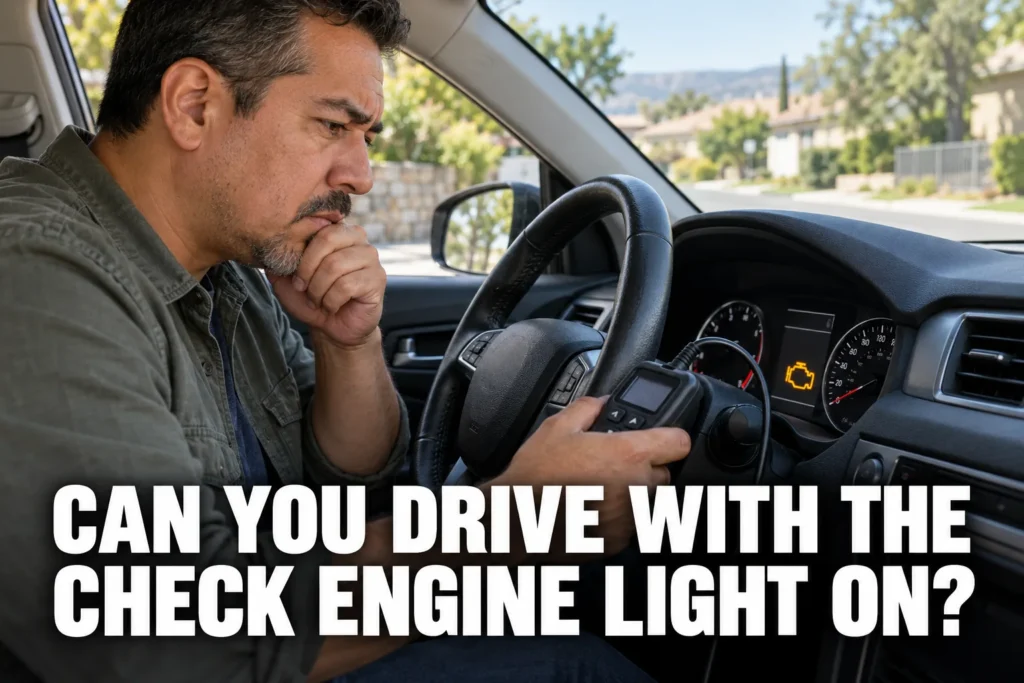
Whether you can drive with the check engine light on is not a yes or no question. The answer depends entirely on which code triggered the light, what it indicates about the current state of the engine, and whether the fault is getting worse while the car is moving. For some codes, driving for days or weeks changes nothing. For others, driving for ten minutes turns a $200 repair into a $1,500 one. The light itself does not tell you which situation you are in. The code does.

About the author: Hello! I’m Kamil Siegień, founder of OBD2 Scout. My diagnostic experience started with an engine rebuild on a 2014 Skoda Superb 1.8 TSI, where tuning from 160 to 222 hp required mastering live data and ECU behavior that basic code readers cannot handle. I am a former BMW and MINI employee and regularly use diagnostic scanners on my own Audi A4 2.0 TFSI.
This guide covers the specific codes that are safe to drive with short-term, the codes that require stopping immediately, how live data changes the risk assessment, and what ignoring the light costs over time in real repair terms.
What the Check Engine Light Actually Signals
The check engine light is not a “something is wrong” light. It is a “the ECU has confirmed a specific fault that exceeds a defined emissions or performance threshold” light. That distinction matters because it means the light carries diagnostic information, not just a warning. The same light that comes on for a loose gas cap comes on for an active engine misfire that is destroying a catalytic converter in real time. The visual signal is identical. The urgency is completely different.
Any scanner in my guide to the best budget OBD2 scanners reads the code number in 60 seconds and converts that generic warning into a specific diagnosis.
The ECU confirms a fault after detecting it across a defined number of drive cycles, typically two for most emissions-related faults. Once confirmed, the DTC is stored in non-volatile memory and the MIL illuminates. The light will not turn off on its own until the fault resolves and the ECU runs enough consecutive clean drive cycles to auto-clear, or until a scanner sends an explicit clear command. Driving with the light on does not make the light go away. It stays on as long as the stored code remains. The guide on how to clear OBD2 codes covers the difference between manually clearing codes and waiting for the ECU to self-clear, including when self-clearing causes readiness monitor issues.
Before deciding whether to drive, the correct first step is always to read the code. An OBD2 scanner takes 60 seconds to connect and display the stored fault. The code number identifies the system. The system determines the urgency. Driving without reading the code first is guessing, and the cost of guessing wrong in the wrong direction can be significant.
On some vehicles the dashboard reads ‘Service Engine Soon’ rather than ‘Check Engine’; my guide to what service engine soon means on your vehicle confirms the scanner process is identical regardless of which label your vehicle uses.
The guide on OBD2 codes explained covers the code number structure and what each letter prefix identifies about the affected system, the fastest way to estimate fault severity before deciding whether to drive.
When Driving Short-Term Is Acceptable
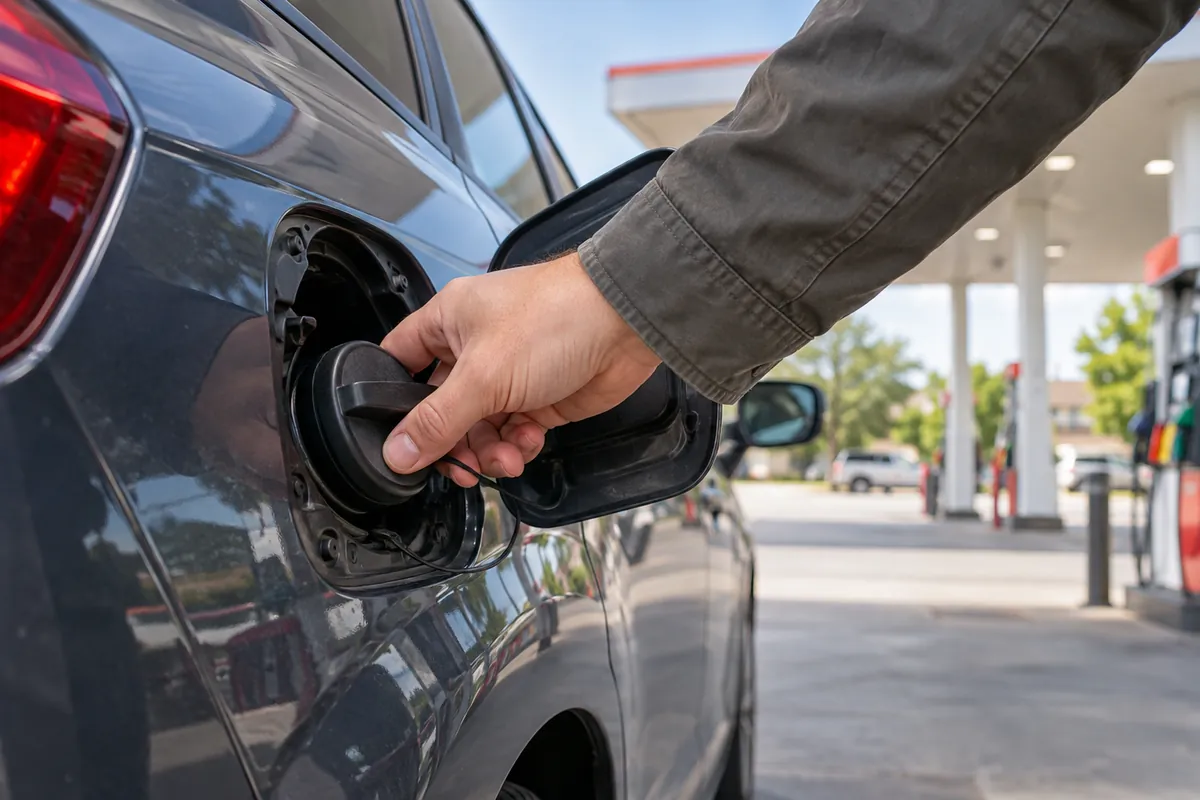
Several categories of fault produce a check engine light and pose no immediate mechanical risk during short-term driving. These faults affect emissions compliance, fuel economy, or long-term component health, but they do not cause acute damage during a normal drive to a repair shop or through daily use over a few days. The key qualifier in all of them is that the car must drive and feel completely normal. No rough idle, no hesitation, no unusual smells, no noise that was not there before.
If a code that seemed minor returns within a day or two of clearing, my guide on why a cleared code reappears so quickly explains the difference between a confirmed code and a permanent code, and what each one means for the repair timeline.
My roundup of the best Bluetooth OBD2 scanners covers the wireless tools that display the fault code and live data on a phone — useful for a quick code check before deciding whether to continue driving.
EVAP system leak codes are the most common example. P0440, P0442, P0455, and P0456 indicate a small, medium, or large evaporative emissions leak. The vast majority of these are a loose fuel cap. A loose cap has zero effect on how the car drives, engine performance, or mechanical durability. It allows fuel vapor to escape the sealed EVAP system, which increases hydrocarbon emissions and eventually triggers a code. Retightening the cap and completing a drive cycle clears it. Driving with an EVAP code is safe for days without any component damage.
My guide to how long the EVAP monitor takes to turn off the check engine light covers the specific monitor completion timeline for EVAP codes and why the EVAP monitor is often the last to complete even after the cap is properly reseated.
Downstream oxygen sensor codes (P0141, P0161, P0147), indicate a failed heater circuit in the downstream (post-catalyst) oxygen sensor. The downstream sensor monitors catalyst efficiency. A failed downstream sensor does not affect the ECU’s closed-loop fuel control, which relies on the upstream sensor. The engine runs normally. Fuel economy does not change. The only consequence of continued driving is that the ECU cannot accurately assess catalyst health until the sensor is replaced. This is a repair-when-convenient fault for a car with normal driving behavior. The guide on OBD2 scanner ABS and airbag codes covers which additional system codes carry similar low-urgency classifications and which require immediate attention even if the car feels normal.
The Loose Gas Cap: P0440, P0442, P0455, P0456
P0440 is a general EVAP system malfunction. P0442 is a small evaporative emissions leak. P0455 is a large EVAP leak. P0456 is a very small EVAP leak. All four can be triggered by a fuel cap that was not fully seated after refueling. The EVAP system is a sealed network of hoses, valves, and a charcoal canister that captures fuel vapor. The fuel cap is the only part of that sealed system that is opened during normal use. An improperly sealed cap allows vapor to escape, which the ECU detects through pressure differential in the EVAP system during the sealed test it runs at specific coolant temperatures and engine-off conditions.
My my guide on perform evap system test covers this step by step.
The fix is to remove the cap, inspect the rubber seal for cracks or deformation, reseat the cap fully (three audible clicks on most vehicles), and drive normally for one to two complete drive cycles. If the code clears and does not return, the cap was the cause. If it returns with a fully seated and undamaged cap, the EVAP system has a different leak point: a cracked vacuum hose, a failed purge valve, a damaged charcoal canister, or a split vapor line. None of these are acute risks during driving, but they do require diagnosis and repair.
Driving with an EVAP code is safe indefinitely from a mechanical standpoint. The emissions non-compliance is the only real consequence, and that matters for passing an emissions inspection in states that require it. The guide on OBD2 scanner emissions testing covers how to check readiness monitor status before scheduling an inspection and whether an EVAP code will cause an automatic fail at the testing station.
O2 Sensor Codes: How Urgency Varies by Position
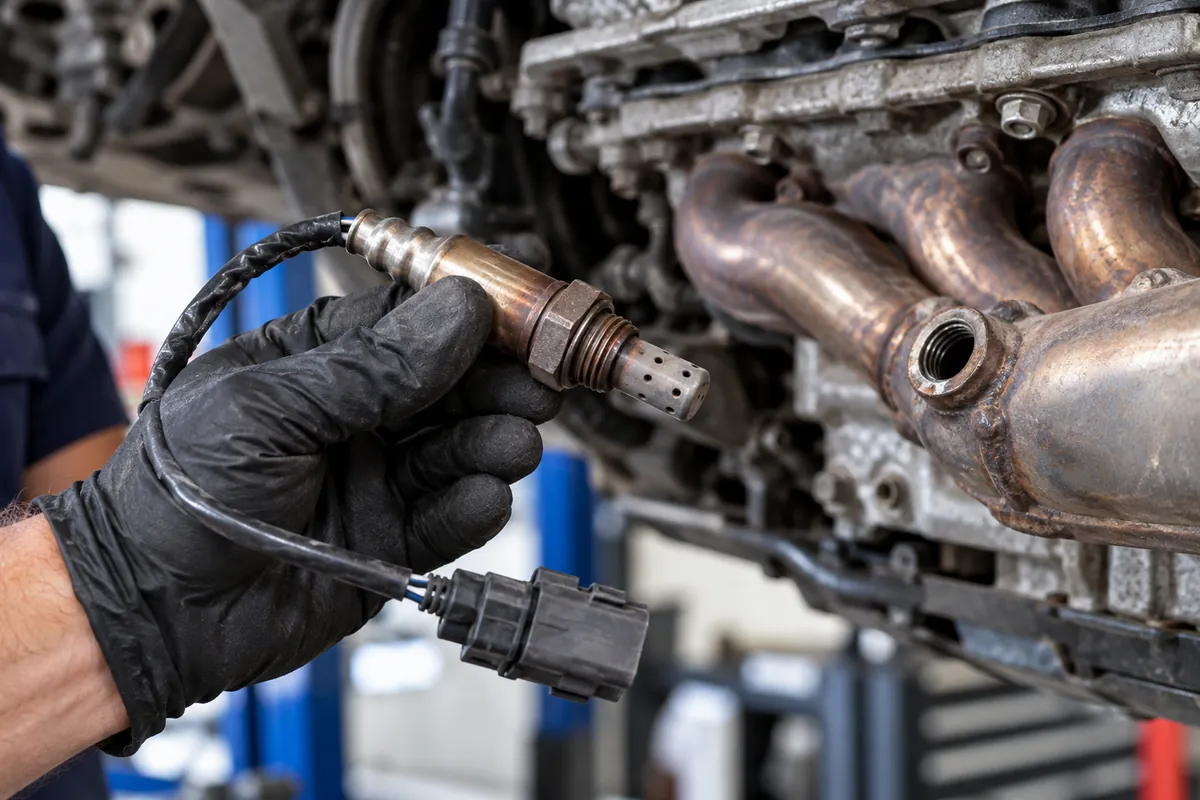
Oxygen sensor codes divide into two groups with very different urgency levels, determined by whether the affected sensor is upstream (before the catalytic converter) or downstream (after it). The sensor position appears in the code: B1S1 is Bank 1, Sensor 1 (upstream); B1S2 is Bank 1, Sensor 2 (downstream). The same physical failure in a sensor produces a different urgency based entirely on which side of the catalytic converter it sits.
My my guide on test o2 sensor covers this step by step.
An upstream oxygen sensor failure (P0131, P0132, P0133, P0134, P0135, P0137, P0138), removes the ECU’s primary feedback signal for closed-loop fuel control. Without accurate upstream O2 data, the ECU may default to open loop operation and run a fixed fuel map. Depending on the direction of the fault, the engine runs rich or lean without correction. Running persistently rich increases hydrocarbons in the exhaust, which accelerates catalyst degradation. Running persistently lean causes combustion temperatures to rise. Neither is a risk for a short trip to a repair shop, but months of open-loop operation from a failed upstream sensor can cause measurable catalytic converter damage and a downstream P0420 code. This is a repair-within-a-week fault, not repair-when-convenient.
My my guide on test catalytic converter covers this step by step.
A downstream sensor failure (P0141, P0147, P0161), does not affect fuel control at all. The downstream sensor’s job is emissions monitoring and catalyst efficiency assessment, not fuel delivery feedback. The ECU continues to use the upstream sensor for closed-loop control exactly as it normally does. Fuel economy, drivability, and engine performance are unchanged. The only consequence is that catalyst health monitoring stops, and an existing P0420 catalyst efficiency fault might not trigger as expected. This is the safest check engine light fault category for continued driving.
Catalytic Converter Efficiency Codes: P0420 and What They Mean for Driving
P0420 (Bank 1 catalyst efficiency below threshold) and P0430 (Bank 2) indicate that the catalytic converter is no longer converting exhaust gases efficiently enough to meet the OBD2 monitoring standard. The ECU reaches this conclusion by comparing the switching behavior of the upstream and downstream oxygen sensors. A functioning converter keeps the downstream sensor reading steady while the upstream sensor switches. When the downstream sensor starts switching in a pattern that mirrors the upstream sensor, the converter is no longer buffering the exhaust chemistry, and the ECU stores P0420.
The important point for driving decisions is that P0420 means the converter has already failed. It is not a warning of approaching failure. The damage is done. Driving further does not cause additional converter damage, the converter is already non-functional as an emissions device. The mechanical consequences of a failed converter are minimal in the short term: slightly elevated exhaust backpressure, minimal power loss at high load. Driving with P0420 for weeks or months does not cause engine damage in most cases, though it does mean continued emissions non-compliance and a guaranteed fail at emissions inspection.
The decision to drive with P0420 is essentially a decision about when to budget for converter replacement. The repair should not be deferred indefinitely because a severely deteriorated converter can eventually shed ceramic substrate and restrict exhaust flow enough to cause overheating and power loss. However, this stage takes months and significant further degradation beyond the initial P0420 trigger point. Short-term driving while arranging a repair is not a risk under normal conditions.
When You Should Stop Immediately
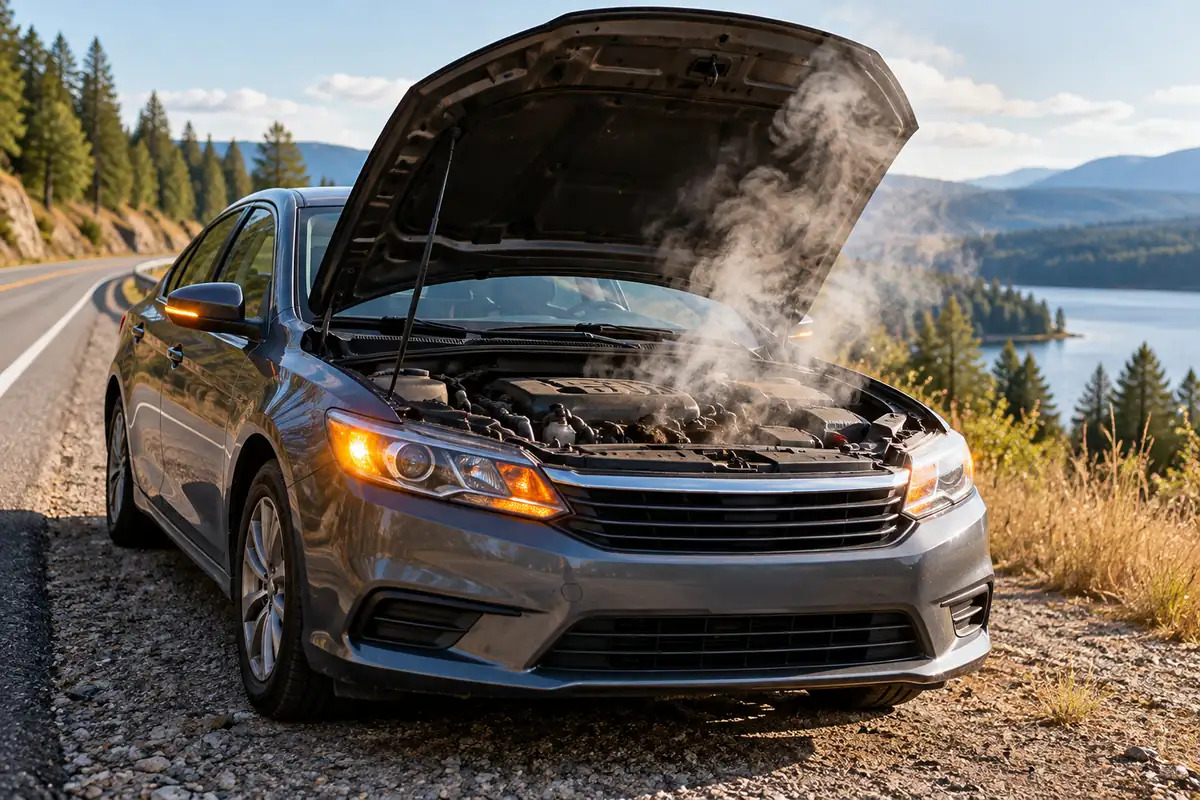
Three situations require stopping now, regardless of how far the repair shop is or how minor the light seems.
A flashing check engine light is the first. This is covered in full in the separate guide on flashing vs solid check engine light. The summary: a flashing MIL means an active Type A misfire with a rate the ECU calculates will cause catalytic converter damage within minutes at current conditions. Reduce load, coast to a stop, turn off the engine, do not restart. Every minute of continued driving at load while the light is flashing compounds both the converter damage and the stress on the misfiring cylinder.
My the malfunction indicator light mil explained covers this step by step.
Any check engine light that appears alongside another warning light (particularly the temperature gauge, oil pressure light, or battery light), requires stopping before the secondary warning escalates. An overheating engine with a check engine light is not a check engine situation. It is an overheating situation that happens to have also triggered a check engine code. Continuing to drive an overheating engine destroys head gaskets, warps cylinder heads, and in severe cases results in a seized engine. The check engine light is irrelevant until the cooling or oil pressure issue is resolved. If the temperature gauge climbs above the normal range or the oil pressure light is on, stop immediately regardless of what other lights are or are not on.
My why does check engine light come on after oil change covers this step by step.
A check engine light that came on during or immediately after a loss of power, a loud knock, a sudden RPM drop, or a severe vibration not present before also requires stopping. The light in these cases is not the primary event. It is a secondary indication that the ECU detected a fault during a mechanical event. Driving after a knock that triggered the MIL risks driving on a damaged bearing, a dropped valve, or a broken piston ring, faults that will escalate rapidly under any continued load.
My a pid obd2 diagnostics explained covers this step by step.
What a Flashing Light Changes About Everything Above
All of the driving guidance above applies to a solid check engine light. A single change (the light starts flashing), invalidates every category of “safe to drive” listed here. A car that was carrying a safe-to-drive EVAP code for two weeks becomes a stop-immediately situation if the MIL transitions from solid to flashing on the same drive. The EVAP fault did not cause the flashing. A new misfire did. The light’s behavior is the only way to distinguish this without a scanner in hand.
Check the light’s state at every cold start and any time engine behavior changes during a drive. A light that was solid this morning and is now flashing means a new fault occurred since the last time the car was started. The prior EVAP or O2 code is now a secondary concern. The misfire that caused the flashing is the active problem. Pull over, scan, and address the misfire before doing anything else. The guide on pending and confirmed OBD2 codes covers how to determine whether a new code appeared alongside an existing one and which one caused the current light state.
How to Assess Risk Using OBD2 Live Data
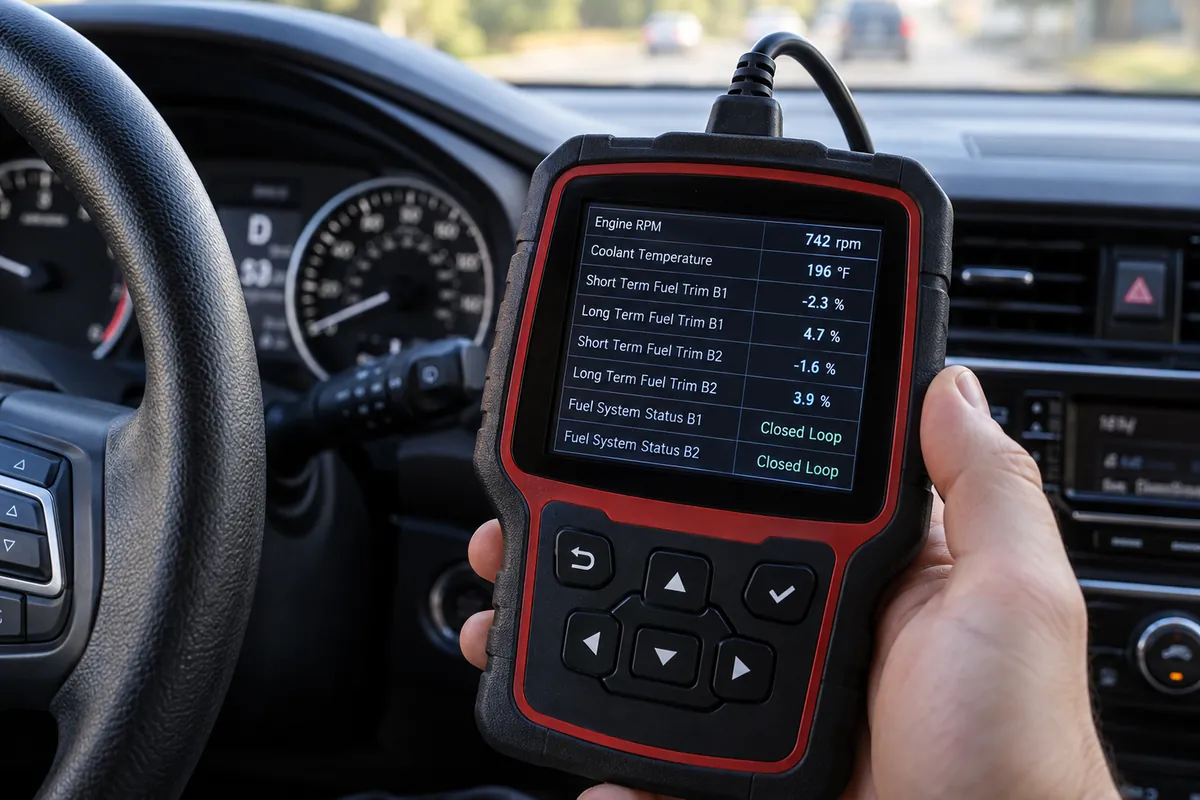
My guide to the best bidirectional OBD2 scanners covers the tools that stream the full live data set needed for a real-time drivability risk assessment.
A code alone tells you the system. Live data tells you whether the fault is actively affecting engine behavior right now. For a driver deciding whether to complete a trip or pull over, live data provides a real-time assessment that a static code cannot.
The four most relevant live data parameters for a driving risk assessment are: engine coolant temperature (ECT), fuel system status, short-term fuel trim (STFT), and engine load. ECT confirms the engine is not overheating. A reading above 105°C while moving at speed is a cooling system concern that overrides any check engine light decision. Fuel system status shows whether the ECU is in closed loop (normal, using O2 sensor feedback) or open loop (sensor-dependent fault is preventing normal fuel control). STFT values beyond ±15% indicate the ECU is making large real-time corrections to a lean or rich condition, which puts stress on both the engine and the converter. Engine load that is abnormally high for the driving conditions (above 80% at steady highway cruise), can indicate exhaust restriction from a collapsed converter substrate.
My my guide on stft vs ltft read fuel trims covers this step by step.
My guide to the best professional OBD2 scanners covers the tools that log all four of these parameters simultaneously in a graph, which makes the driving risk assessment faster and more reliable.
A normal set of readings (ECT between 90 and 105°C, fuel system closed loop, STFT within ±8%, engine load proportional to driving conditions), confirms the car is operating within normal parameters despite the stored fault. Continuing a trip under those conditions, with a confirmed non-urgent code and normal live data, is a defensible decision. Abnormal readings in any of those parameters alongside the check engine light shift the decision toward stopping. The guide on OBD2 live data covers the full parameter table with normal ranges at idle and at cruise, and how to use cross-referenced readings to interpret what they mean together rather than individually.
What Ignoring the Light Costs Over Time
The financial case for reading and addressing check engine codes promptly is straightforward. A P0171 lean condition code from a dirty MAF sensor costs roughly $30 to clean the sensor or $150 to replace it. Left unaddressed, the lean condition causes the ECU to run high positive long-term fuel trim indefinitely, which increases combustion temperatures, accelerates spark plug wear, and eventually stresses the catalytic converter into a P0420 efficiency fault. A $30 MAF cleaning becomes a $150 MAF replacement plus a $900-$1,500 catalytic converter replacement on a mid-size sedan.
My most common reasons check engine light comes on covers this step by step.
An upstream oxygen sensor code costs $80-$200 in parts depending on the vehicle. Left unaddressed, the ECU loses its primary fuel feedback signal, runs open loop, and again stresses the catalyst. The chain of deferred repairs always flows in the same direction: small sensor fault leads to secondary stress on a larger component, which eventually fails and requires the original repair plus the secondary repair. The economic argument for reading codes early and addressing non-urgent faults promptly is not about the light itself. It is about preventing the cascade.
Driving with any undiagnosed check engine light also creates a practical problem: if a new, more urgent fault triggers the MIL during the same period, it adds to the existing stored code and there is no visual change in the warning. The light is already on. A new fault (a developing misfire, a sudden coolant temperature spike), does not make the light look different. The only way to detect the new fault is to scan again. The guide on car diagnostic costs covers how frequently scanning with your own scanner prevents this scenario and whether the one-time cost of a mid-range OBD2 scanner pays off against the cost of even one missed escalating fault.
The Bottom Line
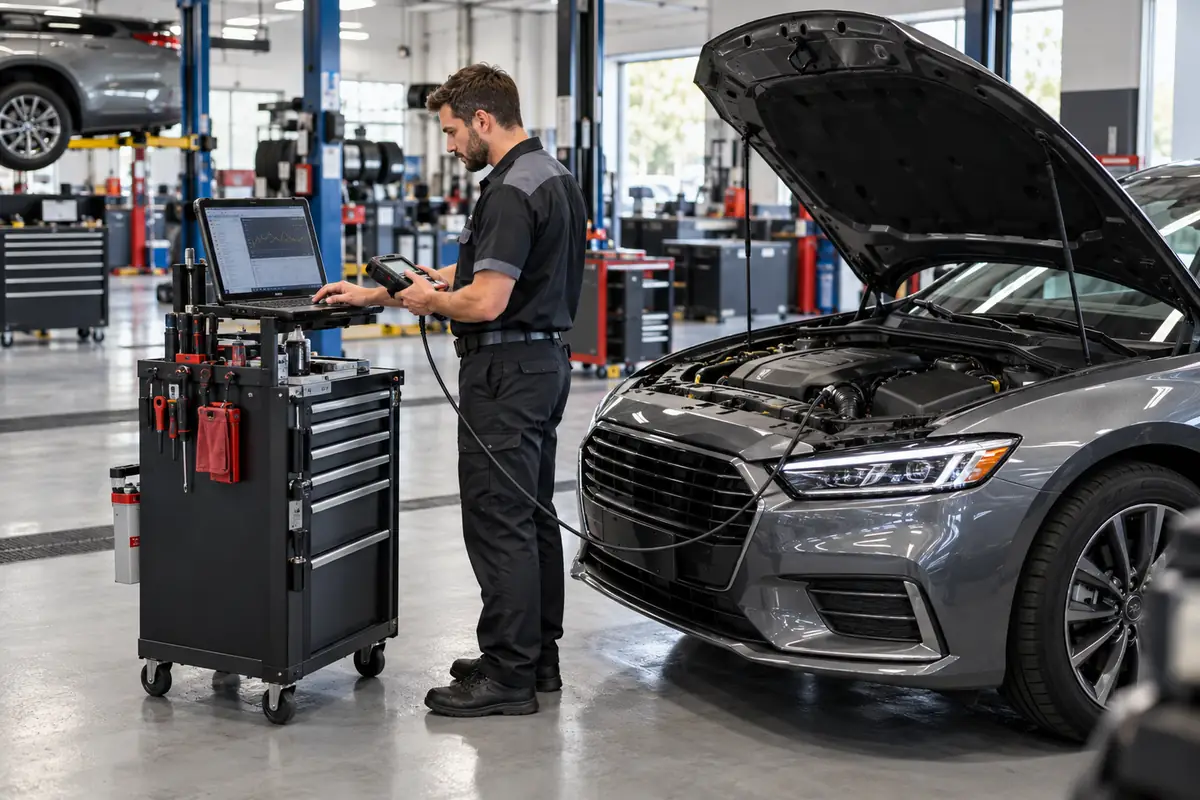
A solid check engine light with a non-urgent code and a car that drives normally is not an emergency. Read the code, identify the system, confirm the fault type, check live data if possible, and arrange a repair on a realistic timeline. An EVAP code or downstream O2 sensor code on a car that runs smoothly is different from a solid P0171 lean condition code on a car that already shows signs of rough idle.
A flashing check engine light is always an emergency, regardless of what code is stored or how the car feels. A check engine light alongside overheating or oil pressure warnings is always an emergency, regardless of what triggered the MIL. Any check engine light that appeared during or immediately after an unusual event (knock, stall, power loss), is always an emergency. The guide on how to use an OBD2 scanner covers the complete process from connecting the tool to reading both confirmed codes and live data in a single session, which provides everything needed to make an informed driving decision in under two minutes.
FAQs
How long can you drive with the check engine light on before something breaks?
There is no universal answer because it depends entirely on the code. A loose gas cap code (P0442) can be driven with indefinitely without any component damage. An upstream oxygen sensor failure (P0131) should be addressed within days to a week to prevent rich running from degrading the catalytic converter. A misfire code with a flashing light requires stopping immediately. The light itself provides no information about time sensitivity, the code does. Scanning takes 60 seconds and eliminates guessing entirely.
Can the check engine light come on and then go off by itself?
Yes. If the fault was intermittent and does not repeat, the ECU counts clean drive cycles and eventually clears the DTC and turns the MIL off. This typically requires three consecutive clean drive cycles for most fault types, though the exact count varies by manufacturer and fault category. The light going off does not mean the fault is permanently resolved. If the underlying condition returns and the ECU detects it again, the light comes back on. An intermittent fault that self-clears is worth noting and monitoring even though it is not currently active.
Is it safe to drive with the check engine light on if the car feels completely normal?
Normal driving feel alongside a solid check engine light is a positive indicator but not a guarantee of safety. Some faults that do not affect drivability at all (a failing downstream O2 sensor, a minor EVAP leak), genuinely are safe to drive with short-term. Others that also produce no noticeable driving change (an upstream O2 sensor running the engine in slightly lean open loop, a failing EGR causing elevated combustion temperatures), are causing slow-developing secondary damage that the driver cannot feel. Normal driving feel is a necessary but not sufficient condition for deciding to drive. The code provides the other half of the assessment.
Does driving with the check engine light on affect fuel economy?
Some codes directly reduce fuel economy; others do not. A failed upstream oxygen sensor that forces open-loop operation typically increases fuel consumption by 10-20% because the ECU runs a conservative rich fuel map without O2 feedback. A misfiring cylinder wastes the full fuel charge for each misfire event without producing useful power. A clogged EGR valve can alter combustion efficiency and affect fuel consumption in either direction depending on which way the EGR fails. An EVAP leak, a downstream O2 sensor failure, or a catalytic converter efficiency code typically have no measurable effect on fuel consumption at all.
Will the check engine light cause an automatic fail at an emissions test?
Yes, in all states with OBD2-based emissions testing, an illuminated MIL causes an automatic failure. The emissions tester connects an OBD2 scanner to the vehicle’s diagnostic port and checks three things: MIL status (must be off), stored DTCs (must be none), and readiness monitor status (most monitors must show complete). A check engine light on means the MIL status check fails immediately. The vehicle fails the inspection regardless of whether the code that triggered the light is emissions-related or not.
Can I just disconnect the battery to turn off the check engine light before an emissions test?
Disconnecting the battery clears the fault codes and turns the MIL off, but it also resets all readiness monitors to “not ready.” Modern emissions testing checks monitor completion status as part of the inspection. A vehicle with all monitors showing “not ready” fails the inspection on monitor status even with the MIL off and no stored codes. Most states allow one or two monitors to show incomplete, but a fresh battery disconnect clears all of them, typically producing five or more incomplete monitors. The ECU needs one to three full drive cycles to complete all monitors after a reset, and some monitors (EVAP, catalyst), require very specific enabling conditions to run and may take a full week of normal driving to complete.