
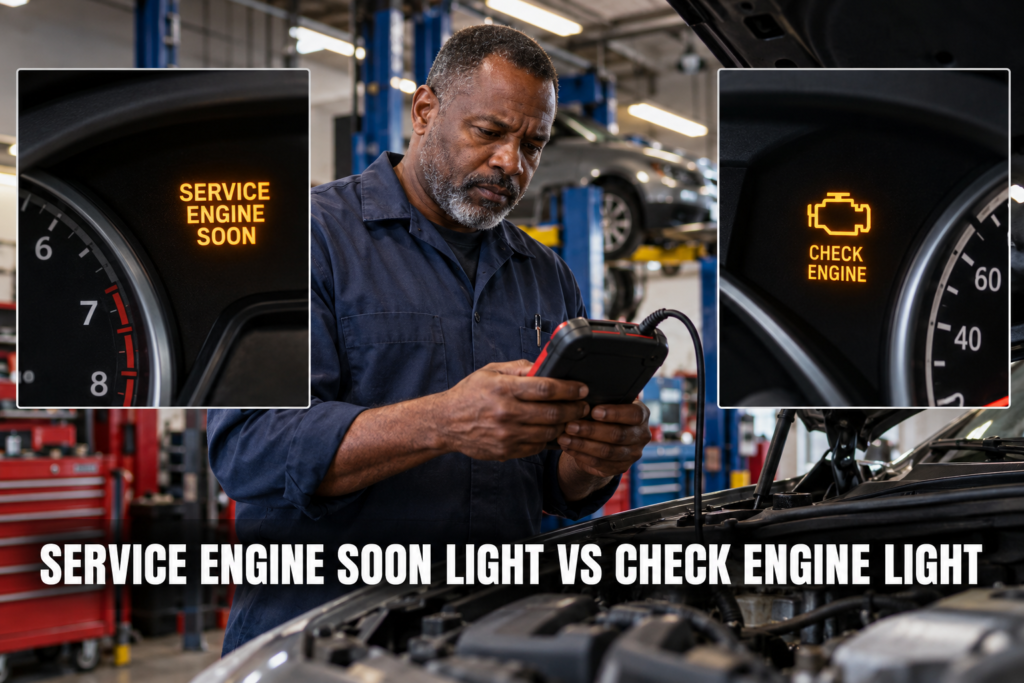
Service Engine Soon Light vs Check Engine Light: What Each One Actually Means
By Kamil Siegień / October 12, 2026
These two warnings look alike on a dashboard but can mean completely different things depending on the manufacturer. On some vehicles, service engine soon is a routine maintenance reminder with no fault code behind it. On others, it is the legally required OBD2 malfunction indicator lamp (MIL) under a different name. Reading it wrong leads to either ignoring a real fault or making an unnecessary shop visit.

About the author: Hello! I’m Kamil Siegień, founder of OBD2 Scout. My diagnostic experience started with an engine rebuild on a 2014 Skoda Superb 1.8 TSI, where tuning from 160 to 222 hp required mastering live data and ECU behavior that basic code readers cannot handle. I am a former BMW and MINI employee and regularly use diagnostic scanners on my own Audi A4 2.0 TFSI.
This guide covers what each light means at the ECU level, which manufacturers use which term and why, how to instantly tell the difference with a scanner, and what to do when the light is blinking.
What the Check Engine Light Is
The check engine light is the MIL: Malfunction Indicator Lamp. Federal law requires every gasoline-powered vehicle sold in the United States since 1996 to have an OBD2-compliant MIL that illuminates when the ECU stores an emissions-related Diagnostic Trouble Code. California mandated it earlier, from 1988 on some vehicles.
My the malfunction indicator light mil explained covers this step by step.
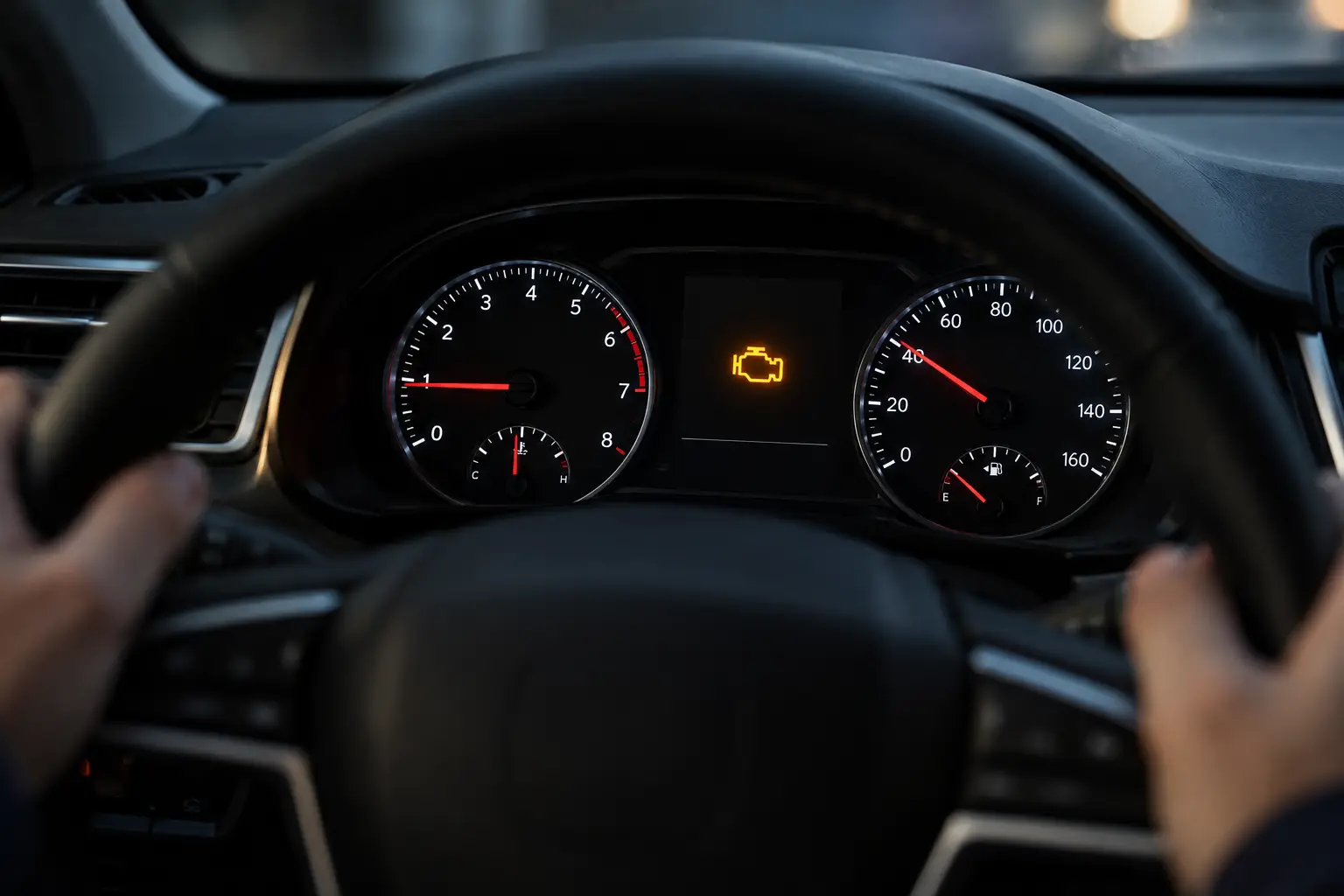
The MIL activates when the ECU detects a fault that affects the vehicle’s emissions output above a defined threshold. Every confirmed DTC in the P-code range, and many B and U codes, can trigger the MIL depending on the manufacturer. The specific icon varies: some vehicles show a stylized engine block outline, others show the words “CHECK ENGINE,” and others show “SERVICE ENGINE SOON.”
The MIL has two states: steady and blinking. A steady MIL means a confirmed fault is stored and should be diagnosed, but the vehicle can generally be driven to a shop. A blinking MIL means an active misfire is occurring at a rate severe enough to damage the catalytic converter. A blinking light requires stopping the vehicle promptly.
What the Service Engine Soon Light Is (and Is Not)
The answer depends entirely on the vehicle brand. There is no universal standard for what “Service Engine Soon” means across manufacturers. The phrase exists because manufacturers have latitude in how they label the MIL, and separately because some manufacturers added a distinct maintenance reminder light that is not the MIL at all.
On General Motors vehicles from the early OBD2 era, GM renamed the MIL to “Service Engine Soon” to reduce driver panic and the number of emergency tows submitted as warranty claims. Functionally, the GM “Service Engine Soon” light is identical to a “Check Engine” light: it turns on when a DTC is stored, it follows all OBD2 MIL rules, and it blinks during active misfires.
On BMW vehicles, “Service Engine Soon” appears as a maintenance reminder. BMW uses a separate CBS (Condition Based Service) system that tracks oil age, brake pad wear, and fluid intervals. When a service interval is reached, “Service Engine Soon” lights up in the instrument cluster as text, not as the engine outline icon. No DTC is behind it. This light has nothing to do with the OBD2 MIL.
On Nissan and Infiniti, some older models used “Service Engine Soon” as the MIL label. Current Nissan models use the engine outline icon with no text, which is the standard MIL format across most manufacturers today.
My roundup of the best OBD2 scanners for Nissan covers tools that work correctly on both older Service Engine Soon labeled models and current Nissan vehicles.
How to Tell Which Type of Light You Have
Plug in an OBD2 scanner within 60 seconds of seeing the light. If the scanner shows one or more stored DTCs, the light is the MIL, regardless of what it says on the dashboard. The fault code pinpoints the system that triggered it.
A budget tool is enough for this initial check; my guide to the best budget OBD2 scanners covers options under $60 that read codes and confirm MIL status on any OBD2 vehicle.
If the scanner shows no codes, no pending codes, and all monitors either “Ready” or “Not Applicable,” the light is almost certainly a maintenance reminder. On BMW vehicles, a CBS-reset tool (or a BMW-specific scanner) will show the remaining interval for oil, brakes, or another service item.
A generic OBD2 code reader cannot read BMW CBS service data. A scanner with BMW-specific coverage, or the BMW iDrive service menu, is needed to see and reset the BMW Service Engine Soon indicator. The generic OBD2 port is unrelated to the BMW CBS light.
If you drive a BMW, my guide to the best OBD2 scanners for BMW covers tools that access both standard emissions faults and CBS service data from a single device.
| Manufacturer | Light Label | What It Means | Scanner Codes Present? |
|---|---|---|---|
| General Motors (most models) | Service Engine Soon | MIL (OBD2 fault) | Yes |
| BMW | Service Engine Soon | CBS maintenance interval | No (generic) |
| Nissan (older models) | Service Engine Soon | MIL (OBD2 fault) | Yes |
| Ford | Check Engine | MIL (OBD2 fault) | Yes |
| Honda | Check Engine | MIL (OBD2 fault) | Yes |
| Toyota | Check Engine | MIL (OBD2 fault) | Yes |
Vehicles That Have Both Lights
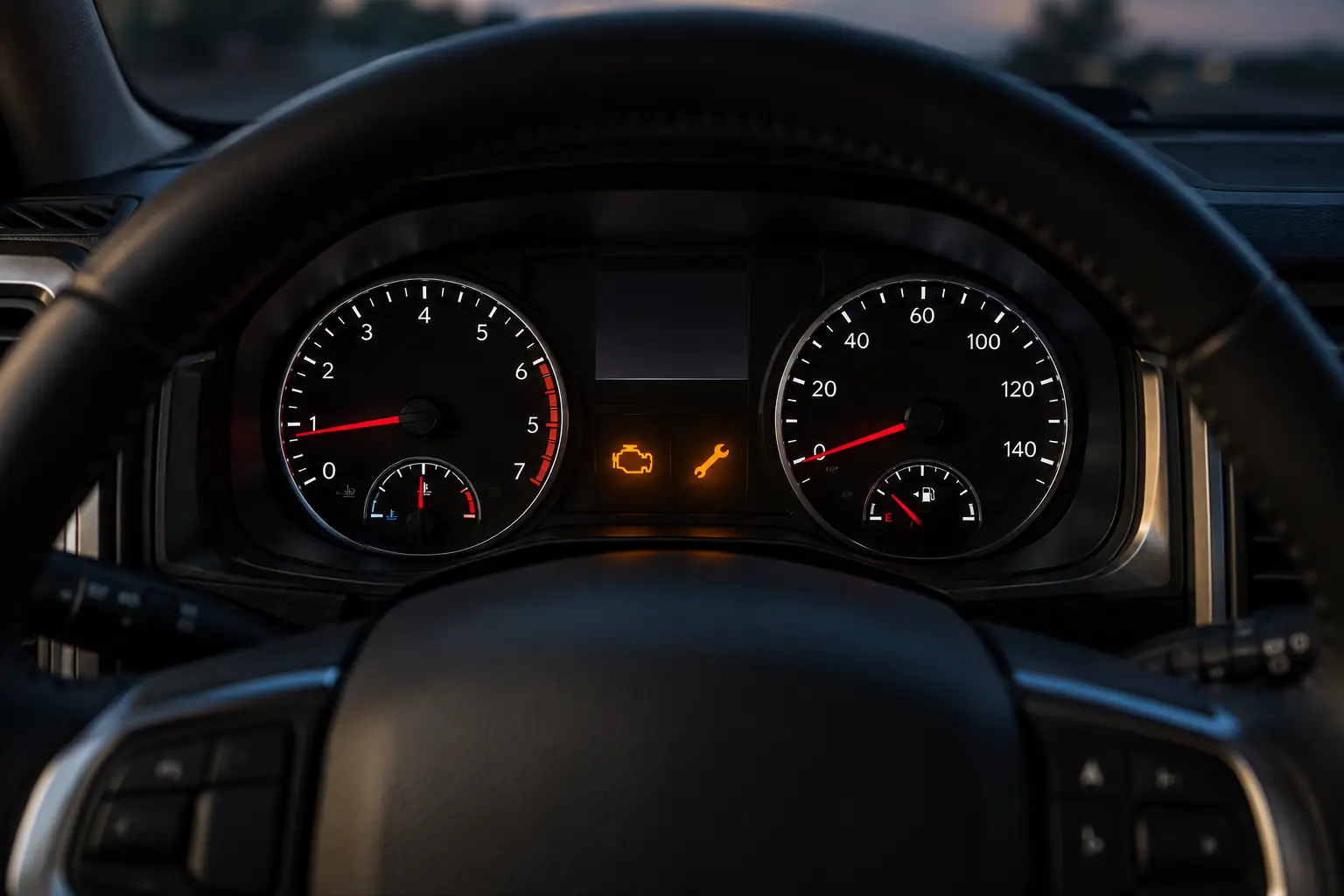
Some vehicles have both a maintenance reminder light and a separate MIL. These are distinct warning systems that appear in different locations on the instrument cluster or as different icons in the multi-information display.
A common example is the oil life monitor on many domestic vehicles: a separate “Change Oil Soon” or oil-can icon appears when the oil life percentage drops below a threshold. This is a maintenance reminder. The engine outline MIL is a separate indicator that only activates on a DTC.
If both lights are on at the same time, they are unrelated events occurring simultaneously. The MIL requires a scanner to diagnose. The maintenance reminder requires a service reset, which most vehicles allow through the instrument cluster menu without a scanner.
The MIL Blinking Rule Applies to Both Names

Regardless of whether the dashboard says “Check Engine” or “Service Engine Soon,” if the light blinks, the OBD2 MIL rules apply. A blinking MIL means the ECU detected an active misfire at a rate that places the catalytic converter at risk of overheating and irreversible damage.
On GM vehicles labeled “Service Engine Soon,” a blinking light has exactly the same meaning as a blinking “Check Engine” light on a Ford or Honda. Stop driving. Do not continue to a destination 10 miles away. The catalyst temperature rises within minutes of an active high-rate misfire, and converter replacement costs $400 to $1,200 depending on the vehicle.
On BMW vehicles, the CBS maintenance “Service Engine Soon” text cannot blink. It is a static text display driven by a timer, not the MIL circuit. If a BMW shows a blinking warning light, it will appear as a separate symbol, not the CBS service text.
Why Manufacturers Use Different Names for the Same Warning
The OBD2 standard (SAE J1979 and ISO 15031) specifies the function of the MIL but not the exact wording on the dashboard. Manufacturers have latitude in how they label the lamp. The result is a patchwork of different names for the same federally required indicator.
My guide to the best OBD2 scanners covers tools across every budget that read the MIL’s underlying codes, from basic adapters to BMW CBS-capable professional devices.
GM’s decision to use “Service Engine Soon” was a deliberate user experience choice. Driver studies in the early 1990s showed that “Check Engine” caused significant anxiety and unnecessary dealer visits for minor emissions faults. “Service Engine Soon” was perceived as less urgent, reducing panic while still conveying the message that a visit was needed.
The European approach took a different path. European manufacturers, particularly German brands, preferred the engine outline icon without any text, which has now become the near-universal MIL format on most vehicles sold globally. The separate CBS or service interval systems were kept as distinct indicators, which is why BMW uses “Service Engine Soon” for maintenance while using the engine icon for faults.
How to Reset Each Type
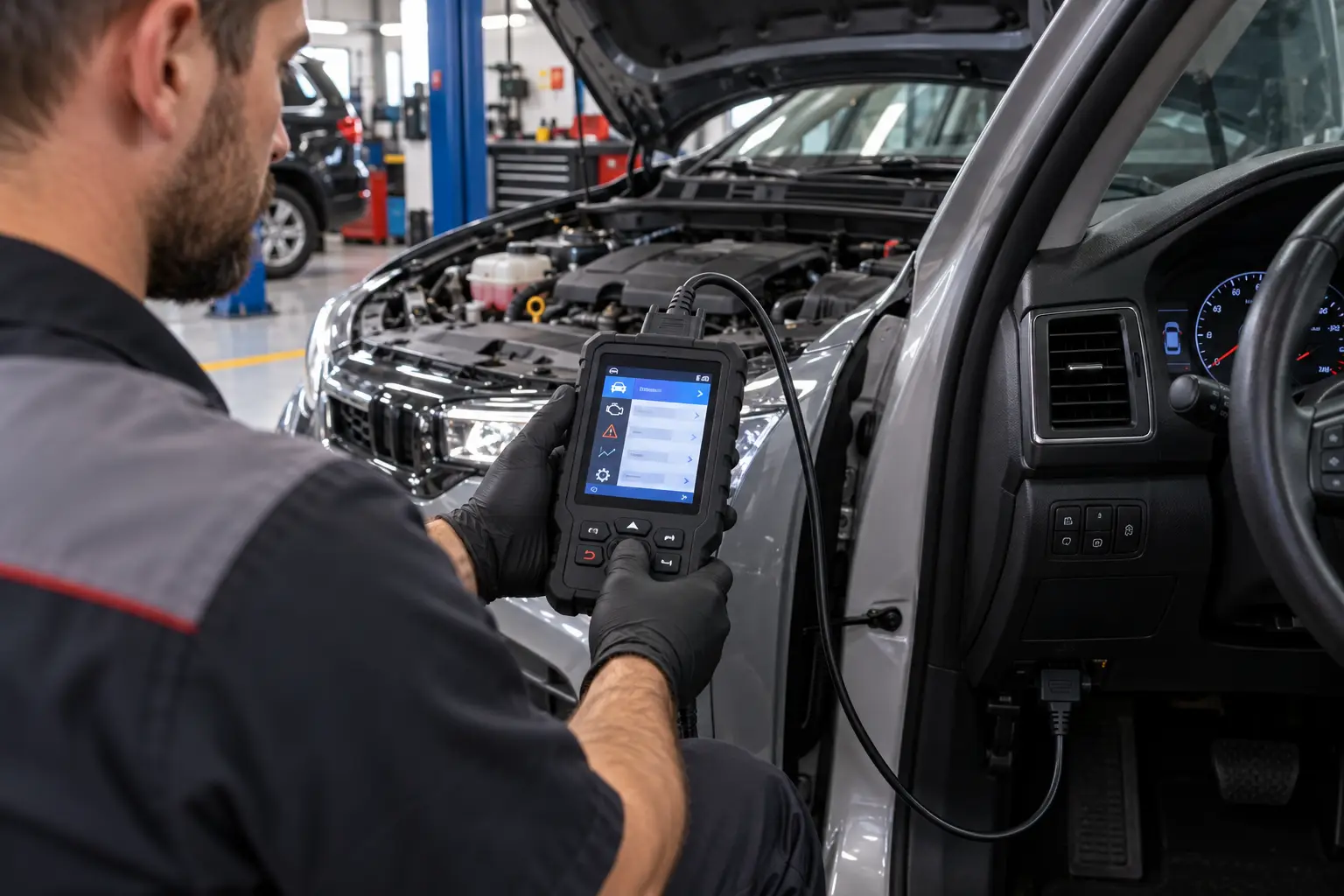
If the light is the MIL with a stored DTC, the only correct reset is to repair the fault and allow the ECU to clear the code through passing drive cycles. Clearing the code with a scanner without a repair turns the light off temporarily, but the code returns as soon as the fault recurs.
My my guide on reset check engine light without a scanner covers this step by step.
My guide on why the check engine light returns after clearing codes explains the exact fault cycle, including the permanent code category that a scanner cannot erase regardless of make.
If the light is a maintenance reminder with no stored codes, a service reset procedure clears it. On GM vehicles, this is usually done through the trip computer button sequence: hold the trip reset button, cycle the ignition to “on,” and release when the light flashes. On BMW, the CBS reset requires going into the iDrive service menu and resetting the specific service item that triggered the reminder.
The Autel MaxiCOM MK808BT Pro handles BMW CBS resets through its scanner menu instead of the iDrive; my Autel MaxiCOM MK808BT Pro review covers which BMW service items it can reset and how the process works.
Resetting a maintenance light with a scanner’s “service reset” function without performing the actual service does not harm the vehicle mechanically. The light will return at the next interval. Skipping the underlying service, however, has the usual consequences: worn oil damages bearings, worn brake pads wear rotors, and delayed spark plug replacement causes misfires.
What the Engine Icon Means vs the Text Warning
The engine outline icon, a silhouette of an engine block profile, is the universal symbol for the OBD2 MIL. On every vehicle sold in the US since 1996, this icon means a DTC is stored and a scanner will show it. The icon may say “CHECK ENGINE” underneath it, “SERVICE ENGINE SOON” underneath it, or nothing at all.
A text-only warning, such as “SERVICE DUE” or “OIL CHANGE REQUIRED,” appearing in the instrument cluster information display is almost always a maintenance reminder, not the MIL. These warnings are driven by the instrument cluster microcontroller based on mileage or time counters, not by the ECU’s fault detection system.
If any doubt remains after seeing the dashboard, a $15 Bluetooth OBD2 adapter connected to a free phone app settles the question in under 30 seconds. Stored codes mean MIL. No codes mean maintenance reminder.
My guide to the best Bluetooth OBD2 scanners covers adapters tested on GM, BMW, and other makes for code reading and MIL confirmation at this price point.
What Diagnostic Codes Look Like Under Each Light Type
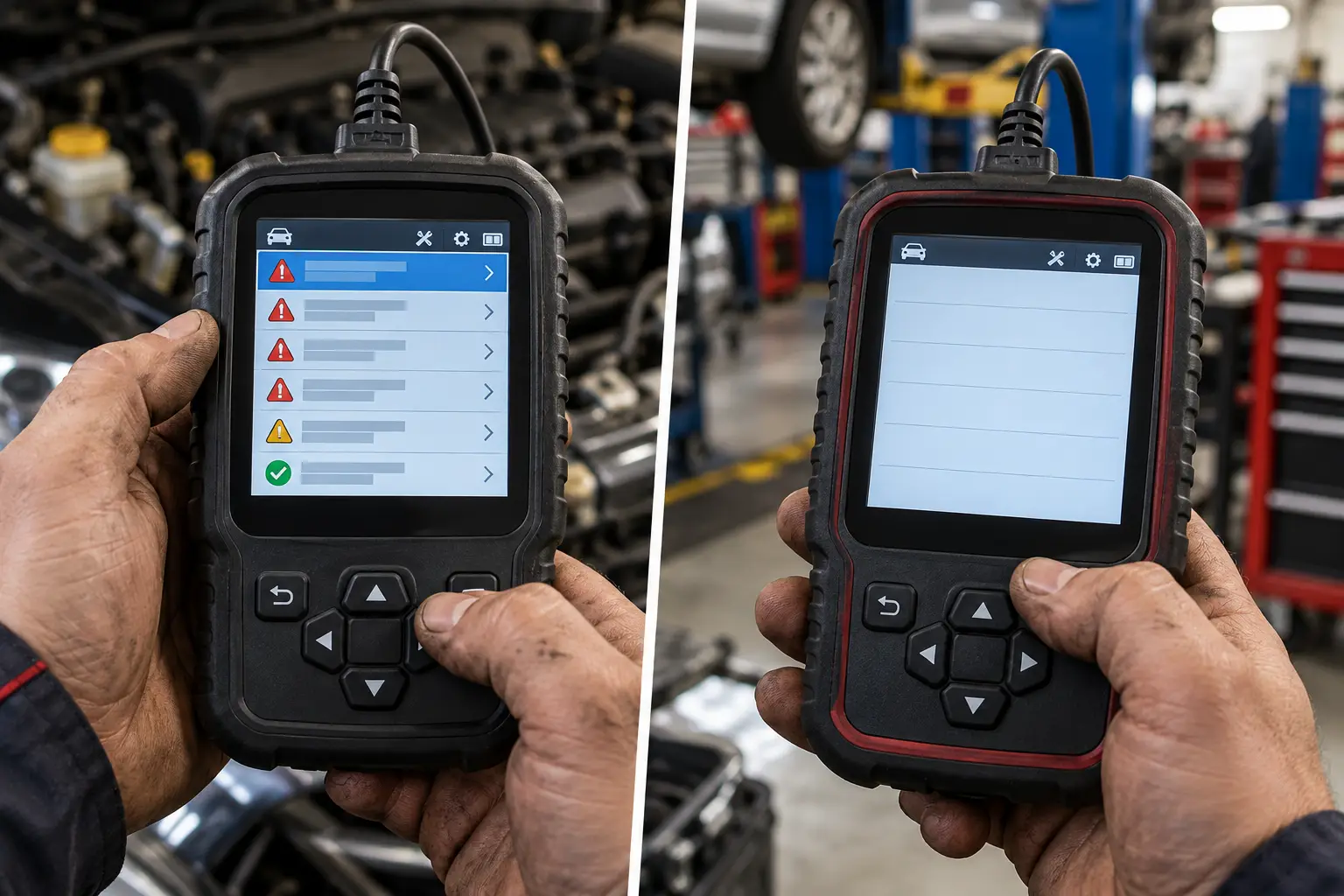
Connecting a scanner to a vehicle with a MIL-triggered “Service Engine Soon” light shows one or more P-codes in the confirmed code list. The code is always specific: P0420 for catalyst efficiency, P0301 for a cylinder 1 misfire, P0171 for a lean fuel condition. These are OBD2 standard codes that any scanner can read, and any repair manual or online database can look up.
My my guide on diagnose misfires covers this step by step.
My guide to how to read OBD2 trouble codes covers the full P, B, C, and U code structure and what each character position means for diagnosis.
Connecting a scanner to a BMW with a CBS “Service Engine Soon” reminder shows no codes in the standard OBD2 code list. The generic scanner returns “No DTC found” or an empty code list. A BMW-specific scanner (or the iDrive menu under Vehicle Info and Service Requirements) shows the CBS data: the specific service item, the current interval reading, and the remaining distance or time before the next service.
My guide to the best professional OBD2 scanners highlights tools with BMW CBS access alongside standard code reading in one device.
This distinction matters for diagnosis. A generic code reader that shows “No codes found” on a BMW maintenance reminder is working correctly. The same code reader showing “No codes found” on a GM “Service Engine Soon” light would be unusual and could indicate a scanner communication failure or a rare case where the light was triggered by a soft module error that cleared between startups.
The BlueDriver Pro reads enhanced GM codes that generic scanners miss on Service Engine Soon labeled vehicles; my BlueDriver Pro review covers its performance across GM platforms and what it catches that basic readers cannot.
FAQs
Is the service engine soon light the same as the check engine light?
On GM vehicles, yes. The GM “Service Engine Soon” label is applied to the OBD2 MIL and functions identically to a “Check Engine” light. On BMW vehicles, no. BMW uses “Service Engine Soon” for a routine maintenance reminder, while the MIL appears as the engine outline icon without text. The only way to confirm which type you have is to check with a scanner.
Should I pull over if the service engine soon light comes on?
If the light is blinking, pull over promptly regardless of what it says on the dashboard. A blinking MIL indicates an active misfire that can destroy the catalytic converter within minutes of continued driving. If the light is steady, you can drive to a diagnostic shop, but do not ignore it for weeks.
Can I reset the service engine soon light myself?
If it is a maintenance reminder with no codes, yes: a button sequence through the trip computer or an oil life reset procedure in the vehicle’s menu clears it. If it is the MIL with a stored code, clearing the code without performing a repair only turns the light off temporarily. A proper reset requires fixing the underlying fault.
Why does my BMW service engine soon light come on even though my car runs fine?
BMW’s “Service Engine Soon” indicator is a CBS maintenance reminder based on oil age, mileage, and condition data, not an engine fault. The car runs fine because there is no active fault. The light is informing you that a scheduled service item, typically an oil change, has reached its interval threshold. A BMW-specific scanner or the iDrive service menu shows which item triggered it.
Does the service engine soon light affect emissions testing?
If the light is the MIL with a stored DTC, yes: an illuminated MIL is an automatic failure at most state OBD2 emissions inspections. If the light is a maintenance reminder with no stored codes and all monitors showing “Ready,” it does not affect the emissions test. The inspection system reads DTC status and monitor readiness, not the dashboard text label of the light.