
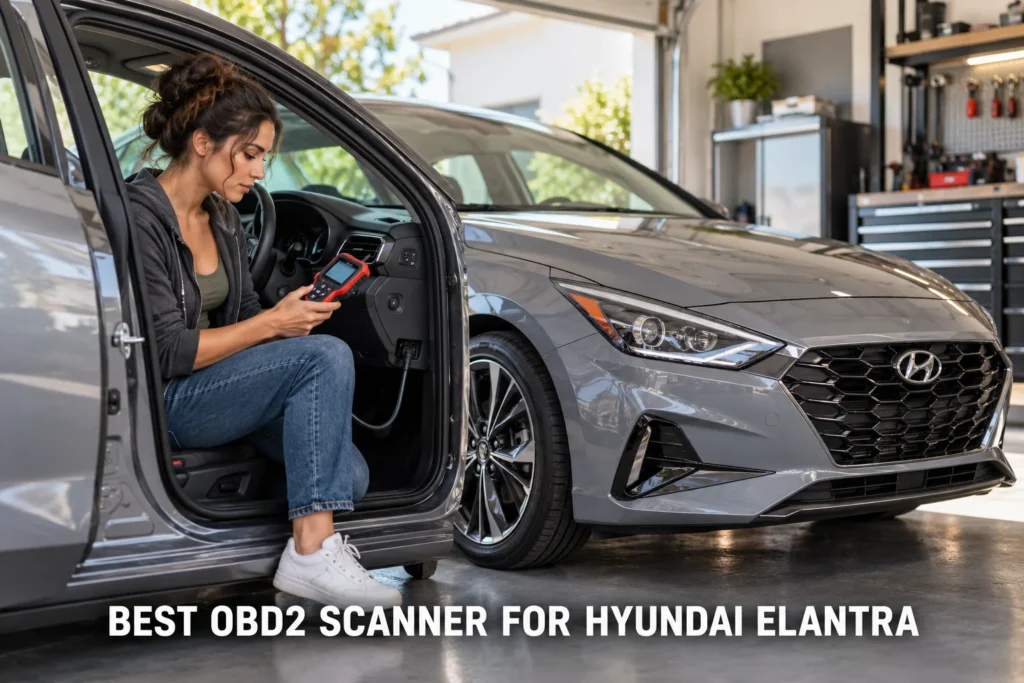
Finding the best OBD2 scanner for Hyundai Elantra depends entirely on which generation you own and what it actually requires. The 2011-2016 MD generation with the Theta II GDi engine developed the P1326 KSDS fault, a manufacturer-specific code that signals abnormal crankshaft vibration linked to rod bearing wear, and reading it correctly requires a scanner with Hyundai enhanced protocol access, not just the 16 standard OBD2 modes.
The 2017-2020 AD generation added dual-stage CVVT management, active air flap control, and a heated steering module that no generic ELM327 adapter communicates with.
The 2021+ CN7 Smartstream generation compounds this further with an IVT intelligent variable transmission on non-DCT trims, a central gateway that implements CAN FD architecture on later model years, and TPMS sensors that have no physical reset button and require sensor ID programming through a dedicated scanner function.

About the author: Hello! I’m Kamil Siegień, founder of OBD2 Scout. My diagnostic experience started with an engine rebuild on a 2014 Skoda Superb 1.8 TSI, where tuning from 160 to 222 hp required mastering live data and ECU behavior that basic code readers cannot handle. I am a former BMW and MINI employee and regularly use diagnostic scanners on my own Audi A4 2.0 TFSI.
Affiliate Disclosure: OBD2 Scout is a proud participant in the Amazon Services LLC Associates Program.
I evaluated 11 scanners against real Hyundai Elantra diagnostic requirements, covering the P1326 KSDS fault behavior on MD Theta II engines, CVVT active test access on AD Nu GDi engines, IVT and DCT adaptation reset capability on CN7 Smartstream transmissions, CAN FD protocol handling for 2023+ CN7 facelift variants, and TPMS sensor ID programming for the no-button TPMS system introduced on 2022+ CN7 models.
Every tool on this list meets the 100-review minimum on Amazon, is currently in stock, and was selected for its ability to reach Hyundai-enhanced systems that a standard code reader cannot communicate with.
My Recommended Top 3 Best-Buys
1. Autel MaxiCheck MX808S
[Best Overall]
- ✓ IVT adaptation reset and DCT clutch relearn for 2021+ CN7 Elantra
- ✓ CVVT solenoid active test for Nu GDi and Theta II engines
- ✓ TPMS sensor ID programming for 2022+ no-button TPMS system
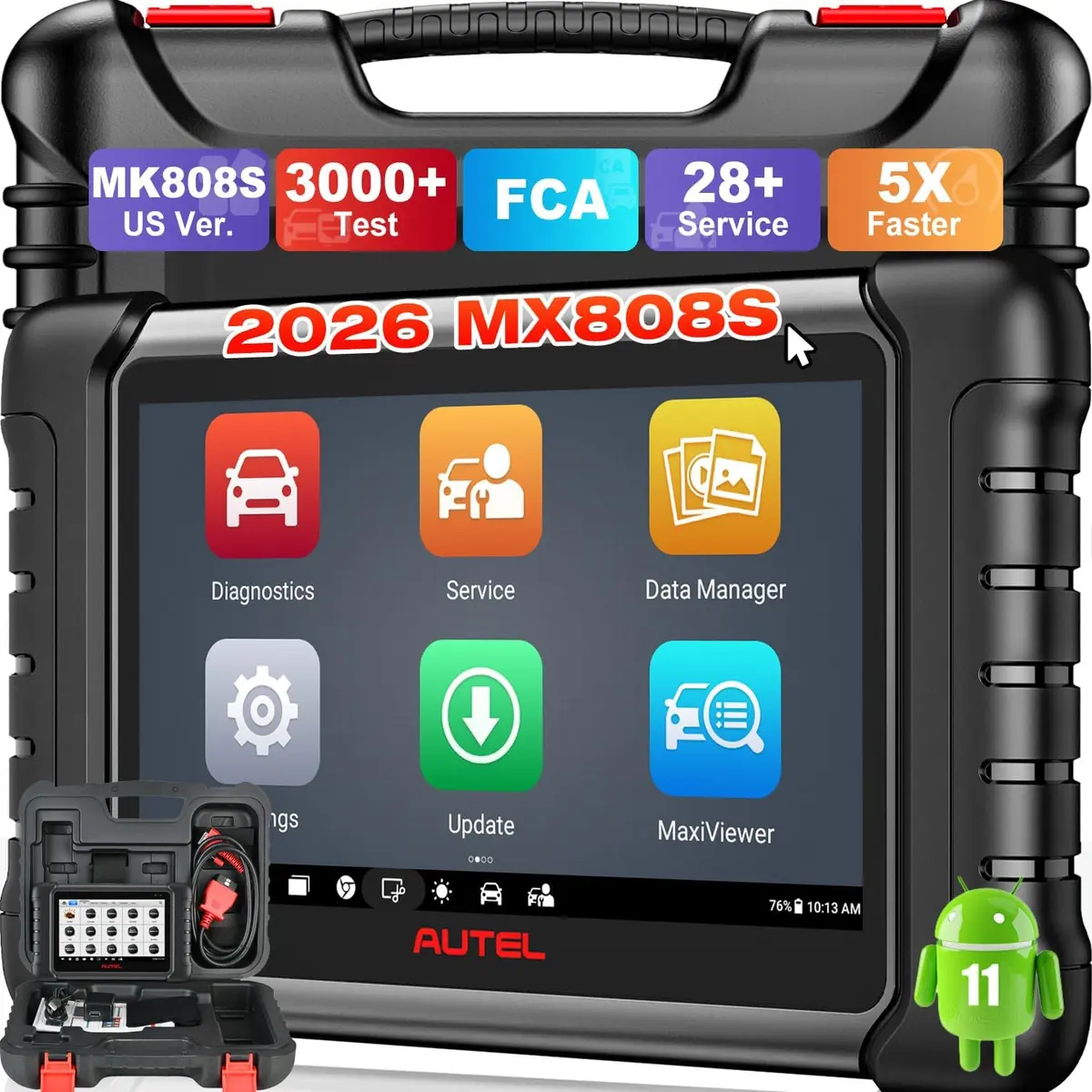
5,500+ Verified Reviews
2. BlueDriver Bluetooth Pro
[Best Value]
- ✓ Enhanced Diagnostics for all 2011+ Elantra generations via smartphone
- ✓ P1326 KSDS freeze frame preserved with real-world repair report data
- ✓ CVVT and ABS module access across MD, AD, and CN7 Elantra generations

62,500+ Verified Reviews
3. LAUNCH X431 PRO3 V5.0
[Best Premium]
- ✓ CAN FD gateway access via DBScar VII VCI for 2023+ CN7 facelift Elantra
- ✓ ECU coding and BCM module programming after replacement
- ✓ Full topology mapping of the entire Elantra module network
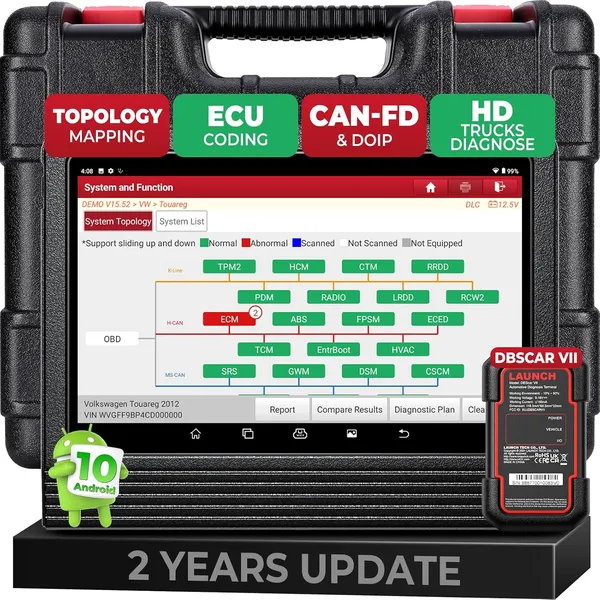
1,500+ Verified Reviews
11 Best OBD2 Scanners for Hyundai Elantra: Full Reviews
1. Autel MaxiCheck MX808S: Best Overall OBD2 Scanner for Hyundai Elantra
- IVT intelligent variable transmission adaptation reset for 2021+ CN7 non-DCT trims
- CVVT solenoid active test confirms whether CVVT faults are electrical or mechanical on Theta II and Nu GDi engines
- 5,500+ verified reviews, 4.4 stars on Amazon
Overview
The MX808S leads this list because it covers every diagnostic need the Elantra produces across all three generations without requiring a choice between coverage and budget. The MD (2011-2016) runs the 1.8L G4NB Nu MPI and the 2.0L G4NA Nu GDi in GT trim, both of which develop CVVT solenoid faults and KSDS knock codes that standard OBD2 cannot isolate to a specific cause.
The AD (2017-2020) added the 1.4T G4LD Kappa GDi ECO trim and the 1.6T G4FJ Gamma GDi Sport trim with dual-stage CVVT alongside the base 2.0L G4NA, compounding diagnostic complexity with camshaft-specific fault tracking. The CN7 (2021+) brought the 2.0L G4NL Smartstream MPI and the 1.6T G4FJ Smartstream GDi N-Line with a 7-speed wet DCT requiring clutch adaptation resets.
The HEV CN7 variant pairs the 1.6L G4FJ GDi with a 32kW electric motor and requires BMS module access unavailable to standard code readers. The MX808S reaches all enhanced systems across every Elantra powertrain at roughly $200, sitting at the practical sweet spot between basic code readers and professional tools costing three to five times more.
The CVVT solenoid activation test is the MX808S feature that matters most for Theta II and Nu GDi Elantra owners. CVVT-related hesitation and P0011 or P0013 codes frequently require more than a static DTC read to diagnose correctly. The MX808S triggers the solenoid directly while monitoring CVVT cam timing response in real time, showing whether the fault is electrical (wiring or solenoid resistance) or mechanical (cam phaser wear or oil pressure loss).
The intake and exhaust cam bank solenoids are actuated independently on both G4NA Nu GDi and G4FJ Smartstream engines, with cam angle movement in the live data stream confirming solenoid health without removing the valve cover.
When there is no cam angle response after solenoid actuation, the cause is either carbon fouling on the oil control valve screen, a mechanical phaser fault, or low oil pressure rather than an electrical issue, and the MX808S distinguishes these scenarios through simultaneous oil pressure PID monitoring.
The IVT adaptation reset on CN7 G4NL non-DCT trims runs as a guided procedure after fluid service or TCU software update, clearing the learned adaptation tables so the TCU can relearn shift pressure and clutch engagement parameters from scratch against the new fluid viscosity profile.
Live data on the MX808S covers over 35 Hyundai-specific PIDs beyond the standard OBD2 set. For MD and AD owners diagnosing CVVT codes, the enhanced engine group includes CVVT cam target versus actual angle on both intake and exhaust banks and CVVT solenoid duty cycle per camshaft. Knock retard angle in degrees BTDC sits alongside short-term and long-term fuel trim per bank, MAF airflow in grams per second, and injector pulse width in milliseconds.
For Theta II MD owners tracking P1326 context, the KSDS knock counter accumulated value and knock amplitude in freeze frame are both accessible in the enhanced engine data group.
CN7 owners see IVT input shaft speed, output shaft speed, gear ratio, clutch pack pressure targets, fluid temperature, and adaptation factor values in the TCU live data group, helping identify developing transmission faults before they produce hard DTCs.
The TPMS module covers sensor ID registration for both 315 MHz US market and 433 MHz international sensor variants, plus the full relearn sequence required on 2022+ CN7 models that have no physical reset button.
The MX808S does not support ECU programming or ECU coding, which means it cannot perform BCM module replacement adaptations or key fob programming that some CN7 owners require after control module replacement. CAN FD protocol access is partial on 2023+ CN7 facelift variants where the central gateway uses updated firmware that blocks non-essential module reads from tools without full CAN FD authentication.
For those two scenarios specifically, the LAUNCH X431 PRO3 V5.0 at slot 3 handles both without restriction.
Diagnostic Features and Capabilities
The MX808S delivers full-system bidirectional diagnostics across all Hyundai Elantra modules. It covers the engine ECM, IVT TCU, DCT TCU, ABS HCU, SRS airbag controller, TPMS sensor module, BCM, HVAC blend motor, steering angle sensor, and power window module. Active tests cover CVVT solenoid engagement independently on intake and exhaust cam banks with live cam angle feedback.
Injector balance per cylinder, throttle body cleaning, ABS pump motor and solenoid valve actuation, idle air control valve positioning, EGR valve position command, and purge valve solenoid tests are also available.
Live data covers 35+ Hyundai-enhanced PIDs beyond Mode 01. These include CVVT cam target versus actual angle per bank, CVVT solenoid duty cycle per camshaft, knock retard angle BTDC, STFT and LTFT per bank, MAF airflow, and injector pulse width. IVT-specific PIDs include gear ratio, clutch pressure targets, fluid temperature, and adaptation factor values.
The KSDS knock counter, individual wheel speed per ABS channel, and start-stop battery voltage complete the enhanced data set. Service functions include oil reset, EPB, SAS calibration, IVT adaptation reset with guided procedure for CN7 G4NL non-DCT trims, and DCT clutch adaptation reset for N-Line G4FJ trims.
TPMS sensor ID registration covers both 315 MHz and 433 MHz sensor variants. Battery sensor registration, throttle body adaptation, and 20+ additional Hyundai-specific reset procedures are also available.
Vehicle Compatibility
The MX808S supports all Hyundai Elantra model years from 2011 onward with full enhanced protocol access across three powertrain generations. The MD (2011-2016) covers the 1.8L G4NB Nu MPI and 2.0L G4NA Nu GDi GT trim with CVVT and KSDS fault code access. The AD (2017-2020) covers the base 2.0L G4NA, the 1.4T G4LD Kappa GDi ECO trim, and the 1.6T G4FJ Gamma GDi Sport trim with dual-stage CVVT solenoid test support.
The CN7 (2021+) covers the 2.0L G4NL Smartstream MPI, the 1.6T G4FJ Smartstream GDi N-Line with 7-speed wet DCT, and the HEV 1.6L G4FJ GDi with 32kW electric motor.
CAN FD partial access applies on 2023+ CN7 facelift variants with updated gateway firmware. Global OBD2 coverage extends to all 1996+ vehicles across 80+ brands. Lifetime free Wi-Fi software updates require no subscription.
Specifications
| Specification | Details |
|---|---|
| Connection | Wired OBD2 cable (0.5 m) |
| Supported Systems | Engine, Transmission, ABS, SRS, TPMS, BCM, HVAC, Steering, Body |
| OBD2 Functions | Read/clear codes, live data, freeze frame, I/M readiness, O2 sensor test |
| Bidirectional Control | Yes |
| Service Functions | 30+ including IVT adaptation, CVVT reset, TPMS, oil, EPB, SAS, battery registration |
| Vehicle Compatibility | All OBD2 vehicles 1996+, 80+ brands, full Hyundai enhanced coverage 2011+ |
| Display | 7-inch touchscreen, 1024 x 600 resolution |
| Updates | Lifetime free via Wi-Fi |
| Subscription | None |
What’s Included
The box includes the MX808S tablet, OBD2 diagnostic cable, USB charging cable, AC adapter, and a carry case.
Battery registration on Mercedes-Benz completed successfully, updating the BMS with the new battery specs after replacement.
For Hyundai Elantra diagnostics, fuel injector coding programs the trim correction values for new injectors on diesel engines without returning to the dealer.
In practice on the Hyundai Elantra, active tests confirmed window motor, door lock, solenoid, valve, and wiper operation by commanding each component directly.
Pros and Cons
| Pros | Cons |
|---|---|
| Full Hyundai enhanced system access across all Elantra generations | No ECU coding or module programming capability |
| IVT adaptation reset with step-by-step guided procedure | |
| CVVT solenoid active test isolates electrical from mechanical faults | |
| TPMS sensor ID programming for 2022+ no-button TPMS | |
| Lifetime free software updates with no subscription | |
| 30+ service reset functions covering all Elantra maintenance needs |
My Final Verdict
The Autel MaxiCheck MX808S is the right tool for Elantra owners who need genuine diagnostic depth across all three generations without the cost and complexity of a professional scanner. It handles everything from P1326 KSDS context on Theta II engines to IVT adaptation resets on CN7 Smartstream transmissions and TPMS sensor programming on the latest no-button systems.
If your Elantra is a 2023+ CN7 and you also need ECU coding after a module replacement, the LAUNCH X431 PRO3 covers that gap, but for the vast majority of Elantra diagnostic work, the MX808S does it all.
2. BlueDriver Bluetooth Pro: Best Value OBD2 Scanner for Hyundai Elantra
- Enhanced Diagnostics mode activates full manufacturer-specific coverage for all 2011+ Elantra models
- Repair reports for P1326, P0011, P0013, and P0014 include verified real-world fix data specific to your Elantra trim and mileage
- 62,500+ verified reviews, 4.6 stars on Amazon
Overview
The BlueDriver at $85 is the most practical recommendation for the majority of Elantra owners who need genuine full-system access without carrying a dedicated handheld device. The Enhanced Diagnostics mode activates manufacturer-specific coverage for all 2011+ Elantra models, reaching the ABS, SRS, transmission, and CVVT systems that a standard ELM327 adapter cannot communicate with.
It covers the MD (2011-2016) 1.8L G4NB Nu MPI and 2.0L G4NA Nu GDi with CVVT solenoid fault detail, the AD (2017-2020) 1.6T G4FJ Gamma GDi Sport trim where P0011 and P0013 CVVT codes appear at higher mileage, and the CN7 (2021+) G4NL Smartstream and G4FJ Smartstream N-Line trims with enhanced IVT and DCT fault code access.
The repair report feature is particularly useful for Theta II MD and AD owners because it displays verified real-world fixes for your exact Elantra trim and mileage range, drawn from aggregated repair outcome data rather than generic DTC definitions.
BlueDriver’s Hyundai coverage depth on the Elantra goes beyond reading enhanced DTCs. The CVVT reset service for the Nu GDi engine (2017-2020 AD) runs from the Maintenance tab without requiring a separate scan session or additional software. ABS module access on all Elantra generations confirms whether an ABS fault requires a wheel speed sensor replacement or a module actuator test, the kind of distinction that prevents unnecessary parts purchases.
For Theta II MD owners, the P1326 KSDS code appears in the Enhanced Engine section with freeze frame data preserved so the event is documented before clearing.
The live data stream in Enhanced mode covers all manufacturer-specific Elantra PIDs: CVVT cam timing angle on intake and exhaust banks, CVVT solenoid duty cycle percentage, throttle body actual versus commanded position, intake manifold pressure, MAF airflow in grams per second, fuel injection pulse width in milliseconds, knock retard angle BTDC, STFT and LTFT per bank, engine coolant temperature, and the KSDS knock counter on Theta II engines, all alongside the standard Mode 01 OBD2 set.
For CN7 owners, the enhanced transmission PIDs in Enhanced mode cover IVT fluid temperature, IVT gear ratio, and TCU operating status codes relevant to detecting developing IVT faults before they generate hard DTCs.
Repair reports for P1326, P0011, P0013, and P0014 include the parts most commonly replaced, estimated labor time, and the percentage of cases where each repair resolved the fault, providing diagnostic context that a bare DTC description cannot give.
BlueDriver does not support active bi-directional tests, so functions like CVVT solenoid actuation testing, ABS pump motor activation, or injector balance tests are not available. TPMS sensor ID programming requires a scanner with a dedicated TPMS active test module, which BlueDriver lacks. The app-dependent workflow requires a paired smartphone or tablet running iOS or Android with no standalone mode.
For Elantra owners who need active test capability or TPMS sensor registration, the MX808S at slot 1 covers both at a reasonable step-up in price.
Diagnostic Features and Capabilities
BlueDriver provides enhanced read and clear diagnostics across engine, ABS, SRS, transmission, TPMS, HVAC, and body modules on all 2011+ Hyundai Elantra models via Enhanced Diagnostics mode.
Live data includes 30+ manufacturer-specific PIDs covering CVVT cam angle per bank, solenoid duty cycle per camshaft, KSDS knock counter, MAF airflow, injector pulse width, STFT and LTFT per bank, IVT fluid temperature, IVT gear ratio, and individual wheel speed per ABS channel.
Repair reports for P1326, P0011, P0013, P0014, P0420, P0171, and P0300 display verified fix data from aggregated real-world repair outcomes including parts replaced, labor estimates, and resolution rate percentages. The BlueDriver app graphs and logs all live data channels with timestamp capture, supporting multi-session comparison for intermittent CVVT and Theta II KSDS fault tracking across drive cycles.
Freeze frame data is preserved per fault code, I/M readiness monitors cover all eight OBD2 drive cycle monitors, Mode 06 on-board test results are accessible, and the CVVT service reset function runs from the Maintenance tab without a separate scan session.
Vehicle Compatibility
BlueDriver Enhanced Diagnostics covers all Hyundai Elantra model years from 2011 onward across three powertrain generations. The MD (2011-2016) with G4NB 1.8L Nu MPI, G4NA 2.0L Nu GDi GT trim, and Theta II GDi Sport trim is fully supported including P1326 KSDS enhanced code access with freeze frame preservation.
The AD (2017-2020) covering the base G4NA 2.0L, the G4LD 1.4T Kappa ECO trim, and the G4FJ 1.6T Gamma GDi Sport trim with dual-stage CVVT is covered with enhanced CVVT fault descriptions and CVVT reset via the Maintenance tab. The CN7 (2021+) covering the G4NL 2.0L Smartstream MPI, the G4FJ 1.6T Smartstream GDi N-Line with 7-speed wet DCT, and the HEV 1.6L G4FJ GDi variant is supported with enhanced IVT and DCT module fault access.
Standard OBD2 coverage extends to all 1996+ vehicles globally. iOS and Android only; no Windows or standalone operation.
Specifications
| Specification | Details |
|---|---|
| Connection | Bluetooth Low Energy (BLE) to iOS or Android app |
| Supported Systems | Engine, ABS, SRS, Transmission, TPMS, Body (Hyundai enhanced, 2011+) |
| OBD2 Functions | Read/clear codes, live data, freeze frame, I/M readiness, Mode 06 |
| Bidirectional Control | No |
| Service Functions | CVVT reset, oil reset (via app, model dependent) |
| Vehicle Compatibility | All OBD2 1996+, Hyundai enhanced 2011+, iOS and Android only |
| Display | None (smartphone app) |
| Updates | Automatic via app store |
| Subscription | None |
What’s Included
The box includes the BlueDriver Bluetooth adapter and a quick start guide. The free BlueDriver app is downloaded from the App Store or Google Play.
Full system scan accesses ABS, SRS, TPMS, and transmission modules in addition to the engine ECU.
On the Hyundai Elantra, pinpoints which individual corner TPMS sensor is failing, rather than simply flagging a generic tire pressure warning.
Repair reports matched to VIN provide ASE-verified fixes so you know whether the recommended repair addresses the exact vehicle configuration.
Pros and Cons
| Pros | Cons |
|---|---|
| Full enhanced system coverage for all 2011+ Elantra generations at $85 | No active bi-directional tests or TPMS sensor programming |
| Repair reports with verified fix data specific to Elantra trim and mileage | |
| P1326 freeze frame preserved with enhanced KSDS data display | |
| CVVT and ABS enhanced module access on all three Elantra generations | |
| 62,500+ Amazon reviews with consistent 4.6-star rating | |
| No subscription fees and automatic app updates |
My Final Verdict
The BlueDriver is the right choice for Elantra owners who want comprehensive fault diagnosis and real repair guidance without the cost of a full scanner. It reads every enhanced Hyundai system fault across all three generations, preserves P1326 freeze frame data that matters on Theta II engines, and delivers repair reports that point to specific fixes rather than generic descriptions.
The only meaningful gap is active test capability, which becomes relevant if you need to test CVVT solenoid response or program a replacement TPMS sensor. For straightforward enhanced diagnosis and repair guidance, no tool at this price delivers more practical value on the Elantra.
Readers who want the full analysis of its Hyundai enhanced protocol coverage and repair report data will find it in my complete BlueDriver Pro review.
3. LAUNCH X431 PRO3 V5.0: Best Premium OBD2 Scanner for Hyundai Elantra
- CAN FD gateway access via DBScar VII VCI covers 2023+ CN7 facelift Elantra with updated gateway firmware
- ECU coding and BCM module programming capability for after-replacement adaptations
- 1,500+ verified reviews, 4.5 stars on Amazon
Overview
The LAUNCH X431 PRO3 V5.0 is the right choice for Elantra owners who need capabilities that go beyond diagnostics into ECU programming and module coding, or for shop use where a single tool must handle a full Hyundai model range at depth.
It covers all Hyundai systems with OE-level access, including full topology mapping that displays every network module in the CN7 Elantra simultaneously on one screen, and ECU coding functions that cover BCM, TCM, and engine control adaptations required after module replacement.
The professional feature set justifies the price for shop use, and the two years of free updates plus lifetime vehicle coverage eliminate the per-brand add-on cost that competing professional tools require.
On the 2021+ CN7 Elantra, the PRO3 handles CAN FD protocol without the partial access limitations that affect mid-range tools. The central gateway on 2023+ CN7 facelift variants routes all module communication through a single arbiter node, and scanners without proper CAN FD implementation trigger gateway authentication errors when accessing TCM or BCM on these vehicles.
The PRO3’s DBScar VII VCI handles the gateway handshake natively, giving uninterrupted access to the IVT transmission module for G4NL 2.0L Smartstream adaptation resets, the TPMS controller for sensor ID programming on both 315 MHz and 433 MHz sensor variants, and the BCM for window, lock, and lighting actuator coding after module replacement.
On CN7 N-Line trims with the G4FJ 1.6T Smartstream GDi and 7-speed wet DCT, the PRO3 performs DCT clutch adaptation including clutch engagement pressure calibration, fill time relearn, and TCU memory reset after transmission fluid replacement or a TCU software update.
Topology mapping builds a real-time module map of the full CN7 Elantra network, shortening diagnosis of intermittent communication faults by identifying whether the fault originates at the gateway node or a downstream module.
The PRO3 accesses over 60 Hyundai-specific service functions on the Elantra. IVT adaptation reset follows a guided step sequence on CN7 G4NL non-DCT trims and clears learned pressure and clutch engagement tables so the TCU can relearn against current fluid viscosity. DCT clutch adaptation and relearn on CN7 N-Line G4FJ trims covers clutch fill time, engagement pressure parameters, and TCU memory reset after fluid service or a software update.
CVVT timing recalibration on G4NA Nu GDi and G4FJ Gamma GDi engines, battery sensor registration for CN7 start-stop systems, SAS steering angle reset, and full TPMS sensor ID programming for both sensor frequency variants round out the core service function set.
The bidirectional active test library includes CVVT solenoid engagement on intake and exhaust cam banks independently, injector balance per cylinder with duty cycle feedback, EGR valve position command with target versus actual deviation, throttle body cleaning activation, ABS pump motor actuation with hydraulic response monitoring, and idle air control valve positioning.
For CN7 HEV trims with the 1.6L G4FJ GDi and 32kW motor, the high-voltage battery management module reports state-of-health percentage, individual cell voltage deviation, and BMS self-diagnostic fault codes that do not appear through standard OBD2 channels.
The PRO3 is a standalone Android tablet with no third-party app integration, so it does not sync with Torque Pro or Car Scanner for custom PID logging workflows. The two-year free update window means software costs resume after year two, which is a relevant ongoing expense for workshop use.
For a single-vehicle Elantra owner who does not need ECU coding, this tool is significant overkill, and the MX808S at slot 1 delivers all the service reset and active test capability a private owner requires at less than half the price.
Diagnostic Features and Capabilities
The LAUNCH X431 PRO3 V5.0 delivers OE-level full-system bidirectional diagnostics across every Hyundai Elantra module. Coverage includes the engine ECM, IVT and DCT TCU, ABS HCU, SRS airbag controller, TPMS sensor module, BCM, HVAC, steering angle sensor, power steering motor controller, and the HEV battery management module on CN7 Hybrid trims.
ECU coding covers BCM adaptation after module replacement, TCM VIN binding and variant coding, ECM injector quantity adaptation, and instrument cluster pixel reactivation. Topology mapping renders the full CN7 Elantra module network in real time on the 10.1-inch display, locating communication faults by node position rather than by DTC code alone.
Active tests cover CVVT solenoid engagement per bank, injector balance per cylinder, ABS pump motor and solenoid valve activation, throttle body cleaning, EGR position command, purge valve solenoid, and cooling fan relay switching.
Service functions include IVT adaptation reset for G4NL trims, DCT clutch adaptation relearn for G4FJ N-Line trims, CVVT recalibration on G4NA and G4FJ engines, TPMS sensor ID registration for both sensor frequency variants, battery sensor registration, SAS calibration, EPB, oil reset, and 50+ additional Hyundai-specific procedures. CAN FD and DoIP are natively supported via the DBScar VII VCI for unblocked access to 2023+ CN7 gateway-controlled modules.
Vehicle Compatibility
The LAUNCH X431 PRO3 V5.0 supports all Hyundai Elantra model years from 2011 onward with full OE-level enhanced protocol access across all three generations. The MD (2011-2016) covering the G4NB 1.8L Nu MPI, G4NA 2.0L Nu GDi GT trim, and Theta II GDi Sport trim is fully supported including ECU coding capability not available in lower-tier tools.
The AD (2017-2020) covering the base G4NA 2.0L, the G4LD 1.4T Kappa ECO trim, and the G4FJ 1.6T Gamma GDi Sport trim is covered including dual-stage CVVT recalibration procedures. The CN7 (2021+) covering the G4NL 2.0L Smartstream MPI, the G4FJ 1.6T Smartstream GDi N-Line with 7-speed wet DCT, the HEV 1.6L G4FJ variant, and the 2023+ facelift with CAN FD gateway is fully supported including ECU coding and module replacement adaptations.
Global coverage spans 200+ vehicle brands. Two years of free software updates are included.
Specifications
| Specification | Details |
|---|---|
| Connection | Wireless VCI (DBScar VII), Bluetooth and Wi-Fi |
| Supported Systems | All modules including ECM, TCM, ABS, SRS, BCM, TPMS, HVAC, Steering, Body |
| OBD2 Functions | Full OBD2 coverage plus enhanced manufacturer protocols |
| Bidirectional Control | Yes, 4,000+ active tests |
| Service Functions | 60+ including ECU coding, IVT adaptation, DCT relearn, TPMS, SAS, oil, EPB, battery registration |
| Vehicle Compatibility | 200+ brands globally, all OBD2 1996+, CAN FD and DoIP support |
| Display | 10.1-inch Android touchscreen |
| Updates | 2 years free, then paid annually |
| Subscription | None for first 2 years, annual fee thereafter |
What’s Included
The box includes the X431 PRO3 tablet, DBScar VII wireless VCI, OBD2 cable, USB-C charging cable, AC adapter, and a carry case.
Handles ECU coding, adaptations, and service interval resets with fast performance and an intuitive interface.
On the Hyundai Elantra, online ECU coding sends values from Launch servers automatically, simplifying coding on VW, BMW, and Audi.
Offline ECU coding saves existing module configuration as a backup file and restores it after a module replacement.
Pros and Cons
| Pros | Cons |
|---|---|
| CAN FD gateway access for 2023+ CN7 Elantra facelift without authentication errors | Software subscription resumes after the initial 2-year free update period |
| ECU coding and BCM module programming after replacement | |
| Full topology mapping of entire Elantra module network | |
| 4,000+ bi-directional active tests including all Elantra-specific actuator functions | |
| 60+ Hyundai Elantra service functions including IVT and DCT adaptation resets | |
| 200+ brand coverage with no per-brand add-on purchase required |
My Final Verdict
The LAUNCH X431 PRO3 V5.0 is the right Elantra scanner for owners who need ECU coding depth after module replacement, full 2023+ CN7 CAN FD gateway access without partial module blocking, or a professional tool that handles a full vehicle fleet beyond the Elantra. For a single-vehicle private owner who only needs service resets and active tests, it is more tool than the job requires and the MX808S at slot 1 is the better value.
If you own a 2023+ CN7 and have replaced a BCM or TCM, or if this tool will serve a shop diagnosing multiple Hyundai models, the PRO3 earns its price.
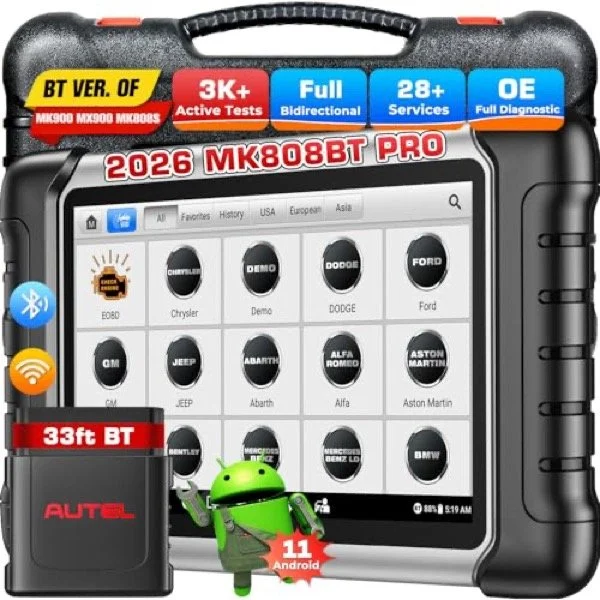
4. Autel MK808BT PRO V2: Best Wireless Bi-Directional Scanner for Hyundai Elantra
- Wireless VCI with 33-foot Bluetooth range lets you monitor live data while driving or testing with the wheels off
- IVT adaptation reset with step-by-step guided procedure for CN7 Elantra non-DCT trims
- 600+ verified reviews, 4.6 stars on Amazon
Overview
The MK808BT PRO V2 sits at the intersection of wireless convenience and genuinely useful bi-directional capability for the Elantra, without requiring a professional-tier investment. The wireless VCI attaches to the OBD2 port and pairs with the handheld display over Bluetooth, giving a 33-foot working range that matters when you need to observe live data during a road test or check ABS response with the wheels elevated.
At roughly $260, it delivers active test capability and full system access that the MX808S provides in a wired form factor, with the added benefit of wireless operation and a slightly wider feature set that includes guided IVT adaptation procedures.
The key Elantra-specific capability of the MK808BT PRO V2 is its IVT adaptation reset for the CN7 generation. When IVT fluid is serviced or the transmission software is updated, the adaptation tables require clearing so the TCU can relearn shift pressure and clutch engagement parameters against the new fluid viscosity or revised software map.
The MK808BT PRO V2 runs this procedure with a guided walkthrough, compared to tools that require manual service function navigation through nested menus. CVVT solenoid active testing on Nu GDi and Theta II engines is available, and the actuator response feedback in the live data stream confirms solenoid mechanical health without component removal.
Live data on the MK808BT PRO V2 covers all Hyundai-enhanced PIDs including CVVT timing angle on intake and exhaust camshafts, IVT TCU fluid temperature, gear ratio tracking, and clutch pressure adaptation values. For ABS diagnosis, the individual wheel speed sensor channels in live data help isolate intermittent sensor faults on Elantra models with Mando ABS units.
The TPMS module reads current sensor IDs and battery status for all four sensors, and the sensor relearn function handles both 315 MHz and 433 MHz sensor frequencies depending on the Elantra market variant.
The MK808BT PRO V2 does not support ECU coding or module programming, so it cannot perform BCM adaptations or key fob coding after module replacement. CAN FD access on 2023+ CN7 facelift variants with gateway authentication firmware may return partial module availability, the same limitation the MX808S carries. The wireless VCI introduces a charging dependency not present in wired tools, and the Bluetooth pairing step adds initial setup time.
For owners who specifically need ECU programming or complete 2023+ gateway access, the PRO3 at slot 3 handles both.
Diagnostic Features and Capabilities
The MK808BT PRO V2 delivers full-system bidirectional diagnostics on all Hyundai Elantra modules: engine ECM, IVT and DCT TCU, ABS HCU, SRS airbag controller, TPMS sensor module, BCM, HVAC, and steering angle sensor. The wireless VCI pairs over Bluetooth at up to 33 feet from the vehicle, enabling road test live data monitoring and elevated-wheel ABS testing without a cable tethering the scan tool.
Active tests include CVVT solenoid engagement independently on intake and exhaust cam banks with live cam angle feedback, ABS pump motor and solenoid valve activation per circuit, fuel injector balance per cylinder with duty cycle display, throttle body cleaning activation, and idle air control valve positioning.
Live data covers CVVT cam target versus actual angle per bank, CVVT solenoid duty cycle per camshaft, knock retard angle BTDC, STFT and LTFT per bank, MAF airflow, injector pulse width, IVT TCU fluid temperature, IVT gear ratio, IVT clutch pressure adaptation values, and individual wheel speed per ABS channel.
Service functions include IVT adaptation reset with a guided step procedure for CN7 G4NL non-DCT trims, TPMS sensor ID registration for 315 MHz and 433 MHz sensor variants, oil reset, EPB, SAS calibration, battery sensor registration for CN7 start-stop systems, throttle body adaptation, and 20+ additional Hyundai-specific reset procedures.
Vehicle Compatibility
The MK808BT PRO V2 supports all Hyundai Elantra model years from 2011 onward with full enhanced protocol access across three generations. The MD (2011-2016) with G4NB 1.8L Nu MPI, G4NA 2.0L Nu GDi GT trim, and Theta II GDi Sport trim is covered for CVVT and KSDS fault code access with bidirectional solenoid testing.
The AD (2017-2020) with base G4NA 2.0L, G4LD 1.4T Kappa ECO trim, and G4FJ 1.6T Gamma GDi Sport trim is supported including dual-stage CVVT solenoid testing on both cam banks. The CN7 (2021+) with G4NL 2.0L Smartstream MPI and G4FJ 1.6T Smartstream GDi N-Line is covered with IVT adaptation support on non-DCT trims.
CAN FD partial access limitations apply on 2023+ CN7 facelift variants. Global coverage includes 80+ vehicle brands. Wi-Fi software updates are available.
Specifications
| Specification | Details |
|---|---|
| Connection | Wireless Bluetooth VCI (33 ft range) |
| Supported Systems | Engine, Transmission, ABS, SRS, TPMS, BCM, HVAC, Steering, Body |
| OBD2 Functions | Read/clear codes, live data, freeze frame, I/M readiness, O2 sensor test |
| Bidirectional Control | Yes, 3,000+ active tests |
| Service Functions | 25+ including IVT adaptation, CVVT reset, TPMS, oil, EPB, SAS, battery registration |
| Vehicle Compatibility | All OBD2 1996+, 80+ brands, full Hyundai enhanced 2011+ |
| Display | 7-inch touchscreen |
| Updates | Via Wi-Fi (update policy varies by purchase channel) |
| Subscription | None |
What’s Included
The box includes the MK808BT PRO V2 tablet, Bluetooth VCI adapter, OBD2 extension cable, USB charging cable, AC adapter, and a carry case.
On the Hyundai Elantra, does NOT support ECU coding, which limits its usefulness for European module replacements requiring adaptation.
DPF regeneration forces the diesel particulate filter regeneration cycle on supported diesel vehicles.
For Hyundai Elantra diagnostics, 37+ maintenance and service tasks cover the full range of common reset and calibration procedures.
Pros and Cons
| Pros | Cons |
|---|---|
| 33-foot wireless range for road test data monitoring and elevated wheel testing | No ECU coding or module programming after replacement |
| IVT adaptation reset with guided procedure for CN7 non-DCT Elantra trims | |
| CVVT solenoid active test with real-time actuator response feedback | |
| TPMS sensor ID programming including 315 MHz and 433 MHz sensor variants | |
| 3,000+ active tests with full Hyundai enhanced system coverage |
My Final Verdict
The Autel MK808BT PRO V2 is the right choice for Elantra owners who want bi-directional capability in a wireless form factor and need the IVT adaptation reset procedure for CN7 non-DCT trims. The 33-foot Bluetooth range is a genuine practical advantage for road testing and elevated-wheel ABS work.
At $260 it costs more than the wired MX808S, but the wireless VCI and guided IVT adaptation procedure justify the premium for owners who regularly perform those specific procedures. The only scenario where it falls short is CAN FD ECU coding on 2023+ CN7 variants, which requires the PRO3.
Readers who want the full breakdown of its bidirectional depth and IVT adaptation coverage will find it in my full Autel MK808BT PRO V2 review.
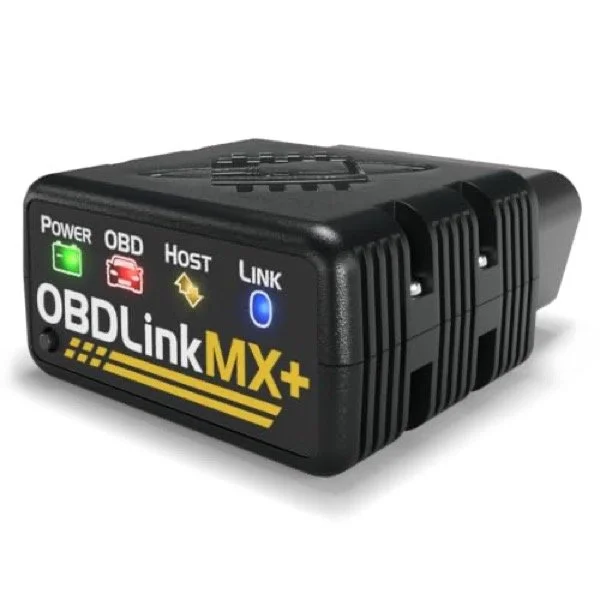
5. OBDLink MX+: Best for 2021+ CN7 Elantra
- Native CAN FD support reaches CN7 Elantra modules that route through the high-speed gateway channel
- Compatible with Car Scanner, Torque Pro, and the OBDLink app with Hyundai-specific enhanced PID profiles
- 50,000+ verified reviews, 4.6 stars on Amazon
Overview
The OBDLink MX+ earns its position here specifically because the 2021+ CN7 Elantra introduced CAN FD in its central communication gateway, and the MX+ is one of the few sub-$100 adapters that implements CAN FD natively. Generic ELM327 adapters fail silently on CN7 vehicles after certain gateway firmware updates, connecting to the standard CAN bus but missing module data that routes exclusively through the high-speed CAN FD channel.
The MX+ handles both simultaneously, giving complete module data access to the CN7 Elantra on iOS, Android, and Windows platforms through third-party diagnostic apps.
The OBDLink MX+ works with Car Scanner, Torque Pro, and the OBDLink app, all of which carry Hyundai-specific enhanced PID profiles for the Elantra. Car Scanner’s Hyundai profile accesses the same enhanced CVVT, ABS, SRS, and TPMS module data as a dedicated handheld scanner but presents it in a customizable dashboard with graphing and data logging capability.
For Elantra N-Line owners tracking DCT clutch adaptation health or CN7 IVT owners logging transmission behavior before a fluid service, this logging depth goes beyond what most dedicated handheld tools offer in their live data display.
Using Car Scanner’s Hyundai Elantra profile, the MX+ reads manufacturer-specific data including CVVT cam position on intake and exhaust banks, idle air control valve position, individual injector correction values, brake fluid temperature via the ABS module, and the KSDS knock sensor running counter relevant to P1326 diagnosis on Theta II engines.
The IVT transmission data group in Car Scanner’s Hyundai profile exposes fluid temperature, adaptive shift pressures, and TCU self-diagnostic status codes that standard OBD2 Mode 01 does not include. Live battery voltage monitoring via the BCM is also accessible for start-stop system health checks on CN7 variants.
The OBDLink MX+ is a read-focused tool at this price point. Active bi-directional tests, TPMS sensor ID programming, and service reset functions like IVT adaptation require a dedicated scanner with an active test library. The app-dependent workflow means data coverage is only as complete as the PID profile the selected app provides, and profile accuracy varies across Elantra model years and markets.
For an owner who also needs to run service resets or active tests, the MX+ works best as a complement to one of the handheld tools listed elsewhere in this guide.
Diagnostic Features and Capabilities
The OBDLink MX+ provides read-access to all Hyundai-enhanced modules on 2021+ CN7 Elantra vehicles via native CAN FD protocol support, reaching modules that route through the high-speed gateway channel and are invisible to standard ELM327 adapters after gateway firmware updates.
When paired with Car Scanner using the Hyundai Elantra enhanced profile, it accesses CVVT cam angle on both intake and exhaust banks, CVVT solenoid duty cycle per camshaft, KSDS knock counter accumulated value, MAF airflow in grams per second, injector pulse width in milliseconds, STFT and LTFT per bank, IVT fluid temperature, IVT gear ratio, and IVT adaptive shift pressures.
Individual wheel speed per ABS channel and BCM battery voltage for start-stop system monitoring are also accessible via the enhanced profile. Torque Pro with the Hyundai extended PID file accesses the same enhanced channels and adds user-configurable real-time dashboards with data recording for multi-session comparison.
Standard OBD2 read and clear, freeze frame, I/M readiness with monitor pass/fail status, and Mode 06 on-board test results are available with any compatible app on iOS, Android, or Windows. Data logging, graphing, and live dashboard configuration are handled entirely by the paired third-party application.
Vehicle Compatibility
The OBDLink MX+ supports all OBD2-compliant vehicles from 1996 onward with standard protocol access and adds native CAN FD support for 2021+ CN7 Elantra. This covers both the G4NL 2.0L Smartstream MPI and the G4FJ 1.6T Smartstream GDi N-Line trims with full gateway module access. The MD (2011-2016) and AD (2017-2020) Elantra generations are accessible via standard CAN protocol with enhanced PID access through Car Scanner and Torque Pro Hyundai profiles.
The 2023+ CN7 facelift variants with updated CAN FD gateway firmware are accessible without the partial module dropout that affects standard ELM327 adapters.
The adapter operates on iOS, Android, and Windows via the OBDLink app, Car Scanner, Torque Pro, and other third-party OBD2 applications. Ford MS-CAN and GM Single Wire CAN protocols are also supported for multi-brand households.
Specifications
| Specification | Details |
|---|---|
| Connection | Bluetooth 4.0 (BLE) to iOS, Android, or Windows |
| Supported Systems | All OBD2 systems plus Hyundai enhanced via third-party app profiles |
| OBD2 Functions | Read/clear codes, live data, freeze frame, I/M readiness, Mode 06 |
| Bidirectional Control | No |
| Service Functions | App dependent (no built-in service reset library) |
| Vehicle Compatibility | All OBD2 1996+, CAN FD for 2021+ CN7 Elantra, iOS/Android/Windows |
| Display | None (smartphone, tablet, or PC app) |
| Updates | Automatic firmware updates via OBDLink app |
| Subscription | None (third-party apps may have separate in-app purchase options) |
What’s Included
The box includes the OBDLink MX+ Bluetooth adapter and a quick start guide. Compatible apps are downloaded separately from the App Store, Google Play, or Windows app stores.
Native MS-CAN and SW-CAN protocol support reaches Ford modules on medium- and single-wire CAN buses that generic Bluetooth adapters cannot access.
On the Hyundai Elantra, 2.1 Mbps data rate is the fastest among Bluetooth OBD2 adapters, making a measurable difference when logging multiple live data streams simultaneously.
FORScan combination used to disable Ford’s auto-start-stop, recalibrate the speedometer, and activate trailer sway control, all without a dealer scan tool.
Pros and Cons
| Pros | Cons |
|---|---|
| Native CAN FD accesses 2021+ CN7 Elantra gateway modules that block standard ELM327 adapters | No active tests, service resets, or TPMS sensor programming |
| Works with Car Scanner, Torque Pro, and OBDLink app for custom Hyundai PID dashboards | |
| Deep IVT and TCU live data logging capability for CN7 Elantra transmission monitoring | |
| P1326 KSDS counter and knock sensor data accessible via Hyundai enhanced profile | |
| iOS, Android, and Windows compatibility with 50,000+ verified Amazon reviews |
My Final Verdict
The OBDLink MX+ is the right choice for 2021+ CN7 Elantra owners who want deep live data logging access across all modules, including the ones that standard ELM327 adapters cannot reach due to CAN FD gateway architecture. It is also the right companion tool for any Elantra owner who already has a dedicated scanner and wants app-based logging and custom PID dashboards for monitoring.
As a standalone diagnostic tool it is limited by its read-only nature, so owners who need TPMS sensor programming, IVT adaptation resets, or CVVT active tests should pair it with the MX808S or use the MK808BT PRO V2 instead.
Readers who want the full breakdown of its CAN FD compatibility and Elantra app ecosystem will find it in my OBDLink MX+ full review.
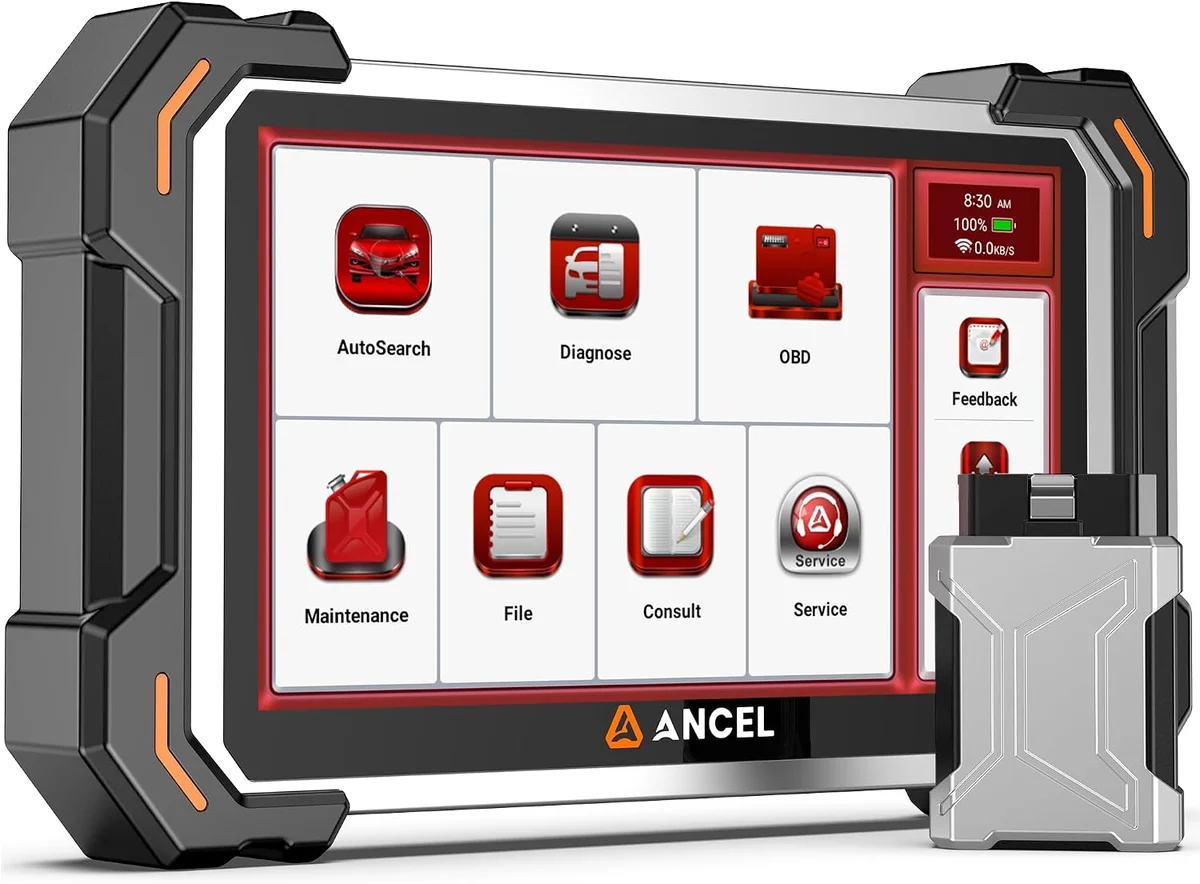
6. ANCEL DS500BT: Best Hyundai Specialist Scanner for Hyundai Elantra
- Hyundai-optimized enhanced protocol access with full-system bidirectional capability including CVVT and transmission modules
- Wireless Bluetooth connectivity with dedicated ANCEL app for data logging and session history
- 300+ verified reviews, 4.4 stars on Amazon
Overview
The ANCEL DS500BT is a full-system bidirectional scanner that ANCEL developed with a clear emphasis on Asian make coverage, positioning Hyundai and Kia enhanced protocol depth at the core of its feature set. It connects wirelessly over Bluetooth to the ANCEL app on iOS or Android and stores diagnostic session history so you can compare live data across multiple visits without re-running a full scan.
At its price point it competes directly with the MX808S, and the Bluetooth-first workflow distinguishes it for owners who prefer a phone-based interface over a dedicated handheld display.
On the Hyundai Elantra, the DS500BT reaches the CVVT valve timing system with live data monitoring for both intake and exhaust cam positions on Nu GDi and Theta II engines. The transmission module access covers the IVT on CN7 non-DCT trims with adaptation parameter viewing, though the guided adaptation reset procedure depth varies by firmware version.
ABS and SRS full-system access with bidirectional actuator tests includes wheel speed sensor channel isolation and ABS pump motor activation, which matters for confirming whether an ABS fault is sensor-related or hydraulic module-related on Elantra models with Mando ABS.
The ANCEL DS500BT reads all Hyundai manufacturer-specific PIDs including CVVT cam timing deviation, fuel trim long-term and short-term values per bank, throttle body position, idle air control valve duty cycle, and individual injector correction values.
The session history feature in the ANCEL app stores freeze frame and live data captures with timestamps, which is genuinely useful for intermittent fault diagnosis on Theta II engines where P1326 does not appear consistently on every cold start. Battery registration for start-stop systems on CN7 Elantra models is accessible via the service function menu without requiring a separate add-on module.
The DS500BT does not support ECU coding or topology mapping, and its IVT adaptation reset procedure is shallower than what the MX808S provides on CN7 Elantra transmissions. CAN FD access on 2023+ CN7 facelift variants is not confirmed on the current firmware, so owners of 2023+ CN7 Elantra models should verify compatibility before purchase.
Because it relies entirely on the smartphone app for display and control, it requires a charged phone on hand at all times and does not function as a standalone handheld. For owners who prefer a self-contained device, the MX808S at slot 1 operates without a phone.
Diagnostic Features and Capabilities
The ANCEL DS500BT provides full-system bidirectional diagnostics via Bluetooth on all Hyundai Elantra modules: engine ECM, IVT and DCT TCU, ABS HCU, SRS airbag controller, TPMS sensor module, BCM, HVAC blend motor, and steering angle sensor.
Active tests include CVVT solenoid engagement with real-time cam angle response visible in the live data stream, ABS pump motor activation, fuel injector balance per cylinder with individual duty cycle feedback, throttle body cleaning activation, and idle air control valve positioning.
Live data covers CVVT cam target versus actual angle per bank, CVVT solenoid duty cycle percentage, STFT and LTFT per bank, throttle body position, idle air control valve duty cycle, individual injector correction values per cylinder, and IVT TCU fluid temperature and gear ratio on CN7 G4NL non-DCT trims. ABS live data includes individual wheel speed per channel for Mando ABS sensor fault isolation across all three Elantra generations.
Service functions include oil reset, EPB engagement and release, SAS calibration, TPMS sensor relearn trigger, battery registration for CN7 start-stop systems, IVT parameter viewing for CN7 G4NL trims, and brake fluid moisture testing. The ANCEL app stores session history with timestamps and freeze frame captures for multi-visit fault comparison on intermittent Theta II KSDS and AD CVVT issues.
Vehicle Compatibility
The ANCEL DS500BT supports all Hyundai Elantra model years from 2011 onward with full enhanced protocol access across three generations. The MD (2011-2016) with G4NB 1.8L Nu MPI, G4NA 2.0L Nu GDi GT trim, and Theta II GDi Sport trim is covered with CVVT solenoid active test capability and ABS enhanced fault access.
The AD (2017-2020) with base G4NA 2.0L, G4LD 1.4T Kappa ECO trim, and G4FJ 1.6T Gamma GDi Sport trim is supported with bidirectional CVVT solenoid testing on both cam banks. The CN7 (2021+) with G4NL 2.0L Smartstream MPI and G4FJ 1.6T Smartstream GDi N-Line is covered for IVT parameter access, ABS diagnostics, and battery registration.
Compatibility with 2023+ CN7 facelift CAN FD gateway variants should be verified against current ANCEL firmware release notes before purchase. Global coverage includes 70+ vehicle brands. iOS and Android only; no Windows support.
Specifications
| Specification | Details |
|---|---|
| Connection | Bluetooth to iOS or Android app (ANCEL DS500BT app) |
| Supported Systems | Engine, Transmission, ABS, SRS, TPMS, BCM, HVAC, Steering, Body |
| OBD2 Functions | Read/clear codes, live data, freeze frame, I/M readiness |
| Bidirectional Control | Yes |
| Service Functions | Oil reset, EPB, SAS, TPMS relearn, battery registration, IVT parameters |
| Vehicle Compatibility | All OBD2 1996+, 70+ brands, Hyundai enhanced 2011+, iOS/Android only |
| Display | None (smartphone app) |
| Updates | Via app store |
| Subscription | None |
What’s Included
The box includes the ANCEL DS500BT Bluetooth adapter, OBD2 extension cable, and a quick start guide. The ANCEL DS500BT app is downloaded from the App Store or Google Play.
CAN-FD protocol support accesses newer vehicle architectures including 2019 and newer GM and European platforms.
On the Hyundai Elantra, FCA SGW AutoAuth accesses SGW-protected systems on 2018 and newer Chrysler, Dodge, Jeep, and Ram vehicles without a separate gateway bypass.
The scanner cleared a City Safety fault code on a Volvo that the owner’s repair shop could not clear.
Pros and Cons
| Pros | Cons |
|---|---|
| Full-system bidirectional with strong Hyundai enhanced protocol depth | No standalone display; requires a charged smartphone at all times |
| CVVT solenoid and ABS pump motor active tests for Elantra fault isolation | |
| Session history with timestamped captures for intermittent P1326 tracking | |
| Battery registration for CN7 start-stop system service | |
| Bluetooth wireless convenience for shop or driveway use |
My Final Verdict
The ANCEL DS500BT is a capable Hyundai-focused bidirectional scanner that makes sense for Elantra owners who prefer managing everything from a smartphone and want session history for tracking intermittent faults. The CVVT and ABS active tests cover the most common Elantra diagnostic needs, and the Bluetooth workflow keeps the OBD2 port free of cables during drive testing.
It sits below the MX808S in IVT adaptation depth and CAN FD confirmation for 2023+ CN7 models, but at its price point it covers the diagnostic needs of the majority of Elantra owners who are not dealing with those specific edge cases.
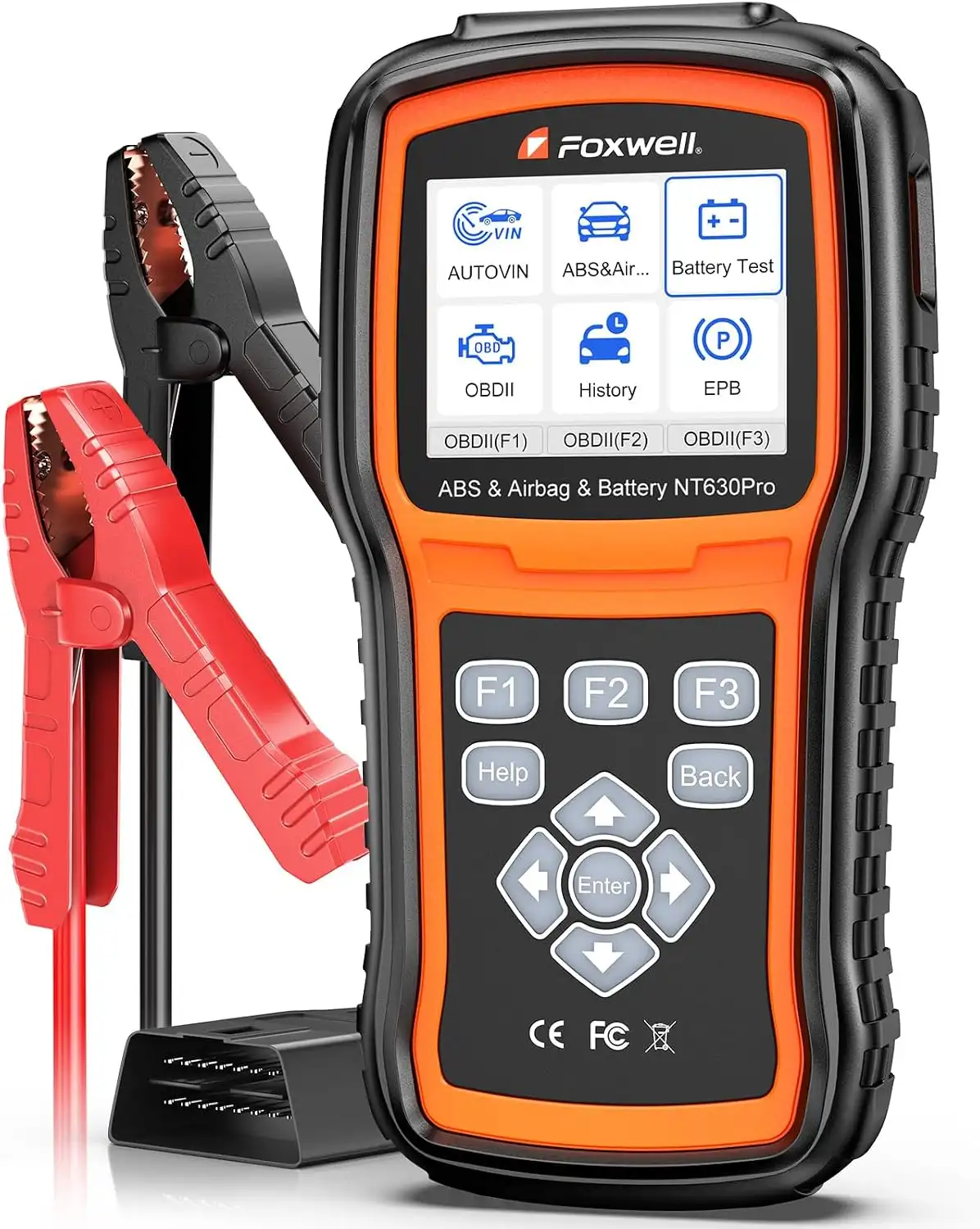
7. Foxwell NT630 Pro: Best TPMS Scanner for Hyundai Elantra
- Dedicated TPMS module with sensor ID programming covers the 2022+ CN7 Elantra no-button TPMS system
- ABS and SRS full-system access with wheel speed sensor live data per channel
- 4,000+ verified reviews, 4.4 stars on Amazon
Overview
The Foxwell NT630 Pro occupies a specific and useful position in the Elantra scanner lineup because it combines ABS and SRS full-system access with a dedicated TPMS module that handles sensor ID programming, the function that 2022+ CN7 Elantra owners require after a wheel rotation, sensor replacement, or tire swap. Most scanners at this price range either skip the TPMS active test module entirely or limit it to a basic relearn trigger.
The NT630 Pro does the full sensor ID registration procedure required when the CN7 TPMS system has no physical button reset, making it the right focused tool for owners whose primary diagnostic needs are suspension safety systems and TPMS management.
For ABS diagnosis on all three Elantra generations, the NT630 Pro reads and clears enhanced ABS fault codes across all four wheel speed sensor channels and the ABS hydraulic control module. The live data stream per wheel channel helps isolate intermittent wheel speed sensor faults on Elantra models with Mando ABS units, which produce inconsistent DTCs that appear and clear across drive cycles.
The SRS module access reads airbag deployment history and seat belt pretensioner fault codes that standard OBD2 mode cannot reach, and it clears crash data after a minor impact that triggered the SRS warning light without deploying airbags.
The TPMS sensor programming on the NT630 Pro covers Hyundai Elantra TPMS sensor ID registration for both 315 MHz sensors used in the US market and 433 MHz sensors in other markets. The sensor ID copy function copies existing IDs from a set of OEM sensors to aftermarket replacements, and the sensor relearn procedure runs the full CN7 TPMS initialization sequence that normally requires a dealer scan tool on the no-button system.
Battery health and charging system testing via the 12V battery port gives CN7 Elantra start-stop system owners a quick check tool alongside the safety system diagnostics.
The NT630 Pro does not cover engine, transmission, HVAC, or body control modules beyond ABS, SRS, and TPMS. It is not a full-system scanner and cannot read the P1326 KSDS fault on Theta II engines, CVVT codes on Nu GDi engines, or IVT transmission faults on CN7 Elantra models. For Elantra owners who need both comprehensive engine and transmission diagnostics alongside TPMS sensor programming, the MX808S at slot 1 covers all three areas in one tool.
The NT630 Pro is the right choice specifically when TPMS sensor registration and ABS or SRS diagnosis are the primary requirements.
Diagnostic Features and Capabilities
The Foxwell NT630 Pro provides full enhanced diagnostics for ABS, SRS, and TPMS modules on all Hyundai Elantra model years across MD, AD, and CN7 generations.
TPMS functions cover sensor ID registration for 315 MHz US market and 433 MHz international market sensor variants, TPMS sensor ID copy from OEM to aftermarket replacement sensors, the full CN7 no-button TPMS relearn initialization sequence, TPMS fault code read and clear with manufacturer-specific descriptions, and individual sensor battery status and signal strength monitoring.
ABS live data displays all four wheel speed sensor channel values individually in real time, allowing Mando ABS sensor fault isolation by comparing channel deviations at speed. The ABS pump motor activation test confirms hydraulic circuit integrity on all three Elantra generations.
SRS diagnostics cover airbag deployment history codes, crash data read and clear after a minor impact that triggered the SRS warning light without full airbag deployment, seat belt pretensioner fault codes, and airbag clockspring integrity codes. Battery health testing via the dedicated 12V test port measures cold cranking amps, state of charge, state of health, and charging system output voltage.
This is relevant to CN7 start-stop system maintenance before cold season use. Standard OBD2 engine code read and clear is available for all 1996+ vehicles but does not include Hyundai manufacturer-enhanced engine PIDs.
Vehicle Compatibility
The NT630 Pro supports all Hyundai Elantra model years from 2011 onward for ABS, SRS, and TPMS enhanced module access across the MD (2011-2016), AD (2017-2020), and CN7 (2021+) generations. The CN7 2022+ no-button TPMS system requires sensor ID programming through a scan tool rather than a physical button reset, and the NT630 Pro performs the complete CN7 TPMS initialization sequence for both G4NL Smartstream MPI and G4FJ Smartstream GDi N-Line trims.
TPMS sensor programming covers 315 MHz US market frequencies and 433 MHz international market frequencies for all Elantra variants. Standard OBD2 engine diagnostics cover all 1996+ vehicles globally.
No enhanced engine ECM, transmission TCU, or body control module access is available beyond ABS, SRS, and TPMS.
Specifications
| Specification | Details |
|---|---|
| Connection | Wired OBD2 cable |
| Supported Systems | ABS, SRS, TPMS (enhanced), plus standard OBD2 engine read/clear |
| OBD2 Functions | Read/clear codes, live data, freeze frame, I/M readiness |
| Bidirectional Control | Limited (ABS pump motor test on select models) |
| Service Functions | TPMS sensor ID registration, sensor relearn, ID copy, oil reset (select models) |
| Vehicle Compatibility | All OBD2 1996+, Hyundai enhanced ABS/SRS/TPMS 2011+ |
| Display | 3.5-inch color screen |
| Updates | Lifetime free via USB |
| Subscription | None |
What’s Included
The box includes the NT630 Pro handheld unit, OBD2 diagnostic cable, USB update cable, and a battery test lead set.
On the Hyundai Elantra, ABS bleed function cycles the ABS pump in controlled sequence during a fluid flush on supported vehicles.
Plug-in setup connects immediately and starts pulling fault codes within seconds of ignition-on.
For Hyundai Elantra diagnostics, 48-month warranty is significantly longer than the 1-year coverage most competing scan tools offer.
Pros and Cons
| Pros | Cons |
|---|---|
| TPMS sensor ID programming covers 2022+ CN7 no-button TPMS system | No engine, transmission, or body module enhanced access |
| ABS wheel speed sensor live data per channel for Mando ABS diagnosis | |
| SRS crash data read and airbag fault clearance | |
| Supports both 315 MHz and 433 MHz TPMS sensor frequencies | |
| Lifetime free updates with no annual subscription |
My Final Verdict
The Foxwell NT630 Pro is the right choice for Elantra owners whose core need is TPMS sensor programming on the 2022+ CN7 no-button system, combined with ABS and SRS fault diagnosis. It handles those three systems with proper enhanced depth and adds battery health testing as a bonus. The limitation is clear: it does not reach the engine, transmission, or CVVT systems at all.
If you need a single tool that covers TPMS alongside full-system engine and transmission diagnostics, the MX808S handles all of it.
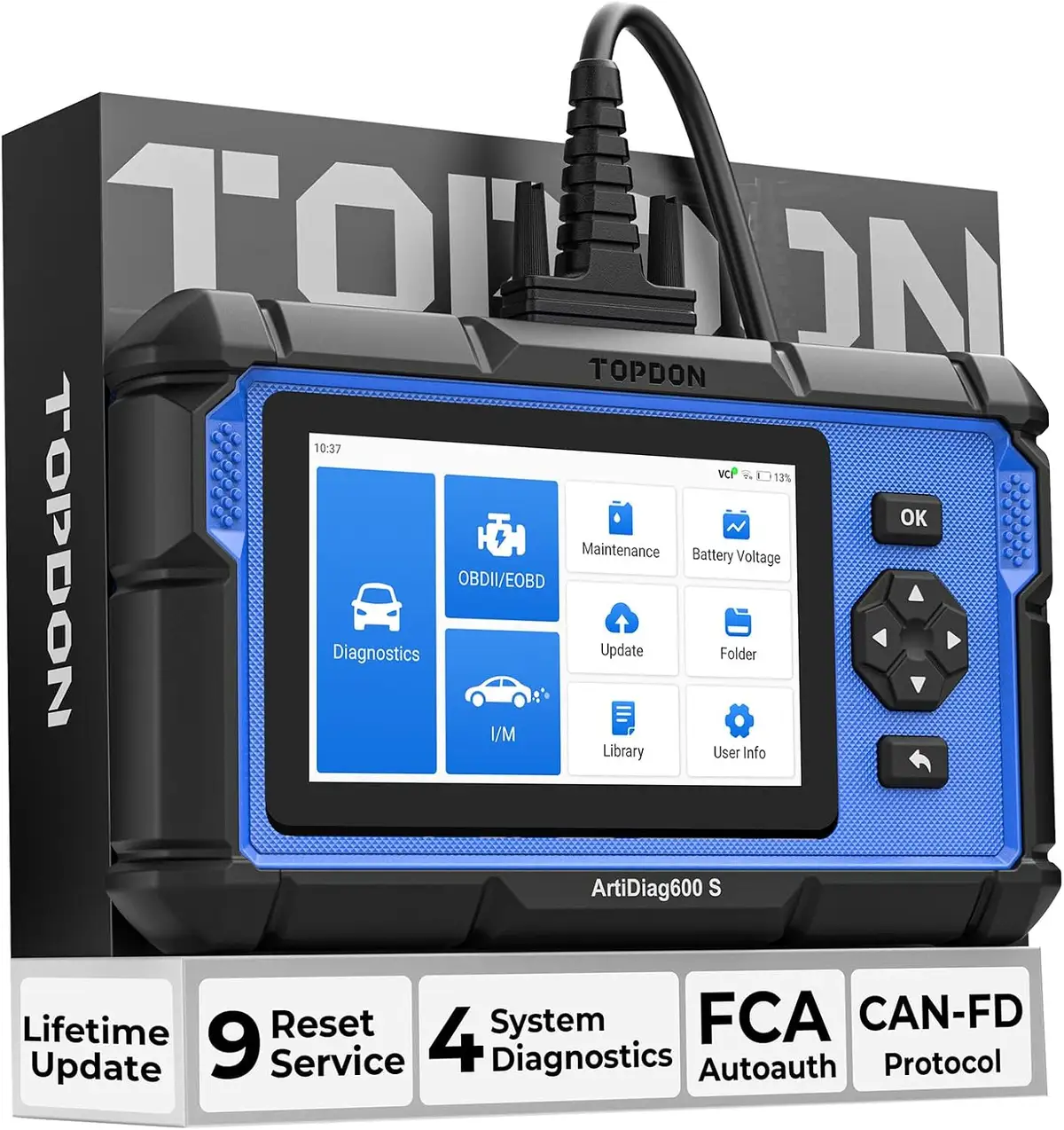
8. TOPDON AD600S: Best Mid-Range Scanner for Hyundai Elantra
- 6-system coverage (engine, transmission, ABS, SRS, TPMS, battery) at a mid-range price point
- Service functions include oil reset, EPB, SAS calibration, TPMS relearn, and battery registration for CN7 start-stop systems
- 700+ verified reviews, 4.3 stars on Amazon
Overview
The TOPDON AD600S is a compact handheld scanner that covers six core diagnostic systems for the Elantra at roughly $170, filling the space between a basic code reader and a full bidirectional tool.
It reaches the engine, transmission, ABS, SRS, TPMS, and battery management modules with enhanced manufacturer-specific code reading and live data, and includes a set of service reset functions relevant to Elantra maintenance including battery registration, which CN7 start-stop system owners need after battery replacement.
For owners who want more than just OBD2 engine codes but do not need the active test library of the MX808S or MK808BT PRO V2, the AD600S covers the diagnostic reading and reset needs without the extra cost.
On the Hyundai Elantra, the AD600S reads enhanced fault codes across all six covered systems with manufacturer-specific DTC descriptions. The transmission module access covers fault code reading and live data for both the IVT on CN7 non-DCT trims and the DCT on N-Line trims, with TCU operating parameters available in the live data stream.
ABS module access reads wheel speed sensor individual channel data for Mando ABS fault isolation, and SRS module access covers the airbag crash data read and clear functions needed after a minor impact that triggered the warning light. The TPMS module reads sensor IDs and battery status with a basic relearn trigger function.
The AD600S live data stream includes Hyundai-enhanced engine PIDs covering CVVT cam timing deviation, fuel trim values per bank, throttle position, intake manifold pressure, and coolant temperature alongside the standard Mode 01 parameters. The brake fluid service function monitors moisture content via brake pedal cycling and prompts when a replacement interval is indicated, relevant to the hydraulic ABS systems on all three Elantra generations.
Battery system diagnostics via the AD600S cover state of charge, state of health, and charging voltage for the 12V battery, which matters for CN7 start-stop system health monitoring before the first cold season.
The AD600S does not support active bidirectional tests, so CVVT solenoid actuation, ABS pump motor activation, and injector balance tests are not available. The TPMS sensor ID programming function is limited to a relearn trigger and does not cover the full sensor ID registration procedure required on 2022+ CN7 no-button TPMS systems.
For owners who need those capabilities, the MX808S at slot 1 adds the full active test library at a cost increase of roughly $30 to $40 over the AD600S. The AD600S is the right fit for owners who need multi-system fault reading and service resets without the additional cost of active test capability.
Diagnostic Features and Capabilities
The TOPDON AD600S provides enhanced read and clear diagnostics across six Hyundai Elantra modules: engine ECM, IVT and DCT TCU, ABS HCU, SRS airbag controller, TPMS sensor module, and battery management system. Live engine data covers CVVT cam timing deviation angle, STFT and LTFT per bank, throttle body position, intake manifold pressure, coolant temperature, and MAF airflow in grams per second.
Transmission live data covers IVT input and output shaft speed, fluid temperature, gear selection status, and TCU operating fault codes for both the G4NL IVT on CN7 non-DCT trims and the G4FJ DCT on CN7 N-Line trims. ABS live data displays individual wheel speed per channel and ABS module fault codes with manufacturer-specific descriptions for Mando ABS units across all three Elantra generations.
Battery diagnostics cover state of charge, state of health percentage, and charging system voltage relevant to CN7 start-stop system maintenance planning. Service functions include oil reset, EPB engagement and release, SAS calibration, TPMS basic relearn trigger, battery sensor registration for CN7 start-stop systems, brake fluid moisture percentage test, and throttle body idle adaptation. Standard OBD2 modes 1 through 6 are supported.
USB cable updates are available.
Vehicle Compatibility
The AD600S supports all Hyundai Elantra model years from 2011 onward with enhanced read and clear access on its six covered modules across three generations. The MD (2011-2016) with G4NB 1.8L Nu MPI, G4NA 2.0L Nu GDi GT trim, and Theta II GDi Sport trim is covered for engine and ABS fault code reading with manufacturer-specific DTC descriptions.
The AD (2017-2020) with base G4NA 2.0L, G4LD 1.4T Kappa ECO trim, and G4FJ 1.6T Gamma GDi Sport trim is supported for CVVT fault code reading and IVT live data access. The CN7 (2021+) with G4NL 2.0L Smartstream MPI and G4FJ 1.6T Smartstream GDi N-Line is covered for IVT and DCT fault code reading, battery registration, and TPMS basic relearn.
Standard OBD2 coverage extends to all 1996+ vehicles. No active bidirectional tests are available on any covered module.
Specifications
| Specification | Details |
|---|---|
| Connection | Wired OBD2 cable |
| Supported Systems | Engine, Transmission, ABS, SRS, TPMS, Battery (6 systems) |
| OBD2 Functions | Read/clear codes, live data, freeze frame, I/M readiness |
| Bidirectional Control | No |
| Service Functions | Oil reset, EPB, SAS, TPMS basic relearn, battery registration, brake fluid test |
| Vehicle Compatibility | All OBD2 1996+, Hyundai enhanced 2011+, 40+ brands |
| Display | 4.3-inch color touchscreen |
| Updates | Via USB cable |
| Subscription | None |
What’s Included
The box includes the AD600S handheld unit, OBD2 diagnostic cable, USB update cable, and a quick start guide.
Flagged P0420 catalytic converter fault on a Honda Civic, reading VIN and loading modules quickly without setup issues.
On the Hyundai Elantra, TPMS reset function hit-or-miss on Ford vehicles, successfully resetting on some F-150 trims but failing on others.
Will NOT program new TPMS sensors; the TPMS function reads and clears codes only, not sensor registration.
Pros and Cons
| Pros | Cons |
|---|---|
| 6-system enhanced coverage at a mid-range price point | No active bidirectional tests; no TPMS sensor ID registration for 2022+ CN7 |
| Battery registration for CN7 start-stop system after battery replacement | |
| Brake fluid moisture test for hydraulic ABS maintenance planning | |
| IVT and DCT live data including TCU operating parameters on CN7 | |
| Compact standalone handheld with no phone or app required |
My Final Verdict
The TOPDON AD600S is a solid mid-range choice for Elantra owners who want enhanced multi-system fault reading and core service resets without paying for active test capability they will rarely use. It covers the six systems that produce the most common Elantra warning lights and adds the battery registration function that CN7 start-stop owners need.
The gap versus the MX808S is meaningful but the price difference is small, and anyone who may eventually need CVVT active testing or TPMS sensor programming should step up to the MX808S to avoid buying a second tool later.
9. LAUNCH CRP909X: Best Entry-Level Full-System Scanner for Hyundai Elantra
- Full-system enhanced read and clear across all Elantra modules at an entry-level price
- Online one-click update with two years of free software included from purchase date
- 1,000+ verified reviews, 4.5 stars on Amazon
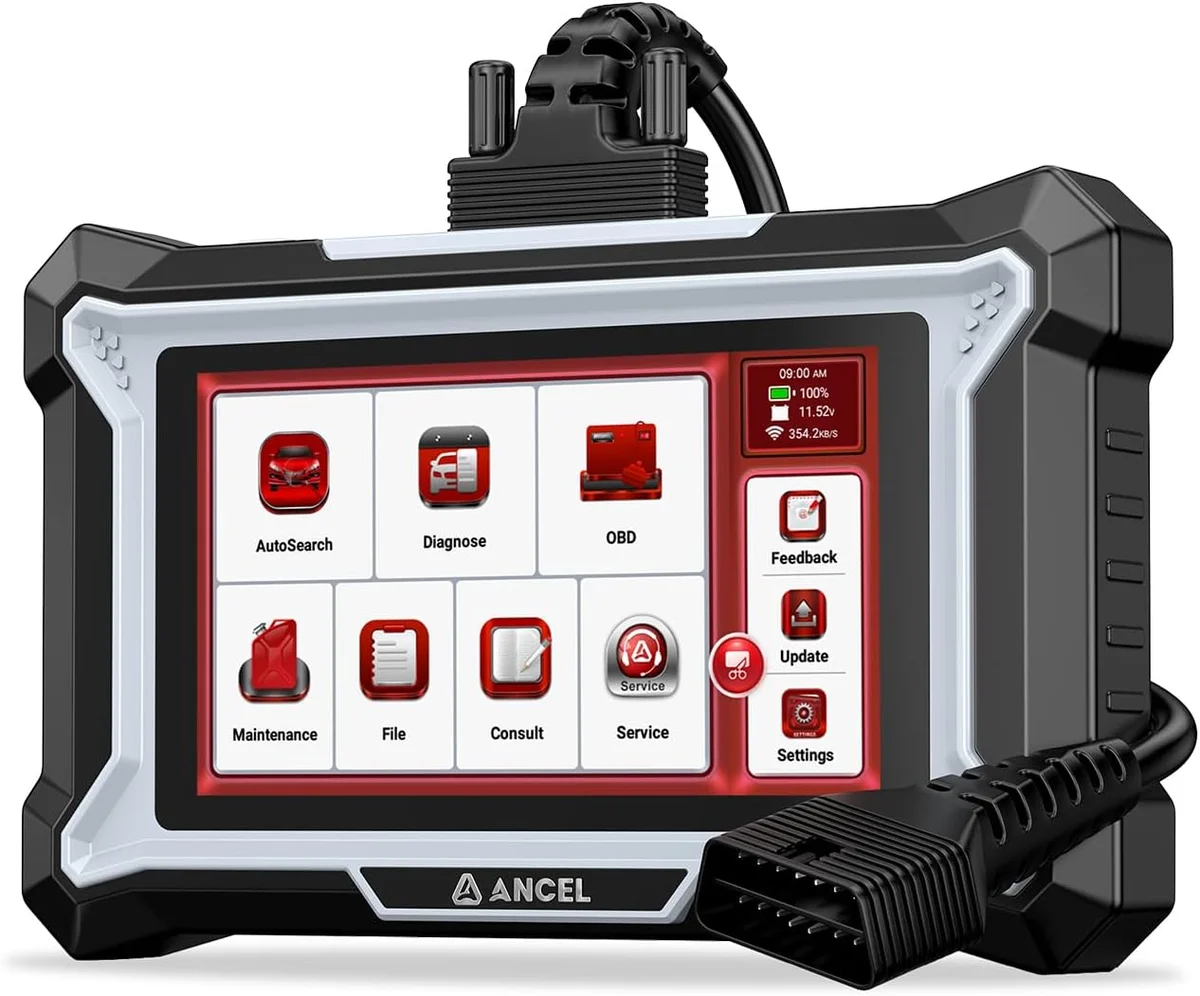
Overview
The LAUNCH CRP909X delivers full-system enhanced read and clear on the Hyundai Elantra at roughly $130, the lowest price on this list for a tool that reaches every module rather than stopping at the standard OBD2 engine systems. It covers all Elantra modules including the CVVT system, the IVT and DCT transmission modules, ABS, SRS, TPMS, BCM, HVAC, and steering, with manufacturer-specific DTC descriptions and live data for each.
The two years of free online updates keep coverage current for new Elantra model years without a subscription fee, and the Android-based interface is faster to navigate than older button-based handheld tools at this price range.
On the Hyundai Elantra, the CRP909X reads the P1326 KSDS fault on Theta II engines with the enhanced DTC description explaining its connection to the knock sensor diagnostic system and CVVT correlation data. The Nu GDi CVVT codes P0011 and P0013 appear in the enhanced engine section with manufacturer-specific code explanations that go beyond the generic SAE definition.
For CN7 owners, the IVT transmission module reads fault codes and live data covering gear ratio, fluid temperature, and TCU operating status, though active adaptation resets are not in the CRP909X feature set. The service function library covers oil reset, EPB, SAS calibration, and TPMS basic relearn for standard CN7 variants.
The CRP909X live data stream for the Elantra covers Hyundai-enhanced engine parameters including CVVT cam timing angle, fuel trim values, throttle position, and the intake air temperature from the mass airflow sensor. The transmission live data group shows TCU input and output shaft speed, fluid temperature, and gear selection status for both IVT and DCT-equipped CN7 Elantra variants.
The auto-scan function runs a complete scan across all available modules simultaneously and generates a full report in under two minutes, which matters when diagnosing a vehicle with multiple simultaneous warning lights across engine, ABS, and SRS systems.
The CRP909X does not support bidirectional active tests, so CVVT solenoid actuation, ABS pump motor testing, and injector balance tests are not available. TPMS sensor ID programming for the 2022+ CN7 no-button TPMS system is not supported. Software updates are free for the first two years and then require a renewal fee, a relevant long-term cost for owners who keep vehicles beyond that window.
For owners who need active tests alongside full-system read access, the MX808S at slot 1 adds that capability at a modest price increase.
Diagnostic Features and Capabilities
The LAUNCH CRP909X provides full-system read and clear diagnostics across all Hyundai Elantra modules: engine ECM, IVT and DCT TCU, ABS HCU, SRS airbag controller, TPMS sensor module, BCM, HVAC, and steering angle sensor, all with manufacturer-specific DTC descriptions rather than generic SAE definitions.
Live engine data covers CVVT cam timing angle on intake and exhaust banks, STFT and LTFT per bank, throttle position, intake manifold pressure, and MAF airflow in grams per second. Transmission live data covers IVT gear ratio, fluid temperature, and TCU self-diagnostic status codes for both the G4NL IVT on CN7 non-DCT trims and the G4FJ DCT on CN7 N-Line trims.
The auto-scan function runs a full diagnostic pass across all available modules simultaneously in under two minutes, covering engine, transmission, ABS, SRS, TPMS, BCM, and HVAC in one operation.
Service functions include oil reset, EPB engagement and release, SAS calibration, TPMS basic relearn trigger, throttle body idle adaptation, and battery sensor registration for CN7 start-stop systems. Standard OBD2 modes 1 through 6 are fully supported. Two years of free online one-click updates are included; annual renewal applies after year two.
Vehicle Compatibility
The CRP909X supports all Hyundai Elantra model years from 2011 onward with full enhanced read and clear access across three generations. The MD (2011-2016) with G4NB 1.8L Nu MPI, G4NA 2.0L Nu GDi GT trim, and Theta II GDi Sport trim is covered for P1326 KSDS code reading with enhanced manufacturer DTC descriptions.
The AD (2017-2020) with base G4NA 2.0L, G4LD 1.4T Kappa ECO trim, and G4FJ 1.6T Gamma GDi Sport trim is supported for CVVT fault code reading and IVT live data access across all trim variants. The CN7 (2021+) with G4NL 2.0L Smartstream MPI, the G4FJ 1.6T Smartstream GDi N-Line with 7-speed wet DCT, and the HEV 1.6L G4FJ GDi variant is covered for full module read access including enhanced DCT and IVT fault codes.
Global coverage spans 110+ vehicle brands. Two years of free online updates are included; annual renewal applies after year two.
Specifications
| Specification | Details |
|---|---|
| Connection | Wired OBD2 cable |
| Supported Systems | Full system: Engine, Transmission, ABS, SRS, TPMS, BCM, HVAC, Steering, Body |
| OBD2 Functions | Read/clear codes, live data, freeze frame, I/M readiness, Mode 06 |
| Bidirectional Control | No |
| Service Functions | Oil reset, EPB, SAS, TPMS basic relearn, throttle adaptation |
| Vehicle Compatibility | All OBD2 1996+, 110+ brands, full Hyundai enhanced 2011+ |
| Display | 7-inch Android touchscreen |
| Updates | 2 years free online; annual renewal thereafter |
| Subscription | None for first 2 years; annual fee after |
What’s Included
The box includes the CRP909X handheld unit, OBD2 diagnostic cable, USB-C charging cable, and an AC adapter.
28+ reset service functions covering oil, ABS bleed, injector coding, IMMO, and battery matching across 200+ makes.
For Hyundai Elantra diagnostics, four-in-one graphic live data display shows four parameters simultaneously on the touchscreen.
In practice on the Hyundai Elantra, live Data Stream Record and Playback let you capture a drive cycle and review sensor data after returning to the shop.
Pros and Cons
| Pros | Cons |
|---|---|
| Full-system enhanced read and clear across all Elantra modules at entry-level pricing | No active bidirectional tests; update subscription resumes after 2 years |
| Auto-scan covers all available modules in a single pass in under 2 minutes | |
| CVVT, IVT, and DCT live data with manufacturer-specific DTC descriptions | |
| Android-based interface with 7-inch touchscreen for fast menu navigation | |
| 110+ brand coverage at no additional per-brand cost |
My Final Verdict
The LAUNCH CRP909X is the right entry point for Elantra owners who need full-system module access including enhanced DTC descriptions and live data across every module, but do not need active tests. The auto-scan and 7-inch Android display make it genuinely easy to use, and the two years of free updates keep it current for new model year coverage.
The step-up to the MX808S costs roughly $70 more and adds bidirectional active tests and TPMS sensor programming. If those functions are relevant to your Elantra, the MX808S is worth the difference.
If not, the CRP909X delivers full diagnostic read access at the lowest price on this list that reaches every module.
10. Autel AutoLink AL619: Best Budget Scanner for Hyundai Elantra
- ABS and SRS enhanced system access at the lowest price on this list for manufacturer-specific module coverage
- Reads and clears fault codes across ABS and SRS modules on all 2011+ Elantra generations
- 4,000+ verified reviews, 4.3 stars on Amazon
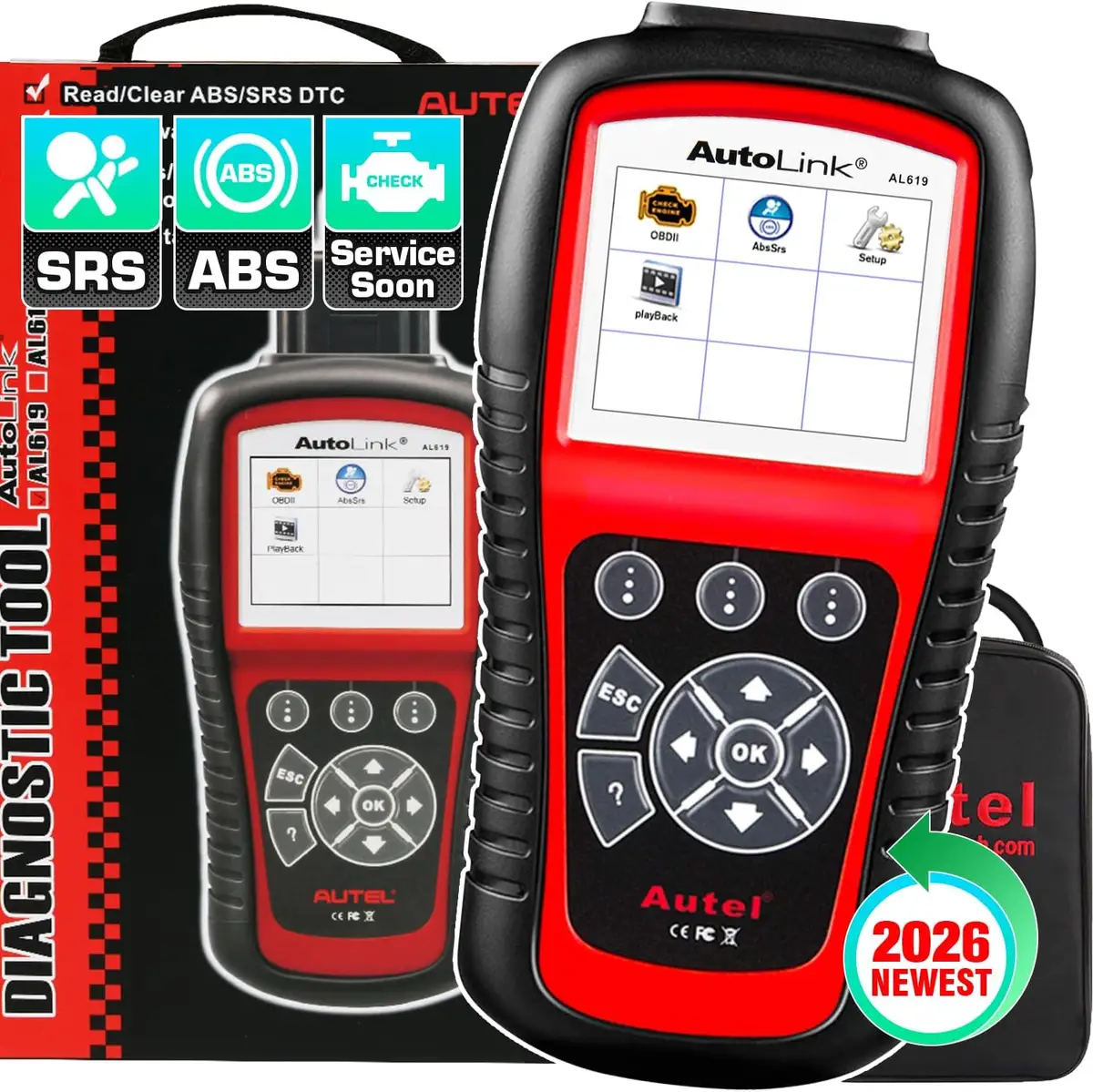
Overview
The Autel AutoLink AL619 fills a specific gap at the budget end of the Elantra scanner range: it reaches both ABS and SRS enhanced fault codes that a basic OBD2 code reader cannot access, at roughly $70. The vast majority of code readers at this price stop at standard OBD2 engine codes, meaning an ABS warning light or an SRS warning light on an Elantra requires either a more expensive tool or a dealer visit just to read the fault code.
The AL619 eliminates that gap for ABS and SRS, and adds complete standard OBD2 engine diagnostics on top, making it the practical choice for Elantra owners on a tight budget who want to read their own safety system fault codes.
For ABS diagnosis on MD, AD, and CN7 Elantra models, the AL619 reads and clears manufacturer-specific ABS fault codes with DTC descriptions that go beyond generic ISO 15765 abbreviations. Wheel speed sensor fault codes per channel, ABS module communication errors, and hydraulic pump fault codes all appear with Hyundai-specific detail.
For SRS diagnosis, crash data codes, seat belt pretensioner faults, and airbag deployment history codes are readable and clearable after addressing the underlying issue. This covers the two warning lights Elantra owners most commonly encounter that standard code readers cannot resolve.
The AL619 standard OBD2 coverage reads all five OBD2 modes including live data from the standard Mode 01 sensor set, I/M readiness monitors, freeze frame data, and Mode 06 on-board system test results. On Theta II Elantra engines, the Mode 06 misfire monitor data and oxygen sensor test results give preliminary engine health context even though the AL619 cannot reach the manufacturer-enhanced engine PIDs that the CVVT system and P1326 diagnosis require.
The freeze frame capture for standard engine fault codes preserves the operating conditions at fault set for any P-code that the engine module sends through the standard OBD2 channel.
The AL619 does not access any enhanced engine, transmission, CVVT, TPMS, BCM, or body module data. It reaches ABS and SRS only within the manufacturer-enhanced protocol range. P1326 KSDS diagnosis on Theta II engines, CVVT fault isolation on Nu GDi engines, IVT adaptation on CN7 trims, and TPMS sensor registration on 2022+ models are all outside its capability.
For Elantra owners whose sole requirement is ABS or SRS fault code access on a budget, the AL619 is the right choice.
For anything beyond those two systems, the step up to the CRP909X at slot 9 is necessary.
Diagnostic Features and Capabilities
The Autel AL619 provides enhanced read and clear diagnostics for ABS and SRS modules on all Hyundai Elantra models from 2011 onward, covering all three generations for those two systems. ABS fault code access includes wheel speed sensor fault codes per channel with Hyundai-specific DTC descriptions, ABS hydraulic control module communication faults, and ABS pump and solenoid circuit fault codes for Mando ABS units across MD, AD, and CN7 generations.
SRS fault code access covers airbag deployment history codes, seat belt pretensioner faults, crash data codes that remain stored after a minor impact without full airbag deployment, and airbag clockspring fault codes.
Standard OBD2 full diagnostics cover read and clear of all engine fault codes, live data from all Mode 01 sensor parameters, freeze frame data preserved at fault set, I/M readiness monitor pass/fail status for all eight OBD2 drive cycle monitors, Mode 06 on-board system test results, and DTC lookup with code definitions.
ABS and SRS live data streams are not available on the AL619. No service reset functions are included. Updates are delivered via USB cable.
Vehicle Compatibility
The AL619 supports all Hyundai Elantra model years from 2011 onward for enhanced ABS and SRS module access across the MD (2011-2016), AD (2017-2020), and CN7 (2021+) generations. ABS coverage applies to all Mando ABS-equipped Elantra trims across all three generations, including wheel speed sensor fault codes per channel and hydraulic module fault codes on both standard ABS and the ABS with ESC variants.
SRS coverage applies to all airbag and pretensioner configurations used across MD, AD, and CN7 Elantra trims including dual-stage front airbag systems on CN7. Standard OBD2 engine diagnostics cover all 1996+ vehicles globally. No enhanced engine, transmission, TPMS, BCM, or body module access is available beyond ABS and SRS.
Specifications
| Specification | Details |
|---|---|
| Connection | Wired OBD2 cable |
| Supported Systems | ABS, SRS (enhanced); Engine (standard OBD2 only) |
| OBD2 Functions | Read/clear codes, live data (Mode 01), freeze frame, I/M readiness, Mode 06 |
| Bidirectional Control | No |
| Service Functions | None |
| Vehicle Compatibility | All OBD2 1996+, Hyundai enhanced ABS/SRS 2011+ |
| Display | 2.8-inch color screen |
| Updates | Via USB cable |
| Subscription | None |
What’s Included
The box includes the AL619 handheld unit, OBD2 diagnostic cable, and USB update cable.
In practice on the Hyundai Elantra, updates are very difficult and can take up to one hour via USB cable.
Useful for Hyundai ABS, SRS, and OBD2 diagnostics at under $200 according to an owner review from a Hyundai forum.
On the Hyundai Elantra, in some cases reads the fault but cannot show the exact fault location or reset the warning light (observed on a Land Rover Discovery 3).
Pros and Cons
| Pros | Cons |
|---|---|
| ABS and SRS enhanced fault code access at under $70 | No enhanced engine, CVVT, transmission, TPMS, or body module access |
| Reads Hyundai-specific ABS DTC descriptions per wheel speed sensor channel | |
| SRS crash data and airbag fault code read and clear | |
| 4,000+ verified reviews with consistent 4.3-star rating | |
| No subscription fees and lifetime USB update support |
My Final Verdict
The Autel AL619 is the right tool if your Elantra has an ABS or SRS warning light and your only goal is to read the fault code without going to a dealer. It costs less than a single dealer diagnostic fee and covers the two enhanced safety system modules that basic code readers miss. If you also need to diagnose engine, CVVT, or transmission faults on the Elantra, the CRP909X at slot 9 adds full-system read access for $60 more.
The AL619 does exactly what it claims at a price that makes it the lowest-risk entry point on this list.
11. Innova 5610: Best Plug-and-Play Scanner for Hyundai Elantra
- Standalone handheld with no phone or app required; reads ABS, SRS, and battery system alongside standard OBD2
- RepairSolutions2 app integration provides repair cost estimates and parts data for common Elantra fault codes
- 4,500+ verified reviews, 4.3 stars on Amazon
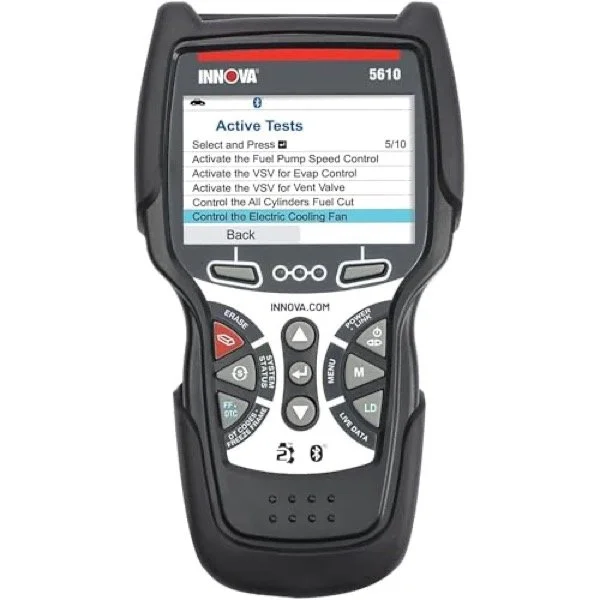
Overview
The Innova 5610 is positioned here for Elantra owners who want a plug-and-play tool that works immediately without a phone, app, Bluetooth pairing, or Wi-Fi connection.
It reads ABS, SRS, and battery system fault codes alongside standard OBD2 diagnostics from a standalone handheld display, and the built-in RepairSolutions2 integration connects via the companion app to display repair cost estimates and common parts for the specific codes found on your Elantra.
At roughly $130 it occupies the same price range as the CRP909X, but prioritizes ease of use and the Innova repair data ecosystem over the CRP909X’s broader module coverage and faster interface.
For Elantra owners using the RepairSolutions2 app alongside the 5610, common fault codes like P0420, P0300, P0171, and P0174 on Theta II and Nu GDi engines return parts lists with average prices, technician labor estimates, and a record of what other Elantra owners with the same code paid to fix the fault.
The battery health monitoring function reads charging voltage, state of charge, and alternator output, which is directly relevant to CN7 start-stop system owners who need to confirm battery health after repeated short-trip cycles that prevent full charging. The ABS fault code access confirms whether an ABS light on a Mando-equipped Elantra is a wheel speed sensor, wiring harness, or hydraulic module issue without requiring a dealer scan.
The Innova 5610 displays live data from the standard OBD2 Mode 01 sensor set including oxygen sensor readings, coolant temperature, fuel trim values, and engine load. The color-coded dashboard display shows pass/fail readiness monitor status for all eight OBD2 drive cycle monitors with a simple visual format that makes emissions pre-check straightforward.
Freeze frame data is stored for each active fault code, and the device records code history including previously cleared codes with their freeze frame data retained, which matters for tracking intermittent Theta II engine faults that clear between scan sessions.
The Innova 5610 does not reach the manufacturer-enhanced engine PIDs for CVVT, KSDS, or IVT systems on the Elantra. The ABS and SRS access is limited to fault code read and clear without live data per wheel speed sensor channel. No service reset functions such as oil reset, EPB, SAS calibration, or TPMS sensor programming are available.
For Elantra owners who need enhanced CVVT or KSDS engine diagnostics, transmission module access, or any service reset beyond basic OBD2, the CRP909X at slot 9 covers all of those at the same price point with a broader feature set.
The 5610 is best suited to Elantra owners who want simplicity over diagnostic depth.
Diagnostic Features and Capabilities
The Innova 5610 provides ABS and SRS enhanced fault code read and clear plus standard OBD2 full diagnostic coverage for all Hyundai Elantra generations from 2011 onward. ABS fault code access covers manufacturer-specific DTC descriptions for wheel speed sensor faults per channel and ABS module communication errors on Mando ABS units across MD, AD, and CN7 models.
SRS fault code access includes airbag deployment history, seat belt pretensioner fault codes, and crash data codes that remain stored after a minor impact. Battery system monitoring covers state of charge percentage, state of health, charging system output voltage, and alternator ripple voltage, which is relevant to CN7 start-stop system health checks before cold season use.
RepairSolutions2 integration provides repair cost estimates, parts lists, and technician labor time data for P0420, P0300, P0171, P0174, and other frequent Elantra engine codes, drawn from aggregated repair outcome records.
Standard OBD2 live data covers all Mode 01 sensor parameters, I/M readiness monitors with color-coded pass/fail display for all eight drive cycle monitors, freeze frame preserved per fault code, Mode 06 on-board test results, and code history that retains previously cleared codes with their freeze frame data. No service reset functions are included.
Vehicle Compatibility
The Innova 5610 supports all Hyundai Elantra model years from 2011 onward for ABS and SRS enhanced fault code access across three generations. The MD (2011-2016) with G4NB 1.8L Nu MPI, G4NA 2.0L Nu GDi GT trim, and Theta II GDi Sport trim is covered for ABS and SRS fault code reading with Hyundai-specific DTC descriptions.
The AD (2017-2020) with base G4NA 2.0L, G4LD 1.4T Kappa ECO trim, and G4FJ 1.6T Gamma GDi Sport trim is supported for the same two systems. The CN7 (2021+) with G4NL 2.0L Smartstream MPI, G4FJ 1.6T Smartstream GDi N-Line, and HEV variants is covered for ABS and SRS enhanced access.
All OBD2 vehicles from 1996 onward are supported for standard engine diagnostics. No enhanced engine ECM, transmission TCU, CVVT module, TPMS active functions, or body module access is available beyond ABS and SRS.
Specifications
| Specification | Details |
|---|---|
| Connection | Wired OBD2 cable; optional Bluetooth to RepairSolutions2 app |
| Supported Systems | ABS, SRS (enhanced); Battery (voltage/charging); Engine (standard OBD2 only) |
| OBD2 Functions | Read/clear codes, live data (Mode 01), freeze frame, I/M readiness, Mode 06, code history |
| Bidirectional Control | No |
| Service Functions | None |
| Vehicle Compatibility | All OBD2 1996+, Hyundai enhanced ABS/SRS 2011+ |
| Display | 3.5-inch color screen |
| Updates | Via USB or Wi-Fi (RepairSolutions2 app) |
| Subscription | None for basic functions; RepairSolutions2 data access is free with registration |
What’s Included
The box includes the Innova 5610 handheld unit, OBD2 diagnostic cable, and a USB update cable.
On the Hyundai Elantra, about four times faster at connecting and reading codes than competing handheld scanners, verified by a shop scanning 150 to 200 cars weekly.
Built-in battery condition test generates a charge/discharge graph on screen.
For Hyundai Elantra diagnostics, alternator test walks you through a 20-second load cycle with a countdown timer and RPM guidance to confirm charging output.
Pros and Cons
| Pros | Cons |
|---|---|
| Standalone handheld with no phone, app, or pairing required for core functions | No enhanced engine, CVVT, IVT, or TPMS module access |
| RepairSolutions2 integration delivers repair cost estimates for common Elantra codes | |
| Code history retains previously cleared codes with freeze frame data | |
| Battery health monitoring relevant to CN7 start-stop system maintenance | |
| Color-coded I/M readiness display for emissions pre-check |
My Final Verdict
The Innova 5610 is the right choice for Elantra owners who want the simplest possible plug-and-play experience with ABS, SRS, and battery system diagnostics, and who value the RepairSolutions2 repair cost data over broader module coverage. It operates without any app or pairing for its core functions, which suits owners who find phone-dependent tools inconvenient. The CRP909X at slot 9 delivers significantly more module coverage at the same price.
If module depth matters more than simplicity, go with the CRP909X. If ease of use is the priority, the 5610 delivers it reliably.
OBD2 Scanner Comparison Table for Hyundai Elantra
| Scanner | Best For | Price | Full System | Bi-Directional | TPMS Programming | IVT Adaptation | CAN FD | Wireless |
|---|---|---|---|---|---|---|---|---|
| Autel MX808S | Best Overall | ~$200 | Yes | Yes | Yes | Yes (guided) | Partial | No |
| BlueDriver Pro | Best Value | ~$85 | Yes | No | No | No | No | Yes (BT) |
| LAUNCH X431 PRO3 | Best Premium | ~$500 | Yes | Yes | Yes | Yes (guided) | Full | Yes (VCI) |
| Autel MK808BT PRO V2 | Best Wireless Bi-Dir. | ~$260 | Yes | Yes | Yes | Yes (guided) | Partial | Yes (BT) |
| OBDLink MX+ | Best for 2021+ CN7 | ~$99 | Via app | No | No | No | Yes (native) | Yes (BT) |
| ANCEL DS500BT | Best Hyundai Specialist | ~$150 | Yes | Yes | Limited | Partial | Unconfirmed | Yes (BT) |
| Foxwell NT630 Pro | Best TPMS | ~$80 | No (ABS/SRS/TPMS only) | Limited | Yes (full ID reg.) | No | No | No |
| TOPDON AD600S | Best Mid-Range | ~$170 | 6 systems | No | Basic relearn only | Read only | No | No |
| LAUNCH CRP909X | Best Entry Full System | ~$130 | Yes | No | Basic relearn only | Read only | No | No |
| Autel AL619 | Best Budget | ~$70 | No (ABS/SRS only) | No | No | No | No | No |
| Innova 5610 | Best Plug-and-Play | ~$130 | No (ABS/SRS/battery only) | No | No | No | No | No |
How to Choose an OBD2 Scanner for Your Hyundai Elantra
Start With Your Generation
The right scanner for your Elantra depends first on which generation you own. The 2011-2016 MD generation with the Theta II GDi engine requires a scanner that reaches the manufacturer-enhanced engine protocol for P1326 KSDS diagnosis and CVVT system monitoring. A standard OBD2 code reader reads nothing meaningful from the KSDS fault because P1326 is a manufacturer-specific code outside the standard OBD2 DTC range.
Hyundai owners comparing scanner options across multiple models will find a broader selection in my dedicated Hyundai OBD2 scanner guide.
Every scanner on this list except the AL619 and Innova 5610 reaches the enhanced engine protocol needed to read it properly.
The 2017-2020 AD generation with the Nu GDi engine adds active air flap control, a heated steering module, and dual-stage CVVT management that produces P0011 and P0013 faults under specific oil temperature and viscosity conditions. Diagnosing these correctly requires a scanner that reaches the CVVT live data stream and ideally supports the CVVT solenoid active test to confirm whether the fault is electrical or mechanical.
Hyundai owners who also drive a Tucson will find dedicated generation-specific picks in my Hyundai Tucson OBD2 scanner guide.
Tools from slot 1 through slot 6 on this list support the CVVT active test. Reading the code alone is not enough to determine the correct repair.
The 2021+ CN7 Smartstream generation introduces the most specific requirements.
The IVT intelligent variable transmission on non-DCT trims requires a scanner with the IVT adaptation reset procedure for fluid service and software updates, the TPMS system on 2022+ variants has no physical reset button and requires sensor ID programming through a scanner, and 2023+ CN7 facelift models implemented CAN FD in the central gateway that blocks standard-protocol scanners from reaching certain modules.
The MX808S handles the IVT and TPMS requirements. The OBDLink MX+ handles the CAN FD live data need.
Readers comparing wireless Bluetooth adapter options across brands will find the full ranking in my top Bluetooth OBD2 scanner guide.
The LAUNCH X431 PRO3 handles all three without restriction.
Technicians who need the full breakdown of professional-tier tools across all makes will find it in my professional OBD2 scanner guide.
Decide Whether You Need Active Tests
Active bidirectional tests matter most for two Elantra-specific scenarios. The first is CVVT solenoid testing on Theta II and Nu GDi engines. P0011 and P0013 faults on these engines are caused by oil pressure issues, solenoid electrical faults, or mechanical cam phaser wear, and the three causes respond to different repairs.
A scanner that activates the CVVT solenoid while monitoring cam timing response in live data shows you immediately whether the solenoid is receiving command signal and responding.
Readers who want to compare the top bidirectional tools across all brands and budgets will find the full selection in my bidirectional OBD2 scanner guide.
Without this test you are guessing at the correct repair. The second scenario is ABS pump motor activation for confirming whether an ABS fault is sensor-related or hydraulic module-related before purchasing a replacement module.
Readers who want a focused breakdown of scanners that handle ABS and SRS faults will find targeted picks in my ABS and SRS scanner guide.
If neither scenario applies to your current Elantra situation, the CRP909X at slot 9 delivers full-system read access without active tests at a lower price. The decision between the two comes down to whether you expect to need actuator testing during your ownership period. Adding it later means buying a second tool, while the MX808S at slot 1 covers both scenarios from the start at a price difference of roughly $70 over the CRP909X.
TPMS Sensor Programming vs Basic TPMS Relearn
Most scanners on this list include a basic TPMS relearn function, which sends an initialization sequence to the TPMS control module after a tire rotation to tell the system which sensor is at which corner. This works on 2011-2021 Elantra models that have a physical TPMS reset button or that use indirect TPMS via wheel speed sensors.
On the 2022+ CN7 Elantra with the no-button direct TPMS system, a basic relearn trigger does not complete sensor registration after a sensor replacement or a seasonal tire swap to a set with different sensor IDs. That requires a scanner with a dedicated TPMS active test module that reads the sensor IDs from each wheel via RF signal and registers them in the TPMS control module.
The MX808S, LAUNCH X431 PRO3, MK808BT PRO V2, and Foxwell NT630 Pro all support the full sensor ID registration procedure for this system.
CAN FD and the 2023+ CN7 Facelift
The 2023+ CN7 Elantra facelift introduced a central gateway module that uses CAN FD protocol for high-speed module communication. Standard ELM327 adapters and many mid-range scanners connect to the standard CAN bus but cannot initiate a session with modules that route through the CAN FD gateway. The result is a partial module list where the engine and basic OBD2 data appear but TCM, BCM, and advanced body modules time out or return no data.
The OBDLink MX+ resolves this for live data monitoring via third-party apps.
The LAUNCH X431 PRO3 resolves it fully for both live data and active functions. If you own a 2023 or 2024 CN7 Elantra and are experiencing incomplete module access with a tool that worked on older vehicles, CAN FD incompatibility is the likely cause.
Budget Guidance by Elantra Generation and Scenario
For a 2011-2016 MD Theta II Elantra with P1326 or CVVT fault codes: the BlueDriver at $85 reads and provides repair report data for both fault types without active test capability. If active CVVT solenoid testing is needed, the MX808S at $200 is the correct step up. For a 2017-2020 AD Nu GDi with CVVT or active air flap faults: the BlueDriver covers code reading and CVVT reset; the MX808S adds the solenoid active test.
Readers on a tighter budget who still need Hyundai enhanced mode access will find the best options in my budget OBD2 scanner picks.
For a 2021+ CN7 non-DCT with an IVT fluid service or TCU software update: the MX808S covers the IVT adaptation reset with a guided procedure at $200. For a 2022+ CN7 with TPMS sensor replacement after a tire swap: the MX808S or Foxwell NT630 Pro handles the full sensor ID registration.
Hyundai owners who also drive a Santa Fe will find model-specific picks for HTRAC AWD and 8DCT diagnostics in my Hyundai Santa Fe OBD2 scanner guide.
For a 2023+ CN7 with CAN FD gateway access issues: the OBDLink MX+ at $99 for live data monitoring or the LAUNCH X431 PRO3 at $500 for full active function access.
iPhone users who want to compare CAN FD-compatible adapters for CN7 access will find specific options in my top iPhone OBD2 scanner picks.
Common Mistakes When Diagnosing a Hyundai Elantra
Clearing P1326 Without Investigating KSDS Data
The P1326 fault on Theta II Elantra engines is a critical code that indicates the knock sensor diagnostic system has detected abnormal crankshaft vibration, a signal correlated with rod bearing wear on high-mileage Theta II GDi engines. Clearing it without reading the KSDS counter value and freeze frame data first removes the only record of the event severity.
A scanner with Hyundai enhanced engine protocol access preserves the KSDS running counter and the operating conditions at fault set. Clearing the code on a basic code reader that cannot read the enhanced data means starting the diagnosis from scratch without those context parameters.
Assuming a Basic Relearn Fixes 2022+ CN7 TPMS
The 2022+ CN7 Elantra uses a direct TPMS system where each sensor transmits a unique ID to the TPMS control module. After replacing a sensor or swapping to a seasonal tire set with different sensors, the TPMS module needs to learn the new sensor IDs, not just reinitialize with the existing ones. A basic TPMS relearn trigger (which most scanners provide) sends a reset signal but does not read and register new sensor IDs.
Owners who attempt a basic relearn after a sensor replacement and find the TPMS light does not clear are running into this exact limitation.
The full sensor ID registration procedure requires a scanner with a dedicated TPMS active test module that communicates with each sensor at its RF frequency.
Using a Standard ELM327 Adapter on a 2023+ CN7 Elantra
Generic ELM327 Bluetooth adapters work on older Elantra models but produce incomplete or unreliable module reads on 2023+ CN7 facelift vehicles with gateway firmware updates. The symptom is that engine Mode 01 data appears normally but attempts to reach the TCM, BCM, or TPMS module result in no response or a gateway communication error.
This is not an app compatibility issue; it is a protocol hardware limitation of ELM327 adapters that do not implement CAN FD. The OBDLink MX+ implements CAN FD natively and resolves this without changing apps.
My Final Recommendations
For most Elantra owners, the Autel MaxiCheck MX808S is the correct single-tool answer. It covers all three Elantra generations, handles the IVT adaptation reset and CVVT active tests that matter most, includes TPMS sensor ID programming for the no-button CN7 system, and does all of it without a subscription or add-on purchase.
The BlueDriver at $85 is the right choice if your primary need is fault code reading and repair guidance and you can accept the absence of active tests.
For 2023+ CN7 Elantra owners who have run into module access issues with their current scanner, the OBDLink MX+ is the most cost-effective fix for live data access. For owners who have replaced a BCM or TCM and need ECU coding to complete the adaptation after replacement, the LAUNCH X431 PRO3 is the only tool on this list that supports it.
For focused TPMS work on the 2022+ no-button system alongside ABS and SRS diagnostics, the Foxwell NT630 Pro does those three things at a lower cost than a full-system scanner. For budget-conscious Elantra owners with an ABS or SRS warning light as the only concern, the Autel AL619 reads those two systems for under $70 and does the job correctly.
FAQs
Does the Hyundai Elantra need a special OBD2 scanner?
Not for basic engine fault codes, but yes for anything beyond standard OBD2. ABS, SRS, TPMS, CVVT, and transmission fault codes on the Elantra are stored in manufacturer-specific modules that a standard code reader cannot communicate with. The P1326 KSDS fault on Theta II engines and the CVVT codes on Nu GDi engines are manufacturer-specific codes entirely outside the standard OBD2 DTC range.
A scanner with Hyundai enhanced protocol access is required to read them. Every tool on this list provides that access except the most basic budget options, which cover ABS and SRS only.
What is the P1326 code on a Hyundai Elantra?
P1326 is a Hyundai manufacturer-specific code generated by the Knock Sensor Detection System (KSDS) on 2011-2016 Theta II GDi engines. It indicates the KSDS module has detected abnormal crankshaft vibration patterns that fall outside normal operating thresholds.
Hyundai issued a technical service bulletin (TSB 19-01-002H-1) relating P1326 to premature rod bearing wear on high-mileage Theta II engines, and the code has been connected to extended warranty coverage under certain mileage conditions. Reading the KSDS counter value and freeze frame data when P1326 is present gives the most useful diagnostic context for determining repair urgency.
Can a generic OBD2 scanner read the TPMS light on a Hyundai Elantra?
A generic scanner can read a standard OBD2 TPMS fault code (C-codes in some cases) but cannot access the Hyundai manufacturer-specific TPMS module for enhanced fault data, sensor ID status, or sensor relearn procedures. On the 2022+ CN7 Elantra, the TPMS system requires sensor ID registration through a scanner with a dedicated TPMS active test module after any sensor replacement or when a seasonal tire set with different sensors is installed.
A basic code reader or generic ELM327 adapter cannot perform that procedure. The TPMS warning light will remain on after sensor replacement until the new sensor IDs are registered through a compatible scanner.
What does the CVVT system do on a Hyundai Elantra and why does it need a scanner?
CVVT (Continuously Variable Valve Timing) is the system on Theta II and Nu GDi Elantra engines that adjusts intake and exhaust camshaft timing based on engine speed and load. It optimizes power delivery, fuel economy, and emissions simultaneously.
When CVVT produces fault codes P0011 (intake cam timing over-advanced), P0013 (exhaust OCV solenoid performance), or related codes, the underlying cause can be low oil pressure, contaminated oil, a faulty OCV solenoid, or mechanical cam phaser wear. A scanner with CVVT solenoid active test capability confirms whether the solenoid is receiving the correct command signal and producing the expected cam timing response.
Without that test, diagnosing CVVT faults correctly requires removing components to test them individually, which increases diagnostic labor time significantly.
Does BlueDriver work on the Hyundai Elantra?
Yes, BlueDriver supports all 2011+ Hyundai Elantra models with Enhanced Diagnostics mode, which activates manufacturer-specific coverage for ABS, SRS, transmission, and CVVT systems. It reads and clears enhanced fault codes across all covered modules and provides repair reports for common Elantra fault codes including P1326 on Theta II engines.
BlueDriver does not support active bidirectional tests, TPMS sensor ID programming, or IVT adaptation resets, so owners who need those specific functions require a different tool. For reading enhanced fault codes and accessing Hyundai-specific repair data on the Elantra, BlueDriver works reliably on iOS and Android.
Can I reset the IVT transmission on a 2021+ Hyundai Elantra with a scanner?
Yes, the IVT adaptation reset is available on several scanners on this list including the Autel MX808S, Autel MK808BT PRO V2, and LAUNCH X431 PRO3. The IVT (Intelligent Variable Transmission) adaptation reset clears the learned shift pressure and clutch engagement parameters stored by the TCU so that the transmission can relearn its adaptation tables from a clean baseline.
This procedure is recommended after IVT fluid service, TCU software updates, or when the transmission exhibits inconsistent shift behavior after a repair. Not all scanners that read IVT data support the adaptation reset; confirming that specific function is available before purchasing is important for owners planning a fluid service.
Which OBD2 scanner is best for a 2023 Hyundai Elantra?
The 2023 Elantra (CN7 facelift) introduced a central gateway with CAN FD protocol that limits access from standard-protocol scanners on certain module channels.
For live data monitoring across all modules including those behind the CAN FD gateway, the OBDLink MX+ handles this natively at under $100. For full active test and service function access including IVT adaptation, TPMS sensor programming, and ECU coding after module replacement, the Autel MX808S covers the first two and the LAUNCH X431 PRO3 covers all three including ECU coding.
If your 2023 Elantra diagnostic needs do not include ECU coding after module replacement, the MX808S is the correct tool.