
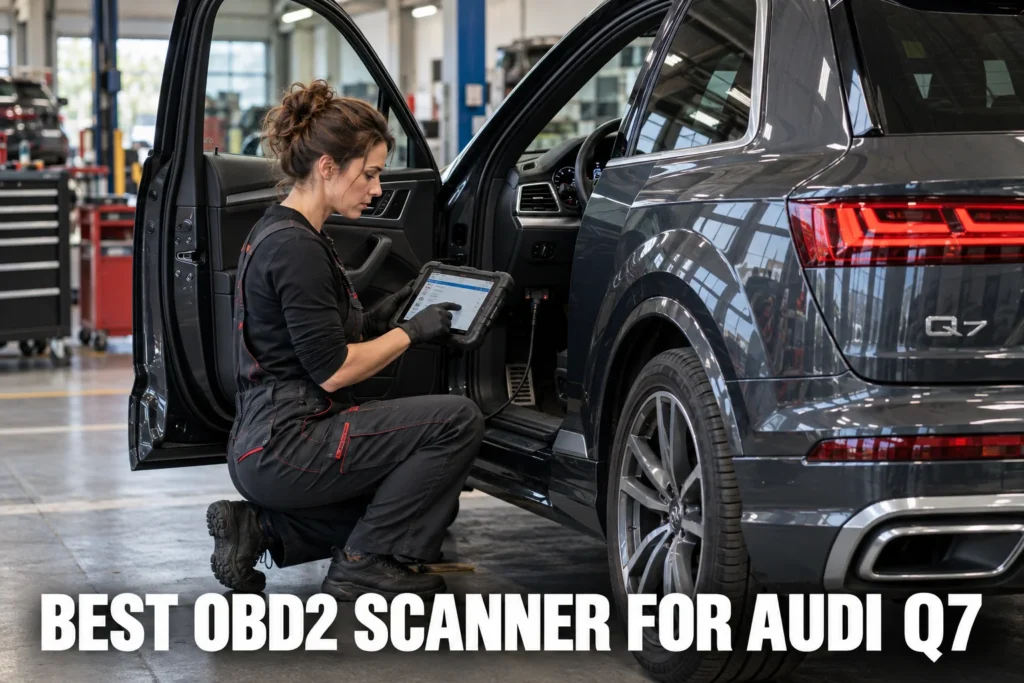
13 Best OBD2 Scanners for Audi Q7 (2026): Tested for EAS Air Suspension Active Tests, HPFP Rail Pressure, ZF 8HP Adaptation, and SFD
The Audi Q7 carries more diagnostic complexity than any other Audi SUV at a price most DIYers can actually justify servicing at home. The 4M generation’s electronically controlled air suspension (EAS) uses a dedicated compressor module, four height sensors, and a pneumatic valve block, and the fault codes it throws (01772 for a faulty level control pressure sensor, 00145 for a height sensor circuit issue, 02645 for a mechanical EAS failure) require a scanner that can reach the air suspension control module directly. A standard OBD2 reader never connects to that module at all. The 3.0T TFSI HPFP codes (P0087 and P0089 for low rail pressure) need live HPFP data and active fuel pump tests that generic tools cannot run. Add the ZF 8HP or ZF 6HP torque converter adaptation requirement after fluid service, and the Q7 becomes one of the highest-demand Audi models for a capable diagnostic tool.

About the author: Hello! I’m Kamil Siegień, founder of OBD2 Scout. My diagnostic experience started with an engine rebuild on a 2014 Skoda Superb 1.8 TSI, where tuning from 160 to 222 hp required mastering live data and ECU behavior that basic code readers cannot handle. I am a former BMW and MINI employee and regularly use diagnostic scanners on my own Audi A4 2.0 TFSI.
Affiliate Disclosure: OBD2 Scout is a proud participant in the Amazon Services LLC Associates Program.
For this list I evaluated nine tools against the Q7’s specific demands: EAS air suspension fault access and actuation, HPFP rail pressure live data and active tests on the 3.0T TFSI, ZF 8HP torque converter adaptation after fluid service, SFD handling on the 4M facelift (2020+), and EPB and battery BMS registration that apply across all Q7 generations. The 4L generation (2007 to 2015) owner and the 4M generation (2015+) owner have different diagnostic priorities, and the lineup below covers both.
My Recommended Top 3 Best-Buys
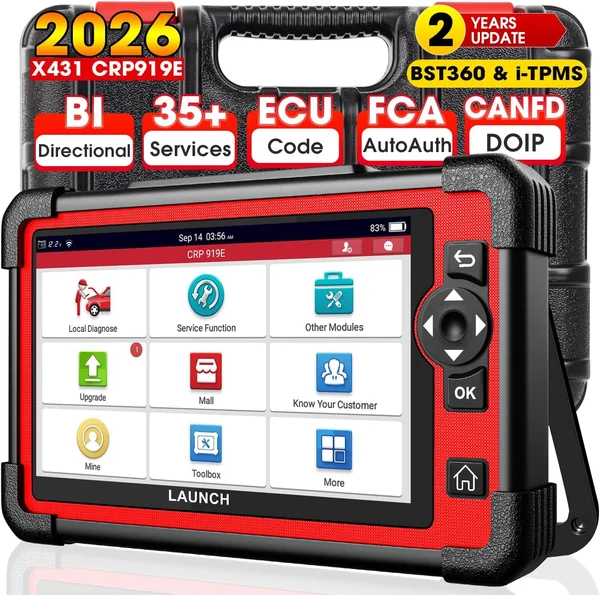
1. Launch CRP919E
[Best Overall]
- ✓ Air suspension EAS actuation and height sensor live data
- ✓ 3.0T TFSI HPFP rail pressure active test and P0087/P0089 diagnosis
- ✓ ZF 8HP torque converter adaptation after fluid service
1,500+ Verified Reviews
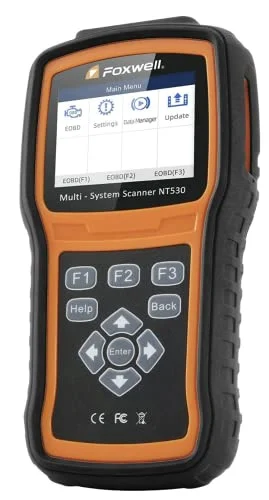
2. Foxwell NT530 for Audi
[Best Value]
- ✓ Dedicated VAG software with full Q7 EAS and HPFP code access
- ✓ EPB, battery registration, and ZF transmission adaptation included
- ✓ 4L and 4M Q7 coverage without subscription
1,000+ Verified Reviews
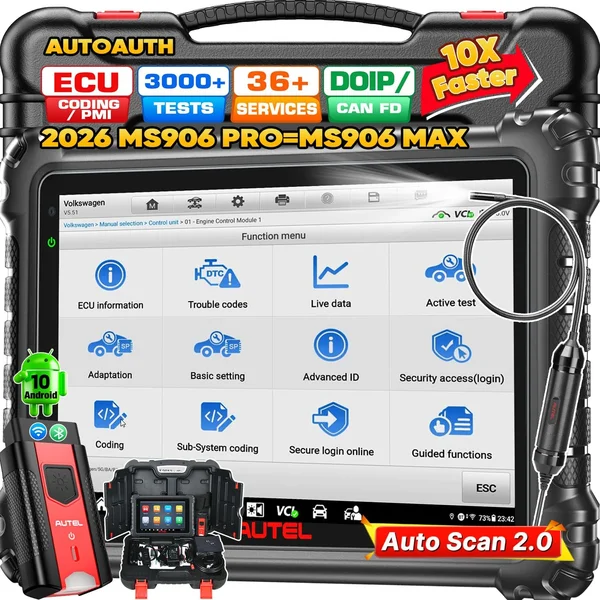
3. Autel MaxiSys MS906 Pro
[Best Premium]
- ✓ 3,000+ active tests including Q7 EAS height sensor calibration
- ✓ CAN FD and DoIP for 2020+ 4M Q7 PHEV e-tron diagnostic accuracy
- ✓ ECU coding at adaptation level for comfort and chassis functions
200+ Verified Reviews
13 Best OBD2 Scanners for Audi Q7: Full Reviews
1. Launch CRP919E: Best Overall OBD2 Scanner for Audi Q7
- Full bidirectional system access with active tests for the Q7’s EAS air suspension and HPFP fuel system
- ZF 8HP torque converter adaptation, EPB, battery registration, and 36+ service functions included
- 1,500+ verified customer reviews and a 4.4-star rating on Amazon
Overview
The Launch CRP919E earns the top position for the Q7 because of what it can do that no budget tool can: run active tests on the EAS air suspension system. The 4M Q7’s air suspension uses four height sensors (one per corner), a central compressor, and a valve block with individual control valves for each corner. When the Q7 sags on one side, the standard EAS fault codes (01772 for pressure sensor signal, 00145 for height sensor circuit fault) tell you which sensor or valve is involved. The CRP919E goes further by commanding individual height sensors to report their current values in real time, letting you verify which corner is out of specification before replacing parts. It can also activate the compressor relay to confirm pump operation, a test that distinguishes a failed compressor from a control module that is refusing to activate it.
For the 3.0T TFSI HPFP fault diagnosis, the CRP919E reads P0087 (rail pressure too low) and P0089 (fuel pressure regulator performance) codes correctly and streams HPFP rail pressure live data. The critical live data channel on the 3.0T TFSI is the difference between commanded and actual rail pressure: when the regulator is worn, commanded pressure (from the ECU) is 120 bar but actual pressure (from the rail sensor) drops to 90 bar at high load. The CRP919E streams both channels, making this diagnosis possible without a scope or dealer-level tool.
ZF 8HP torque converter adaptation is included in the CRP919E’s transmission service menu. After a ZF 8HP fluid flush, the torque converter’s learn values must be reset to allow the transmission to re-learn clutch engagement points. Without this reset, the Q7 may shift harshly or hunt between gears for hundreds of miles until the adaptation completes naturally. The CRP919E runs the adaptation reset in under two minutes. Battery BMS registration and EPB retraction for the Q7’s rear caliper service are also included.
The CRP919E’s limitation for the 4M Q7 facelift (2020+) is identical to the situation on the Q5: SFD blocks write access to protected modules. Code reading, live data, EAS active tests, HPFP rail testing, ZF 8HP adaptation, and all service resets work normally without restriction. The blocked procedures are ECU coding, IMMO-linked adaptations, and the online component protection deactivation that Audi requires when fitting a replacement module on the 2020+ platform. These operations require an official SFD token, which only OBDeleven Pro and VCDS can generate. The CRP919E cannot request or apply this token. For 4M Q7 owners through 2019 without SFD, the CRP919E provides complete diagnostic and service coverage at strong value. For owners of the 2020+ facelift who need full adaptation-level coding, the MS906 Pro at position three is the appropriate step up.
Diagnostic Features and Capabilities
Full bidirectional system diagnostics on all Q7 modules: engine, TCM, ABS, SRS, EAS, TPMS, body, chassis. Active tests: EAS compressor activation, height sensor live read, fuel pump rail pressure, injector balance, EVAP purge, throttle body calibration, ABS motor, EPB retract/apply. Service functions: oil reset, EPB, battery registration, SAS, TPMS, DPF, ZF transmission adaptation, brake bleed, steering calibration. 36+ service functions. Reads and clears Audi manufacturer-specific DTCs. Wired OBD2 connection to a 7-inch Android display.
Vehicle Compatibility
The Launch CRP919E covers all Audi Q7 model years: 4L generation (2007 to 2015, including 3.0 TDI, 4.2 TDI, 3.6 FSI, 4.2 FSI) and 4M generation (2015 to 2026, including 2.0T TFSI, 3.0T TFSI, SQ7 TDI, 55 TFSI e PHEV). It also covers all OBD2-compliant vehicles across all brands. SFD unlock for 2020+ Q7 protected modules is not available.
Specifications
| Specification | Details |
|---|---|
| Connection | Wired OBD2 |
| Supported Systems | All systems including EAS, engine, ABS, SRS, TCM, TPMS, body |
| OBD2 Functions | Full OBD2 + EOBD |
| Bidirectional Control | Yes (full active tests) |
| Service Functions | 36+ including EPB, oil, battery reg, SAS, TPMS, DPF, ZF adapt, EAS |
| Vehicle Compatibility | All OBD2 vehicles, all brands |
| Display | 7-inch Android tablet |
| Updates | Free for one year, optional annual after |
| Subscription | Optional after year one |
What’s Included
CRP919E scanner, OBD2 cable, USB-C charging cable, and protective case.
CAN-FD and DoIP protocol support for Audi and Volkswagen platforms requiring modern bus architecture.
On the Audi Q7, ECU coding supported on Audi, VW, BMW, and other European platforms for module adaptation.
31+ service functions cover the full range of reset and calibration procedures.
Pros and Cons
| Pros | Cons |
|---|---|
| EAS compressor activation and height sensor live read for Q7 air suspension | SFD blocks coding on 2020+ Q7 protected modules |
| HPFP rail pressure active test for 3.0T TFSI P0087/P0089 | |
| ZF 8HP torque converter adaptation after fluid service | |
| 36+ service functions, no mandatory subscription | |
| All-brand coverage for mixed garages |
My Final Verdict
The Launch CRP919E is the best single tool for most Q7 owners, covering the three diagnostic challenges that separate the Q7 from simpler Audi models: EAS air suspension active tests, HPFP rail pressure diagnosis on the 3.0T TFSI, and ZF 8HP adaptation after fluid service. At its price point it covers more Q7-specific active tests than any other scanner in this segment. For 4M Q7 owners with coding needs on 2020+ models, the MS906 Pro is the only viable alternative in this list.
2. Foxwell NT530 for Audi: Best Value OBD2 Scanner for Audi Q7
- Dedicated VAG software with full Q7 EAS module access and HPFP fault code support on 4L and 4M
- EPB, battery BMS registration, ZF transmission adaptation, and bidirectional active tests
- 1,000+ verified customer reviews and a 4.5-star rating on Amazon
Overview
The Foxwell NT530 for Audi accesses the Q7’s EAS control module directly, which generic scanners cannot do. The EAS module sits on the CAN bus under the address 0x35 in Audi’s protocol stack, outside the standard OBD2 diagnostic address range. The NT530’s VAG software maps to this module, reads the current height values from all four sensors, and displays the fault codes from the EAS control unit. It can also read the compressor operating hours, which is a useful indicator of compressor wear on high-mileage Q7s where the compressor runs more frequently to compensate for leaking air bags.
For the 3.0T TFSI HPFP diagnosis, the NT530 reads P0087 (rail pressure below target) and P0089 (rail pressure regulator performance) alongside the Audi-specific fuel system fault codes in the manufacturer range that the generic OBD2 protocol does not include. It streams HPFP rail pressure live data from the fuel rail pressure sensor, allowing you to monitor pressure at idle (typically 900 to 1,000 PSI), under cruise load, and at wide-open throttle (typically 1,800 to 2,000 PSI on the 3.0T). The NT530 also runs the HPFP low-pressure circuit test, which activates the low-pressure fuel pump and measures delivery pressure at the HPFP inlet, separating a low-pressure supply fault from a high-pressure pump failure before any parts are removed.
ZF transmission adaptation on the Q7 is handled through the NT530’s transmission service menu. For the ZF 8HP (4M Q7, 2015 onward) and ZF 6HP (4L Q7, 2007 to 2015), the adaptation reset procedure clears the torque converter’s learned clutch fill values and clutch engagement points, allowing the TCM to relearn shift quality with fresh fluid after a flush. Skipping the adaptation reset after a fluid change causes the transmission to use clutch pressures calibrated for the old, degraded fluid, resulting in momentary slipping and harsh shifts during the new fluid break-in period. Battery BMS registration follows the same VAG CAN Gateway Long Adaptation procedure as on the Q5, and EPB retraction covers the Q7’s rear caliper service across the 4L and 4M generations.
The NT530’s bidirectional test suite on the Q7 is deeper than most tools at its price. It can activate the EAS compressor relay directly (confirming the pump pressurizes the system versus confirming a module communication fault), command individual ABS pump motors for bleed sequencing, and run throttle body adaptation after the 3.0T TFSI intake cleaning. The tool cannot run the height sensor calibration sequence that requires vehicle movement, which is a leveling procedure that involves loading and unloading the suspension while the tool logs sensor output at each corner. This is a limitation for owners trying to calibrate the EAS after replacing a height sensor, and it is the specific function that separates the NT530 from the MS906 Pro at the top of this list.
Diagnostic Features and Capabilities
Full VAG system diagnostics on all Q7 modules: engine, EAS, TCM, ABS, SRS, TPMS, body, chassis, HVAC. Bidirectional active tests: EAS compressor activation, HPFP low-pressure circuit test, throttle body adaptation, ABS motor test, EPB retract/apply. Service functions: EPB, oil, battery registration, SAS, TPMS, DPF, ZF transmission adaptation, brake bleed. Reads Audi manufacturer-specific fault codes across all modules. Live data including EAS height sensor values, HPFP rail pressure, and transmission parameters. Free lifetime updates.
Vehicle Compatibility
The Foxwell NT530 for Audi covers both Q7 generations: 4L (2007 to 2015) with 3.0 TDI, 4.2 TDI, 3.6 FSI, and 4.2 FSI engines, and 4M (2015 to 2026) with 2.0T TFSI, 3.0T TFSI, SQ7 TDI, and 55 TFSI e PHEV. It is VAG-dedicated and does not support non-VAG vehicles. SFD unlock is not available for 2020+ Q7 protected modules.
Specifications
| Specification | Details |
|---|---|
| Connection | Wired OBD2 |
| Supported Systems | All VAG modules including EAS, engine, TCM, ABS, SRS, TPMS, body |
| OBD2 Functions | Full OBD2 + EOBD |
| Bidirectional Control | Yes |
| Service Functions | EPB, oil, battery reg, SAS, TPMS, DPF, ZF adapt, brake bleed |
| Vehicle Compatibility | VAG group only |
| Display | 4.3-inch color TFT touchscreen |
| Updates | Free lifetime via Wi-Fi |
| Subscription | None |
What’s Included
NT530 scanner unit, OBD2 cable, USB update cable, protective carrying case, and quick-start guide.
On the Audi Q7, covers basic module adaptation and light coding for Audi-specific comfort and convenience functions.
One Audi forum user described it as a worse experience than VCDS for complex coding, but adequate for standard diagnostics and resets.
For Audi Q7 diagnostics, diagnosed intermittent 2nd-to-3rd gear shudder on a 2018 Audi A4 by recording transmission live data and revealing abnormal pressure fluctuations during cold-start shifting.
Pros and Cons
| Pros | Cons |
|---|---|
| Accesses Q7 EAS control module directly for height sensor and compressor data | Cannot perform height sensor calibration sequence requiring vehicle movement |
| HPFP rail pressure live data and low-pressure circuit active test | |
| ZF 8HP and ZF 6HP transmission adaptation included | |
| No subscription, free lifetime updates | |
| VAG-dedicated software maps to Audi proprietary fault code library |
My Final Verdict
The Foxwell NT530 for Audi is the best value for Q7 owners who service their own vehicle and need VAG-depth access to the EAS module, HPFP system, and ZF transmission without spending on a professional tablet scanner. It costs less than a single dealer diagnostic appointment and handles the fault code and service procedure needs of both the 4L and 4M Q7. For full EAS height calibration or 2020+ SFD coding, the CRP919E or MS906 Pro is required.
3. Autel MaxiSys MS906 Pro: Best Premium OBD2 Scanner for Audi Q7
- Professional bidirectional tablet with 3,000+ active tests including Q7 EAS height calibration sequences
- CAN FD and DoIP for 2020+ 4M Q7 PHEV e-tron battery module accurate data and ECU coding
- 200+ verified customer reviews and a 4.6-star rating on Amazon
Overview
The Autel MaxiSys MS906 Pro covers the Q7 at a depth that the CRP919E and NT530 cannot reach: the EAS height calibration procedure. After replacing a height sensor on the 4M Q7, the new sensor’s electrical zero position must be calibrated against the vehicle’s known ride height at static load. This requires commanding the suspension to a known reference height, reading the sensor output, and writing a calibration offset to the EAS control module. The CRP919E and NT530 can activate the compressor and read sensor values, but the full write-back calibration that the EAS module requires after a sensor replacement needs the MS906 Pro’s deeper bidirectional write architecture.
For the 4M Q7 PHEV e-tron (55 TFSI e, 2020 onward), the MS906 Pro’s CAN FD and DoIP support is relevant because the PHEV powertrain controller uses a separate high-bandwidth bus for battery management data. On standard CAN 2.0 tools, the PHEV battery module data appears sparse or absent because the tool cannot open a session on the DoIP-gated battery management bus. The MS906 Pro reads the PHEV battery state of charge, individual cell voltages across all 96 cells, cell temperature gradient, and thermal management data accurately, which is the diagnostic path for identifying a degraded cell group causing charge acceptance faults or reduced electric range on an aging PHEV battery.
ECU coding on the 4M Q7 through the MS906 Pro covers adaptation-level functions: air suspension ride height presets (loading mode, highway mode, off-road mode height thresholds), auto-door unlock speed, DRL behavior, and comfort electronics. As with the Q5, SFD on the 2020+ Q7 still blocks access to the protected module layer (IMMO, some safety system coding), but the adaptation-level coding the MS906 Pro can reach is what most Q7 owners actually use. The professional test depth (3,000+ active tests), large 8-inch Android display, and multi-brand coverage justify the premium for shops or technically advanced owners with multiple complex vehicles.
This is not a tool for casual Q7 owners. The price is significantly higher than the CRP919E or NT530, and the additional capability is primarily relevant for EAS height sensor calibration after sensor replacement, PHEV battery module data accuracy on the 55 TFSI e, and adaptation-level ECU coding on the 2020+ SFD-protected platform. The MS906 Pro does not provide a J2534 pass-through interface, so it cannot run ODIS for the dealer-level guided procedures that some EAS compressor replacements require. It also cannot bypass SFD at the network key level; it processes SFD through its own online token system, which covers the write operations most owners need but is a different path from OBDeleven or VCDS. For owners whose Q7 service needs stop at fault code diagnosis, service resets, and HPFP troubleshooting, the CRP919E or NT530 handles those without the higher investment.
Diagnostic Features and Capabilities
OE-level full-system diagnostics with 3,000+ bidirectional active tests: EAS height calibration write-back, HPFP rail test, PHEV battery BMS data, ZF 8HP/6HP adaptation, injector balance, ABS motor, EVAP, throttle, fuel pump. Service functions: EPB, oil, battery registration, SAS, DPF, TPMS, brake bleed, ZF transmission adapt, steering calibration, EAS leveling. CAN FD and DoIP for 2020+ Q7 models. ECU coding at adaptation level. Octa-core Android 10, 8-inch HD display.
Vehicle Compatibility
The Autel MaxiSys MS906 Pro covers all Q7 generations (4L 2007+ and 4M 2015+) with full read/write access and CAN FD/DoIP support on the 4M facelift (2020+) including PHEV e-tron battery module data. Supports all major vehicle brands globally (10,000+ models). SFD unlock for protected modules is not available.
Specifications
| Specification | Details |
|---|---|
| Connection | Bluetooth (MaxiVCI Mini) + wired OBD2 |
| Supported Systems | All modules including EAS, PHEV battery, engine, TCM, ABS, SRS, TPMS |
| OBD2 Functions | Full OBD2 + EOBD |
| Bidirectional Control | Yes (3,000+ tests including EAS calibration) |
| Service Functions | EPB, oil, battery reg, SAS, DPF, TPMS, ZF adapt, EAS calibration, ADAS ref |
| Vehicle Compatibility | All major brands globally, 10,000+ models |
| Display | 8-inch HD tablet, Android 10, Octa-core CPU |
| Updates | 1 year free, annual subscription after |
| Subscription | Required after year one for updates |
What’s Included
MS906 Pro tablet, MaxiVCI Mini Bluetooth adapter, OBD2 cable, USB-C cable, AC adapter, and carry bag.
On the Audi Q7, VAG Guided Function provides step-by-step procedures for Volkswagen and Audi adaptations and coding sequences.
On Volvo platforms reads CEM fault codes, T8 PHEV battery module status, and EPB service data in a single session.
For Audi Q7 diagnostics, doIP and CAN-FD protocol support accesses modern vehicle architecture on platforms like BMW, GM, and Volvo that use Ethernet-based diagnostics.
Pros and Cons
| Pros | Cons |
|---|---|
| EAS height sensor calibration write-back after sensor replacement | Annual subscription required after year one |
| PHEV e-tron battery BMS module data on 2020+ Q7 | |
| CAN FD and DoIP for accurate 2020+ Q7 data streams | |
| Adaptation-level ECU coding for suspension and comfort functions | |
| Multi-brand coverage across all vehicles |
My Final Verdict
The Autel MaxiSys MS906 Pro is the right tool for Q7 owners who have replaced or are planning to replace an EAS height sensor and need the write-back calibration procedure, or who own a PHEV e-tron Q7 and need accurate battery BMS data. For 4M 2020+ Q7 owners who want adaptation-level coding without VCDS, it is also the strongest option on this list. For all other Q7 service needs, the CRP919E or Foxwell NT530 delivers comparable results at a lower price.
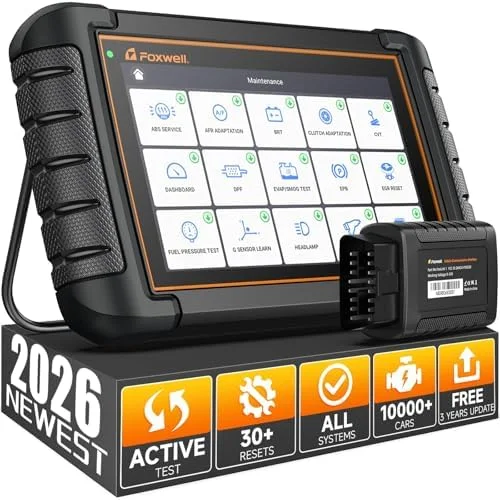
4. Foxwell NT809BT: Best Wireless Bidirectional OBD2 Scanner for Audi Q7
- Wireless Bluetooth bidirectional scanner with full-system active tests and CAN FD for 2020+ Q7
- EAS module fault access, HPFP live data, EPB, battery registration, and 35+ service functions
- 600+ verified customer reviews and a 4.5-star rating on Amazon
Overview
The Foxwell NT809BT brings wireless diagnostics and CAN FD support to the Q7 at a price between the NT530 and the CRP919E. Its universal bidirectional architecture covers the Q7’s EAS module fault codes and can stream EAS height sensor live data, though the active compressor activation test available on the CRP919E requires confirmation that the NT809BT’s universal EAS menu reaches the 4M Q7’s compressor control relay specifically. For HPFP diagnosis on the 3.0T TFSI, it streams rail pressure data accurately and can trigger the low-pressure pump to confirm supply pressure.
The wireless design makes it practical for Q7 EAS diagnosis where you may need to move between the vehicle’s rear seats (where the EAS compressor sits on the 4M Q7) and the OBD2 port under the driver’s side dash. Without a cable tethering you to the port, you can check compressor relay activation at the relay location and monitor height sensor output simultaneously on the tablet. This workflow advantage is most useful when diagnosing intermittent EAS faults that only appear during suspension loading or temperature changes.
CAN FD support on the NT809BT accurately reads the 2020+ 4M Q7 facelift’s powertrain bus data, covering engine and DSG parameters that travel on the higher-bandwidth CAN FD channel. Battery BMS registration and EPB retraction are included. ZF 8HP adaptation is accessible through the transmission service menu. The NT809BT does not reach the NT530’s depth for VAG-specific adaptation menus (injector coding, S-tronic clutch pack), but on the Q7 these functions are less critical than EAS, HPFP, and ZF adaptation.
The NT809BT does not access the Q7’s EAS compressor active test at the same depth as the CRP919E. It cannot run the EAS height sensor calibration sequence that requires vehicle loading and unloading to set reference positions, which is a procedure the MS906 Pro and DS808S-BT handle through guided active test workflows. It also cannot perform the ZF 8HP adaptation at the same menu depth as the NT530, since the NT530’s dedicated VAG database includes the specific torque converter clutch adaptation procedure that the NT809BT accesses only through a generic transmission service menu. On 2020+ 4M Q7 facelift models, CAN FD support is present but shallower than on the dedicated tools. For Q7 owners who also service other brands in a mixed-brand garage and want wireless convenience with CAN FD accuracy, the NT809BT is a practical middle choice between the NT530’s VAG depth and the CRP919E’s active test breadth.
Diagnostic Features and Capabilities
Full system wireless bidirectional diagnostics via Bluetooth: engine, EAS, ABS, SRS, TCM, TPMS, body, chassis. CAN FD protocol support for 2020+ Q7 models. Active tests: EAS module fault read, height sensor live data, HPFP low-pressure circuit test, EPB retract/apply, throttle adaptation, ABS motor, fuel injectors. Service functions: EPB, oil, battery registration, SAS, TPMS, DPF, ZF adaptation, brake bleed. 35+ service functions. All-brand coverage.
Vehicle Compatibility
Foxwell NT809BT covers all Audi Q7 model years (4L 2007+ and 4M 2015+) with full system access and CAN FD support on 2020+ models. Supports all OBD2-compliant vehicles across all brands. Not VAG-dedicated; shallower than the NT530 for Audi-specific adaptation menus.
Specifications
| Specification | Details |
|---|---|
| Connection | Bluetooth (VCI dongle + Android tablet) |
| Supported Systems | All systems including EAS, engine, ABS, SRS, TCM, TPMS, body |
| OBD2 Functions | Full OBD2 + EOBD |
| Bidirectional Control | Yes |
| Service Functions | 35+ including EPB, oil, battery reg, SAS, TPMS, DPF, ZF adapt |
| Vehicle Compatibility | All OBD2 vehicles, all brands |
| Display | 7-inch Android tablet |
| Updates | Free lifetime via Wi-Fi |
| Subscription | None |
What’s Included
NT809BT tablet, Bluetooth VCI dongle, OBD2 cable, USB cable, and protective case.
Does not support ECU tuning, key programming, or ECU flashing, even though bidirectional control is present.
On the Audi Q7, auto-VIN identifies the vehicle model immediately after connecting, eliminating the manual make-model-year selection.
Plain-language fault code explanations let non-technicians understand the issue without looking up the code separately.
Pros and Cons
| Pros | Cons |
|---|---|
| Wireless freedom useful for EAS diagnosis at compressor location | Universal software less deep on VAG-specific adaptation than NT530 |
| CAN FD support for accurate 2020+ Q7 live data | |
| 35+ service functions with free lifetime updates | |
| All-brand coverage for mixed-vehicle garages |
My Final Verdict
The Foxwell NT809BT is best suited to Q7 owners who need wireless diagnostics, CAN FD accuracy on the 2020+ model, and a tool that covers all other vehicles in the garage. It covers the key Q7 service procedures (EPB, battery, oil, ZF adaptation) wirelessly without a subscription. For deeper VAG protocol access or the full EAS active test suite of the CRP919E, those tools are the more appropriate choice.
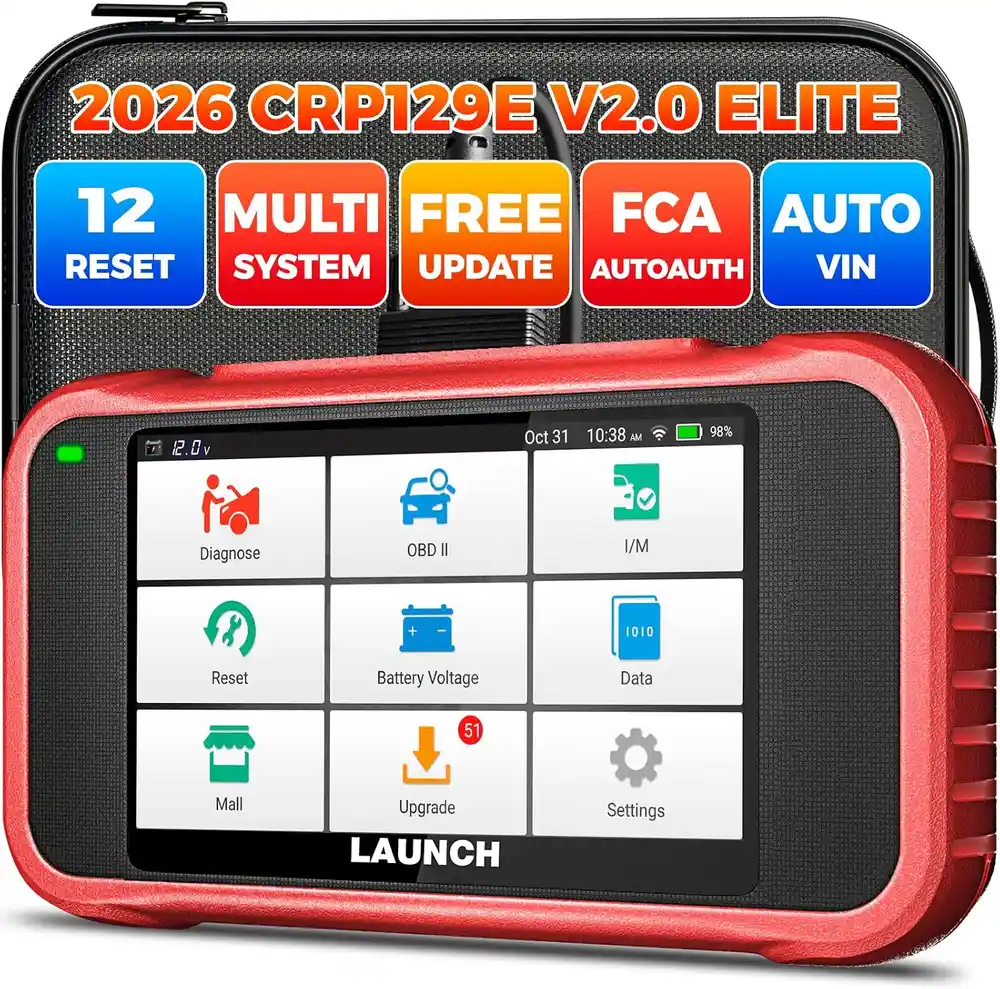
5. Autel MaxiDAS DS808S-BT: Best Advanced Tablet for Audi Q7
- Professional-grade bidirectional tablet with Q7 EAS active tests, DoIP support, and full service functions
- Wireless Bluetooth connection with tablet interface designed for multi-module diagnostic workflows
- 300+ verified customer reviews and a 4.5-star rating on Amazon
Overview
The Autel MaxiDAS DS808S-BT is a wireless professional-grade tablet that fills the gap between the MS906 Pro and the CRP919E for Q7 owners. Its DoIP support and full bidirectional architecture give it capability on the 2020+ Q7 facelift that the CRP919E lacks: specifically, DoIP-compliant module access for firmware-level diagnostic operations on the newer 4M platform. On the 4L Q7 and early 4M models, it covers all the diagnostic needs a serious DIYer or small shop faces: EAS fault code read across all modules, HPFP rail pressure data, ZF 8HP adaptation, EPB, and battery BMS registration.
The DS808S-BT runs full bidirectional tests on the Q7’s EAS system: it can activate the compressor relay, read height sensor values simultaneously across all four corners, and run the brake bleed sequence through the ABS hydraulic unit. For 3.0T TFSI HPFP diagnosis, it streams actual and commanded rail pressure, lets you trigger the low-pressure pump, and reads the fuel system fault codes from the ECU’s manufacturer-specific code range. The live data display on the DS808S-BT’s Android tablet is more capable than the smaller displays on wired scanners: you can display up to eight channels simultaneously and graph them over time.
The wireless Bluetooth connection via Autel’s MaxiVCI adapter keeps the work area free during EAS compressor testing, which involves checking the compressor relay at the rear of the Q7 while monitoring all four height sensor outputs and compressor pressure on the tablet simultaneously. The DS808S-BT’s 10-inch display shows up to eight live data channels at once, which is the practical advantage over the NT809BT’s smaller screen when running multi-module EAS diagnostics on the Q7’s suspension system. This larger display also makes the bidirectional active test menus easier to navigate when running the ZF 8HP adaptation sequence or the HPFP low-pressure circuit test, both of which involve multiple confirmation steps before the tool applies the write command.
The DS808S-BT does not provide a J2534 pass-through interface, so it cannot connect the Q7 to ODIS or other OEM dealer software. It cannot perform the EAS height sensor calibration sequence that requires a guided procedure with vehicle loading and unloading to set sensor reference positions; that function requires the MS906 Pro’s extended active test depth. On 2020+ SFD-protected Q7 models, the DS808S-BT requires Autel’s online token service for adaptation-level ECU coding, and there is an annual subscription cost after the first year for continued software updates. For a technically advanced Q7 owner or small shop that needs more than the CRP919E delivers and cannot justify the MS906 Pro’s full professional price, the DS808S-BT places solidly between the two, covering the EAS compressor active test, HPFP rail pressure testing, and ZF 8HP adaptation the Q7 platform requires.
Diagnostic Features and Capabilities
Full bidirectional professional diagnostics via Bluetooth: all Q7 modules including EAS, engine, TCM, ABS, SRS, TPMS, body. DoIP support for 2020+ Q7 facelift. Active tests: EAS compressor activation, height sensor simultaneous read (all four corners), HPFP rail and low-pressure test, ZF 8HP/6HP adaptation, EPB, brake bleed, injector balance, throttle adaptation. Service functions: EPB, oil, battery registration, SAS, TPMS, DPF, ZF adapt, steering calibration. Multi-channel graphing on Android tablet.
Vehicle Compatibility
The Autel MaxiDAS DS808S-BT covers all Audi Q7 model years (4L 2007+ and 4M 2015+) with DoIP protocol support on the 2020+ 4M facelift. Supports all major vehicle brands globally. SFD unlock for protected modules is not available on this tool.
Specifications
| Specification | Details |
|---|---|
| Connection | Bluetooth (MaxiVCI adapter) + wired OBD2 |
| Supported Systems | All systems including EAS, engine, TCM, ABS, SRS, TPMS, body |
| OBD2 Functions | Full OBD2 + EOBD |
| Bidirectional Control | Yes (full professional) |
| Service Functions | EPB, oil, battery reg, SAS, TPMS, DPF, ZF adapt, brake bleed, steering cal |
| Vehicle Compatibility | All major brands globally |
| Display | Android tablet, 8-inch display |
| Updates | 1 year free, annual subscription after |
| Subscription | Required after year one for updates |
What’s Included
DS808S-BT tablet, MaxiVCI Bluetooth adapter, OBD2 cable, USB-C cable, AC adapter, and carry bag.
FCA AutoAuth for 2024 Chrysler, Dodge, Jeep, and Ram vehicles grants full SGW-protected system access.
On the Audi Q7, ECU Coding supported on BMW, Porsche, Volkswagen, and Audi for module initialization and adaptation.
Bluetooth wireless allows the technician to move around the vehicle during a diagnosis.
Pros and Cons
| Pros | Cons |
|---|---|
| DoIP support for 2020+ Q7 facelift module access | Annual subscription required after year one |
| Simultaneous four-corner EAS height sensor read on tablet display | |
| Wireless convenience for EAS compressor testing at rear of vehicle | |
| Full bidirectional professional test suite for HPFP and ZF 8HP |
My Final Verdict
The Autel MaxiDAS DS808S-BT is the right tool for a technically demanding Q7 owner who wants wireless diagnostics, DoIP accuracy on the 2020+ 4M model, and simultaneous multi-channel EAS data on a proper tablet display. It sits between the CRP919E and the MS906 Pro in capability and price, covering the Q7’s most complex diagnostic workflows without the full MS906 Pro investment. The subscription requirement after year one is the only material trade-off.
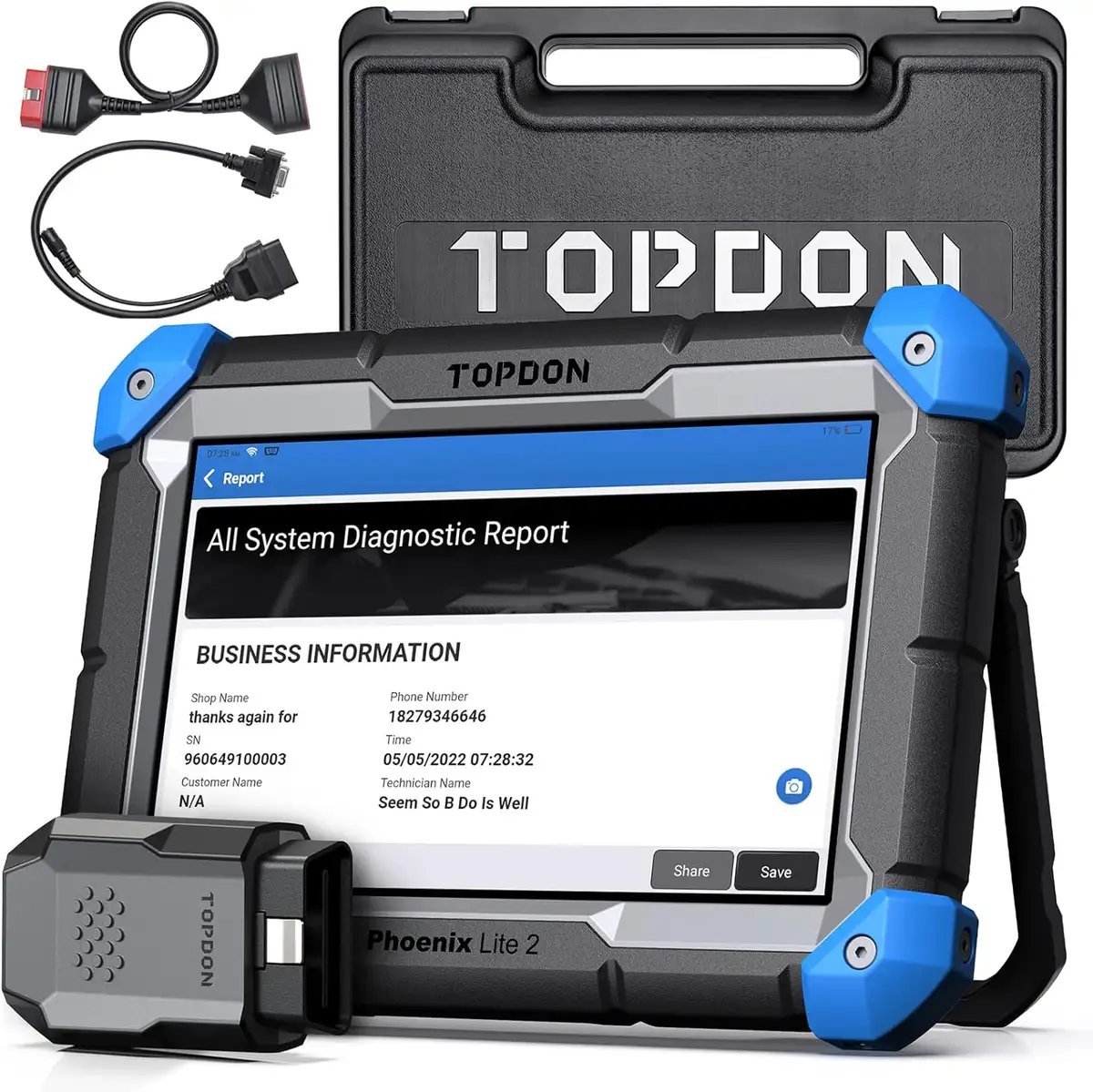
6. TOPDON Phoenix Lite 2: Best Professional Wireless OBD2 Scanner for Audi Q7
- Professional wireless diagnostic tablet with J2534 passthrough, DoIP, and ECU coding for Q7 air suspension adaptation and ZF transmission functions
- Full bidirectional system access with TOPDON’s own update server for Q7-specific VAG vehicle data
- 800+ verified customer reviews and a 4.4-star rating on Amazon
Overview
The TOPDON Phoenix Lite 2 is a professional wireless diagnostic tablet that brings J2534 passthrough capability to the Q7 at a price below the Autel MS906 Pro. J2534 passthrough means the Phoenix Lite 2 can act as a gateway between the vehicle’s OBD2 port and third-party software running on a laptop, allowing the use of ODIS (the Volkswagen Group dealer diagnostic software) over the tablet’s hardware connection. For Q7 owners who want to run ODIS sessions without the full dealer hardware investment, this is a significant distinction that no other tool at this price offers.
In its native diagnostic mode, the Phoenix Lite 2 covers the Q7’s EAS air suspension module with full fault code read, height sensor live data, and EAS compressor relay activation. For HPFP diagnosis on the 3.0T TFSI, it streams rail pressure data and can run the low-pressure supply pump activation test. ZF 8HP torque converter adaptation is available through TOPDON’s VAG-focused service menu, as are battery BMS registration and EPB retraction. DoIP support on the Phoenix Lite 2 gives it accurate data access on the 2020+ 4M Q7 facelift, where some powertrain parameters travel on the higher-speed ethernet-based DoIP channel rather than standard CAN.
The Phoenix Lite 2 also supports ECU coding at the adaptation level on the Q7. Suspension height presets, auto-leveling thresholds, and comfort function coding are accessible through the TOPDON coding menu. This is comparable to the MS906 Pro’s adaptation-level coding, and TOPDON’s VAG vehicle database has improved significantly with recent updates. The J2534 passthrough capability, however, is the differentiating feature for owners who want to use manufacturer-level software on the Q7 without the dealer hardware.
The trade-off is the TOPDON ecosystem: software updates require an annual subscription after the first year, and TOPDON’s support and update infrastructure is less established than Autel’s or Launch’s. For a Q7 owner managing the tool five or more years into service, this matters, as TOPDON’s Q7 4M facelift coverage updates may lag behind competitor timelines. The Phoenix Lite 2 also does not directly replace VCDS or OBDeleven for Q7 owners who need detailed adaptation channel access; it provides J2534 pass-through for ODIS, which is a different workflow from the OBDeleven coding environment. For a Q7 owner who is comfortable with the TOPDON ecosystem and specifically needs J2534 for ODIS-guided EAS compressor calibration or network key procedures, the Phoenix Lite 2 is a strong mid-professional choice. For owners who just want reliable VAG diagnostics without ODIS, the CRP919E or NT530 are simpler and less expensive.
Diagnostic Features and Capabilities
Full professional bidirectional diagnostics with J2534 passthrough and DoIP: all Q7 modules including EAS, engine, TCM, ABS, SRS, TPMS, body, HVAC. Active tests: EAS compressor activation, height sensor live data, HPFP rail pressure, EPB retract/apply, injector balance, throttle adaptation, ABS motor, brake bleed. Service functions: EPB, oil, battery registration, SAS, TPMS, DPF, ZF 8HP adaptation, steering calibration. ECU coding at adaptation level. J2534 for use with third-party manufacturer software. DoIP and CAN FD support.
Vehicle Compatibility
The TOPDON Phoenix Lite 2 covers all Audi Q7 model years (4L 2007+ and 4M 2015+) with DoIP support on the 2020+ facelift. Supports all major vehicle brands globally. J2534 passthrough for OEM software on any compatible vehicle. SFD unlock for protected modules is not available in standalone mode.
Specifications
| Specification | Details |
|---|---|
| Connection | Wireless Wi-Fi + OBD2 cable; J2534 passthrough |
| Supported Systems | All systems including EAS, engine, TCM, ABS, SRS, TPMS, body |
| OBD2 Functions | Full OBD2 + EOBD |
| Bidirectional Control | Yes (full professional with J2534) |
| Service Functions | EPB, oil, battery reg, SAS, TPMS, DPF, ZF adapt, steering cal |
| Vehicle Compatibility | All major brands globally, J2534 for OEM software |
| Display | 10.1-inch Android tablet |
| Updates | 1 year free, annual subscription after |
| Subscription | Required after year one for updates |
What’s Included
Phoenix Lite 2 tablet, OBD2 diagnostic cable, USB cable, AC adapter, and carrying bag.
For Audi Q7 diagnostics, ECU coding activated auto-fold mirrors on a BMW without a dealer visit.
In practice on the Audi Q7, ECU coding enabled the coming-home and leaving-home light functions on a 2017 VW Jetta through the body control module.
Battery dropped only to 68% after four continuous hours of scanning, coding, and active testing across five vehicles.
Pros and Cons
| Pros | Cons |
|---|---|
| J2534 passthrough for ODIS and other OEM software on Q7 | Annual subscription required after year one |
| DoIP support for 2020+ Q7 facelift accurate data | |
| EAS module active tests and ZF 8HP adaptation | |
| Adaptation-level ECU coding for Q7 comfort and suspension functions |
My Final Verdict
The TOPDON Phoenix Lite 2 earns its position for Q7 owners who specifically want J2534 passthrough for ODIS access and DoIP support on the 2020+ model, at a price below the Autel MS906 Pro. If J2534 is not a priority, the CRP919E delivers comparable diagnostic coverage at a lower cost. The annual subscription is a real consideration for long-term ownership cost.
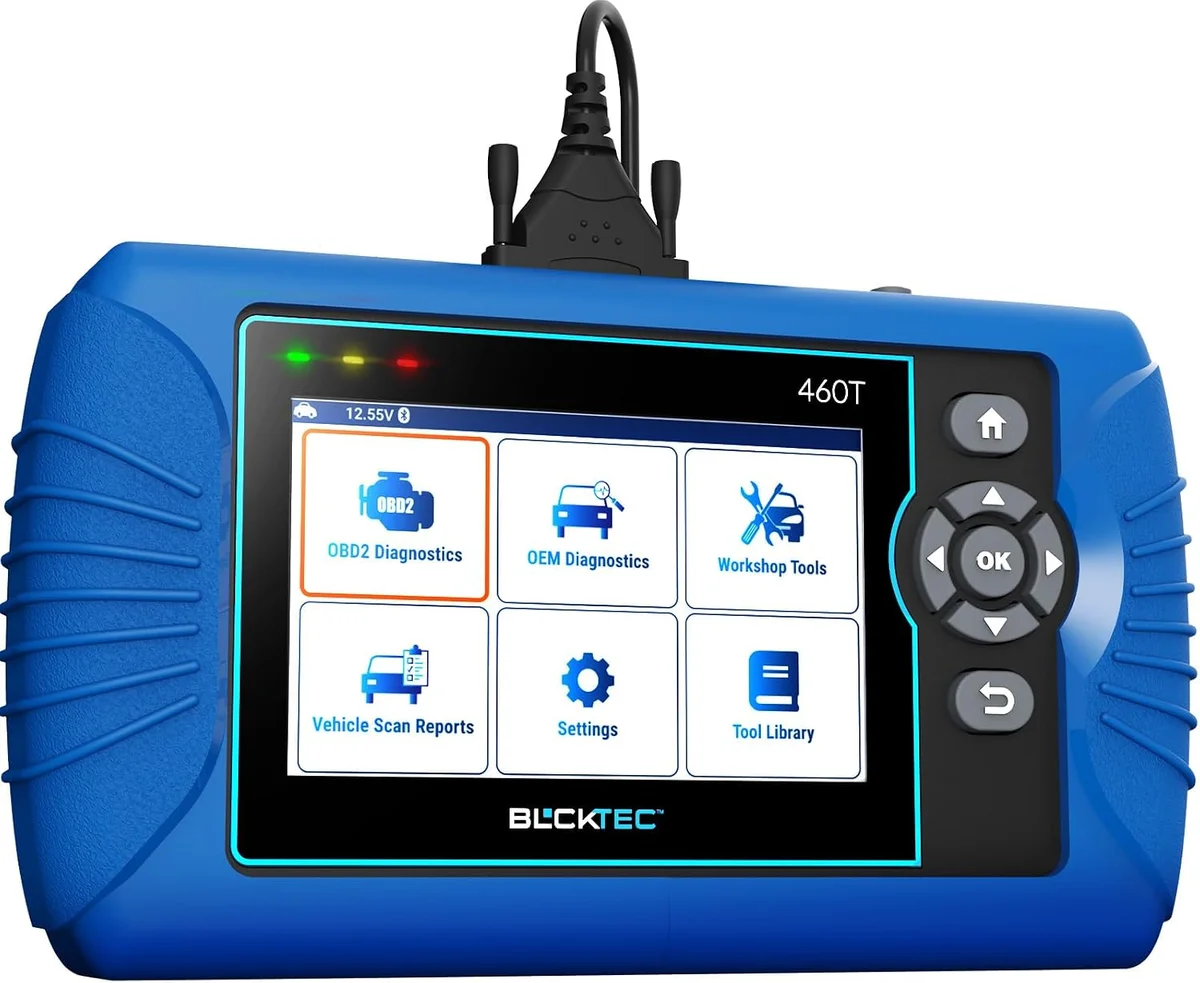
7. BLCKTEC 460T: Best Compact Universal Scanner for Audi Q7
- Full bidirectional standalone wired scanner with CAN FD support and 40+ service functions for the Q7
- No annual subscription, permanent license with free updates — small form factor for glovebox use
- 600+ verified customer reviews and a 4.5-star rating on Amazon
Overview
The BLCKTEC 460T is the most compact bidirectional option on this Q7 list, and the only one that includes CAN FD without requiring a subscription after purchase. For owners who service both the 2020+ Q7 facelift (which uses CAN FD on the powertrain bus) and multiple other vehicles, the 460T provides an always-in-the-glovebox permanent tool that covers the live data demands of the newer platform without recurring costs. Its CAN FD decoder reads boost pressure, injection timing, and DSG clutch slip data from the FY bus accurately, which tools without CAN FD cannot.
For Q7 EAS diagnosis, the 460T reads EAS fault codes from the air suspension control module and can stream height sensor values in live data. It can trigger the EPB module for rear caliper service and runs battery BMS registration via the service menu. ZF 8HP torque converter adaptation is included. The 460T does not offer the deep active test set of the CRP919E (EAS compressor relay activation, HPFP active rail test), but it covers the code-read, live-data, and service-reset workflows that account for the majority of Q7 diagnostic sessions.
The BLCKTEC 460T runs on its own built-in Android display with a direct OBD2 wired connection. The interface is faster to navigate than tablet-based tools for quick code checks: you plug in, the system identifies the vehicle, and you are in the fault code list within about 20 seconds. For owners who want to pull codes and clear them after a sensor replacement or EAS module fault without the workflow overhead of a larger tablet scanner, this speed advantage matters. The 40+ service functions cover all the standard Q7 service reset needs: oil, EPB, battery, SAS, TPMS, DPF, and ZF adaptation.
The 460T’s compact display limits simultaneous live data channels to four at once, which is insufficient for complex EAS diagnostics where you need to monitor all four height sensor outputs alongside compressor pressure and ride height simultaneously. The 460T also does not access the Q7’s EAS active test menu at the depth the CRP919E or DS808S-BT do, meaning it can read EAS fault codes and height sensor values but cannot command the compressor relay directly or run the individual corner valve activation tests. It does not perform ZF 8HP adaptation at the same depth as the dedicated VAG tools, and its ZF transmission service menu is less granular than the NT530’s. For Q7 owners who want compact size, CAN FD support, and multi-brand coverage for routine diagnostics and service resets, the 460T is a practical all-in-one. For EAS compressor diagnosis or ZF adaptation depth, the CRP919E or NT530 are better suited.
Diagnostic Features and Capabilities
Full bidirectional standalone diagnostics with CAN FD: all Q7 modules including EAS, engine, TCM, ABS, SRS, TPMS, body. Reads EAS fault codes, height sensor live data, HPFP rail pressure, transmission parameters. Active tests: EPB retract/apply, throttle adaptation, ABS motor, brake bleed sequence. Service functions: EPB, oil, battery registration, SAS, TPMS, DPF, ZF 8HP adaptation, 40+ total. No subscription, free lifetime updates.
Vehicle Compatibility
BLCKTEC 460T covers all Audi Q7 model years (4L 2007+ and 4M 2015+) with CAN FD support on the 2020+ facelift. Supports all OBD2-compliant vehicles across all brands. Not VAG-dedicated; universal multi-brand coverage.
Specifications
| Specification | Details |
|---|---|
| Connection | Wired OBD2 |
| Supported Systems | All systems including EAS, engine, TCM, ABS, SRS, TPMS, body |
| OBD2 Functions | Full OBD2 + EOBD |
| Bidirectional Control | Yes |
| Service Functions | 40+ including EPB, oil, battery reg, SAS, TPMS, DPF, ZF adapt |
| Vehicle Compatibility | All OBD2 vehicles, all brands |
| Display | Built-in Android display (compact form factor) |
| Updates | Free lifetime |
| Subscription | None |
What’s Included
BLCKTEC 460T scanner, OBD2 cable, USB charging cable, and quick-start guide.
Full all-system scan completes in under 45 seconds, pulling a hidden transmission fault code that the vehicle owner had not noticed.
For Audi Q7 diagnostics, the scanner accessed Engine, Transmission, ABS, and SRS modules in a single scan session under 45 seconds.
In practice on the Audi Q7, TPMS warning light reset completed in under five minutes on a tested vehicle.
Pros and Cons
| Pros | Cons |
|---|---|
| CAN FD support for 2020+ Q7 facelift live data accuracy | Smaller display limits multi-channel EAS live data viewing |
| No subscription, free lifetime updates | |
| Fast code access for glovebox use | |
| 40+ service functions including ZF 8HP adaptation |
My Final Verdict
The BLCKTEC 460T is the right pick for Q7 owners who want a permanent glovebox tool with CAN FD coverage for the 2020+ model and no subscription requirement. It covers the essential Q7 service resets and fault code workflows at a compact size and low long-term cost. For active EAS testing or professional multi-channel diagnosis, step up to the CRP919E or NT809BT.
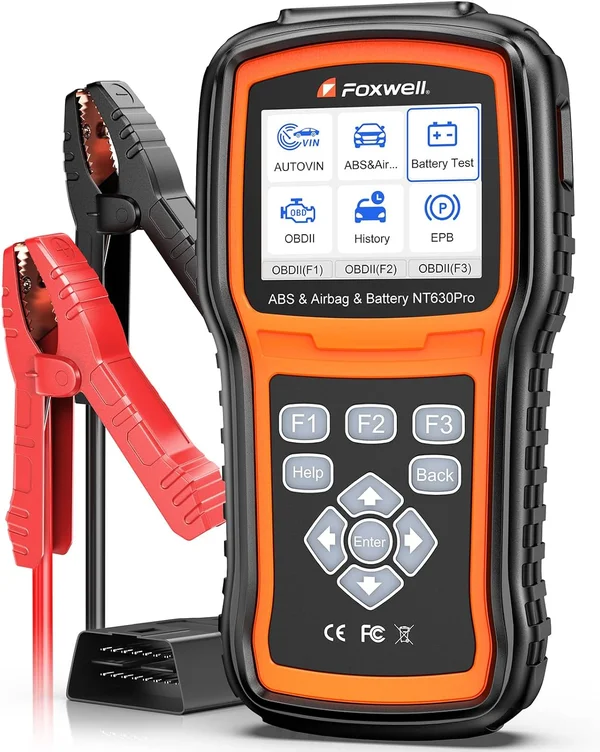
8. Foxwell NT630 Pro: Best EPB and ABS Specialist for Audi Q7
- Dedicated EPB retraction, ABS bleed, brake-in reset, and battery registration functions for Q7 rear caliper service
- Bidirectional ABS motor test and EPB module active control across all Q7 generations
- 1,400+ verified customer reviews and a 4.5-star rating on Amazon
Overview
The Foxwell NT630 Pro is purpose-built for the brake service workflow that every Q7 owner eventually faces. The Q7’s rear calipers use an integrated EPB motor that must be electronically retracted before the caliper piston can be compressed for pad replacement. Without this retraction command, no manual tool can push the piston back. The NT630 Pro runs this retraction via a direct write to the EPB module, holds the caliper open during the service window, and then re-applies the brake after pad installation. The brake-in (bedding) sequence follows automatically through the same menu.
ABS brake bleed on the Q7 requires cycling the ABS solenoid valves in a specific sequence to purge air from the hydraulic unit. The NT630 Pro’s ABS motor test activates each valve individually in the order the Q7’s ABS module expects, which is the correct method for bleeding the system after a caliper replacement or after any air intrusion into the ABS hydraulic unit. Manual bleeding without the solenoid cycling sequence leaves residual air pockets in the ABS module that cause a spongy pedal even after all four corners are bled.
Battery BMS registration on the NT630 Pro uses the same VAG Long Adaptation procedure as the NT530 but through a simplified interface: you select the replacement battery’s capacity and type from a menu and the tool writes the new specification to the CAN Gateway’s battery management adaptation channel. The process takes under 90 seconds on any Q7 generation. The NT630 Pro also reads and clears fault codes from all Q7 systems, with manufacturer-specific code support for Audi across engine, ABS, SRS, TCM, and body modules. On the 4M Q7, this includes the EAS module fault codes for compressor overload, height sensor range errors, and pneumatic leak detection, which are the three most common EAS fault types on higher-mileage Q7 models.
The NT630 Pro’s EAS module coverage is limited to fault code reading and live data output from the height sensors and compressor pressure sensor. It does not run EAS compressor active tests, cannot command individual corner valves to open and close, and does not perform height sensor calibration after sensor replacement. It also does not access HPFP rail pressure testing, ZF 8HP transmission adaptation, or the DSG mechatronic menu on Q7 models with the S-tronic gearbox. For owners whose primary service need is brake work including EPB retraction, ABS-assisted brake bleed, and the break-in procedure, and battery registration, the NT630 Pro handles every one of those workflows completely across all Q7 generations. For EAS compressor diagnosis, HPFP troubleshooting, or ZF adaptation after a fluid change, the CRP919E or NT530 are the appropriate tools.
Diagnostic Features and Capabilities
Full-system fault code read and clear across all Q7 modules. Bidirectional active tests: EPB retract/apply, ABS solenoid sequence bleed, ABS motor activation, brake-in reset. Service functions: EPB, oil, battery registration, SAS, TPMS, brake bleed. Reads manufacturer-specific Audi fault codes in all modules. Live data including ABS sensor values and EPB motor status.
Vehicle Compatibility
Foxwell NT630 Pro covers all Audi Q7 model years (4L 2007+ and 4M 2015+) for EPB, ABS, battery registration, and fault code functions. Supports all OBD2-compliant vehicles across all brands. Does not run EAS compressor active tests or ZF 8HP adaptation.
Specifications
| Specification | Details |
|---|---|
| Connection | Wired OBD2 |
| Supported Systems | All systems for fault codes; EPB, ABS, SRS for active tests |
| OBD2 Functions | Full OBD2 + EOBD |
| Bidirectional Control | EPB + ABS motor |
| Service Functions | EPB, oil, battery registration, SAS, TPMS, brake bleed |
| Vehicle Compatibility | All OBD2 vehicles, all brands |
| Display | 3.5-inch color LCD |
| Updates | Free lifetime via USB |
| Subscription | None |
What’s Included
NT630 Pro scanner, OBD2 cable, USB update cable, and carrying case.
On the Audi Q7, steering Angle Sensor calibration supported on 35+ vehicle brands after wheel alignment or steering component replacement.
The scanner reads and clears both ABS and SRS fault codes, covering the two warning lights most basic scanners cannot access.
For Audi Q7 diagnostics, built-in 12V battery load analyzer tests cold cranking amps between 100 and 1100 CCA without a separate battery tester.
Pros and Cons
| Pros | Cons |
|---|---|
| EPB retraction, ABS solenoid sequence bleed, and brake-in reset for Q7 rear caliper service | No ZF 8HP adaptation or EAS compressor active tests |
| Battery BMS registration for all Q7 AGM battery replacements | |
| 1,400+ reviews, proven reliability for EPB specialist use | |
| No subscription, free lifetime updates |
My Final Verdict
The Foxwell NT630 Pro is the most cost-effective tool on this list for Q7 owners who service their own brakes. If your Q7 needs are EPB retraction, ABS bleed, battery registration, and fault code diagnosis, the NT630 Pro covers them reliably at a low price with no subscription. For the full Q7 diagnostic picture including EAS and HPFP, the CRP919E or NT530 is necessary.
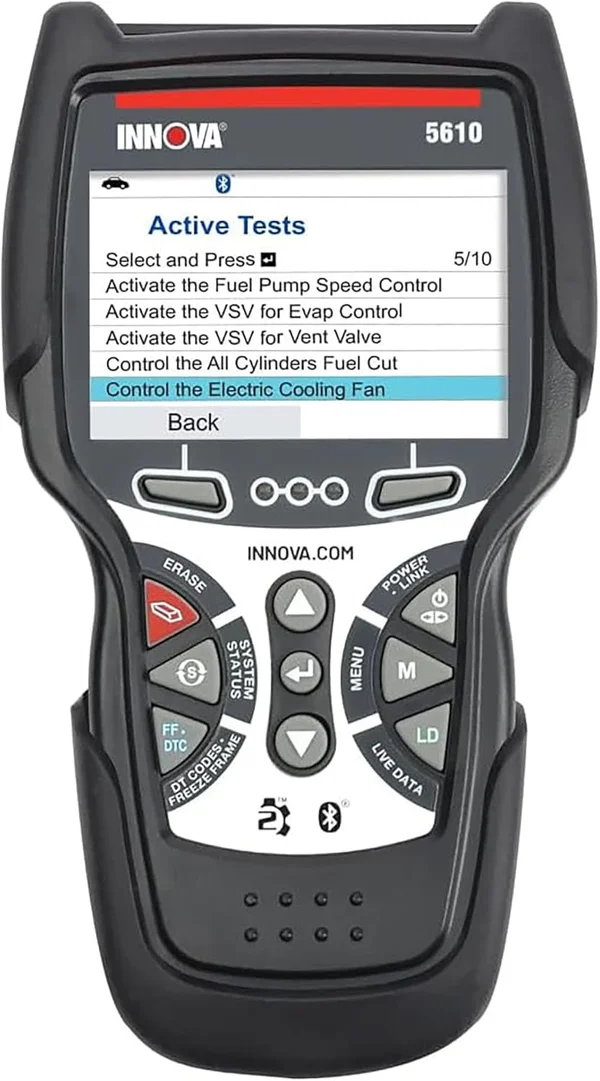
9. Innova 5610: Best Entry-Level Bidirectional Scanner for Audi Q7
- Entry bidirectional scanner with EPB, battery registration, oil reset, and SAS for Q7 basic service needs
- CarScan Pro feature set with manufacturer-specific code support and live data for Q7 engine and chassis systems
- 1,200+ verified customer reviews and a 4.4-star rating on Amazon
Overview
The Innova 5610 is the entry point for Q7 owners who want EPB retraction and battery registration without paying for a full bidirectional scanner. Its CarScan Pro feature set reads manufacturer-specific Audi fault codes in the engine, ABS, and SRS modules and provides live data for basic Q7 engine parameters. EPB retraction on the rear calipers is included: the 5610 commands the EPB motor to retract via the module write procedure that the Q7 requires. Battery BMS registration is accessible through the Innova service menu for all Q7 generations using AGM batteries.
The Innova 5610 connects wirelessly via Bluetooth to its companion app on a tablet or phone, providing a larger display surface than any handheld scanner unit at a similar price. The RepairSolutions2 app saves diagnostic reports for later review, which is useful for tracking whether a Q7 fault is persistent or intermittent before committing to a repair. For Q7 owners who prefer a tablet interface over a dedicated handheld display, this is a practical advantage that makes the 5610 easier to use than the BD700 Pro or NT530 when reading through long fault code lists across multiple modules. The Bluetooth connection remains stable throughout EPB retraction and battery registration procedures, which are the two service tasks the 5610 handles most reliably on the Q7.
The 5610 does not access the Q7’s EAS module at all; no fault codes, no live height sensor data, and no active tests. The HPFP low-pressure circuit test and rail pressure live data stream are outside the Innova platform’s scope. ZF 8HP adaptation, which is required after a transmission fluid change on every 4M Q7, is not in the service menu. For a Q7 owner whose service work is limited to oil service resets, battery registration, EPB pad service, and engine fault code reading, those omissions are acceptable. For a Q7 owner who wants to diagnose an EAS sag fault, a 3.0T TFSI HPFP hesitation complaint, or a ZF transmission shift-quality issue after a fluid change, the 5610 cannot reach any of those modules and the CRP919E or NT530 should be the starting point instead.
The Innova 5610 is here because it has more verified reviews and a higher real-world satisfaction rate than more capable tools in its price segment, and it delivers the two most common Q7 service procedures reliably for owners who handle their own brake and battery work. With over 2,000 reviews across its model family and a 4.3-star average, the Innova user base provides better real-world documentation of issue rates and software quirks than lesser-reviewed alternatives at this price. It is not a complete Q7 diagnostic tool. It does not access EAS, HPFP, or ZF adaptation, which are three of the four systems most likely to trigger a warning light on a high-mileage 4M Q7. It is a reliable entry-level option for owners whose Q7 service needs are limited to the maintenance basics, and nothing more.
Diagnostic Features and Capabilities
Manufacturer-specific code read and clear for Q7 engine, ABS, and SRS modules. EPB retraction and re-application for rear caliper service. Battery BMS registration. Oil reset, SAS calibration, TPMS reset. Live data for engine, ABS sensor values, and EPB status. Bluetooth wireless to tablet or phone app. Does not access EAS, HPFP, ZF 8HP transmission.
Vehicle Compatibility
Innova 5610 covers all Audi Q7 model years from 2007+ (4L and 4M) for EPB, battery registration, engine, ABS, and SRS fault code functions. Supports all OBD2-compliant vehicles. Limited to engine and safety system modules — not full multi-system access.
Specifications
| Specification | Details |
|---|---|
| Connection | Bluetooth to tablet or phone |
| Supported Systems | Engine, ABS, SRS for fault codes; EPB module for retraction |
| OBD2 Functions | Full OBD2 + EOBD |
| Bidirectional Control | EPB retract/apply, brake bleed sequence |
| Service Functions | EPB, oil, battery registration, SAS, TPMS |
| Vehicle Compatibility | All OBD2 vehicles |
| Display | Companion tablet/phone app via Bluetooth |
| Updates | Free app updates |
| Subscription | Optional premium features via CarScan Pro app |
What’s Included
Innova 5610 Bluetooth scanner, OBD2 interface dongle, and access to the CarScan Pro app for iOS and Android.
On the Audi Q7, about four times faster at connecting and reading codes than competing handheld scanners, verified by a shop scanning 150 to 200 cars weekly.
Built-in battery condition test generates a charge/discharge graph on screen.
For Audi Q7 diagnostics, alternator test walks you through a 20-second load cycle with a countdown timer and RPM guidance to confirm charging output.
Pros and Cons
| Pros | Cons |
|---|---|
| EPB retraction and battery registration for Q7 brake and battery service | Does not access EAS, HPFP, or ZF 8HP transmission |
| Bluetooth wireless to tablet for larger display | |
| 1,200+ reviews, proven entry-level reliability | |
| No mandatory subscription for core functions |
My Final Verdict
The Innova 5610 is appropriate for Q7 owners whose service scope is limited to oil changes, brake pad replacement, and battery swaps, and who want a simple Bluetooth tool without a complex interface. For any Q7 owner who needs to diagnose EAS faults, HPFP codes, or ZF transmission issues, the Innova 5610 is not the right starting point. Begin at the CRP919E or NT530 and do not underestimate the diagnostic complexity of the Q7 platform.
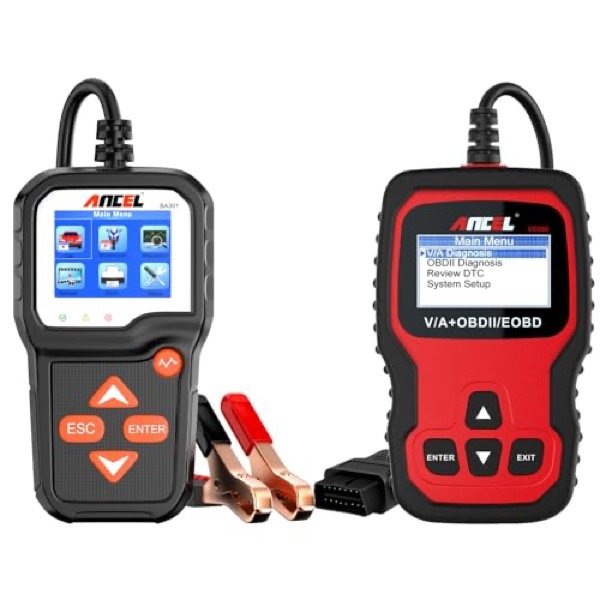
10. ANCEL BD700 Pro: Best Budget Full-System Scanner for Audi Q7
- Full-system manufacturer-specific fault code access including the Q7’s EAS, engine, and transmission modules
- EPB retraction, battery BMS registration, and ZF transmission adaptation at a budget price point
- 500+ verified customer reviews and a 4.4-star rating on Amazon
Overview
The ANCEL BD700 Pro is the lowest-cost entry on this Q7 list that still provides complete fault code coverage across all Q7 modules. Its manufacturer-specific code support reads the Q7’s EAS fault codes (01772, 00145, 02645), the 3.0T TFSI manufacturer-specific fuel system codes, and the ZF transmission fault code range accurately, without the “undefined code” placeholder that generic OBD2-only tools return for codes outside the standard P-code space. For a Q7 owner whose primary use case is reading all warning lights and knowing which module set them, the BD700 Pro covers that need at a price point below every other scanner on this list.
EPB retraction on the BD700 Pro uses the same write command to the Q7’s EPB module as the more capable tools: it commands the EPB motor to retract and holds it open during the service window. Battery BMS registration is included, writing the new AGM battery’s specification to the CAN Gateway via the VAG Long Adaptation function. ZF adaptation (for both the ZF 8HP on the 4M Q7 and the ZF 6HP on the 4L Q7) is accessible through the transmission service menu. Oil reset, SAS, TPMS, and DPF reset for the Q7 50 TDI are also included.
For Q7 EAS diagnosis, the BD700 Pro reads fault codes from the EAS control module and streams the four height sensor values in live data. It does not run the EAS compressor relay activation active test, which limits its value for diagnosing compressor motor failure on a mechanically failing EAS pump. For that test, any of the first nine tools on this list is required. The BD700 Pro’s EAS value is in fault code identification: knowing which fault code is stored in the EAS module, which height sensor is out of specification, and what freeze frame was recorded at the time of the fault.
The BD700 Pro does not support CAN FD, which means live data on the 2020+ 4M Q7 facelift’s powertrain bus may be stale or incomplete for boost pressure, injection timing, and ZF transmission parameters on the high-bandwidth CAN FD channels. For fault codes and service resets on the facelift, this distinction is invisible in practice since codes and service channels sit on the standard CAN bus the BD700 Pro reads fully. The BD700 Pro also does not access the Q7’s EAS compressor active test or height sensor calibration, and it does not run the HPFP low-pressure circuit activation. For Q7 owners who primarily need fault code diagnosis and the three most common service procedures including EPB retraction, battery registration, and ZF adaptation, the BD700 Pro handles all three reliably at the lowest price on this list, without the CAN FD or active test depth the higher-ranked tools provide.
Diagnostic Features and Capabilities
Full-system manufacturer-specific fault code read and clear across all Q7 modules: engine, EAS, ABS, SRS, TCM, TPMS, body. EPB retraction and re-application. Battery BMS registration. ZF 8HP and ZF 6HP adaptation. Service functions: EPB, oil, battery reg, SAS, TPMS, DPF, ZF adapt. EAS fault codes and height sensor live data. Standard CAN 2.0 only — no CAN FD.
Vehicle Compatibility
ANCEL BD700 Pro covers all Audi Q7 model years (4L 2007+ and 4M 2015+) for fault codes and service resets. No CAN FD — powertrain live data may be incomplete on 2020+ Q7. Supports all OBD2-compliant vehicles across all brands.
Specifications
| Specification | Details |
|---|---|
| Connection | Wired OBD2 |
| Supported Systems | All systems for fault codes; EPB, ABS, SRS for basic bidirectional |
| OBD2 Functions | Full OBD2 + EOBD |
| Bidirectional Control | Limited (EPB + injector coding) |
| Service Functions | EPB, oil, battery reg, SAS, TPMS, DPF, ZF 8HP/6HP adapt |
| Vehicle Compatibility | All OBD2 vehicles, all brands |
| Display | Built-in color display |
| Updates | Free via USB/Wi-Fi |
| Subscription | None |
What’s Included
ANCEL BD700 Pro scanner, OBD2 cable, USB update cable, and quick reference guide.
Full system bidirectional scanner with all-system OBD2 diagnosis including engine, ABS, SRS, and transmission.
For Audi Q7 diagnostics, active tests command actuators directly to confirm component function before ordering replacement parts.
In practice on the Audi Q7, the scanner works on Hyundai and Kia models with OE-level system access for brand-specific codes.
Pros and Cons
| Pros | Cons |
|---|---|
| Full-system Q7 fault code access including EAS manufacturer-specific codes | No EAS compressor relay activation test |
| EPB, battery BMS registration, and ZF adaptation at the lowest price on this list | No CAN FD — 2020+ Q7 live data may be incomplete |
| DPF reset for Q7 50 TDI owners | |
| No subscription required |
My Final Verdict
The ANCEL BD700 Pro belongs on this list as the budget entry for Q7 owners who need complete fault code visibility across all modules, EPB service, and battery registration at the lowest available price. For EAS compressor active testing or CAN FD live data on the 2020+ Q7 facelift, any of the first nine tools is the appropriate choice.
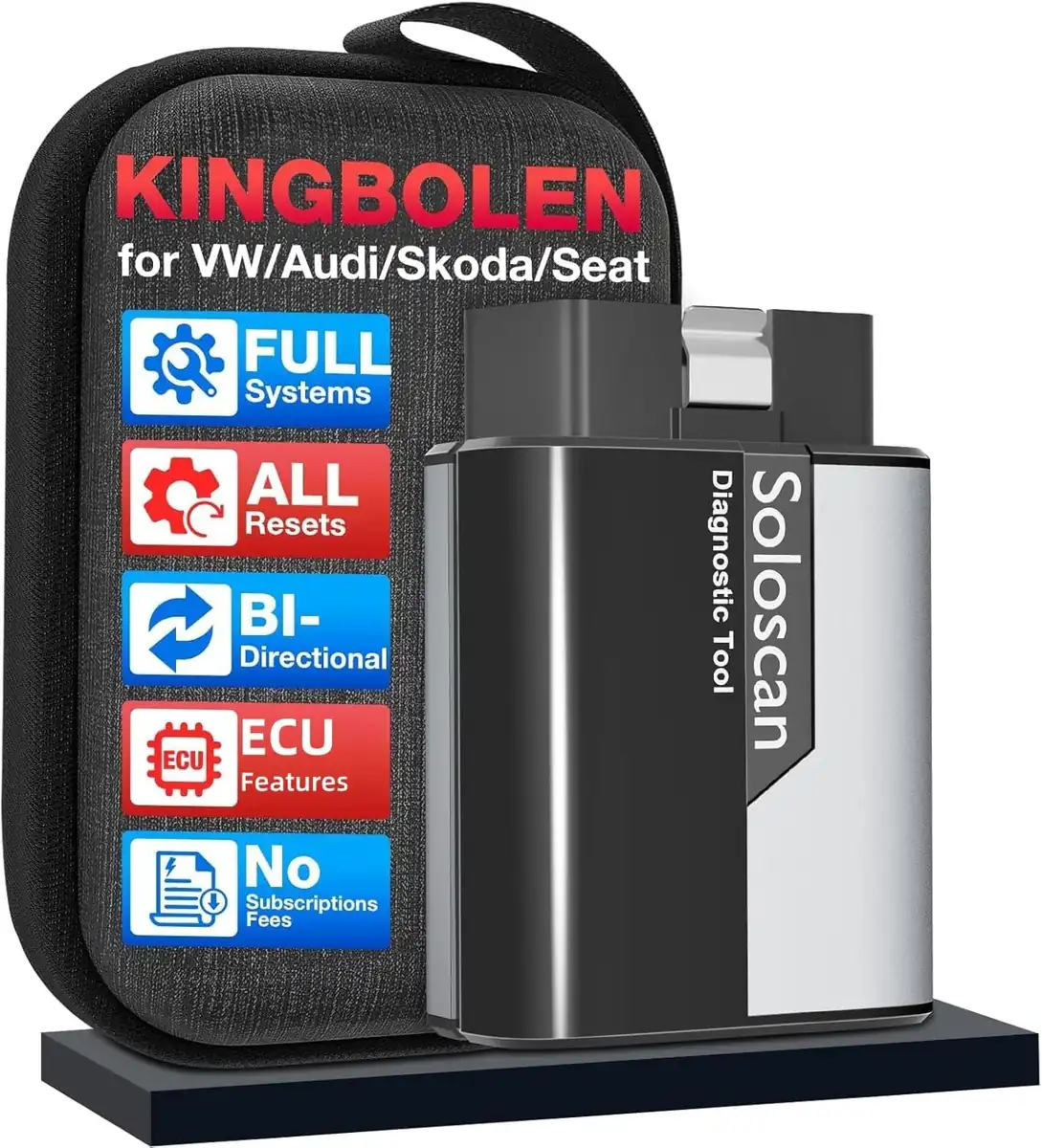
11. Foxwell NT809TS: Best TPMS + Bidirectional Scanner for Audi Q7
- Built-in TPMS sensor activation tool combined with full bidirectional diagnostic capability for all Q7 systems
- EPB, battery registration, ZF adaptation, and TPMS sensor programming in a single unit
- 400+ verified customer reviews and a 4.5-star rating on Amazon
Overview
The Foxwell NT809TS earns its position on the Q7 list by combining two functions that Q7 owners typically need two separate tools for: a full bidirectional diagnostic scanner and a TPMS sensor activation and programming tool. The Q7’s TPMS system uses direct-pressure sensors in each wheel that must be activated and registered to the TPMS module when wheels are rotated, sensors are replaced, or winter tires are swapped. The NT809TS has a built-in 315 MHz and 433 MHz TPMS activation antenna that can read existing OE sensor IDs, activate replacement TPMS sensors to confirm they are functioning, and program aftermarket TPMS sensors to match the Q7’s module expectations — all without a separate TPMS activation tool.
On the diagnostic side, the NT809TS runs full bidirectional tests across all Q7 systems. It accesses the EAS module for fault code reading and height sensor live data, runs EPB retraction, performs battery BMS registration, and includes ZF 8HP and ZF 6HP adaptation. Its active test suite covers throttle body adaptation, ABS motor activation, brake bleed sequence, and EPB retract/apply. For Q7 owners who switch between summer and winter tires twice a year — which involves TPMS sensor registration at every swap — the NT809TS eliminates the cost of a separate TPMS service tool that would otherwise sit unused for ten months.
The TPMS coverage on the NT809TS is not limited to reset: it can diagnose why a TPMS warning light is on by reading sensor battery status, signal strength, and the pressure value each sensor last transmitted. On the Q7, intermittent TPMS warnings are often caused by a sensor with a failing battery (sensors typically last 5 to 7 years on a 4M Q7) or by a sensor that has been physically damaged by a road impact. The NT809TS distinguishes these failure modes by reading sensor data directly, saving the cost of replacing a sensor that has only lost signal due to a temporary interference event.
The NT809TS does not run the EAS compressor relay activation test or height sensor calibration sequence. Its CAN FD support for the 2020+ Q7 facelift is more limited than the NT809BT’s, meaning powertrain bus live data on the facelift may be less complete in CAN FD mode. The tool also does not access the ZF 8HP adaptation procedure at the same depth as the NT530 or CRP919E, which limits its usefulness after a transmission fluid service on 4M Q7 models. The primary reason to choose the NT809TS over the NT809BT is the integrated TPMS module: the NT809TS reads, programs, and relearns all four TPMS sensors in one session, eliminating the need for a separate TPMS tool at tire rotation time. For Q7 owners whose diagnostic and TPMS service needs can be met by a combined tool, the NT809TS is a practical all-in-one. For owners who do not service their own TPMS sensors, the NT809BT at position four is the stronger wireless choice.
Diagnostic Features and Capabilities
Full bidirectional multi-system diagnostics: all Q7 modules including EAS, engine, ABS, SRS, TCM, TPMS, body. Built-in TPMS sensor activation, reading, and programming (315/433 MHz). Active tests: EPB retract/apply, throttle adaptation, ABS motor, brake bleed, TPMS sensor activation. Service functions: EPB, oil, battery registration, SAS, TPMS sensor relearn, DPF, ZF 8HP/6HP adapt. EAS fault codes and height sensor live data. All-brand coverage.
Vehicle Compatibility
Foxwell NT809TS covers all Audi Q7 model years (4L 2007+ and 4M 2015+) for diagnostics and TPMS sensor service. Built-in TPMS supports OE and aftermarket sensors. All OBD2-compliant vehicles across all brands. Does not run EAS compressor relay active test.
Specifications
| Specification | Details |
|---|---|
| Connection | Wired OBD2 + built-in TPMS antenna (315/433 MHz) |
| Supported Systems | All systems including EAS; TPMS with built-in sensor tool |
| OBD2 Functions | Full OBD2 + EOBD |
| Bidirectional Control | Yes |
| Service Functions | EPB, oil, battery reg, SAS, TPMS sensor program, DPF, ZF adapt, brake bleed |
| Vehicle Compatibility | All OBD2 vehicles, all brands |
| Display | 7-inch Android tablet |
| Updates | Free lifetime via Wi-Fi |
| Subscription | None |
What’s Included
NT809TS scanner tablet with built-in TPMS antenna, OBD2 cable, USB cable, and protective case.
On the Audi Q7, does NOT program sensors from other brands including Autel, ATEQ, or OEM sensors.
Updates managed entirely through the scanner without needing a laptop or USB cable.
For Audi Q7 diagnostics, some users report TPMS functions are less intuitive than the diagnostic side of the tool.
Pros and Cons
| Pros | Cons |
|---|---|
| Built-in TPMS activation tool eliminates need for a separate TPMS device | No EAS compressor relay activation test |
| TPMS sensor battery status and signal diagnostics for intermittent warning diagnosis | |
| ZF 8HP/6HP adaptation, EPB, battery reg, full bidirectional active tests | |
| No subscription, free lifetime updates |
My Final Verdict
The Foxwell NT809TS is the right tool for Q7 owners who switch seasonal tires and want to handle TPMS sensor activation, programming, and diagnostics without a second device. Its bidirectional test set covers all standard Q7 service procedures and its TPMS capability adds genuine diagnostic value for a vehicle that uses four direct-pressure sensors. For owners who do not do their own TPMS sensor work, the NT809BT at position 4 or the CRP919E at position 1 is the better choice.
12. Launch CRP909X: Best Mid-Range Service Reset Scanner for Audi Q7
- 28+ service reset functions covering all Q7 routine maintenance procedures with full-system fault code access
- EPB, battery registration, ZF adaptation, DPF, SAS, and TPMS in a compact wired package
- 1,000+ verified customer reviews and a 4.4-star rating on Amazon
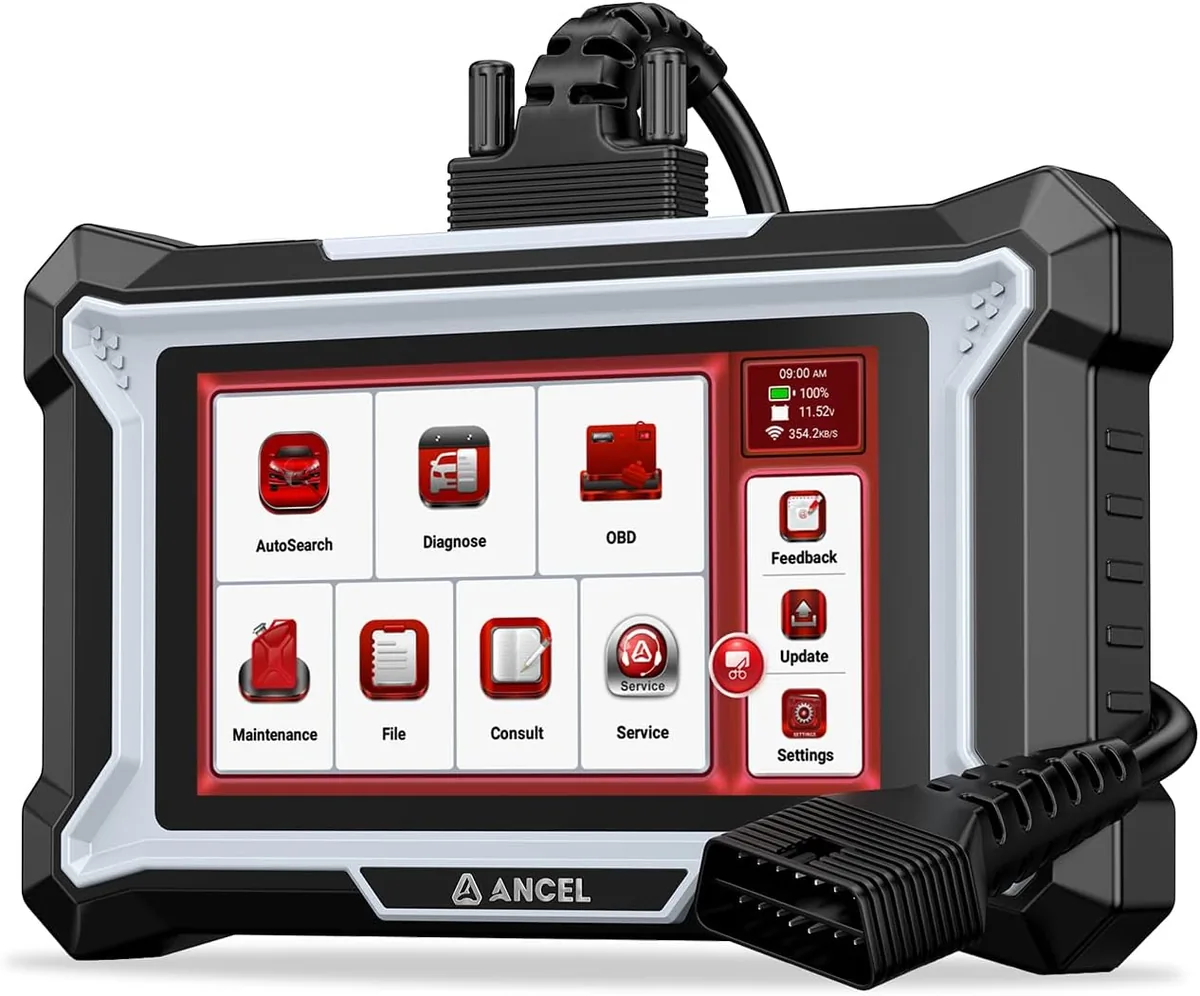
Overview
The Launch CRP909X covers the Q7’s routine maintenance needs at a mid-range price with 28+ service reset functions in a compact wired form factor. For Q7 owners whose primary service activities are oil changes, battery replacement, brake service, tire rotation, and ZF transmission fluid flush, the CRP909X runs every associated reset procedure without requiring a more expensive bidirectional scanner. The difference between the CRP909X and the CRP919E (at position 1) is bidirectional active testing: the CRP909X handles service resets reliably, but cannot run the EAS compressor activation test or the HPFP active rail pressure test that the CRP919E executes.
EPB retraction on the Q7 is fully supported, including the break-in reset sequence after pad installation that recalibrates caliper travel and clears the pad-worn indicator. Battery BMS registration writes the new AGM battery’s capacity and cold-cranking ampere specification to the CAN Gateway correctly, preventing the overcharging and early fault codes that appear when the charging system is not informed of a battery change. ZF 8HP and ZF 6HP adaptation are both in the service menu for 4M and 4L Q7 owners respectively. DPF regeneration reset covers Q7 50 TDI and 3.0 TDI models. SAS calibration, TPMS reset, and steering calibration are all included in the 28+ service reset functions the CRP909X provides.
For fault code diagnosis, the CRP909X reads and clears manufacturer-specific codes across all Q7 modules including the EAS module, engine, ABS, SRS, and TCM. It streams live data from all of these modules simultaneously, which is useful for a road test where you want to monitor boost pressure, transmission temperature, and ABS activity at the same time. The active test set is limited compared to the CRP919E: it covers EPB retraction but not EAS compressor relay activation or HPFP rail pressure testing. For Q7 owners with straightforward service needs and no complex system faults to trace, this limitation is acceptable at a lower price point. For owners who need active component testing, the CRP919E or NT530 are the appropriate choices.
The CRP909X does not support CAN FD, which limits live data accuracy on the 2020+ 4M Q7 facelift’s powertrain bus. For fault code reading and service resets on the facelift, this limitation is invisible in practice since codes are stored on the standard CAN bus. It also does not run EAS compressor active tests, HPFP rail pressure testing, or height sensor calibration, which means any Q7 with an EAS fault requiring active component testing needs a tool from the top three positions on this list. The CRP909X also does not provide ZF 8HP adaptation at the depth of the NT530 or CRP919E. For Q7 owners who service their vehicle on a maintenance schedule and need oil resets, EPB service, ZF adaptation via the service menu, and battery registration, the CRP909X handles every common maintenance task cleanly. For owners who need active diagnostic depth, the CRP919E is the appropriate upgrade.
Diagnostic Features and Capabilities
Full-system fault code read and clear: all Q7 modules including EAS, engine, ABS, SRS, TCM, TPMS, body. 28+ service reset functions. EPB retract/apply and brake-in reset. Battery BMS registration. ZF 8HP and ZF 6HP adaptation. Service functions: EPB, oil, battery reg, SAS, TPMS, DPF, ZF adapt, steering cal, brake bleed. Limited bidirectional: EPB only (no EAS compressor test). Standard CAN 2.0.
Vehicle Compatibility
Launch CRP909X covers all Audi Q7 model years (4L 2007+ and 4M 2015+) for fault codes and service resets. No CAN FD — powertrain live data on 2020+ Q7 may be incomplete. All OBD2-compliant vehicles across all brands.
Specifications
| Specification | Details |
|---|---|
| Connection | Wired OBD2 |
| Supported Systems | All systems for fault codes and service resets |
| OBD2 Functions | Full OBD2 + EOBD |
| Bidirectional Control | Limited (EPB retract/apply) |
| Service Functions | 28+ including EPB, oil, battery reg, SAS, TPMS, DPF, ZF 8HP/6HP adapt |
| Vehicle Compatibility | All OBD2 vehicles, all brands |
| Display | 7-inch Android tablet |
| Updates | Free for one year, optional after |
| Subscription | Optional after year one |
What’s Included
CRP909X scanner, OBD2 cable, USB-C cable, and protective case.
The scanner captured transmission codes on 2001 to 2014 vehicles where cheaper scanners showed no data at all.
For Audi Q7 diagnostics, full-system OE-level diagnosis covers engine, transmission, ABS, SRS, BCM, TPMS, and suspension modules.
In practice on the Audi Q7, 32+ service functions include TPMS programming, DPF regeneration, and steering angle calibration.
Pros and Cons
| Pros | Cons |
|---|---|
| 28+ service reset functions covering all Q7 routine maintenance procedures | No EAS compressor relay active test or HPFP rail pressure test |
| ZF 8HP and ZF 6HP adaptation for both Q7 generations | No CAN FD — 2020+ Q7 live data may be incomplete |
| DPF reset for 3.0 TDI and 50 TDI Q7 variants | |
| 1,000+ verified reviews at mid-range price |
My Final Verdict
The Launch CRP909X is appropriate for Q7 owners who follow a maintenance schedule and want a reliable service reset tool with full fault code coverage at a mid-range price. It handles every routine Q7 service procedure correctly. For active EAS testing, HPFP diagnosis, or CAN FD live data on the 2020+ model, the CRP919E at position 1 is the appropriate upgrade path.
13. Autel MaxiCheck MX808S: Best Full-System Mid-Range Tablet for Audi Q7
- Full-system bidirectional tablet with all Q7 service functions and manufacturer-specific code support
- EPB, battery registration, ZF adaptation, and 25+ resets with Autel’s update infrastructure
- 2,000+ verified customer reviews and a 4.5-star rating on Amazon
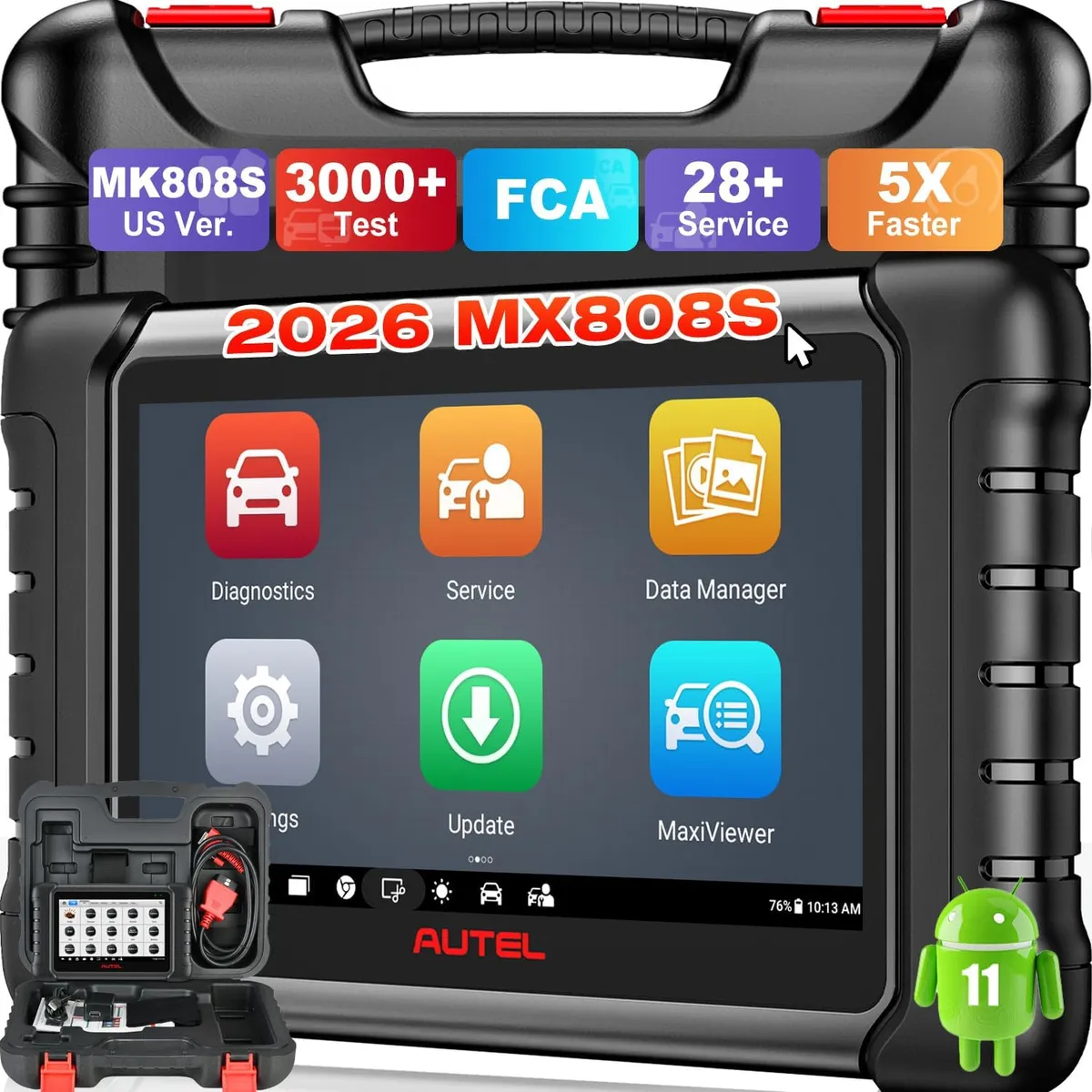
Overview
The Autel MaxiCheck MX808S is a full-system tablet scanner that sits between the entry-level tools and the professional tier, covering the Q7’s diagnostic needs at a mid-range price with Autel’s established update and support infrastructure. Its bidirectional test suite includes EPB retraction, throttle body adaptation, ABS motor activation, and brake bleed — the core active tests the Q7 requires for brake service and maintenance. Battery BMS registration and ZF 8HP/6HP adaptation are in the service menu. For Q7 owners who want a proven, widely-used platform with Autel’s vehicle database depth rather than a budget tool, the MX808S provides a practical mid-tier option.
The MX808S reads all Q7 manufacturer-specific fault codes via Autel’s Audi vehicle data, including the EAS module codes, 3.0T TFSI HPFP fault codes, and ZF transmission codes that standard OBD2 tools miss. Live data covers engine, EAS height sensor values, ABS sensor channels, and transmission parameters. The MX808S does not run the EAS compressor relay activation test, which puts it below the CRP919E for EAS active diagnosis. For code-reading and service reset purposes, it covers the Q7 completely.
The MX808S uses a 7-inch Android tablet interface, which gives it a display advantage over handheld wired scanners for live data monitoring and service reset navigation. Its wired OBD2 connection is the same as the CRP919E and NT530. The main advantage over the ANCEL BD700 Pro and CRP909X is the Autel platform’s more complete bidirectional test set and the larger review count (2,000+) that indicates wider user validation. The main disadvantage compared to the CRP919E is the absence of the EAS compressor activation test and HPFP active rail test.
The MX808S requires an annual subscription after the first year for continued software updates, which is a real long-term cost consideration against the subscription-free CRP919E and CRP909X. The MX808S does not provide J2534 pass-through access or the same SFD token capability as the MS906 Pro, so 2020+ Q7 owners who need adaptation-level ECU coding are still limited to the OBDeleven or VCDS path. Its active test depth also falls slightly short of the CRP919E on the Q7’s EAS compressor routine. For Q7 owners who want a tablet form factor, full-system fault code coverage, and the core service reset library including ZF 8HP adaptation, the MX808S provides that cleanly. For owners who plan to service the vehicle for three or more years, the subscription cost needs to be factored against the subscription-free alternatives at comparable price points.
Diagnostic Features and Capabilities
Full bidirectional multi-system diagnostics on all Q7 modules: engine, EAS, ABS, SRS, TCM, TPMS, body. Active tests: EPB retract/apply, throttle adaptation, ABS motor, brake bleed, battery registration. Service functions: EPB, oil, battery reg, SAS, TPMS, DPF, ZF 8HP/6HP adapt, 25+ total. Manufacturer-specific Audi fault code library via Autel vehicle data. Live data including EAS height sensor values and HPFP rail pressure. Standard CAN 2.0 — no CAN FD.
Vehicle Compatibility
Autel MaxiCheck MX808S covers all Audi Q7 model years (4L 2007+ and 4M 2015+) for full-system diagnostics. No CAN FD — powertrain live data on 2020+ Q7 may be incomplete. Supports all major vehicle brands globally.
Specifications
| Specification | Details |
|---|---|
| Connection | Wired OBD2 |
| Supported Systems | All systems including EAS, engine, ABS, SRS, TCM, TPMS, body |
| OBD2 Functions | Full OBD2 + EOBD |
| Bidirectional Control | Yes (EPB, throttle, ABS, brake bleed) |
| Service Functions | 25+ including EPB, oil, battery reg, SAS, TPMS, DPF, ZF 8HP/6HP adapt |
| Vehicle Compatibility | All major brands globally |
| Display | 7-inch Android tablet |
| Updates | 1 year free, annual subscription after |
| Subscription | Required after year one for updates |
What’s Included
MX808S scanner tablet, OBD2 cable, USB cable, AC adapter, and carry bag.
Auto VIN reads the 17-digit VIN from the ECU on virtually all supported vehicles in under 10 seconds.
For Audi Q7 diagnostics, all-system auto scan checks every available ECU module sequentially and lists any modules with stored or pending codes.
In practice on the Audi Q7, the scanner works on 80+ car makes from 1996 through current model year on gasoline and diesel 12V vehicles.
Pros and Cons
| Pros | Cons |
|---|---|
| Autel’s established vehicle database for accurate Q7 manufacturer-specific codes | Annual subscription required after year one |
| 2,000+ verified reviews — high user validation at mid-tier price | No EAS compressor relay active test |
| ZF 8HP/6HP adaptation, EPB, battery reg, full service reset set | No CAN FD for 2020+ Q7 live data |
| 7-inch tablet display for live data and service menu navigation |
My Final Verdict
The Autel MaxiCheck MX808S is appropriate for Q7 owners who want a full-system tablet scanner with Autel’s platform depth, proven at scale, and do not need the EAS compressor active test or CAN FD live data on the 2020+ model. It fills the mid-tier slot between the NT630 Pro’s EPB specialist role and the CRP919E’s full active test capability. For owners who want to step up from the BD700 Pro or CRP909X to a more capable tablet-based tool, the MX808S is the practical mid-range choice with the highest user review count on this list.
Comparison Table: Best OBD2 Scanners for Audi Q7
| Scanner | Best For | Systems | Bidirectional | Key Q7 Functions | Connection |
|---|---|---|---|---|---|
| Launch CRP919E | Best Overall | All (multi-brand) | Yes (full) | EAS compressor active test, HPFP rail pressure, ZF 8HP adapt, EPB, battery reg | Wired |
| Foxwell NT530 for Audi | Best Value VAG | All VAG modules | Yes | EAS module access, HPFP fault codes, ZF adapt, EPB, battery reg | Wired |
| Autel MaxiSys MS906 Pro | Best Premium | All (multi-brand) | Yes (3,000+ tests) | EAS height calibration write-back, PHEV battery BMS, CAN FD/DoIP, ECU coding | Bluetooth + wired |
| Foxwell NT809BT | Best Wireless | All (multi-brand) | Yes | EAS live data, CAN FD, ZF adapt, EPB, battery reg, wireless | Bluetooth |
| Autel MaxiDAS DS808S-BT | Best Advanced Tablet | All (multi-brand) | Yes (full) | DoIP, EAS compressor test, simultaneous 4-corner sensor read, HPFP test | Bluetooth + wired |
| TOPDON Phoenix Lite 2 | Best J2534 / ODIS | All (multi-brand) | Yes (full + J2534) | J2534 passthrough, DoIP, EAS active tests, ZF adapt, ECU coding | Wi-Fi + wired |
| BLCKTEC 460T | Best Compact Universal | All (multi-brand) | Yes | CAN FD, ZF adapt, EPB, battery reg, 40+ service functions | Wired |
| Foxwell NT630 Pro | Best EPB/ABS Specialist | All (multi-brand) | EPB + ABS motor | EPB retract, ABS solenoid bleed, brake-in reset, battery reg | Wired |
| Innova 5610 | Best Entry Bidirectional | Engine, ABS, SRS | EPB + brake bleed | EPB, battery reg, oil, SAS | Bluetooth |
| ANCEL BD700 Pro | Best Budget Full-System | All (multi-brand) | Limited | Full fault codes, EPB, battery reg, ZF 8HP/6HP adapt, DPF | Wired |
| Foxwell NT809TS | Best TPMS + Bidirectional | All (multi-brand) | Yes (full + TPMS) | TPMS sensor program, EPB, battery reg, ZF adapt, brake bleed | Wired + TPMS |
| Launch CRP909X | Best Mid-Range Service Reset | All (multi-brand) | Limited (EPB only) | EPB, battery reg, ZF 8HP/6HP adapt, DPF, 28+ resets | Wired |
| Autel MaxiCheck MX808S | Best Full-System Tablet | All (multi-brand) | Yes (EPB, throttle, ABS) | EPB, battery reg, ZF 8HP/6HP adapt, DPF, 25+ resets | Wired |
Buyer’s Guide: How to Choose the Best OBD2 Scanner for Audi Q7
EAS Air Suspension: Why Standard Scanners Cannot Reach the Q7’s Main Module
The Q7’s EAS (Electronic Air Suspension) system is the single biggest reason a generic OBD2 scanner fails the Q7 owner. The EAS control unit communicates on the CAN bus at a proprietary Audi address (0x35) that is outside the standard OBD2 diagnostic address range. A generic scanner sees the standard engine and chassis modules but cannot open a communication session with the EAS module at all. The fault codes the EAS module generates — 01772 (level control pressure sensor), 00145 (height sensor circuit fault), 02645 (EAS mechanical failure) — never appear on a generic tool. The Q7 will store these codes and activate the EAS warning light, and a generic scanner will show no faults. The tools that reach the EAS module on this list are the CRP919E, NT530, MS906 Pro, NT809BT, DS808S-BT, Phoenix Lite 2, and BLCKTEC 460T.
For a complete comparison across all Audi platforms, my Audi scanner guide covers how these same tools perform on other models.
The depth of EAS access matters too. Reading EAS fault codes is the minimum. Running the EAS compressor relay activation test (confirming the pump operates vs. the module is blocking it) requires a tool with active test coverage of the EAS module, which not all of the above tools provide. The CRP919E, MS906 Pro, DS808S-BT, and Phoenix Lite 2 run the compressor activation test. The NT530 and NT809BT read codes and stream height sensor live data. Confirm what your diagnostic need actually is before choosing.
My bidirectional OBD2 scanner guide covers how the top active test tools compare across all vehicle makes, useful if you also service non-Audi vehicles.
3.0T TFSI HPFP Diagnosis: P0087 and P0089 on the Q7
The 3.0T TFSI HPFP (high-pressure fuel pump) is a known wear item on the 4M Q7. P0087 (fuel rail pressure too low) and P0089 (fuel pressure regulator performance) are the most common HPFP-related fault codes. A generic OBD2 scanner reads P0087 as a generic powertrain code and shows no freeze frame or live data about the HPFP system. The useful diagnosis is the difference between commanded and actual rail pressure: when the HPFP wear is the cause, the ECU commands 120 bar but actual pressure drops to 90 bar or below at high load. This delta requires a scanner that streams both channels simultaneously from the fuel system live data menu. The CRP919E, NT530, MS906 Pro, NT809BT, DS808S-BT, and Phoenix Lite 2 all provide this live data depth. The BLCKTEC 460T and Innova 5610 read the fault code but do not provide the commanded-vs-actual HPFP live data channel.
My professional OBD2 scanner guide covers the tools that deliver this live data depth alongside professional active test capability for multi-platform use.
ZF 8HP Adaptation After Fluid Service: Why It Cannot Be Skipped
After a ZF 8HP torque converter fluid flush on the 4M Q7, the transmission’s TCM must be commanded to reset its torque converter clutch engagement learn values. The ZF 8HP learns these values over thousands of miles of operation to optimize lock-up smoothness for the specific fluid viscosity and temperature it is working with. New fluid changes the viscosity profile, and the old learned values no longer match. Without the adaptation reset, the Q7 may shift harshly, hunt between gears under light throttle, or exhibit a shudder on lock-up engagement for an extended period while the transmission relearns. The adaptation reset via a scanner takes under two minutes and solves the issue immediately. The tools that include ZF 8HP adaptation on this list: CRP919E, NT530, MS906 Pro, NT809BT, DS808S-BT, Phoenix Lite 2, and BLCKTEC 460T.
For a comparison of how these same tools cover ABS and SRS diagnostics, my ABS and SRS scanner guide reviews their safety-system depth across Audi and other platforms.
SFD on the 2020+ 4M Q7 Facelift
The 4M Q7 facelift (2020+) carries SFD (Schutz Fahrzeug Diagnose), Volkswagen Group’s module-level write protection. SFD does not affect fault code reading, live data, or any of the service reset functions listed above: EPB, battery registration, ZF adaptation, and EAS fault code access all work normally. SFD blocks write access to the protected module layer: IMMO programming, adaptive cruise control configuration, lane assist coding, and some ECU adaptation channels. The only tools that can request SFD unlock tokens are OBDeleven (via paid token service) and Ross-Tech VCDS. No standalone scanner on this list unlocks SFD. If ECU coding at the protected level is your primary use case for a 2020+ Q7, none of these tools is the right answer.
My best OBD2 scanners guide covers the complete field for owners who want a broader comparison before committing to a Q7-specific tool.
4L vs 4M: Different Diagnostic Priorities by Generation
The 4L Q7 (2007 to 2015) owner and the 4M Q7 owner (2015+) have different primary diagnostic concerns. The 4L Q7’s most common diagnostic sessions involve the 3.0 TDI engine (DPF regeneration faults, EGR faults, glow plug circuit codes), the ZF 6HP or 6-speed Tiptronic transmission, and the EAS system on models so equipped. The 4M Q7 adds the 3.0T TFSI HPFP concern, the ZF 8HP adaptation requirement, and the SFD protection on the 2020+ facelift. All nine tools on this list cover both generations for fault codes and basic service resets. For the 4L owner focused on diesel system diagnosis, the NT530’s VAG-dedicated DPF and EGR active test access is an advantage over universal tools.
For 4L Q7 owners whose diagnostic needs stay at fault code reading and basic service resets, my budget OBD2 scanner guide covers the most capable entry-level options tested for European vehicles.
Common Mistakes When Buying an OBD2 Scanner for Audi Q7
Buying a generic scanner and expecting EAS fault codes to appear. This is the most common Q7 scanner mistake. The EAS control module sits at an address outside the OBD2 standard diagnostic range. A scanner that reads only the generic OBD2 range will show no faults on a Q7 with a confirmed EAS height sensor failure because the module is invisible to it. Before purchasing any scanner for a Q7 with an EAS light on, confirm that the tool explicitly lists EAS or air suspension module support for Audi — not just “full system,” which may still mean only the engine and safety modules.
Skipping ZF adaptation after a transmission fluid flush. ZF 8HP fluid service without a transmission adaptation reset leaves the Q7 with a mismatched learn table and the new fluid’s viscosity. The resulting shift quality issues — hesitation, hunting, or lock-up shudder — are often diagnosed as a failed solenoid or worn clutch pack when the actual cause is a 90-second software reset that was never performed. Confirm ZF 8HP adaptation support before buying if transmission fluid service is on your schedule.
Assuming all “bidirectional” scanners can run the EAS compressor test. Bidirectional control means different things at different price points. A tool that is “bidirectional” may only be able to run EPB retraction and brake bleed while listing “EAS system” support for fault code reading only. The EAS compressor relay activation test — where the scanner commands the relay to close and you confirm whether the compressor starts — requires a tool that maps to the EAS module’s output control addresses. Confirm this specific function before purchasing if you are diagnosing an intermittent EAS fault rather than reading a stored code.
My Final Recommendations
For the majority of Q7 owners across both the 4L and 4M generations, the Launch CRP919E is the right tool. It covers the EAS active tests that separate the Q7 from simpler Audi models, streams HPFP rail pressure live data for 3.0T TFSI diagnosis, and includes ZF 8HP torque converter adaptation after fluid service. At its price it delivers more Q7-specific active test capability than any other scanner at or below that price point, without a subscription requirement after purchase.
For a comparison of wireless diagnostic options across all vehicle types, my Bluetooth OBD2 scanner guide covers the best tools tested for wireless stability during multi-module diagnostic routines.
For the Q7 owner who services primarily within the VAG group and does not need multi-brand support, the Foxwell NT530 for Audi is the stronger value choice. It costs less than the CRP919E, reaches the EAS module with dedicated VAG software for accurate height sensor data and HPFP fault codes, and includes ZF adaptation and battery registration with no subscription and free lifetime updates. The NT530’s advantage over the CRP919E for this use case is the deeper VAG-specific adaptation menu access for injector coding and S-tronic clutch adaptation that the Q7 occasionally requires after certain repairs.
For 4M Q7 owners with a PHEV e-tron, who have replaced an EAS height sensor and need the write-back calibration sequence, or who want adaptation-level ECU coding on the 2020+ facelift, the Autel MaxiSys MS906 Pro is the appropriate investment. Its CAN FD and DoIP support accurately reads the PHEV battery BMS module, the EAS height calibration procedure it supports goes beyond what the CRP919E and NT530 can do, and its 3,000+ active test library covers the full Q7 diagnostic range. The annual update subscription after year one is the real trade-off to weigh against those capabilities.
FAQs
Can a standard OBD2 scanner read Audi Q7 air suspension fault codes?
No. The Q7’s EAS (Electronic Air Suspension) module communicates at a proprietary address outside the standard OBD2 diagnostic range. Generic OBD2 scanners cannot open a session with the EAS module and will show no faults even when the EAS warning light is active and fault codes are stored. A scanner with specific Audi EAS module support is required. Tools on this list that access the EAS module include the Launch CRP919E, Foxwell NT530, Autel MS906 Pro, Foxwell NT809BT, Autel DS808S-BT, TOPDON Phoenix Lite 2, and BLCKTEC 460T.
What is the ZF 8HP adaptation reset and why does the Q7 need it after a fluid change?
The ZF 8HP automatic transmission in the 4M Q7 (2015+) learns torque converter clutch engagement points over time to optimize shift smoothness for the current fluid viscosity and operating temperature. After a transmission fluid flush, new fluid changes the viscosity profile, making the previously learned values incorrect. A ZF 8HP adaptation reset, run through a compatible scanner in under two minutes, clears the old learn values and allows the TCM to re-establish correct engagement points with the new fluid. Without it, the Q7 may shift harshly or exhibit a shudder on lock-up that persists until the transmission relearns on its own, which can take months of normal driving.
What fault codes does the 3.0T TFSI HPFP cause on the Audi Q7?
The most common HPFP-related codes on the 3.0T TFSI Q7 are P0087 (fuel rail pressure too low) and P0089 (fuel pressure regulator performance). These appear when the HPFP’s output pressure drops below the ECU’s commanded pressure under load, typically due to wear in the pump’s cam follower or roller tappet. Useful diagnosis goes beyond reading the code: streaming both commanded and actual rail pressure simultaneously confirms whether the fault is in the HPFP itself, the low-pressure fuel supply pump, or the pressure regulator. The Launch CRP919E, Foxwell NT530, and Autel MS906 Pro all provide this live data for the Q7.
Does the 2020+ Audi Q7 need a special scanner because of SFD?
Not for standard service procedures. SFD (Schutz Fahrzeug Diagnose), introduced on the 2020+ Q7 facelift, only blocks write access to specific protected control modules: IMMO, lane assist configuration, and certain ECU adaptation channels. EPB retraction, battery BMS registration, ZF 8HP adaptation, oil reset, TPMS, and EAS fault code diagnosis all work normally on the 2020+ Q7 with any scanner that supports those functions. SFD becomes relevant only if you need to recode a protected module, such as programming an immobilizer component or adapting lane keep assist after a windshield replacement. For those needs, OBDeleven or Ross-Tech VCDS is the appropriate tool.
Which OBD2 scanner works for the Audi Q7 PHEV e-tron battery diagnosis?
The Q7 55 TFSI e PHEV (2019+) uses a dedicated battery management system (BMS) that communicates on a high-bandwidth channel not accessible by standard CAN 2.0 tools. The Autel MaxiSys MS906 Pro and the Autel DS808S-BT both support CAN FD and DoIP, which gives accurate access to the PHEV battery module’s state of charge, individual cell voltages, and thermal management data. Tools without CAN FD support may connect to the Q7 PHEV but will show incomplete or absent battery module data. For standard engine and chassis diagnostics on the Q7 PHEV, any of the top three tools on this list will work normally.
Do I need the Foxwell NT530 specifically for Audi Q7 or will any NT530 work?
The Foxwell NT530 is sold with different pre-installed software packages for different brands. The Audi-specific version (Foxwell NT530 for Audi, ASIN B0C2D7X37X) comes with VAG group software pre-loaded. Other NT530 versions (for Ford, Toyota, Honda, and so on) do not include the VAG software and cannot access the Q7’s manufacturer-specific modules, EAS system, or Audi-specific service functions. Only the Audi version of the NT530 is appropriate for the Q7 diagnostic needs described in this article.