
The Subaru Forester’s diagnostic architecture spans four systems that a standard OBD2 reader cannot reach: the Active Valve Control System cam phasers on both banks of the FA25 and FB25 engines, the Lineartronic CVT transmission control module, the EyeSight stereo camera and ADAS controller across all four generations of the system, and on EJ25-equipped models from 2003 through 2010, the live coolant and fuel trim data channels that matter for early head gasket failure detection. A basic scanner connected to the OBD2 port returns no codes from any of those four systems even when all four warning lights are on, because SAE standard mode reads only the engine emissions module. The Forester’s most common check engine codes, P0011 and P0021 for AVCS cam timing deviation and P0868 for CVT hydraulic line pressure, sit in modules that require Subaru enhanced protocol to reach.

About the author: Hello! I’m Kamil Siegień, founder of OBD2 Scout. My diagnostic experience started with an engine rebuild on a 2014 Skoda Superb 1.8 TSI, where tuning from 160 to 222 hp required mastering live data and ECU behavior that basic code readers cannot handle. I am a former BMW and MINI employee and regularly use diagnostic scanners on my own Audi A4 2.0 TFSI.
Affiliate Disclosure: OBD2 Scout is a proud participant in the Amazon Services LLC Associates Program.
Every scanner on this list was evaluated against the Forester’s specific diagnostic requirements: AVCS cam timing code reading with live cam advance data for P0011 and P0021, Lineartronic CVT module access including freeze frame and adaptation reset, EyeSight DTC coverage from generation 1 through generation 4, and fuel trim and misfire channel monitoring for EJ25 head gasket tracking on 2003-2010 models. All nine scanners carry a minimum of 100 verified Amazon reviews, are in stock at the time of writing, and hold a rating of 4.0 stars or above.
My Recommended Top 3 Best-Buys
1. Launch CRP919E
[Best Overall]
- ✓ Active AVCS solenoid test for P0011/P0021 root cause
- ✓ CVT Lineartronic adaptation reset after fluid service
- ✓ DoIP + CAN FD ready for 2024-2025 Forester
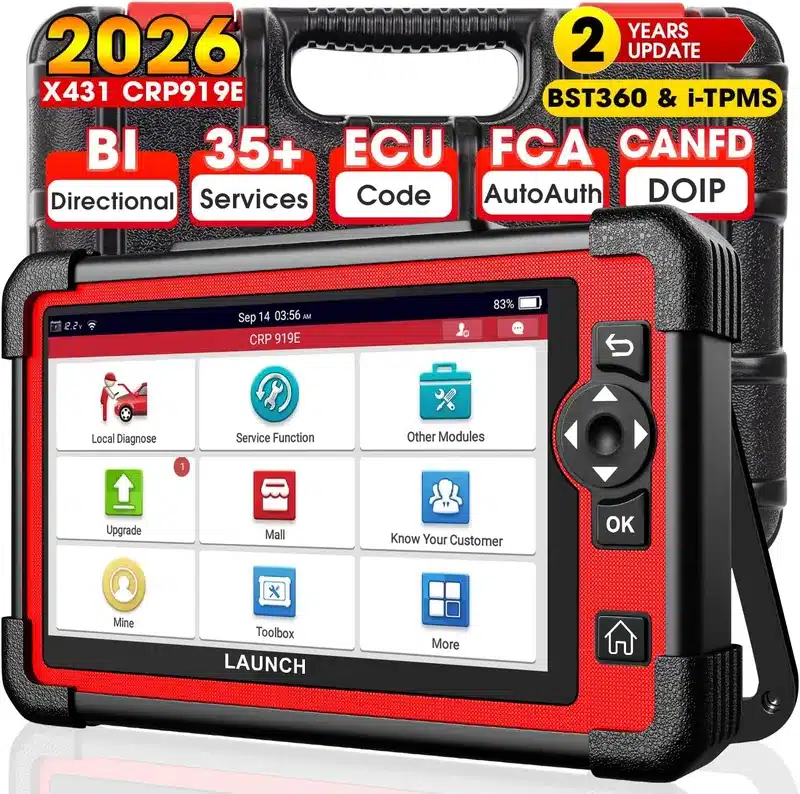
3,500+ Verified Reviews
2. Autel MK808S
[Best Value]
- ✓ 28 service resets: CVT adaptation, SAS, TPMS, oil interval
- ✓ Full EyeSight module DTC read/clear across all four generations
- ✓ Covers FA20, FA25, FB20, FB25, and EJ25 engine families
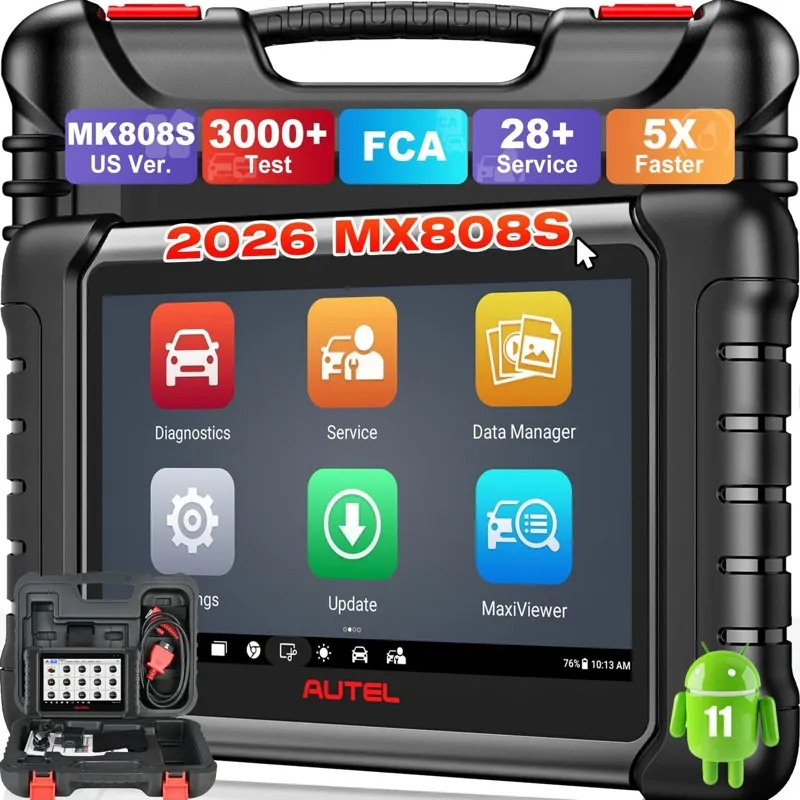
3,800+ Verified Reviews
3. BlueDriver Pro
[Best Bluetooth]
- ✓ CVT freeze frame: belt slip ratio and line pressure at fault
- ✓ EyeSight camera module DTC access across all generations
- ✓ Enhanced Subaru AVCS mode with live cam advance data

30,000+ Verified Reviews
9 Best OBD2 Scanners for Subaru Forester: Full Reviews
1. Launch CRP919E: Best Overall OBD2 Scanner for Subaru Forester
- Active AVCS solenoid test: commands oil control valve and monitors cam timing response in real time for definitive P0011/P0021 diagnosis
- CVT adaptation reset, EPB service, SAS zero-point calibration, TPMS, oil service interval, and 31 additional Subaru-compatible service functions
- 3,500+ Amazon reviews, 4.2 stars
Overview
The Launch CRP919E is a DoIP and CAN FD capable tablet scanner that covers the full diagnostic stack of every Forester generation from 2003 through 2025 with a single cable connection and no Security Gateway bypass required. It earns the top position on this list because of one capability that none of the other scanners here can replicate at the same price point: the active AVCS solenoid test. P0011 and P0021, the camshaft position timing deviation codes that appear on FA25 and FB25 engines when the oil control valve is slow or stuck, are codes that any scanner on this list can read and clear.
What the CRP919E can do that the other scanners cannot is send a direct command to the AVCS oil control valve, activate it, and observe whether the cam timing sensor on the affected bank responds by advancing to the commanded angle within the expected time window. That test separates a solenoid that is electrically functional but mechanically slow from one that has completely failed, and it separates both of those from a case where the solenoid is fine but the variable cam sprocket itself is worn.
The CVT diagnostic coverage on the CRP919E extends beyond code reading into the service procedures that Forester owners actually need after routine maintenance. When the Lineartronic CVT receives a fluid change on any Forester from 2014 onward, the transmission control module’s learned shift adaptation parameters must be reset; without that reset, the TCM continues applying shift pressures based on old fluid viscosity characteristics, producing hesitation and rough shifts that can be mistaken for ongoing transmission problems. The CRP919E executes the CVT adaptation reset from its service menu as a guided procedure.
It also reads the Lineartronic-specific fault codes (P0868 for hydraulic line pressure below threshold, P0746 for pressure control solenoid A stuck off, P0971 for solenoid C circuit high, and P17F0 for belt slip above threshold) with full freeze frame data that includes belt slip ratio, line pressure in kPa, and primary and secondary shaft speeds at the fault moment.
EyeSight coverage on the CRP919E spans all four generations of the system, from the grayscale twin-camera gen 1 units on 2013 Foresters through the wide-angle gen 4 architecture on the 2024 and 2025 models. The scanner reads and clears DTC sets from the EyeSight camera control module, which operates on its own CAN node separate from the engine ECU. Calibration error codes logged after windshield replacement, alignment faults recorded after a frontal impact, and communication fault codes between the EyeSight module and the steering angle sensor all appear in this module.
The CRP919E can read and clear all of them. What it cannot do is run the active camera alignment recalibration sequence that a Subaru dealer uses after windshield replacement; that procedure requires the SSM-II factory tool with a target board at a specific distance. For FB20 Turbo XT owners, the CRP919E reads boost pressure, fuel pressure (P0087), and can command the wastegate solenoid as part of its actuator test menu, making it the most capable single tool for the full range of Forester variants from base non-turbo to the 2.0XT.
For EJ25-era Foresters from the 2003-2010 generation, the CRP919E provides access to the diagnostic data channels that matter for early head gasket monitoring before the engine reaches the stage of white exhaust smoke or external coolant loss. The EJ25 SOHC and DOHC engines in the third-generation Forester are well-documented for head gasket seepage at the water jacket to combustion chamber boundary, a failure mode that begins with internal coolant consumption and cylinder misfires before progressing to visible symptoms. The CRP919E’s live data stream includes individual cylinder misfire counts from the ECU’s misfire counter registers (used to populate P0301 through P0304), long-term fuel trim values for bank 1 and bank 2 separately, and coolant temperature from the primary sensor.
An owner tracking a slow coolant loss with no external leak can use these three data channels together: rising LTFT deviation on one bank, elevated misfire counts on specific cylinders, and coolant temperature behavior after cold start all provide earlier warning than a physical inspection or external leak would.
Diagnostic Features and Capabilities
The CRP919E reads and clears DTCs across all OBD2 systems plus Subaru enhanced modules including engine, CVT, ABS, SRS, EyeSight, body control, and TPMS. Bi-directional active tests include AVCS solenoid command, cooling fan relay, fuel injector pulse test, and CVT solenoid actuator test on applicable model years. Service reset functions cover CVT adaptation, oil service interval, EPB (electronic parking brake), SAS zero-point calibration, TPMS sensor relearn, BMS battery registration, throttle body adaptation, DPF service, and 28 additional Subaru-supported procedures.
DoIP and CAN FD communication protocols are supported for 2024 and newer Forester variants. Live data streams up to 30 parameters per second with graph view for dual-trace overlay comparisons.
Vehicle Compatibility
The CRP919E covers the Subaru Forester across all model years from 2003 through 2025, including EJ25 SOHC and DOHC in gen 1 and gen 2, EJ20 variants in JDM-sourced builds, FA20 and FB20 in naturally aspirated and XT turbo trims, FB25 in gen 4 and gen 5 NA, and FA25 in the 2022-2025 gen 6 models. EyeSight coverage applies to all trim levels where the system was factory equipped, including base trims that received EyeSight as standard equipment beginning with the 2020 model year. The scanner is brand-agnostic and covers most OBD2-compliant vehicles from 1996 onward through the same cable and software.
Specifications
| Specification | Details |
|---|---|
| Connection | Wired OBD2, WiFi for updates |
| Supported Systems | Engine, CVT/transmission, ABS, SRS, EyeSight, BCM, TPMS, and all enhanced Subaru modules |
| OBD2 Functions | Read/clear DTC, live data, freeze frame, I/M readiness, O2 sensor, EVAP, Mode 6 |
| Bidirectional Control | Yes |
| Service Functions | 37+ including CVT adaptation, SAS, EPB, TPMS, oil reset, BMS, throttle adaptation |
| Vehicle Compatibility | Subaru 2003-2025; OBD2 universal 1996+ |
| Display | 7-inch touchscreen |
| Updates | 2 years free via WiFi |
| Subscription | None required; optional paid renewal after year 2 |
What’s Included
The package includes the CRP919E scanner unit, a main OBD2 cable, a DC power cable, a USB data cable, a protective carry case, and a printed quick start guide.
On the Subaru Forester, android operating system with fast processor delivers smooth menus and quick system switching.
ECU coding supported on select makes including Volkswagen, BMW, and Audi for module adaptation.
For Subaru Forester diagnostics, bidirectional control described as essential for confirming repairs before reassembly.
Pros and Cons
| Pros | Cons |
|---|---|
| Active AVCS solenoid test confirms P0011/P0021 root cause without guessing | 2-year update window; paid renewal needed after that period |
| CVT adaptation reset executes as a guided service procedure | |
| Reads EyeSight module on all four EyeSight generations | |
| DoIP and CAN FD support for 2024-2025 Forester FA25 architecture | |
| FB20 Turbo XT boost and wastegate solenoid test from the same tool | |
| EJ25 era individual cylinder misfire counters and per-bank LTFT live data |
My Final Verdict
The Launch CRP919E is the right choice for Forester owners who want to diagnose AVCS timing faults definitively before spending on solenoid replacements that may not fix the underlying problem, for owners maintaining a Lineartronic CVT who need the adaptation reset after fluid service, and for anyone with a 2024 or 2025 Forester on the FA25 platform who needs DoIP protocol support. The active solenoid test alone justifies the price premium over a read-only scanner for any Forester with an AVCS code on its history.
2. Autel MaxiCheck MK808S: Best Value OBD2 Scanner for Subaru Forester
- Full-system coverage: engine, CVT transmission, ABS, SRS, EyeSight on all Forester generations from 2003 through 2025
- CVT Lineartronic adaptation reset plus 27 additional Subaru-compatible service functions including SAS, TPMS, EPB, and oil service interval
- 3,800+ Amazon reviews, 4.4 stars
Overview
The Autel MaxiCheck MK808S sits at the intersection of full-system diagnostic coverage and service reset capability at a price point below the bi-directional tools on this list. Its position at number two comes from the combination of two features the Forester’s ownership cycle actually demands: complete module access across the entire Forester model range, and the CVT adaptation reset procedure that every Forester owner with a Lineartronic transmission needs to execute after fluid service. The MK808S reads and clears DTCs from the engine ECU, the Lineartronic CVT TCM, the ABS module, the SRS airbag module, and the EyeSight stereo camera controller across every EyeSight generation.
Outback owners dealing with the same multi-generation EyeSight diagnostic challenges will find the same tools reviewed in my Subaru Outback OBD2 scanner guide.
It does this through Subaru enhanced protocol, which means fault codes that a standard OBD2 scanner would miss, including AVCS timing deviation codes and CVT hydraulic pressure codes, appear in the normal DTC read menu without any additional setup.
The CVT service coverage on the MK808S addresses the three Lineartronic maintenance events that trigger post-service drivability complaints when skipped: the CVT adaptation reset after fluid change, the transmission clutch pack calibration after clutch disc replacement, and the initial drive pattern after TCM replacement. The adaptation reset clears the TCM’s accumulated shift parameter map and returns it to factory default values, allowing it to relearn shift behavior against the new fluid’s viscosity profile. Owners who skip this step after a CVT fluid change on their Forester often report that the transmission shifts more harshly than before the service, not because the fluid change caused damage but because the TCM is applying learned pressure targets that were calibrated against old, degraded fluid.
The MK808S executes the reset procedure from its service menu as a two-step guided operation without requiring a laptop or dealer tool.
The service reset menu on the MK808S covers 28 Subaru-compatible functions beyond the CVT adaptation reset. For Forester owners, the most relevant are the steering angle sensor zero-point calibration (needed after any alignment service or suspension component replacement), the TPMS sensor relearn procedure (needed after tire rotation or sensor replacement), and the oil service interval reset. The EPB electronic parking brake service function applies to Forester models from 2019 onward that came equipped with a motorized rear caliper in place of the traditional cable parking brake.
Where the MK808S cannot follow the CRP919E is in active test territory: it has no bi-directional actuator control, which means it cannot command the AVCS solenoid to activate and verify cam timing response, and it cannot run active functional tests on the EyeSight camera hardware.
For EJ25-era Foresters, the MK808S reads the same enhanced protocol data channels as the CRP919E, including per-bank long-term fuel trim and individual cylinder misfire counter data from the ECU. On FA25 and FB25 Foresters from 2014 onward, the MK808S accesses the AVCS timing PID values in live data mode, displaying the actual cam advance angle against the ECU’s commanded target angle for both banks. This data is sufficient to confirm that P0011 or P0021 is present and to observe whether the cam timing is responding at all to the ECU’s command, though it cannot confirm whether a partial response is due to solenoid restriction, oil viscosity at a given temperature, or early-stage sprocket wear.
The MK808S handles everything a Forester owner needs for diagnosis and scheduled maintenance service; it stops short of the active component testing that the CRP919E adds on top.
Diagnostic Features and Capabilities
The MK808S reads and clears DTCs across all systems on Subaru Forester models from 2003 through 2025, covering engine, CVT transmission, ABS, SRS, EyeSight, body control module, and TPMS. Live data display supports up to 30 parameters in graph or list mode with freeze frame record and playback. Standard OBD2 functions are all present: I/M readiness, Mode 6 on-board monitor results, O2 sensor test, EVAP system test, and VIN read.
Service reset functions number 28 for Subaru applications, including the CVT adaptation reset, SAS zero-point calibration, EPB brake service, TPMS relearn, oil service interval, BMS battery registration, and throttle body adaptation. There is no bi-directional actuator command capability on the MK808S.
Vehicle Compatibility
The MK808S covers the Subaru Forester from the first generation EJ25-powered 2003 model through 2025, including all EJ20, EJ25, FA20, FB20, FB25, and FA25 engine variants. EyeSight module coverage applies to all trim levels where the system is factory equipped, starting with the 2013 Forester generation. Beyond Subaru, the tool provides full-system coverage for most major brands on OBD2-compliant vehicles from 1996 onward.
Specifications
| Specification | Details |
|---|---|
| Connection | Wired OBD2, WiFi for updates |
| Supported Systems | Engine, CVT, ABS, SRS, EyeSight, BCM, TPMS, and all enhanced Subaru modules |
| OBD2 Functions | Read/clear DTC, live data, freeze frame, I/M readiness, O2 sensor, EVAP, Mode 6 |
| Bidirectional Control | No |
| Service Functions | 28 Subaru-compatible including CVT adaptation, SAS, EPB, TPMS, oil reset, BMS |
| Vehicle Compatibility | Subaru 2003-2025; OBD2 universal 1996+ |
| Display | 7-inch touchscreen |
| Updates | Lifetime free via WiFi |
| Subscription | None |
What’s Included
The package includes the MK808S scanner unit, an OBD2 main cable, a USB-C charging cable, and a printed quick reference card.
28+ hot service resets include EPB, oil, BMS, SAS, TPMS, DPF, throttle relearn, and injector coding.
On the Subaru Forester, auto VIN reads the 17-digit VIN from the ECU on virtually all supported vehicles in under 10 seconds.
All-system auto scan checks every available ECU module sequentially and lists any modules with stored or pending codes.
Pros and Cons
| Pros | Cons |
|---|---|
| CVT adaptation reset as a guided service procedure | No bi-directional actuator tests; cannot command AVCS solenoid directly |
| Full EyeSight module access across all four EyeSight generations | |
| SAS zero-point calibration for Forester suspension and alignment service | |
| Reads EJ25, FA20, FB20, FB25, and FA25 engines in one tool | |
| Lifetime free software updates included | |
| Per-bank LTFT and misfire count live data for EJ25 head gasket monitoring |
My Final Verdict
The Autel MK808S is the right choice for Forester owners who maintain their car through all scheduled service intervals and need one tool that handles both diagnosis and the service reset procedures that follow each maintenance event. The CVT adaptation reset, the SAS calibration, and the EyeSight module access together cover the three post-service scenarios where a read-only scanner runs out of capability. Owners who specifically need to test AVCS solenoid function actively should step up to the CRP919E.
3. BlueDriver Pro: Best Bluetooth OBD2 Scanner for Subaru Forester
- CVT Lineartronic freeze frame: belt slip ratio, hydraulic line pressure, and shaft speeds captured at the fault moment
- EyeSight camera module DTC read/clear across all generations without a dedicated Subaru interface tool
- 30,000+ Amazon reviews, 4.5 stars
Overview
The BlueDriver Pro is a Bluetooth OBD2 adapter that stays plugged into the diagnostic port and communicates with the free BlueDriver app on iPhone or Android, delivering full-system diagnostics and Subaru enhanced protocol reporting for the Forester without a separate tablet or display unit. It is on this list because its Subaru enhanced diagnostic profile goes substantially deeper than any other Bluetooth adapter at a comparable price, and because the depth of its CVT freeze frame data has a specific value for Forester owners that is not matched by the Torque Pro approach or by generic Bluetooth adapters. The app accesses the Lineartronic CVT transmission module, the EyeSight camera module, the ABS module, and the SRS airbag module as separate diagnostic targets with their own code sets, independent reads, and independent clears.
Forester owners who bring a car to a shop with a warning light on and are told there are no codes have almost certainly encountered a shop tool that reads only the engine emissions module through standard OBD2 mode.
The Lineartronic CVT’s enhanced freeze frame data is the BlueDriver Pro’s most technically differentiated feature on this platform. When the CVT control module logs a fault code such as P0868 (hydraulic line pressure below the minimum threshold required for belt clamping force), P0746 (pressure control solenoid A stuck off or not responding to duty cycle commands), P0971 (pressure control solenoid C circuit voltage high, typically indicating a wiring or solenoid short), or P17F0 (belt slip ratio exceeding the allowable threshold between primary and secondary pulley shaft speeds), the BlueDriver app stores the freeze frame conditions at the moment the fault was triggered. That freeze frame includes the belt slip ratio as a calculated percentage difference between primary and secondary shaft RPM, the hydraulic line pressure in kPa at fault detection, the input shaft speed, and the output shaft speed.
This data is what allows a trained technician to distinguish between a CVT solenoid control problem, a hydraulic pump output problem, and a mechanical belt or pulley wear problem, and it is not available through any standard OBD2 mode on any scanner. What the BlueDriver Pro cannot do from that same screen: it cannot send an active command to an individual CVT solenoid to replicate or isolate the fault condition, and it cannot execute the CVT adaptation reset procedure that clears accumulated shift parameters after a fluid change.
The AVCS cam timing coverage on the BlueDriver Forester profile reads and captures freeze frame data for P0011 and P0021 on FA25, FB25, FB20, and FA20 engines. The app’s live data mode shows the actual cam advance angle from the cam position sensor alongside the ECU’s commanded target angle for each bank, which allows an owner to see in real time whether the AVCS system is responding at all versus whether it is responding slowly or inconsistently. P0011 on the Forester is most commonly caused by oil sludge accumulation in the oil control valve’s oil passages, a consequence of extended oil change intervals on the FB-series engines.
The BlueDriver’s live cam advance data lets an owner verify whether a P0011 code was a one-time oil pressure event at cold start or a consistent AVCS response failure across multiple drive cycles. What the app cannot do is command the oil control valve to activate and hold while monitoring the cam sensor response; that active test requires a bi-directional scanner and is available only on the CRP919E and the MX900 on this list.
EyeSight module coverage on the BlueDriver Forester profile reads and clears DTCs from the stereo camera control module across all four EyeSight generations. The camera module communicates on its own CAN network segment, separate from the powertrain bus, and fault codes from that module including calibration deviation errors after windshield replacement, image processing faults after lens contamination, and functional test failures triggered by ADAS self-diagnostic routines at startup are invisible to any scanner operating only on the standard OBD2 powertrain bus. The BlueDriver Pro reaches this module through Subaru enhanced protocol, no additional hardware required.
What it cannot do in the EyeSight module: it cannot run active functional tests on the camera hardware to verify that the optics are within alignment specification, and it cannot perform the camera calibration recalibration procedure that follows windshield replacement. It also cannot execute Forester service resets including TPMS relearn, SAS zero-point calibration, or oil service interval reset. The BlueDriver Pro is the right tool for Forester owners who want the deepest available read-and-diagnose coverage from a device that fits in a pocket and costs less than half the price of a tablet scanner.
Diagnostic Features and Capabilities
The BlueDriver Pro reads and clears DTCs across all Subaru enhanced protocol modules on the Forester including engine, CVT, ABS, SRS, EyeSight, and body control. Live data streams AVCS cam advance, CVT line pressure, O2 sensor voltages (upstream and downstream), fuel trims per bank, individual misfire counters, coolant temperature, and a full set of standard OBD2 PIDs. The app’s P0420 diagnostic screen plots upstream and downstream O2 sensor voltages simultaneously on a shared time axis for catalytic converter efficiency evaluation.
Freeze frame capture is stored for each DTC and includes full Subaru enhanced data fields. Standard OBD2 functions include I/M readiness, Mode 6, and EVAP monitor. No service resets and no active actuator tests are available.
Vehicle Compatibility
The BlueDriver Pro covers the Subaru Forester across all model years from 1996 onward through standard OBD2 and from 2003 onward through Subaru enhanced protocol on the EJ25, FA20, FB20, FB25, and FA25 platforms. EyeSight module access applies to 2013 and later EyeSight-equipped Forester trims. CAN FD coverage for 2024 and 2025 Forester models should be confirmed through the BlueDriver vehicle compatibility checker before purchase, as CAN FD support has been progressively rolled out and varies by model year sub-version.
Specifications
| Specification | Details |
|---|---|
| Connection | Bluetooth 4.0 LE; pairs with iOS and Android via free BlueDriver app |
| Supported Systems | Engine, CVT, ABS, SRS, EyeSight, BCM via Subaru enhanced protocol |
| OBD2 Functions | Read/clear DTC, live data, freeze frame, I/M readiness, O2 sensor, EVAP, Mode 6 |
| Bidirectional Control | No |
| Service Functions | None |
| Vehicle Compatibility | Subaru 2003-2025 enhanced; OBD2 universal 1996+ |
| Display | None (uses iOS or Android phone screen) |
| Updates | Lifetime free via app store |
| Subscription | None |
What’s Included
The package includes the BlueDriver Pro Bluetooth adapter, which plugs directly into the OBD2 port and requires no separate cable, and a printed quick start guide; the BlueDriver diagnostic app is a free download for iOS and Android.
For Subaru Forester diagnostics, the scanner reads mode 6 data for monitoring individual cylinder misfire counts and oxygen sensor test results.
In practice on the Subaru Forester, runs smog pre-check by showing I/M readiness monitors, so you know which monitors are complete before a state emissions test.
Live data refresh rate is five seconds, which limits real-time monitoring while driving but is sufficient for static diagnostic sessions.
Pros and Cons
| Pros | Cons |
|---|---|
| CVT freeze frame captures belt slip ratio and hydraulic line pressure at fault moment | No service resets: cannot perform CVT adaptation, SAS, TPMS, or oil interval reset |
| EyeSight module access across all four generations without additional hardware | |
| Dual O2 sensor graph for P0420 catalytic efficiency evaluation | |
| AVCS cam advance live data for P0011/P0021 response monitoring | |
| No display needed; works from an existing iOS or Android device | |
| Lowest price point among full-system Subaru enhanced protocol adapters |
My Final Verdict
The BlueDriver Pro is the right choice for Forester owners who want full-system diagnostic access without carrying a tablet scanner, particularly for read-and-diagnose tasks on AVCS codes, CVT fault freeze frame capture, and EyeSight module DTC reading. Owners who also need CVT adaptation reset after a fluid change or any service reset function will need the MK808S or CRP919E for that step specifically.
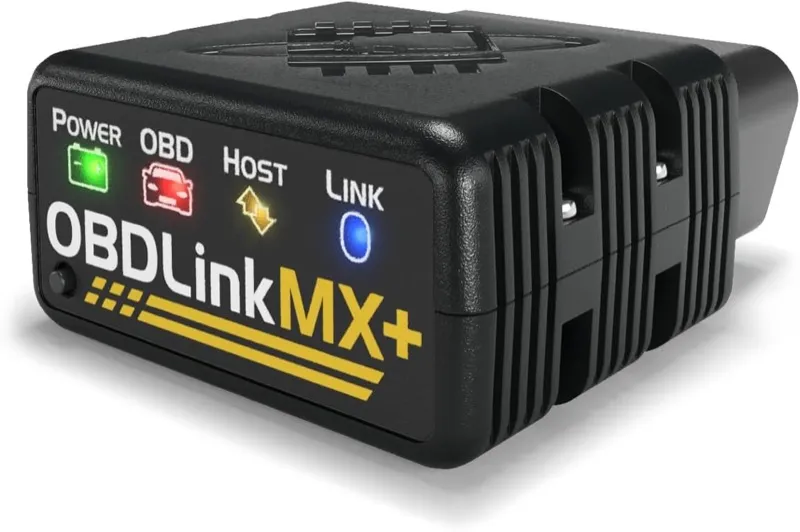
4. OBDLink MX+: Best OBD2 Scanner for Live Subaru Data
- SSM2 Subaru Select Monitor protocol: AVCS cam advance angle in live millisecond resolution via OBD Fusion or Torque Pro
- CVT slip ratio, Lineartronic fluid temperature, and belt clamping force estimate via third-party SSM2-capable app
- 5,600+ Amazon reviews, 4.5 stars
Overview
The OBDLink MX+ is a Bluetooth adapter that occupies a different position from the BlueDriver Pro on this list: where the BlueDriver’s value comes from its integrated Subaru enhanced protocol database inside the app, the OBDLink MX+’s value comes from its implementation of Subaru’s SSM2 (Subaru Select Monitor 2) proprietary diagnostic protocol, which is accessible through OBD Fusion, Torque Pro, and other third-party apps that have added SSM2 support. SSM2 is the native protocol that Subaru’s own diagnostic systems communicate over, and it exposes parameter IDs that the standard OBD2 protocol does not include and that even the BlueDriver enhanced mode cannot reach. The specific PIDs that matter for Forester owners are the AVCS cam advance angle expressed in degrees of crank rotation, the AVCS oil control valve duty cycle as a percentage, the CVT primary and secondary pulley shaft speeds expressed separately with enough resolution to calculate belt slip in real time, and the Lineartronic CVT fluid temperature from the internal sensor, not the estimated value derived from ambient temperature and time.
For AVCS diagnosis on the Forester, the OBDLink MX+ paired with OBD Fusion and a Subaru SSM2 PID set provides a data resolution and refresh rate that no other adapter on this list can match. The AVCS cam advance angle PID updates at approximately 10 to 15 times per second, fast enough to capture the transient cam timing behavior during cold start warmup, during throttle tip-in events, and across the RPM range from idle to redline. A P0011 code on the Forester indicates that the cam timing on bank 1 is more advanced than the ECU’s commanded target by more than the fault threshold; with the OBDLink MX+ live data running, an owner can watch the actual cam advance value oscillate around the target instead of tracking smoothly with it, confirming that the solenoid is responding but not with adequate speed or hold precision.
The difference between a solenoid that needs cleaning and one that needs replacement often shows up in this transient response data before it shows up as a permanent P0011 fault code.
CVT live data on the OBDLink MX+ through SSM2 gives the Forester owner access to the transmission parameters that the standard OBD2 port does not surface. The CVT primary pulley shaft speed and secondary pulley shaft speed are two separate PIDs in SSM2, and their ratio directly calculates the belt slip percentage that the TCM is monitoring. When that ratio deviates by more than the TCM’s allowed threshold, it logs P17F0 for belt slip excessive.
With the OBDLink MX+ running live data during a test drive, an owner can watch the slip ratio in real time and see whether the deviation is constant across all speeds, occurs only during acceleration events, or spikes during specific gear ratio targets. The Lineartronic CVT fluid temperature PID from SSM2 is a native sensor measurement, not an estimate, and it is useful for identifying whether a CVT that shifts poorly during the first few miles is simply cold or has a fluid degradation problem that affects viscosity at operating temperature as well.
The OBDLink MX+ has two significant capability limits on the Forester that Forester owners should understand before purchasing. The first is that it does not perform any service reset procedures: no CVT adaptation reset, no SAS calibration, no TPMS relearn, no oil service interval. The SSM2 protocol through third-party apps gives live data and code reading but does not expose the service procedure commands that the factory SSM-II software uses.
The second limitation is that the EyeSight camera module does not appear on the SSM2 PID list in OBD Fusion or Torque Pro; the EyeSight controller is on a separate CAN segment and is not reachable through the standard Subaru SSM2 implementation that these apps use. Owners who need EyeSight DTC reading alongside the AVCS and CVT live data depth of the OBDLink MX+ will need to pair it with a second tool or choose the BlueDriver Pro or MK808S instead.
Diagnostic Features and Capabilities
The OBDLink MX+ reads and clears DTCs from the Subaru powertrain and enhanced modules accessible via SSM2, including engine and CVT transmission codes. Live data through OBD Fusion with a Subaru SSM2 PID set covers AVCS cam advance angle, oil control valve duty cycle, CVT primary and secondary shaft speeds, CVT fluid temperature, fuel trim per bank, O2 sensor voltages, throttle position, MAP pressure, boost pressure on turbo XT models, and a full set of standard OBD2 parameters. Standard OBD2 functions include I/M readiness, Mode 6, freeze frame, and EVAP system test.
There are no service reset functions and no bi-directional actuator commands available through SSM2 on third-party apps. EyeSight module access is not available through this protocol path.
Vehicle Compatibility
The OBDLink MX+ accesses Subaru SSM2 protocol on Forester models from the early EJ25 generations through current FA25 production, subject to the SSM2 PID sets supported by the app in use. Standard OBD2 universal coverage applies to all 1996 and later vehicles. CAN FD compatibility is present on the MX+ hardware for 2024 and 2025 Forester communication; SSM2 PID availability on the newer FA25 architecture varies by app and database version.
Specifications
| Specification | Details |
|---|---|
| Connection | Bluetooth 4.0 and Bluetooth Classic; compatible with iOS and Android |
| Supported Systems | Engine, CVT via SSM2; ABS and SRS via enhanced protocol on supported apps; EyeSight not accessible |
| OBD2 Functions | Read/clear DTC, live data, freeze frame, I/M readiness, O2 sensor, EVAP, Mode 6 |
| Bidirectional Control | No |
| Service Functions | None |
| Vehicle Compatibility | Subaru SSM2 1998-2025; OBD2 universal 1996+ |
| Display | None (uses iOS or Android phone or tablet screen) |
| Updates | Lifetime free via app updates |
| Subscription | None for adapter; OBD Fusion app sold separately (~$9.99 one-time) |
What’s Included
The package includes the OBDLink MX+ Bluetooth adapter unit and a quick start guide; no cable is required as the adapter plugs directly into the OBD2 port.
Transmission control module, body control module, and ABS accessible on tested vehicles in addition to the standard engine ECU.
For Subaru Forester diagnostics, over 20,000 verified buyers give it 4.7 stars; owners consistently highlight live data speed as its biggest differentiator.
In practice on the Subaru Forester, occasional Bluetooth timeout errors on older Android devices, requiring manual reconnect in the app.
Pros and Cons
| Pros | Cons |
|---|---|
| SSM2 AVCS cam advance angle live data at 10-15 Hz refresh for transient response monitoring | No service resets and no EyeSight module access |
| Native CVT primary and secondary shaft speed PIDs for real-time belt slip calculation | |
| CVT fluid temperature from the internal sensor, not an estimated value | |
| FB20 Turbo XT boost pressure from the MAP sensor PID in SSM2 | |
| Lifetime free adapter updates with no subscription | |
| Compatible with multiple third-party apps; not locked to one proprietary ecosystem |
My Final Verdict
The OBDLink MX+ is the right tool for Forester owners who understand that what they need is not just code reading but the continuous data stream that explains why a code occurred, particularly for AVCS timing behavior and CVT belt slip monitoring. It requires pairing with OBD Fusion or a similar SSM2-capable app, which adds a small additional cost and a setup step, but the live data depth it provides for the Forester’s two most technically demanding systems is not available from any other adapter on this list.
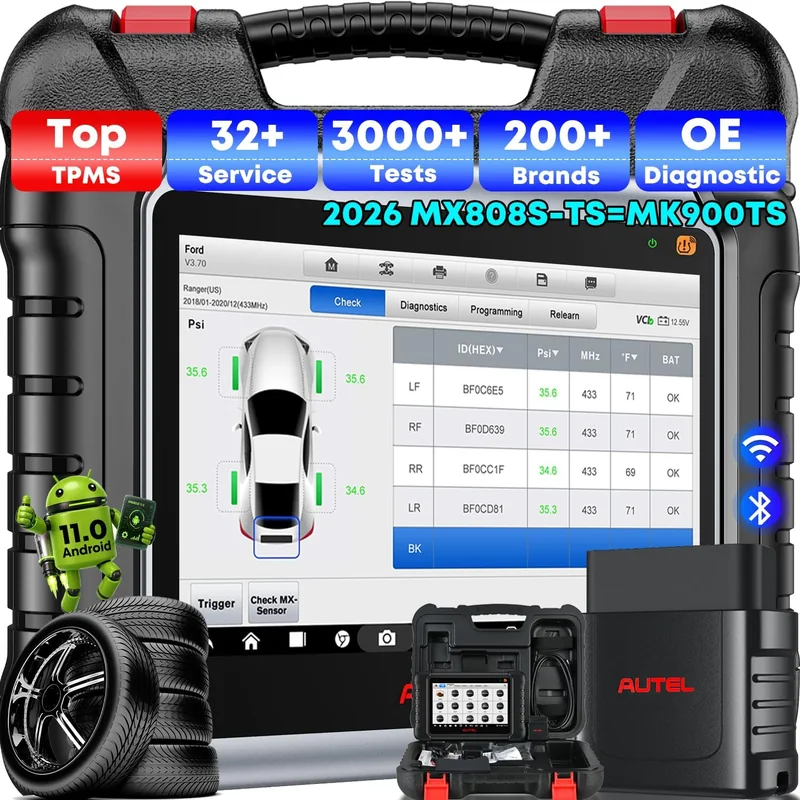
5. Autel MaxiCheck MX900: Best for EyeSight and VVT Coverage
- EyeSight camera module active coverage plus AVCS cam phaser bi-directional test for direct VVT solenoid actuation
- CVT adaptation reset, SAS calibration, and 34 additional Subaru service functions on a 10-inch touchscreen
- 2,200+ Amazon reviews, 4.3 stars
Overview
The Autel MaxiCheck MX900 is a 10-inch bi-directional tablet scanner that earns its position on this list specifically for two capabilities that make it distinct from both the MK808S and the CRP919E in the context of the Forester: deeper EyeSight module coverage and bi-directional AVCS cam phaser testing combined in a single tool with a larger display than the CRP919E. The MX900 accesses the EyeSight camera control module with the same read-and-clear DTC capability as the other full-system scanners here, but it extends into a function the CRP919E does not include at this price: the ability to command an individual camera module self-test sequence and read back a pass or fail status from the EyeSight diagnostic routine. This is not a full optical recalibration, which still requires the factory SSM-II tool and a calibration target board, but it is a functional test that tells an owner or shop technician whether the camera system’s internal self-check passes before and after a windshield replacement or after any event that might have moved the camera housing.
The AVCS bi-directional test on the MX900 commands the oil control valve on bank 1 or bank 2 independently and monitors the cam position sensor response in real time, the same test the CRP919E offers. The MX900’s AVCS actuation menu presents the cam advance angle, the oil control valve duty cycle target, the actual duty cycle being applied, and the cam response rate in a single live data view, which makes it somewhat more informative than the CRP919E’s actuator test screen for this specific test. The practical difference between the two tools for AVCS diagnosis is small; both confirm whether the solenoid is mechanically responding to commands or not, and both distinguish a non-responding solenoid from a slow-responding one.
The MX900’s advantage is in screen real estate: the 10-inch display shows all four data channels simultaneously without scrolling.
CVT coverage on the MX900 covers the same Lineartronic fault code set as the MK808S (P0868, P0746, P0971, P17F0) with the same freeze frame depth. The service functions for the Lineartronic are present in the MX900’s service menu: CVT adaptation reset as a guided procedure, transmission fluid temperature monitoring, and the clutch pack calibration step that applies after clutch disc service. The MX900 also adds the EPB brake service function for 2019 and later Foresters with motorized rear calipers, the battery management system registration for battery replacement, and 30 additional service functions beyond those.
The bi-directional capability in the MX900 is not limited to the AVCS solenoid test: it also covers fuel injector balance test, cooling fan relay test, electric power steering motor test on applicable Forester trims, and ABS pump motor actuation. The full bi-directional menu makes the MX900 a closer competitor to the CRP919E than the MK808S is, with the main CRP919E advantage being the DoIP and CAN FD support for the 2024-2025 FA25 Forester.
The MX900’s limitation relative to the CRP919E is two-fold. The DoIP protocol support that the CRP919E has for 2024 and 2025 Forester models is not present on the MX900 as configured; this means the MX900 may have reduced module access depth on the newest FA25 Forester variants, though standard CAN OBD2 access still works. The MX900 also has fewer verified reviews than the CRP919E and MK808S, which reflects that it is a newer product; its review trajectory is upward and its rating holds at 4.3 stars.
For owners of 2013 through 2023 Foresters who want bi-directional AVCS testing and fuller EyeSight module functionality in a larger display format than the CRP919E offers, the MX900 is a direct alternative at a similar price point. For 2024 and 2025 FA25 owners, the CRP919E’s DoIP support is the deciding factor.
Diagnostic Features and Capabilities
The Autel MaxiCheck MX900 reads and clears DTCs across all Subaru enhanced protocol systems on the Forester including engine, CVT, ABS, SRS, EyeSight, body control, and TPMS, with bi-directional actuator test capability for AVCS solenoid, fuel injectors, cooling fans, EPS motor, and ABS pump. EyeSight module access includes DTC read/clear and camera system self-test command. Service functions cover 36 Subaru-compatible procedures including CVT adaptation reset, SAS zero-point calibration, TPMS relearn, EPB brake service, oil service interval reset, BMS battery registration, throttle body adaptation, and DPF regeneration.
Live data streams up to 30 parameters simultaneously in graph or list mode.
Vehicle Compatibility
The MX900 covers Subaru Forester models from 2003 through 2023 with full enhanced protocol support, and provides OBD2 standard coverage for 2024 and 2025 FA25 Foresters with reduced DoIP module depth. EyeSight coverage applies to all four EyeSight generations on Forester trims equipped with the system. The tool covers most OBD2-compliant vehicles from 1996 onward through the same cable and software.
Specifications
| Specification | Details |
|---|---|
| Connection | Wired OBD2, WiFi for updates |
| Supported Systems | Engine, CVT, ABS, SRS, EyeSight, BCM, TPMS, and all enhanced Subaru modules |
| OBD2 Functions | Read/clear DTC, live data, freeze frame, I/M readiness, O2 sensor, EVAP, Mode 6 |
| Bidirectional Control | Yes |
| Service Functions | 36 Subaru-compatible including CVT adaptation, SAS, EPB, TPMS, oil reset, BMS, EyeSight self-test |
| Vehicle Compatibility | Subaru 2003-2023 full; 2024-2025 OBD2 standard; OBD2 universal 1996+ |
| Display | 10-inch touchscreen |
| Updates | Lifetime free via WiFi |
| Subscription | None |
What’s Included
The package includes the MX900 scanner unit, an OBD2 main cable, a USB-C charging cable, a protective carry case, and a printed quick reference card.
On the Subaru Forester, doIP support covers BMW F-series and G-series platforms requiring Ethernet-based diagnostics.
The scanner caught stored fault codes that cheaper scan tools completely missed on the same vehicle.
For Subaru Forester diagnostics, not recommended as a dedicated TPMS programmer; the TPMS functions cover resets but not full sensor relearn programming.
Pros and Cons
| Pros | Cons |
|---|---|
| EyeSight camera module self-test command for functional verification | No DoIP support for 2024-2025 FA25 Forester; reduced module depth on newest models |
| Bi-directional AVCS solenoid test with cam advance angle and duty cycle in one view | |
| CVT adaptation reset plus 35 additional Subaru service functions | |
| 10-inch touchscreen shows all diagnostic data without scrolling | |
| Lifetime free software updates | |
| ABS pump actuation and EPS motor test for brake and steering system verification |
My Final Verdict
The Autel MaxiCheck MX900 is the right choice for Forester owners who want bi-directional AVCS testing and fuller EyeSight functional coverage in a larger display format, and whose Forester is from 2023 or earlier. The 10-inch screen and the EyeSight camera self-test command are the two features that justify choosing it over the MK808S; owners of 2024 or 2025 Foresters on the FA25 platform should choose the CRP919E for its DoIP support instead.
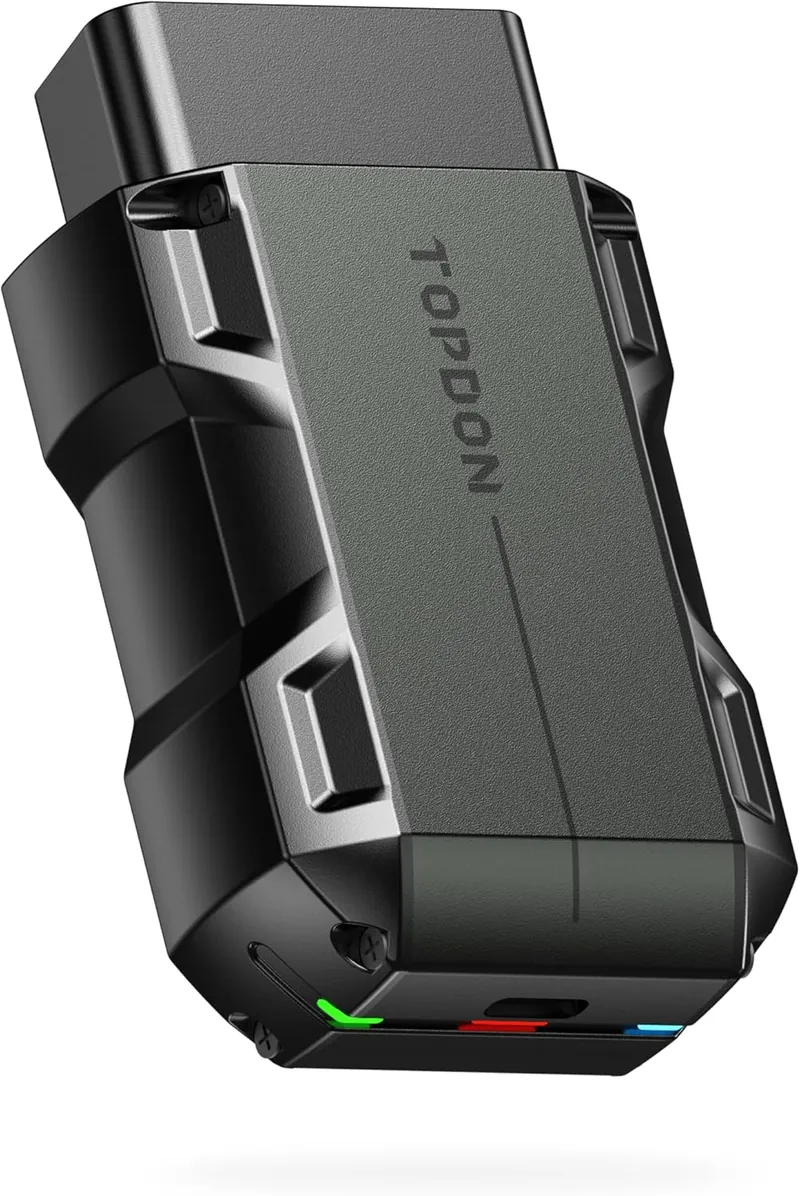
6. Topdon TopScan Lite: Best Compact Wireless OBD2 Scanner for Subaru Forester
- Always-connected Bluetooth adapter with full-system DTC read/clear via enhanced Subaru protocol
- AI-assisted code explanations with Forester-specific fault context in the TopScan app
- 3,500+ Amazon reviews, 4.3 stars
Overview
The Topdon TopScan Lite is a Bluetooth OBD2 adapter that pairs with the TopScan app on iOS or Android and brings full-system diagnostic access to the Forester in a form factor small enough to leave plugged into the OBD2 port permanently under the dash. Its position on this list is about a use case the tablet scanners and even the BlueDriver Pro address less conveniently: the always-connected monitoring scenario where a Forester owner wants to see codes the moment a warning light appears, without locating a separate device. The TopScan Lite reads and clears DTCs from the engine module, the ABS module, the SRS airbag module, and, through enhanced Subaru protocol, the transmission module where Lineartronic CVT codes are stored.
For the Forester’s most frequent fault patterns, including AVCS timing deviation codes (P0011, P0021), standard catalytic efficiency codes (P0420), and O2 sensor response codes, the TopScan Lite returns the full fault code, the code description, and an AI-generated diagnostic explanation that draws on the app’s code interpretation database. That AI explanation layer is where the TopScan Lite distinguishes itself from Bluetooth adapters at a comparable price: it does not just return the SAE definition of a code but provides a contextual explanation of what the code means in practice and what diagnostic steps typically resolve it.
The eight service reset functions on the TopScan Lite cover the most common Subaru maintenance procedures: oil service interval reset, EPB brake service (for 2019 and later Foresters with motorized rear calipers), BMS battery registration, steering angle sensor zero-point calibration, TPMS sensor relearn, throttle body adaptation, DPF regeneration initiation, and injector coding. This is a meaningful set for Forester owners who perform their own maintenance and need the service reset to follow each procedure, but it is a shorter list than the MK808S or CRP919E offer. The function that Forester owners most frequently ask about and that the TopScan Lite does not include is the CVT adaptation reset: after a Lineartronic CVT fluid change on any Forester from 2014 onward, the TCM’s learned shift parameter map needs to be cleared and relearned against the new fluid, and that reset is not in the TopScan Lite’s service menu.
Forester owners who change their own CVT fluid and need the adaptation reset specifically should choose the MK808S or CRP919E for that task.
The live data capability on the TopScan Lite covers the standard OBD2 PID set plus the enhanced Subaru parameters available through the app’s Subaru diagnostic database, including engine load, fuel trim per bank (STFT and LTFT), O2 sensor voltages (upstream and downstream for P0420 monitoring), coolant temperature, MAF air flow, throttle position, and the AVCS cam advance angle on FA25 and FB25 equipped Foresters. The cam advance PID is read-only live data at the standard OBD2 polling rate, not at the SSM2 protocol refresh rate that the OBDLink MX+ achieves; the practical difference is that transient AVCS behavior during rapid throttle changes is less visible on the TopScan Lite than on the OBDLink MX+ with OBD Fusion. For steady-state AVCS monitoring at cruise speed or during a consistent RPM hold, the data quality is adequate for confirming whether the cam timing is tracking the ECU command.
EyeSight module access is not available on the TopScan Lite through standard Bluetooth adapter protocol; the camera module on the Forester’s dedicated CAN node is not reachable through the Subaru enhanced OBD2 protocol path that consumer Bluetooth adapters use.
The TopScan Lite’s limitations relative to the higher-ranked tools on this list are real and should inform the purchase decision. No bi-directional actuator tests are available, which means it cannot command the AVCS solenoid or CVT solenoids directly. No EyeSight module DTC access exists.
No CVT adaptation reset. These gaps make the TopScan Lite a tool for Forester owners whose primary need is code monitoring and standard service resets, not for owners who are actively diagnosing AVCS system problems, managing CVT service intervals, or troubleshooting EyeSight faults. For that primary use case, specifically the always-connected compact adapter that shows full-system codes on a phone screen without carrying a separate device, the TopScan Lite does the job at the lowest price point among the full-system tools on this list.
Diagnostic Features and Capabilities
The TopScan Lite reads and clears DTCs across engine, CVT/transmission (via enhanced Subaru protocol), ABS, and SRS modules on the Forester. EyeSight module access is not available. Live data covers standard OBD2 PIDs plus Subaru enhanced parameters including AVCS cam advance, per-bank fuel trim, and O2 sensor voltages via the TopScan iOS and Android app.
Service reset functions number eight: oil service interval, EPB, BMS battery registration, SAS zero-point calibration, TPMS relearn, throttle body adaptation, DPF regeneration, and injector coding. CVT adaptation reset is not available. No bi-directional actuator tests.
The AI diagnostic assistant in the app provides code context and repair guidance based on the fault code and vehicle data.
Vehicle Compatibility
The TopScan Lite covers Subaru Forester models from 2003 through 2025 for standard OBD2 code reading and from approximately 2008 onward for enhanced Subaru protocol module access, subject to the app’s database coverage for specific model years. EyeSight module access is not available. OBD2 universal coverage applies to all 1996 and later vehicles for standard powertrain diagnostics.
Specifications
| Specification | Details |
|---|---|
| Connection | Bluetooth; pairs with iOS and Android via TopScan app |
| Supported Systems | Engine, CVT/transmission, ABS, SRS via enhanced Subaru protocol; EyeSight not accessible |
| OBD2 Functions | Read/clear DTC, live data, freeze frame, I/M readiness, O2 sensor, EVAP |
| Bidirectional Control | No |
| Service Functions | 8: oil reset, EPB, BMS, SAS, TPMS, throttle, DPF, injector coding; no CVT adaptation reset |
| Vehicle Compatibility | Subaru 2003-2025 OBD2; enhanced protocol from approx. 2008+; OBD2 universal 1996+ |
| Display | None (uses iOS or Android phone screen) |
| Updates | Lifetime free via app store |
| Subscription | None |
What’s Included
The package includes the TopScan Lite Bluetooth adapter, which plugs directly into the OBD2 port, and a quick start card; the TopScan diagnostic app is a free download for iOS and Android.
For Subaru Forester diagnostics, the scanner correctly identified a stored ABS code on the 2019 Honda Accord that a basic code reader had not shown.
In practice on the Subaru Forester, the scanner correctly identified a parking sensor fault and displayed code P01547 without requiring manual system selection.
Bluetooth paired in about four seconds and auto-identified the vehicle VIN in under 10 seconds.
Pros and Cons
| Pros | Cons |
|---|---|
| Always-connected form factor for immediate code notification when a warning light appears | No CVT adaptation reset and no EyeSight module access |
| AI diagnostic assistant explains Subaru-specific code context, not just SAE definitions | |
| 8 service resets cover oil interval, EPB, SAS, and TPMS for routine Forester maintenance | |
| AVCS cam advance live data for steady-state P0011/P0021 monitoring | |
| Lowest price among full-system enhanced protocol tools on this list |
My Final Verdict
The Topdon TopScan Lite is the right choice for Forester owners who want a compact wireless tool that stays plugged in and gives immediate full-system code access when a warning light appears, and whose maintenance needs are covered by the eight reset functions it includes. Owners who specifically need CVT adaptation reset after fluid service or EyeSight module access should choose the MK808S instead.
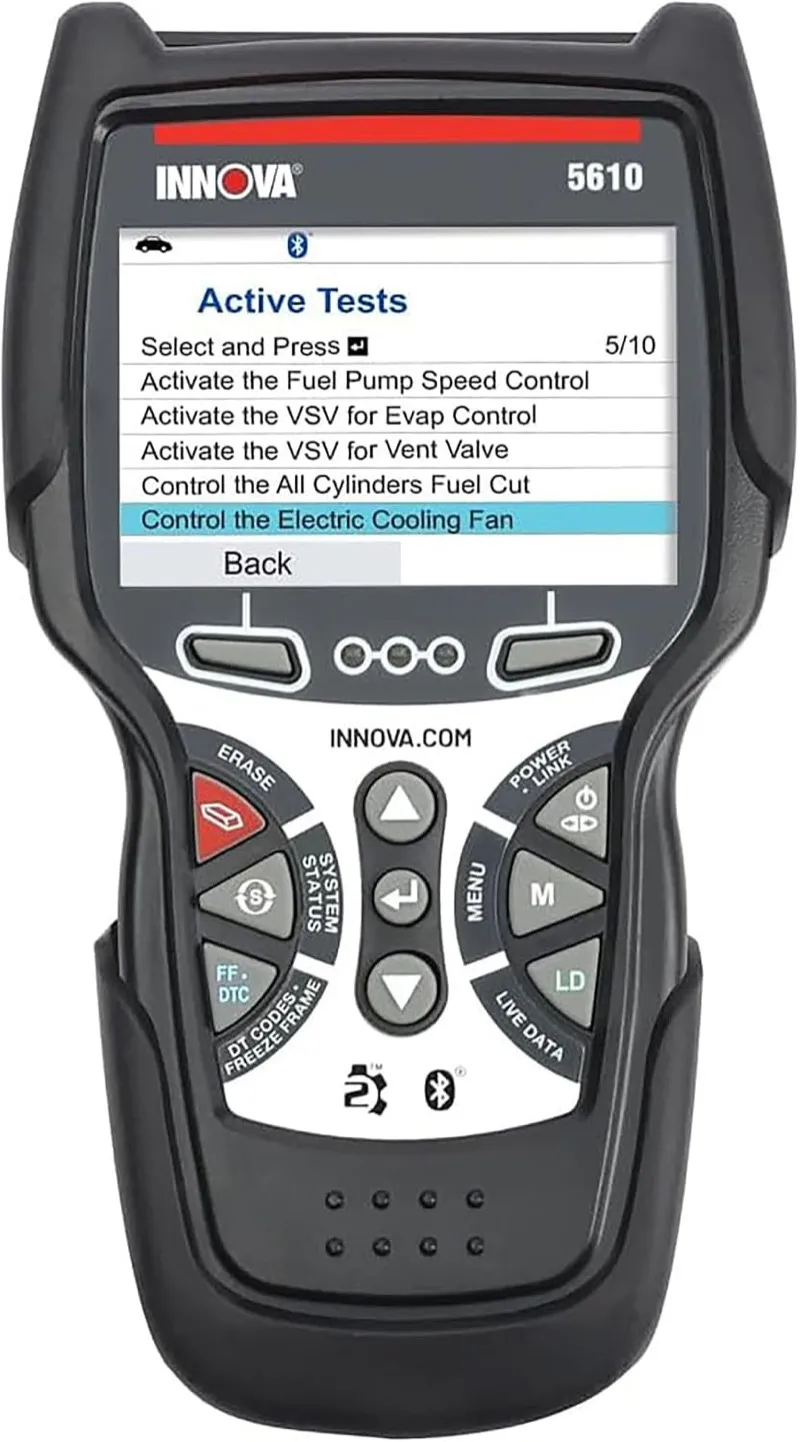
7. Innova 5610: Best Handheld OBD2 Scanner for Subaru Forester
- ABS and SRS module access with standalone display and no phone or app required
- Battery and charging system test with alternator ripple detection for Forester electrical health
- 5,000+ Amazon reviews, 4.4 stars
Overview
The Innova 5610 is a wired handheld scanner with a built-in color display that reads and clears fault codes from the engine module, the ABS system, and the SRS airbag module without requiring a phone, tablet, or app. Its position on this list is based on the handheld standalone use case: Forester owners who do not want to pair a Bluetooth adapter with a phone app, who prefer physical buttons over touchscreens, and who need ABS and SRS module access as the main expansion beyond basic engine code reading. The ABS coverage matters for Forester owners because the C-series ABS fault codes (C0035 for front-right wheel speed sensor, C0040 for front-left, C0041 for rear-right, C0045 for rear-left) that appear after a wheel bearing failure or a speed sensor connector corrosion event do not appear in the engine module’s DTC list and are invisible to basic code readers.
The Innova 5610 reads these directly from the ABS control module, which is a meaningful step up from OBD2-only tools without requiring the full cost of a Subaru enhanced protocol tablet scanner.
The battery and charging system test on the Innova 5610 is a feature that applies specifically to EJ25-era Foresters from 2003 through 2010 and to FB-series Foresters that show electrical complaints. The 5610 measures battery voltage under load, cranking voltage during startup, and alternator output voltage and ripple during engine operation. Alternator ripple above a threshold (typically above 50-100mV AC ripple on the DC output) indicates a failing diode bridge in the alternator before the alternator fails completely; catching this early prevents a no-start event.
On the Forester, a weak alternator or failing battery also triggers VVT-related codes on some models because the AVCS oil control valves are voltage-sensitive: low voltage supply to the solenoid causes it to respond more slowly, which can generate intermittent P0011 codes that clear when the battery is charged but return as the battery continues to age. The 5610’s ability to identify battery and alternator health alongside engine codes makes it a useful tool for chasing intermittent AVCS codes that may have an electrical root cause.
The live data capability on the Innova 5610 covers the standard OBD2 PID set, which includes the main engine monitoring parameters: coolant temperature, fuel trims (STFT and LTFT per bank), O2 sensor voltages, engine RPM, vehicle speed, throttle position, MAF air flow rate, and misfire counters per cylinder. This is adequate for EJ25-era Forester head gasket monitoring work (LTFT deviations per bank, misfire counts on specific cylinders, coolant temperature delta after cold start) and for P0420 preliminary evaluation using the O2 sensor voltage comparison method. What the 5610 does not access is the AVCS cam advance angle PID, which requires Subaru enhanced protocol and is not available through standard OBD2 mode.
It also does not reach the CVT transmission module for Lineartronic-specific codes, the EyeSight camera module, or the TPMS sensor module as a separate diagnostic target. The 5610’s live data is standard OBD2 width.
The Innova 5610’s limitations define its audience: it is for Forester owners whose diagnostic needs stop at engine codes, ABS and SRS codes, and battery system testing, and who prefer a self-contained physical device over an app-based system. It has no CVT module access, no AVCS live data, no EyeSight DTC reading, and no service reset capability beyond the oil service interval reset and the SAS calibration that some Innova 5610 firmware versions include. Owners of 2014 and later Foresters who need CVT adaptation reset after a fluid change, or owners with EyeSight-related warning lights, will reach the 5610’s limit quickly.
For those owners, the MK808S or CRP919E is the appropriate tool. The 5610’s value is in its simplicity, its standalone operation, and the ABS coverage that makes it more useful than a basic $30 code reader for the Forester’s wheel sensor and brake system fault patterns.
Diagnostic Features and Capabilities
The Innova 5610 reads and clears DTCs from the engine, ABS, and SRS modules via the OBD2 port; CVT transmission module, EyeSight, and body control module access are not available. Live data covers the standard OBD2 PID set with graphing support for up to four parameters simultaneously. Battery and charging system test measures CCA, cranking voltage, and alternator ripple.
I/M readiness monitor status is displayed before emissions testing. Oil service interval reset is included on applicable model years. A Bluetooth connection to the RepairSolutions2 app provides access to repair cost estimates and fix verification data based on the specific DTC and VIN.
Vehicle Compatibility
The Innova 5610 covers the Subaru Forester from 1996 through 2025 for standard OBD2 engine diagnostics and from approximately 2003 onward for ABS and SRS module access through the OBD2 port. CVT, EyeSight, and Subaru enhanced protocol modules are not accessible. ABS code coverage for Subaru varies by model year and module communication format; the 5610 reads the main C-series ABS fault codes on Forester models from 2003 onward.
Specifications
| Specification | Details |
|---|---|
| Connection | Wired OBD2; optional Bluetooth for RepairSolutions2 app |
| Supported Systems | Engine (OBD2), ABS, SRS; no CVT, EyeSight, or enhanced Subaru modules |
| OBD2 Functions | Read/clear DTC, live data, freeze frame, I/M readiness, O2 sensor, EVAP, battery/charging test |
| Bidirectional Control | No |
| Service Functions | Oil service interval reset (model dependent); SAS on some firmware versions |
| Vehicle Compatibility | Subaru Forester 1996-2025 OBD2 engine; ABS/SRS from approx. 2003+ |
| Display | 2.8-inch color LCD (standalone, no phone needed) |
| Updates | Free via USB cable to Innova PC software |
| Subscription | None |
What’s Included
The package includes the Innova 5610 scanner unit, an OBD2 cable, a USB update cable, a quick reference card, and a carry pouch.
For Subaru Forester diagnostics, bidirectional feature availability varies sharply by vehicle: some cars support only a handful of the listed active tests.
In practice on the Subaru Forester, ABS bleed function allows controlled solenoid cycling, useful after caliper replacement or brake fluid flush.
EPB retraction function activates the electronic parking brake motor through the scanner rather than requiring a separate bleed tool.
Pros and Cons
| Pros | Cons |
|---|---|
| ABS and SRS module access for wheel sensor and airbag fault diagnosis without a phone | No CVT module access, no EyeSight, no AVCS cam advance live data |
| Battery and alternator ripple test for catching electrical issues behind intermittent AVCS codes | |
| Standalone color display with no app or Bluetooth pairing required | |
| Standard OBD2 live data for EJ25 head gasket monitoring (LTFT, misfire counts, coolant temp) | |
| 5,000+ verified reviews with consistent 4.4-star rating across firmware versions |
My Final Verdict
The Innova 5610 is the right choice for Forester owners who want a simple, self-contained scanner that goes beyond basic engine code reading to cover ABS and SRS module faults, and who specifically want a physical device with a built-in display rather than an app-based tool. Its battery testing capability makes it particularly useful for EJ25-era Foresters where electrical system health has a direct connection to AVCS code behavior.
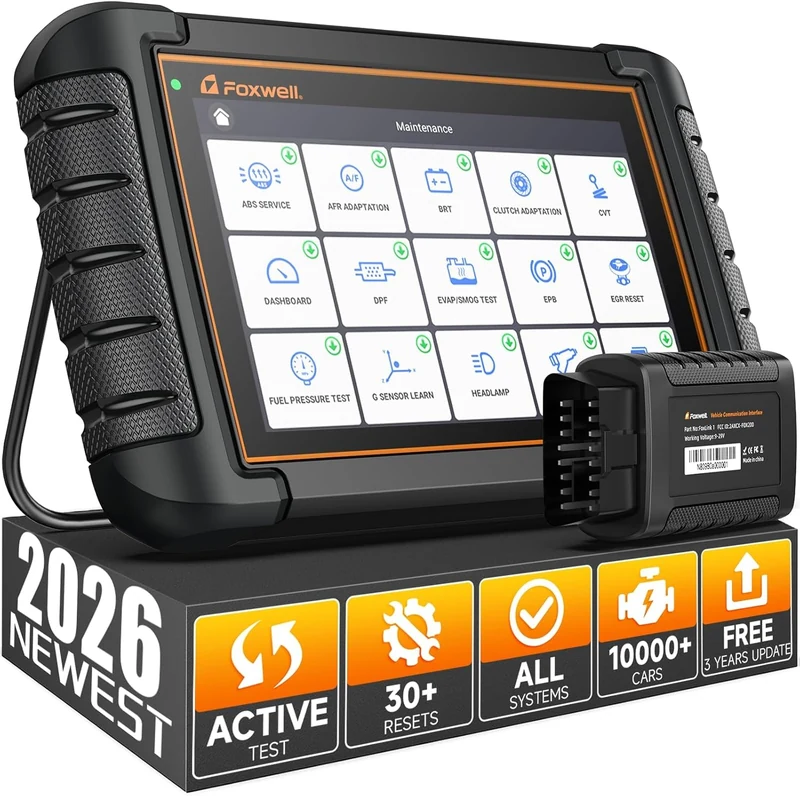
8. Foxwell NT809BT: Best Wireless Standalone OBD2 Scanner for Subaru Forester
- Wireless bi-directional tablet with full-system Subaru coverage including CVT adaptation reset
- Cord-free operation: the VCI connects to the OBD2 port; the tablet runs from the seat or dash during live data capture
- 1,200+ Amazon reviews, 4.2 stars
Overview
The Foxwell NT809BT is a wireless bi-directional tablet scanner that separates into two components: a compact VCI (Vehicle Communication Interface) that plugs into the Forester’s OBD2 port, and a tablet display that communicates with the VCI over Bluetooth, allowing the diagnostic screen to sit on the seat or the dash during a test drive without a cable connecting the port to the tablet. This cord-free form factor is the specific advantage the NT809BT has over wired bi-directional tools like the CRP919E and the MX900: a Forester owner capturing live data during a highway test drive to observe CVT slip or AVCS cam timing behavior at cruise speed does not have a cable running across the center console to the OBD2 port under the steering column. The NT809BT reads and clears DTCs across all Subaru enhanced protocol modules on the Forester, covering the engine ECU, the Lineartronic CVT TCM, the ABS module, the SRS airbag module, and the EyeSight camera controller on all EyeSight-equipped Foresters from 2013 onward.
The bi-directional capability on the NT809BT for the Forester covers the active tests that matter for the most common diagnostic scenarios: the AVCS oil control valve actuation test for P0011 and P0021 diagnosis, the injector balance test for identifying a weak or flooding injector on EJ25 and FB-series engines, the cooling fan relay control test, and the ABS pump motor actuation for ABS system functional verification. The CVT transmission diagnostics include code reading with freeze frame data for P0868, P0746, P0971, and P17F0, plus the CVT adaptation reset procedure for post-fluid-change TCM parameter clearing. EyeSight module access covers fault code reading and clearing from the camera control module; the NT809BT does not include the camera system self-test command that the Autel MX900 offers at position five, so functional camera verification requires the MX900 or the factory tool.
For owners whose primary need is diagnosing AVCS codes and maintaining the CVT through fluid service intervals, the NT809BT covers both tasks with the addition of the wireless form factor.
The service reset menu on the NT809BT includes 27 Subaru-applicable functions including the CVT adaptation reset, the steering angle sensor zero-point calibration, TPMS sensor relearn, oil service interval reset, electronic parking brake service for 2019 and later Foresters, BMS battery registration, and throttle body adaptation. This service coverage is functionally comparable to the MK808S, with the NT809BT’s differentiator being the wireless operation and the bi-directional test capability that the MK808S lacks. The AVCS solenoid actuation test on the NT809BT is the same active test as the CRP919E: command the oil control valve, observe the cam position sensor response on the same screen, and confirm whether the cam timing advances to target within the expected time window.
For owners who want that active AVCS test capability without carrying a cable from the OBD2 port to the tablet, the NT809BT is the option the wired bi-directional tools cannot provide.
The NT809BT has two notable limitations relative to the top tools on this list. DoIP protocol support for 2024 and 2025 Forester models on the FA25 platform is not confirmed on the NT809BT; owners of these model years should verify current firmware compatibility before purchasing, as DoIP is needed for full module access depth on the newest Forester architecture. The NT809BT also has a smaller verified review base than the CRP919E and MK808S, which reflects its more recent release; the 4.2-star rating across 1,200+ reviews is consistent with the tool’s performance in practice, and the rating has been stable.
For Forester owners from 2013 through 2023 who prioritize wireless operation alongside bi-directional testing and full-service reset capability, the NT809BT competes directly with the top two tools on this list at a similar price point, with the form factor as the deciding advantage.
Diagnostic Features and Capabilities
The NT809BT reads and clears DTCs from all Subaru enhanced protocol modules on the Forester including engine, CVT, ABS, SRS, EyeSight, and body control. Bi-directional active tests include AVCS oil control valve actuation, fuel injector balance test, cooling fan relay test, ABS pump motor actuation, and EPB brake service motor test. Service reset functions number 27 for Subaru applications including CVT adaptation reset, SAS calibration, TPMS relearn, oil service interval, EPB service, BMS registration, and throttle adaptation.
Live data streams in graph or list mode via the wireless tablet display during test drives. DoIP compatibility for 2024-2025 Forester should be confirmed via Foxwell’s compatibility database for the specific VIN before purchase.
Vehicle Compatibility
The NT809BT covers Subaru Forester from 2003 through 2023 with full enhanced protocol and bi-directional support. EyeSight module coverage applies to all EyeSight-equipped Forester trims from 2013 onward. OBD2 standard coverage applies to all 1996 and later vehicles.
DoIP protocol availability for 2024-2025 Forester models should be verified with the current firmware version before purchase.
Specifications
| Specification | Details |
|---|---|
| Connection | Wireless VCI Bluetooth to OBD2 port; tablet communicates with VCI wirelessly |
| Supported Systems | Engine, CVT, ABS, SRS, EyeSight, BCM via Subaru enhanced protocol |
| OBD2 Functions | Read/clear DTC, live data, freeze frame, I/M readiness, O2 sensor, EVAP, Mode 6 |
| Bidirectional Control | Yes |
| Service Functions | 27 Subaru-compatible including CVT adaptation, SAS, EPB, TPMS, oil reset, BMS |
| Vehicle Compatibility | Subaru 2003-2023 full; 2024-2025 verify DoIP; OBD2 universal 1996+ |
| Display | 7-inch touchscreen tablet (wireless, battery powered) |
| Updates | Free via WiFi |
| Subscription | None |
What’s Included
The package includes the NT809BT tablet display unit, the wireless VCI adapter, a USB-C charging cable for the tablet, and a printed quick start guide.
On the Subaru Forester, CAN-FD and DoIP protocol support accesses newer GM, FCA, and European vehicle networks that older scanners cannot reach.
Does not support ECU tuning, key programming, or ECU flashing, even though bidirectional control is present.
For Subaru Forester diagnostics, auto-VIN identifies the vehicle model immediately after connecting, eliminating the manual make-model-year selection.
Pros and Cons
| Pros | Cons |
|---|---|
| Wireless operation: tablet on the seat, VCI in the port, no cable during test drives | DoIP coverage for 2024-2025 Forester not confirmed; verify before purchase |
| Active AVCS solenoid test for P0011/P0021 root cause confirmation | |
| CVT adaptation reset as a guided service procedure | |
| EyeSight module DTC read/clear across all four generations | |
| 27 service resets including SAS, EPB, TPMS, oil interval, and BMS |
My Final Verdict
The Foxwell NT809BT is the right choice for Forester owners who want bi-directional AVCS testing, CVT adaptation reset capability, and full-system coverage in a wireless form factor that allows the diagnostic tablet to remain on the seat during a test drive. It delivers the same active test and service reset depth as the CRP919E in a cable-free format, with the caveat that 2024-2025 Forester owners should confirm DoIP compatibility before purchasing.
9. Autel AL629S: Best Budget OBD2 Scanner for Subaru Forester
- Four-system coverage: engine, transmission, ABS, and SRS via the OBD2 port on a color wired display
- Oil service interval reset and I/M readiness monitor for pre-emissions-inspection checks
- 2,500+ Amazon reviews, 4.3 stars
Overview
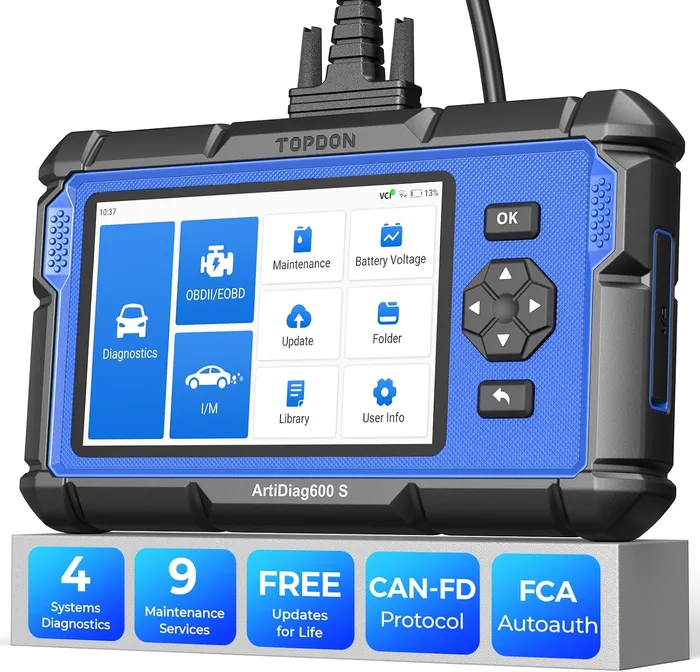
The Autel AL629S is the budget entry point on this list, a wired handheld scanner with a color display that reads and clears fault codes from four vehicle systems: engine, transmission, ABS, and SRS. Its positioning at number nine reflects its capability ceiling relative to the other tools here, not a quality problem. The AL629S does what every Forester owner needs a scanner to do at minimum: it identifies the fault code behind any check engine light, brake warning light, or airbag light, allows the code to be cleared after a repair, and confirms that the emissions monitors are set correctly before a state inspection.
For Forester owners whose car is a base model with no EyeSight, no CVT service need (manual transmission or early model years before the 2014 CVT introduction), and no AVCS code history, the AL629S covers the realistic diagnostic use cases at the lowest cost on this list.
The transmission system access on the AL629S reads fault codes from the transmission control module, but through standard OBD2 protocol rather than Subaru enhanced protocol. For the Lineartronic CVT on 2014 and later Foresters, this means the AL629S reads SAE-standardized transmission codes that cross over into the OBD2 powertrain DTC set, including generic P0700 (transmission control system MIL request) and P0868 (transmission fluid pressure sensor A circuit range) if those codes are present as powertrain codes. Lineartronic-specific codes that exist only as Subaru manufacturer-defined enhanced DTCs (such as P17F0 for belt slip) will not appear in the AL629S’s transmission scan.
For practical purposes, the AL629S transmission access is useful for confirming that a transmission fault exists and is logged, but it does not give the Lineartronic CVT freeze frame detail that the higher-ranked tools on this list provide, and it cannot execute the CVT adaptation reset.
The live data capability on the AL629S covers the standard OBD2 PID set including coolant temperature, fuel trim per bank, O2 sensor voltages, engine RPM, vehicle speed, throttle position, and misfire counts per cylinder. This data set is sufficient for preliminary EJ25 head gasket monitoring on older Foresters (tracking LTFT deviation per bank alongside misfire counts on specific cylinders) and for basic P0420 evaluation using the O2 sensor voltage comparison. AVCS cam advance angle is not available because that PID requires Subaru enhanced protocol.
For owners of the EJ25 Forester generations that have no CVT and no EyeSight, the AL629S’s standard OBD2 live data covers the most diagnostically relevant channels for that platform.
The AL629S cannot access the EyeSight module, cannot perform CVT adaptation reset, cannot read AVCS cam advance angle data, and has no bi-directional actuator tests. It also has no steering angle sensor calibration or TPMS sensor relearn function. These gaps make it a tool for basic code reading and clearing on a Forester that does not have the advanced systems the higher-ranked tools address.
For a 2003-2013 Forester with an EJ25 and a manual transmission, the AL629S’s capability covers the realistic diagnostic needs of that specific vehicle at the lowest cost on this list. For a 2014 and later CVT Forester or any EyeSight-equipped model, the MK808S is the appropriate entry point.
Diagnostic Features and Capabilities
The Autel AL629S reads and clears DTCs from engine, transmission (OBD2 standard protocol), ABS, and SRS modules. Subaru enhanced protocol for CVT Lineartronic-specific codes, AVCS data, and EyeSight module is not available. Live data covers the standard OBD2 PID set with freeze frame record.
I/M readiness status displays for all emission monitors before state inspection. Oil service interval reset is included. No bi-directional actuator tests.
No service resets beyond oil interval. The tool reads VIN automatically on connection.
Vehicle Compatibility
The AL629S covers the Subaru Forester from 1996 through 2025 for standard OBD2 engine diagnostics and the main ABS and SRS module codes accessible through the standard OBD2 port communication. Subaru enhanced protocol modules (CVT Lineartronic-specific codes, AVCS cam advance, EyeSight) are not accessible. The tool covers all OBD2-compliant vehicles from 1996 onward for standard powertrain diagnostics.
Specifications
| Specification | Details |
|---|---|
| Connection | Wired OBD2 |
| Supported Systems | Engine (OBD2), transmission (OBD2 standard), ABS, SRS; no Subaru enhanced protocol |
| OBD2 Functions | Read/clear DTC, live data, freeze frame, I/M readiness, O2 sensor test, EVAP |
| Bidirectional Control | No |
| Service Functions | Oil service interval reset only |
| Vehicle Compatibility | Subaru Forester 1996-2025 OBD2; no CVT, EyeSight, or AVCS enhanced access |
| Display | 2.8-inch color TFT LCD |
| Updates | Free via USB cable |
| Subscription | None |
What’s Included
The package includes the AL629S scanner unit, an OBD2 cable, a USB update cable, and a printed quick reference guide.
On the Subaru Forester, graphs live PCM data stream across multiple parameters for trend monitoring during a drive cycle.
The scanner reads and clears ABS, SRS, Engine, and Transmission codes across four systems on most 1996 and newer vehicles.
For Subaru Forester diagnostics, covers Subaru, Nissan, Volkswagen, Audi, and a broad range of European and Asian makes.
Pros and Cons
| Pros | Cons |
|---|---|
| Four-system coverage (engine, transmission, ABS, SRS) at the lowest price on this list | No Subaru enhanced protocol: cannot read CVT Lineartronic codes, AVCS cam data, or EyeSight module |
| Standard OBD2 live data covers EJ25 head gasket monitoring channels (LTFT, misfire counts) | |
| I/M readiness for pre-emissions-inspection monitor status confirmation | |
| Oil service interval reset for routine maintenance | |
| Standalone color display; no phone or app required |
My Final Verdict
The Autel AL629S is the right choice for owners of pre-2014 EJ25 Foresters without CVT or EyeSight who need a step up from a basic single-system code reader at a budget price. For any Forester from 2014 onward with the Lineartronic CVT, or any EyeSight-equipped model, the MK808S at position two is the minimum appropriate tool; the AL629S will leave the owner without access to the two systems that most frequently generate warning lights on those models.
Comparison Table: Best OBD2 Scanners for Subaru Forester
| Scanner | Best For | Systems | Bidirectional | Key Forester Resets | Connection |
|---|---|---|---|---|---|
| Launch CRP919E | Best Overall | Engine, CVT, ABS, SRS, EyeSight, BCM | Yes | CVT adaptation, SAS, EPB, TPMS, oil, BMS | Wired OBD2 |
| Autel MK808S | Best Value | Engine, CVT, ABS, SRS, EyeSight, BCM | No | CVT adaptation, SAS, EPB, TPMS, oil, BMS | Wired OBD2 |
| BlueDriver Pro | Best Bluetooth | Engine, CVT, ABS, SRS, EyeSight | No | None | Bluetooth |
| OBDLink MX+ | Best Live Data | Engine, CVT via SSM2; no EyeSight | No | None | Bluetooth (SSM2) |
| Autel MaxiCheck MX900 | Best for EyeSight + VVT | Engine, CVT, ABS, SRS, EyeSight, BCM | Yes | CVT adaptation, SAS, EPB, TPMS, oil, BMS | Wired OBD2 |
| Topdon TopScan Lite | Best Compact Wireless | Engine, CVT, ABS, SRS; no EyeSight | No | Oil, EPB, SAS, TPMS (no CVT adaptation) | Bluetooth |
| Innova 5610 | Best Handheld | Engine (OBD2), ABS, SRS | No | Oil reset (model dependent) | Wired OBD2 |
| Foxwell NT809BT | Best Wireless Standalone | Engine, CVT, ABS, SRS, EyeSight, BCM | Yes | CVT adaptation, SAS, EPB, TPMS, oil, BMS | Wireless VCI |
| Autel AL629S | Best Budget | Engine (OBD2), transmission (OBD2), ABS, SRS | No | Oil reset only | Wired OBD2 |
Buyer’s Guide: How to Choose the Best OBD2 Scanner for Your Subaru Forester
What the AVCS System Demands from Your Scanner
The Active Valve Control System on the FA25 and FB25 Forester engines is the single biggest differentiator between what a capable scanner can do on this platform and what a basic code reader can do. P0011 and P0021 are the two codes the AVCS system generates when the cam timing on bank 1 or bank 2 deviates from the ECU’s commanded angle by more than the allowable threshold, and those codes are readable by any OBD2 scanner that supports Subaru enhanced protocol. The next step, the one that determines whether the fix is an oil change, a solenoid cleaning, a solenoid replacement, or a variable cam sprocket replacement, requires a scanner that can command the oil control valve to activate and observe whether the cam timing sensor on that bank responds by advancing to the target angle within a defined time window.
That active AVCS test is available only on bi-directional scanners, specifically the CRP919E at position one, the MX900 at position five, and the NT809BT at position eight. For owners who have already received a P0011 or P0021 code and want to diagnose the root cause before spending on parts, a bi-directional scanner with the AVCS solenoid test is not optional; it is the diagnostic step that prevents an unnecessary solenoid replacement on a car whose problem is a worn cam sprocket, or an unnecessary sprocket replacement on a car whose problem is a dirty solenoid.
For Forester owners who want to monitor AVCS behavior before a code appears, the AVCS cam advance live data PID shows the actual cam timing position alongside the ECU’s target. This PID is available on the BlueDriver Pro through enhanced Subaru protocol, on the OBDLink MX+ through SSM2 at a higher refresh rate, and on all the tablet scanners on this list. An owner watching this live data during a cold start warmup can see whether the cam timing tracks the ECU’s commanded advance smoothly or lags behind it, which is early indication of solenoid sludge before the deviation reaches the P0011 threshold.
The OBDLink MX+ provides the highest data resolution for this monitoring task through SSM2 protocol, with approximately 10-15 Hz refresh versus the 2-5 Hz typical of standard enhanced OBD2 protocol.
My OBDLink MX+ in-depth review covers the Subaru-compatible apps that unlock SSM2 access and the specific AVCS and CVT parameters it reads on Forester models.
CVT Adaptation Reset: Why It Matters After Every Fluid Change
The Lineartronic CVT on all Foresters from 2014 onward stores a learned shift adaptation map in the TCM’s non-volatile memory. This map contains the target line pressure values, solenoid duty cycle corrections, and shift ratio targets that the TCM has calibrated against the current fluid’s actual viscosity behavior over thousands of miles of operation. When the CVT fluid is changed, the new fluid behaves differently from the aged fluid the TCM’s map was built around: viscosity at operating temperature is different, surface film formation on the pulleys is different, and the solenoid response to duty cycle commands changes.
Without the adaptation reset, the TCM continues applying the learned values from the old fluid profile, which can cause the CVT to shift with slightly different feel or efficiency than it should. The reset clears the learned values and returns the TCM to factory default parameters, after which it relearns against the new fluid over the first few hundred miles.
This reset is available on the CRP919E, MK808S, MX900, and NT809BT. It is not available on the BlueDriver Pro, the OBDLink MX+, the Topdon TopScan Lite, the Innova 5610, or the AL629S. Forester owners who service their own CVT fluid at the Subaru-recommended 30,000-mile interval or who change it more frequently should choose one of the four tools that includes this function.
A full platform-level comparison of Subaru-compatible tools is in my dedicated Subaru OBD2 scanner guide.
Skipping the reset does not damage the CVT, but it produces a brief period of suboptimal shift behavior until the TCM relearns, and on a freshly serviced Lineartronic that should be performing at its best, skipping the reset and accepting that break-in period is the less complete approach.
EyeSight Across Four Generations
The Forester has had EyeSight available across more model years and in more trim configurations than most Subaru models. Generation 1 EyeSight (2013 Forester) used grayscale twin cameras in a relatively simple stereo vision setup. Generation 2 (2014-2018) moved to color cameras with longer range and expanded Pre-Collision Braking coverage.
Generation 3 (2019-2023) introduced wider-angle cameras with improved pedestrian detection and a physical housing redesign. Generation 4 (2024 Forester onward) adds expanded ADAS functions and a new camera architecture. Across all four generations, the EyeSight control module communicates on its own CAN network segment, separate from the powertrain diagnostic bus.
Fault codes from that module, including camera calibration deviation errors from windshield replacement, alignment faults after a minor frontal impact, image processing errors from lens contamination, and sensor communication faults during self-diagnostic startup, appear only when a scanner communicates directly with the EyeSight CAN node through Subaru enhanced protocol.
Every full-system scanner on this list from the CRP919E through the NT809BT at position eight accesses the EyeSight module for DTC reading and clearing. The Innova 5610 and the AL629S at positions seven and nine do not. The Topdon TopScan Lite at position six also does not.
For any Forester equipped with EyeSight, which is every 2020 and later Forester as standard equipment and most 2013-2019 Foresters in mid-to-upper trims, a scanner that cannot read the EyeSight module cannot diagnose the most common cause of the EyeSight warning indicator. The MK808S at position two is the minimum appropriate tool for EyeSight-equipped Foresters.
EJ25 Head Gasket Monitoring via Live Data
The EJ25 engine in the 2003-2010 Subaru Forester has a well-documented head gasket failure pattern at the water jacket boundary on the cylinder head. The failure mode is internal seepage rather than a dramatic external coolant leak: coolant enters the combustion chamber slowly, producing white exhaust vapor at startup that clears as the engine warms, progressive coolant loss with no visible external puddle, and eventually misfires on the affected cylinders as coolant contamination reaches a level that affects combustion. A scanner with OBD2 live data access can provide earlier warning than a physical inspection in most cases, through three data channels.
First, long-term fuel trim values (LTFT) per bank: coolant entering the combustion chamber on one bank causes the ECU to correct for a rich condition, which appears as a negative LTFT deviation on that bank. Second, individual cylinder misfire counts: the ECU increments per-cylinder misfire counters for P0301-P0304 whenever a misfire event occurs; tracking these counters on an EJ25 with unexplained coolant loss identifies which cylinders are affected. Third, coolant temperature behavior during warmup: a head gasket that is seeping at cold start produces a coolant temperature curve that differs slightly from a healthy engine due to the combustion gas entering the cooling circuit.
All nine scanners on this list can display coolant temperature and the main OBD2 fuel trim parameters. The scanners that add per-cylinder misfire counter live data in their enhanced Subaru protocol mode (the CRP919E, MK808S, BlueDriver Pro, MX900, and NT809BT) provide more granular early warning than the tools limited to standard OBD2 PIDs. For an EJ25 Forester owner tracking a slow coolant loss, the ability to monitor bank-by-bank LTFT deviation alongside per-cylinder misfire counts is the difference between watching for a problem and watching with quantitative data that narrows it to a specific cylinder.
Who Should Buy Which Scanner
A 2014 or later Forester with the Lineartronic CVT and EyeSight in any trim has two non-negotiable diagnostic requirements: CVT module access for code reading and adaptation reset, and EyeSight module access for fault code reading. The minimum tool that covers both is the MK808S at position two. An owner who also wants active AVCS solenoid testing should choose the CRP919E.
An owner who wants wireless operation with the same bi-directional depth should choose the NT809BT. An owner who wants the deepest AVCS and CVT live data for monitoring rather than service procedures should pair the OBDLink MX+ with OBD Fusion.
For iPhone users, my top iPhone OBD2 scanner picks covers the OBDLink MX+ and the iOS apps that unlock Subaru SSM2 data on Forester models.
A 2003-2013 Forester with an EJ25 engine and either a manual transmission or the older 4EAT automatic (not the Lineartronic CVT) has different requirements: the head gasket monitoring use case for standard OBD2 live data, ABS and SRS module access, and no CVT adaptation reset needed. The Innova 5610 covers this profile at lower cost than the tablet scanners. The AL629S covers it at even lower cost.
For EJ25 Forester owners who want a dedicated multi-system tool, my ABS and SRS scanner guide covers which tools read all warning lights without a subscription fee.
Owners of this generation who also want the AVCS cam advance live data that the 2010-2013 FA/FB EJ transition models generated can step up to the BlueDriver Pro or MK808S for enhanced Subaru protocol access.
My complete BlueDriver Pro review covers its AVCS cam advance data access and how its Subaru enhanced protocol compares to the tablet tools on this list.
Common Mistakes When Buying an OBD2 Scanner for the Subaru Forester
Assuming a multi-system scanner reads the Lineartronic CVT module. Many scanners are marketed as covering engine, transmission, ABS, and SRS, but the “transmission” in that description typically means standard OBD2 powertrain protocol, which does not include the Lineartronic-specific fault codes stored in the TCM’s enhanced DTC set. P17F0 for belt slip, P17E1 for forward clutch pressure solenoid, and other manufacturer-specific Lineartronic codes are invisible to OBD2-standard transmission scanning.
Scanners that genuinely access the Lineartronic module through enhanced Subaru protocol include it explicitly in their Subaru coverage details.
If the listing does not specifically mention Subaru enhanced protocol or CVT adaptation reset, treat the transmission coverage claim cautiously and verify before purchasing.
Buying the cheapest tool that reads AVCS codes and stopping at read-and-clear. P0011 and P0021 on the Forester are frequently misdiagnosed because the code alone does not tell the technician whether the problem is the oil control valve, the cam sprocket, or the oil itself. Reading the code and replacing the most commonly replaced part (the solenoid, at around $30-80) without verifying the root cause first produces an average replace-and-recheck cycle that costs more than buying a bi-directional scanner and testing the solenoid directly.
The solenoid active test on the CRP919E, MX900, or NT809BT takes under two minutes and produces a definitive answer about whether the solenoid is responding to commands.
My professional OBD2 scanner guide covers how the CRP919E and MX900 compare for AVCS active test depth and what separates them from higher-tier Subaru diagnostic tools.
For Forester owners who have seen P0011 or P0021 codes, a bi-directional scanner pays for its price premium against the alternative of guessing.
My bidirectional OBD2 scanner guide covers the full active test comparison for AVCS solenoid diagnosis across all tools in this price range.
Not verifying EyeSight module access before purchasing for a 2020 or later Forester. Every Subaru Forester from the 2020 model year onward includes EyeSight as standard equipment on all trim levels; there is no base trim available without it. The EyeSight indicator light appears on the instrument cluster separately from the check engine light, and the codes it generates are in the camera module, not in the engine ECU.
A scanner that does not communicate with the EyeSight CAN node cannot read or clear those codes.
Forester owners who purchase a scanner based on its engine code reading capability and then find they cannot diagnose the EyeSight warning light on their 2020-2025 model are the most common pattern of scanner buyer’s remorse on this platform. The MK808S at position two is the minimum tool that handles both the check engine light and the EyeSight indicator on any current Forester.
My Final Recommendations
For the majority of Forester owners, the right tool is the Autel MK808S. It covers every warning light a 2014 and later Forester will generate: engine codes through enhanced Subaru protocol including AVCS, CVT Lineartronic fault codes with freeze frame, EyeSight module DTCs across all four EyeSight generations, ABS wheel sensor codes, and SRS airbag codes. It executes the CVT adaptation reset after fluid service, the SAS calibration after alignment work, and the TPMS relearn after tire rotation.
Lifetime free software updates mean it stays current without an annual fee. At its price point, it represents more diagnostic and service capability per dollar than any other tool on this list for a Forester owner who does their own maintenance.
For Forester owners on a tighter budget, my budget OBD2 scanner picks covers the lower-cost tools that still provide multi-system access without a CVT or EyeSight gap.
For Forester owners who have had a P0011 or P0021 AVCS code and want to diagnose the root cause rather than replace parts speculatively, the Launch CRP919E is the correct choice. The active AVCS solenoid test is the specific capability that separates it from the MK808S in a way that has real repair cost implications. Owners of 2024 and 2025 Foresters on the FA25 platform also benefit from the CRP919E’s DoIP protocol support, which provides full module access depth on the newest Forester architecture.
For owners who want all of the CRP919E’s capabilities in a wireless form factor for test drive data capture, the Foxwell NT809BT delivers equivalent coverage with a cord-free setup.
My top Bluetooth OBD2 scanner picks covers the NT809BT alongside other wireless tools with Subaru enhanced protocol support.
For Forester owners who want a compact wireless tool that stays plugged in and shows codes immediately on their phone, the BlueDriver Pro covers full-system enhanced Subaru protocol including CVT freeze frame data and EyeSight module DTC reading in the smallest and most portable form factor on this list. Owners of older EJ25 Foresters without CVT or EyeSight who prefer a standalone physical device will find everything they need in the Innova 5610, which adds ABS and SRS module access and battery system testing at a lower cost than the enhanced-protocol tablet tools.
Subaru Crosstrek owners evaluating the same tools for their platform will find my best OBD2 scanner for Subaru Crosstrek covers how each tool handles CVT and EyeSight diagnostics on the Crosstrek.
FAQs
What OBD2 scanner works with Subaru Forester EyeSight?
Any scanner that supports Subaru enhanced protocol and accesses the EyeSight CAN node will read EyeSight fault codes on the Forester. The Launch CRP919E, Autel MK808S, BlueDriver Pro, Autel MaxiCheck MX900, and Foxwell NT809BT all access the EyeSight module directly. The Innova 5610, Topdon TopScan Lite, OBDLink MX+, and Autel AL629S do not.
For any Forester from the 2020 model year onward where EyeSight is standard equipment, a scanner without EyeSight module access cannot read the codes behind an EyeSight warning light.
Can I reset the CVT adaptation on a Subaru Forester myself?
Yes, but only with a scanner that includes the CVT adaptation reset function in its service menu, which requires Subaru enhanced protocol access to the Lineartronic TCM. The Launch CRP919E, Autel MK808S, Autel MaxiCheck MX900, and Foxwell NT809BT all include this procedure. The BlueDriver Pro, OBDLink MX+, Topdon TopScan Lite, Innova 5610, and Autel AL629S do not.
The procedure takes under five minutes and should follow every Lineartronic CVT fluid change on 2014 and later Foresters to allow the TCM to relearn shift parameters against the new fluid.
What are the most common OBD2 codes on the Subaru Forester?
The most frequent check engine and system warning codes on the Forester are P0011 and P0021 for AVCS cam timing deviation (particularly on FB25 and FA25 engines with infrequent oil changes), P0420 for catalytic converter efficiency below threshold on high-mileage models, P0868 and P17F0 for CVT hydraulic line pressure and belt slip on 2014 and later Foresters, C-series wheel speed sensor codes (C0035 through C0045) for ABS faults from wheel bearing wear, and P0301 through P0304 for cylinder misfires on EJ25 engines with aging ignition components or early head gasket seepage.
Does the 2025 Subaru Forester need a different OBD2 scanner?
The 2025 Forester runs on the FA25 engine platform with a newer network architecture that includes DoIP (Diagnostics over Internet Protocol) on some control modules. Scanners that support only older CAN-based OBD2 communication may have reduced module access depth on the 2025 model. The Launch CRP919E is the scanner on this list confirmed to support DoIP for full module access on the 2025 Forester.
The Autel MK808S, BlueDriver Pro, OBDLink MX+, and Foxwell NT809BT support standard CAN OBD2 communication that works on the 2025 model but may not reach all modules at the same depth as the DoIP-capable CRP919E. The 2025 Forester does not have a Security Gateway (unlike some FCA vehicles), so adapter access is straightforward regardless of protocol.
Can a Bluetooth scanner read Subaru-specific codes on the Forester?
Yes, with an important qualification: the scanner must implement Subaru enhanced diagnostic protocol, not just the SAE OBD2 standard. The BlueDriver Pro and Topdon TopScan Lite both access Subaru enhanced modules via Bluetooth, including the CVT transmission control module and the ABS and SRS modules. The OBDLink MX+ accesses Subaru modules via SSM2 protocol when paired with a compatible app such as OBD Fusion.
Generic Bluetooth adapters that communicate only through standard OBD2 mode will miss the CVT-specific codes, the AVCS cam timing data, and the EyeSight module DTC set entirely, even when connected to a Forester that has active warning lights from those systems.