
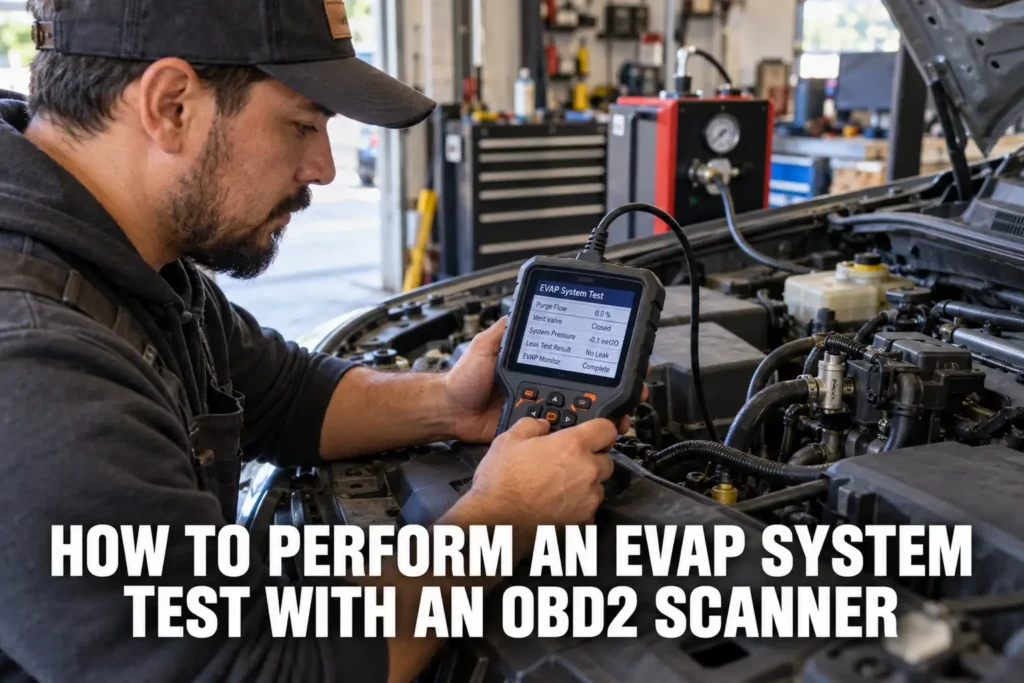
How to Perform an EVAP System Test with an OBD2 Scanner
By Kamil Siegień / October 12, 2026
EVAP system codes (P0440 through P0456) are among the most commonly misdiagnosed check engine light causes because the system is complex, the enabling conditions for its monitor are specific, and the scanner data needed to isolate the fault goes beyond simply reading the DTC. An OBD2 scanner lets you read the fault, check EVAP monitor status, observe fuel tank pressure sensor data, and on capable scanners, activate the purge valve directly to confirm it operates. The fuel cap is the most common cause, but confirming it is the cause requires more than tightening it.
My most common reasons check engine light comes on covers this step by step.
Honda owners looking for the right scanner should check my best diagnostic tools for Honda.

About the author: Hello! I’m Kamil Siegień, founder of OBD2 Scout. My diagnostic experience started with an engine rebuild on a 2014 Skoda Superb 1.8 TSI, where tuning from 160 to 222 hp required mastering live data and ECU behavior that basic code readers cannot handle. I am a former BMW and MINI employee and regularly use diagnostic scanners on my own Audi A4 2.0 TFSI.
This guide covers how the EVAP system works, what each DTC in the P0440 to P0456 range means, how the ECU performs its own EVAP monitor test under enabling conditions, what fuel tank pressure sensor data shows in live data, how to use a scanner’s active test function to cycle the purge valve, and the difference between what a scanner can and cannot diagnose on the EVAP system.
BMW owners looking for the right scanner should check my best diagnostic tools for BMW.
What the EVAP System Does
The evaporative emission control system prevents fuel vapors from the fuel tank and fuel delivery system from venting to the atmosphere. Federal emissions regulations require the system to contain vapors and periodically route them into the engine for combustion rather than releasing them. The system consists of several sealed components: the fuel tank, fuel filler neck, fuel cap, vapor lines, a charcoal canister that stores fuel vapors, a purge valve that controls vapor flow from the canister to the intake manifold, and a vent valve that controls airflow into the canister during the ECU’s leak test.
For scanner recommendations to perform this type of work, see my best diagnostic scanners.
During normal operation, fuel vapors generated in the tank flow through the vapor lines to the charcoal canister and are absorbed by the activated carbon. When the engine reaches operating temperature and load conditions allow, the ECU opens the purge valve and allows manifold vacuum to draw the stored vapors from the canister into the intake manifold for combustion. This purge cycle cleans the canister so it has capacity to absorb more vapors. The vent valve, normally open, allows fresh air into the canister from the atmosphere to replace the vapors being drawn out during purge.
For a scanner with active test capability, see my top bi-directional diagnostic tools.
The ECU tests the EVAP system for leaks by sealing the vent valve, commanding the purge valve open briefly to draw vacuum into the sealed system, then closing the purge valve and monitoring whether the system holds vacuum or loses it to a leak. A fuel tank pressure sensor measures the pressure inside the sealed system during this test. A leak allows the vacuum to decay faster than the threshold, and the ECU records the fault code corresponding to the leak size it detected.
For a scanner that handles ABS and SRS diagnostics, check my scanners for ABS and SRS diagnosis.
EVAP Leak Size Classification and Corresponding Codes
The OBD2 EVAP monitor classifies leaks by orifice size. A gross leak (P0455) is a large opening: an off-vehicle or open fuel cap, a disconnected vapor line, or a split hose. The system cannot hold any vacuum and the tank pressure sensor shows immediate return to atmospheric pressure. P0440 is the general EVAP malfunction code that appears when the monitor detects a gross leak but does not have enough data to assign a specific sub-code on some vehicles.
Audi Q7 owners can find the right scanner in my top Q7 diagnostic tools.
A small leak (P0442) is an opening equivalent to or larger than a 0.040-inch diameter orifice. This is the standard small leak threshold for 1996 to approximately 2008 vehicles. The system holds some vacuum but loses it faster than allowed. Common causes for a small leak are a worn or cracked fuel cap seal, a deteriorated vapor line at a fitting, or a failed vent valve that cannot seal.
I cover this capability in more detail in my BlueDriver Pro deep dive.
A very small leak (P0456) was added for enhanced EVAP systems on vehicles from approximately 2004 onward in California and 2008 onward federally. The very small leak threshold is a 0.020-inch diameter orifice. These leaks are at the limit of what the tank pressure sensor can reliably detect and require specific enabling conditions including a cold start after an overnight soak to reduce false positives from thermal expansion noise in the fuel system.
I cover this capability in more detail in my Innova 3100RS breakdown.
P0441 (incorrect purge flow) indicates the EVAP monitor detected that the purge valve is not flowing the expected amount of vapor during the purge cycle. This can mean the purge valve is stuck closed (not opening on command), partially stuck (opening but with restricted flow), or has an electrical circuit fault. P0443 is the specific purge control valve circuit code. P0446 is the vent control valve circuit code. P0447 and P0449 are vent solenoid open circuit and vent solenoid short codes.
Ford owners looking for the right scanner should check my top-rated scanners for Ford.
EVAP Monitor Enabling Conditions
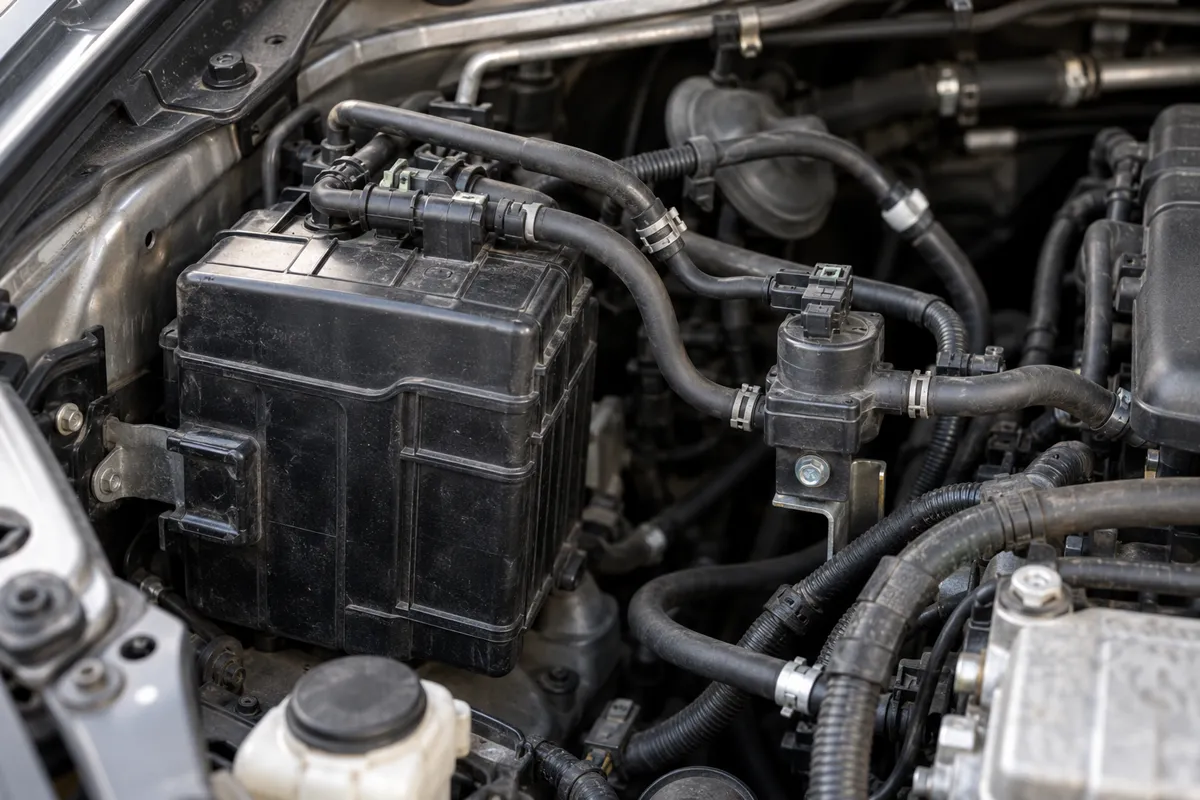
The EVAP monitor is one of the slowest readiness monitors to complete because its enabling conditions are more restrictive than most other monitors. The standard enabling conditions are: engine coolant temperature at startup below 86°F (30°C), meaning the vehicle must have sat overnight in a cool environment; engine temperature must rise during the test drive; fuel level must be between 15% and 85% (too little fuel reduces the vapor surface area; too much can spill into vapor lines during the test); no active DTCs that could affect the test result.
My obd2 mode 06 explained monitor test results covers this step by step.
I explain this in more detail in my can you drive with check engine light on.
After a battery disconnect or code clear, the EVAP monitor resets to “not ready” and may take three to seven days of normal driving that includes overnight cold soaks before it completes. This is the most common cause of EVAP monitor incompleteness on an otherwise correctly functioning vehicle. If a state emissions inspection shows the EVAP monitor as incomplete, it typically means the vehicle was recently serviced, the battery was recently disconnected, or the vehicle’s daily driving does not include the cold start phase required to run the monitor.
I explain this in more detail in my check engine light on but no codes stored.
Check EVAP monitor readiness status in Mode 1 readiness monitor data on your scanner. “Not ready” or “incomplete” for the EVAP monitor does not mean the EVAP system is leaking. It means the ECU has not had the opportunity to run the test under its required conditions yet. Only when the monitor completes and produces a failing result does an EVAP code store.
My obd2 modes explained modes 1 through 10 covers this step by step.
I explain this in more detail in my my guide on check used car.
Reading Fuel Tank Pressure Sensor Data
The fuel tank pressure (FTP) sensor is a live data PID available on most OBD2 scanners that measures the pressure differential inside the sealed EVAP system relative to atmospheric pressure. At key-on without running, the FTP sensor reads approximately 0 inches of water column (atmospheric). During the ECU’s sealed leak test, the system is drawn to a negative pressure (vacuum) of approximately negative 6 to negative 10 inches of water column, then the test monitors how quickly that vacuum decays.
My a pid obd2 diagnostics explained covers this step by step.
I explain this in more detail in my my guide on use an.
In live data, the FTP sensor PID typically reads in inches of water column (inH2O) or millivolts depending on the scanner. Normal values at key-on before startup are near 0. Values that show significant positive pressure (fuel tank vapors pressurizing the system, typically plus 2 to plus 6 inH2O after a warm park with the cap off) are normal thermal expansion behavior. A fuel tank pressure that immediately reads atmospheric (0) regardless of operating conditions suggests the cap is missing or completely unsealed, or the vapor lines are disconnected.
During a purge cycle (engine warm, light cruise, purge valve open), the FTP sensor reading drops toward negative pressure as manifold vacuum draws vapors from the canister. Watching the FTP sensor reading while the engine is warm and at cruise confirms whether the purge valve is opening and the system is sealing. A system that shows no change in FTP during conditions where the purge valve should be active suggests a stuck-closed purge valve or an open circuit in the purge valve solenoid.
Chevy owners looking for the right scanner should check my best diagnostic tools for Chevy.
Using a Scanner’s Active Test to Check the Purge Valve
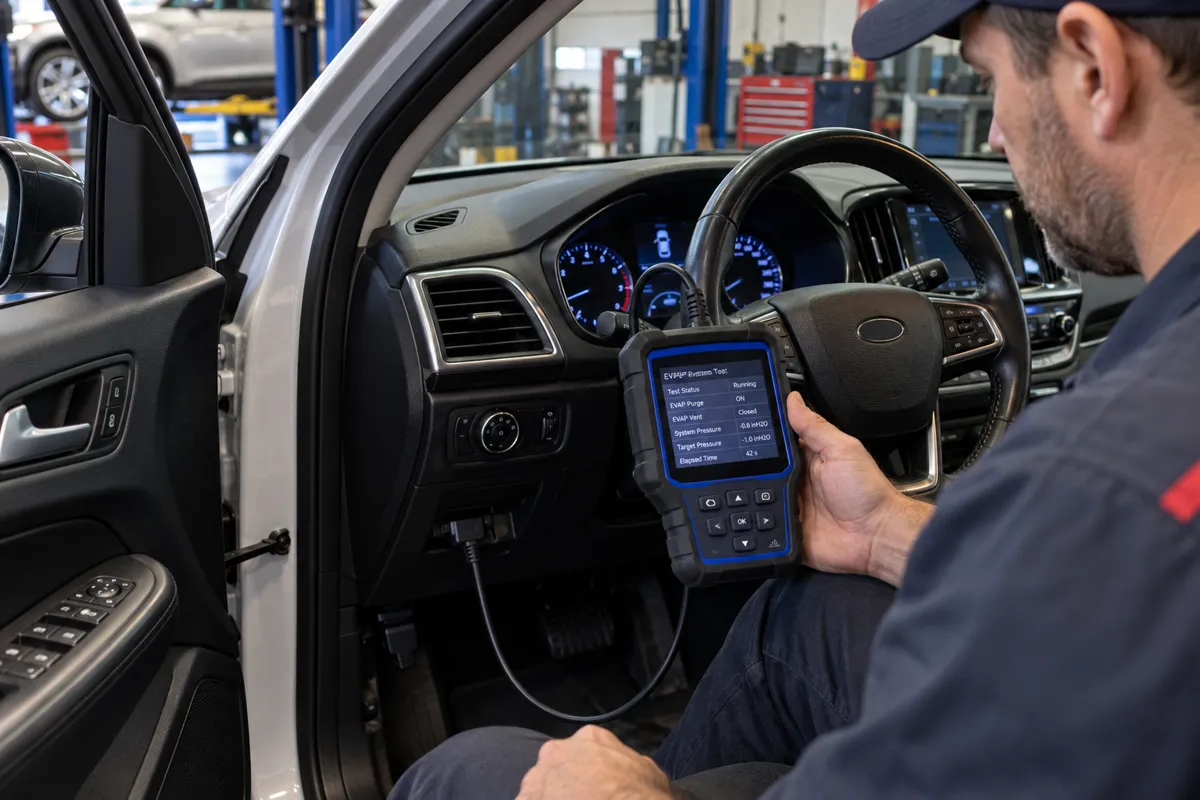
Bidirectional scanners with active test capability can command the EVAP purge valve open and closed while the engine runs. This test confirms the purge valve solenoid is electrically functional and mechanically operating. To perform this test: navigate to the bidirectional controls or active tests section of your scanner, select EVAP purge valve test, command the valve open, and observe two things: a change in engine idle speed or quality (opening the purge valve introduces manifold vacuum into the canister and slightly leans the mixture, which can cause a brief rough idle) and a change in the FTP sensor reading (pressure should drop toward negative when the purge valve opens).
My what is a bidirectional obd2 scanner covers this step by step.
If you are on a tight budget, my best affordable code readers covers the top value picks.
A purge valve that shows no engine response when commanded open indicates the solenoid is not energizing, the valve is stuck closed mechanically, or the vapor line to the intake manifold is disconnected. A purge valve that causes an immediate severe rough idle when commanded open may indicate canister flooding with liquid fuel (a canister-flooded condition where someone overfilled the tank repeatedly), which soaks the charcoal and dumps liquid fuel into the intake.
Toyota owners looking for the right scanner should check my best diagnostic tools for Toyota.
Not all OBD2 scanners support EVAP active tests. Basic code readers and most entry-level scanners only read and clear codes. Mid-range professional scanners typically include EVAP purge valve activation. Manufacturer-specific scanners (factory tools) provide the most complete EVAP test suite including the full sealed-leak test sequence that the ECU runs during the I/M readiness test drive.
Volvo owners looking for the right scanner should check my best diagnostic tools for Volvo.
What a Scanner Cannot Do for EVAP Diagnosis
An OBD2 scanner cannot locate the physical leak. It can confirm that a leak is present and approximately what size it is based on the DTC, but it cannot point to the fuel cap versus a vapor line versus the vent valve as the specific leak source. Finding the exact leak location requires either a smoke test (injecting smoke under low pressure into the EVAP system and watching for smoke emerging from a leak point) or a visual inspection of every vapor line, fitting, and component for cracks and disconnections.
Honda CR-V owners can find the right scanner in my CR-V-compatible diagnostic tools.
The one exception: a P0455 gross leak code alongside a fuel cap warning light on vehicles equipped with one strongly suggests the fuel cap as the leak source, because the cap is the most common source of gross EVAP leaks and the system often detects it separately. However, the cap can appear visually intact and still fail: a worn gasket or distorted threads allow gross leaks that are not visible. Replacing the cap with an OEM-spec part is the correct test: if the P0455 does not return after two to three complete drive cycles with the new cap, the cap was the fault.
Audi Q8 owners can find the right scanner in my top diagnostic tools for the Q8.
Step-by-Step Diagnostic Sequence for an EVAP Code
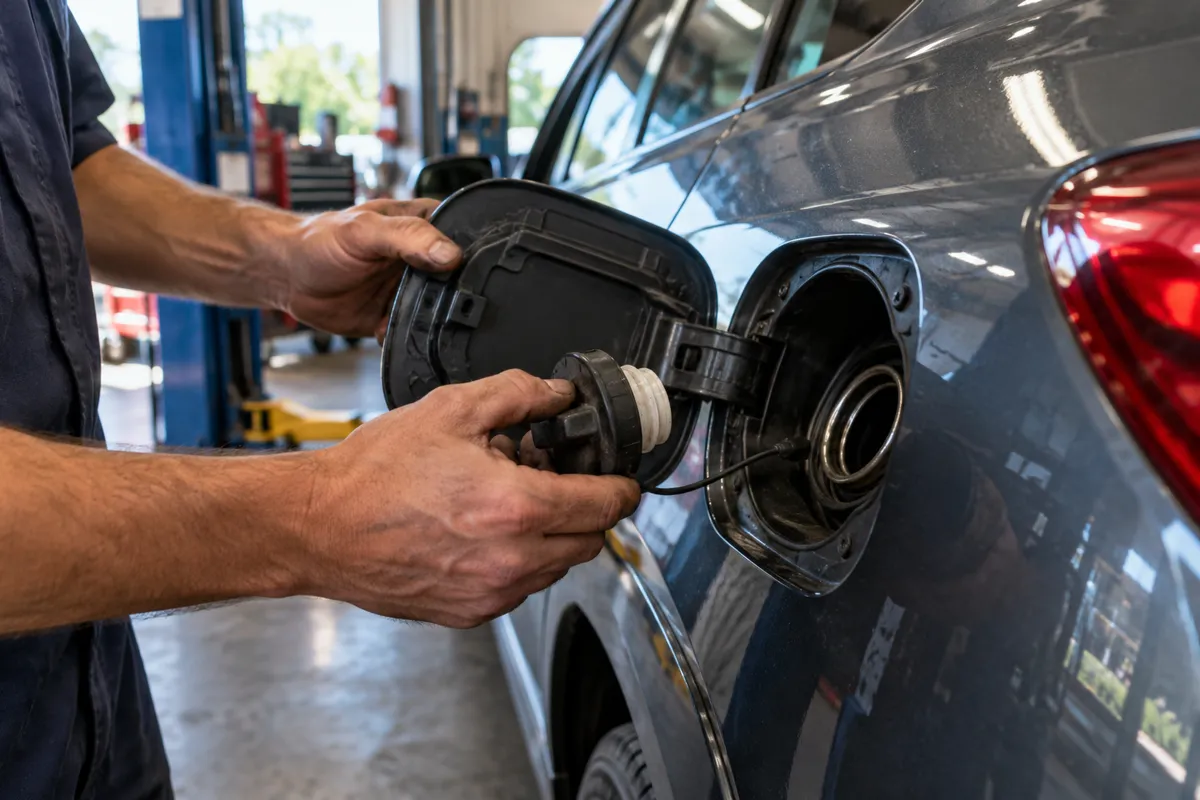
Start by reading the specific DTC. P0455 and P0440 point to gross leaks: check the fuel cap first. Remove it, inspect the gasket for cracking or flattening, reinstall firmly until it clicks, clear the code, and drive two to three complete cycle days. If the code returns, smoke test or inspect the vapor lines visually.
For P0442 or P0456 (small or very small leaks), the fuel cap is still the most common cause, but the leak may be too small to confirm by cap replacement alone. Check the EVAP monitor readiness before and after driving. If the monitor completes and no code stores, the cap fix worked. If the code returns, the leak is in the canister, vapor lines, or purge or vent valve.
Audi owners looking for the right scanner should check my best diagnostic tools for Audi.
For P0441 or P0443 (purge valve issues), use an active test to command the purge valve open and observe engine and FTP sensor response. No response indicates an electrical or mechanical purge valve fault. Check the purge valve solenoid resistance (typically 20 to 40 ohms) with a multimeter and inspect the wiring connector for corrosion.
Check the EVAP monitor status in Mode 1 readiness data. If the monitor shows “not ready” and no code is stored, the system has not been tested yet in this drive cycle set. Drive under cold-start and mixed conditions for two to three days before concluding the system is passing.
FAQs
What is the most common cause of a P0442 or P0455 code?
The most common cause of both P0442 (small leak) and P0455 (gross leak) is a faulty or improperly sealed fuel cap. The cap’s gasket degrades over time and no longer seals against the filler neck, creating an opening that ranges from very small (P0442) to large enough to prevent the system from building any vacuum (P0455). Replacing the cap with an OEM-specification replacement is the correct first repair. Aftermarket caps from non-specified suppliers often do not seal to the OEM specification and can cause or perpetuate the code.
How long does the EVAP monitor take to complete?
The EVAP monitor typically requires one to three nights of cold soak followed by normal driving that includes a cold start in cool temperatures, a sustained drive with the fuel level between 15% and 85%, and no active DTCs during the test sequence. After a battery disconnect or code clear, the EVAP monitor is one of the last monitors to complete: allow three to seven days of normal mixed driving including overnight parking in cool conditions before checking its status.
Can I pass an emissions test with a pending EVAP code?
A pending EVAP code (one that has detected a fault once but not yet confirmed on a second drive cycle) does not illuminate the MIL and does not store a confirmed DTC. In that state, the vehicle typically passes an OBD2 emissions inspection on DTC status and MIL status. However, if the EVAP monitor is still incomplete (not ready), many states fail the inspection on readiness monitor completion. The safest approach is to allow the EVAP monitor to complete and confirm it passes before presenting for inspection.
Does a loose gas cap always cause a check engine light?
A loose gas cap causes the check engine light only after the ECU runs the EVAP monitor and detects the leak on two consecutive drive cycles under its enabling conditions. A cap left loose for a single short trip may not trigger the light immediately. The monitor requires an overnight cold soak, a cold start, and a specific drive sequence to run. A persistent loose cap typically produces a code within three to five days of normal driving that includes a cold start. Some vehicles have a dedicated fuel cap warning light that activates faster than the EVAP monitor, but this is separate from the check engine light.
My scanner shows P0441 (incorrect purge flow). What should I check?
P0441 means the ECU ran the purge test and the FTP sensor did not detect the expected vacuum change when the purge valve was commanded open. Check in this order: first, confirm the purge valve solenoid connector is properly seated (it sits on the intake manifold or near the charcoal canister and is a common connector to knock loose). Second, use a bidirectional scanner to command the purge valve open and listen for a faint click (solenoid energizing) and feel for a slight idle change. Third, measure solenoid resistance: 20 to 40 ohms is typical. An open circuit (infinite resistance) or short (near zero) means the solenoid has failed.
Can an EVAP code affect my fuel economy?
A failed EVAP purge valve stuck closed prevents the ECU from purging stored vapors from the charcoal canister into the engine for combustion. The canister eventually saturates, and on some vehicles the saturated canister can cause a slight rich running condition when heat causes vapors to escape through alternative paths. A failed purge valve that is stuck open (less common) causes a permanent vacuum leak equivalent to the size of the vapor line port, producing a lean condition and rough idle. In both cases the fuel economy effect is minor compared to the emissions and driveability impact.