
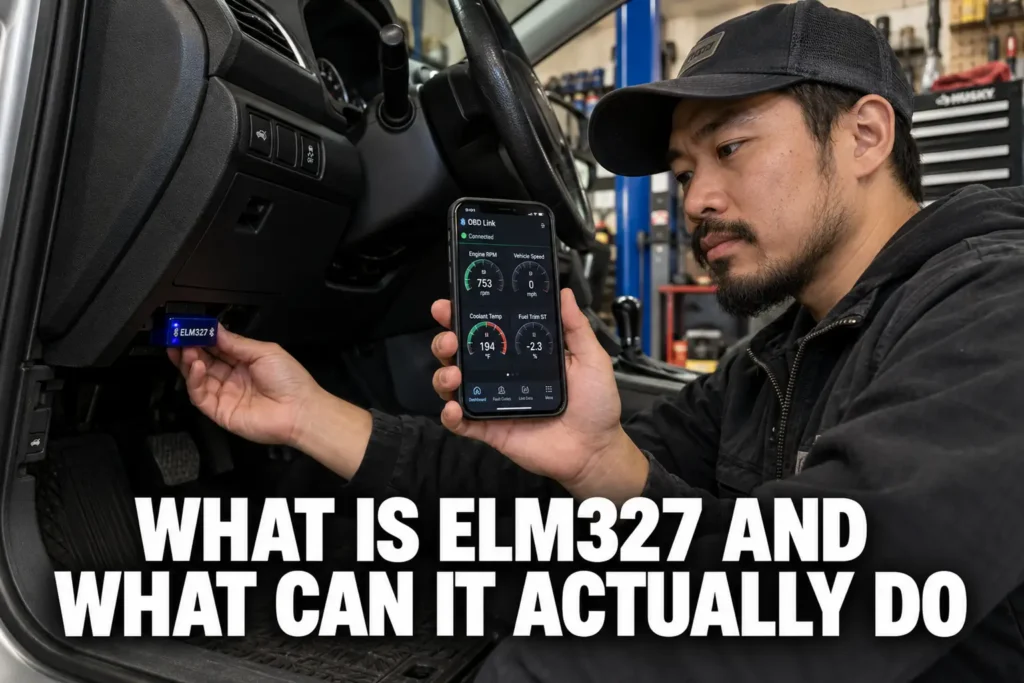
What Is ELM327 and What Can It Actually Do
By Kamil Siegień / October 12, 2026
ELM327 is the designation for a microcontroller chip developed by ELM Electronics that translates between OBD2 communication protocols and a simple serial AT command interface. It became the de facto standard for low-cost OBD2 adapters because it handles the complex OBD2 protocol signaling automatically, allowing any serial-capable device (and later, any Bluetooth or Wi-Fi connected phone or computer) to access vehicle diagnostic data without needing to implement the OBD2 protocols directly. Understanding what the ELM327 chip actually does, what it supports natively, and where it reaches its limits explains why some diagnostic tasks work on any cheap OBD2 adapter while others require purpose-built hardware regardless of price.
I explain this in more detail in my can you drive with check engine light on.
For scanner recommendations to perform this type of work, see my scanner comparison guide.

About the author: Hello! I’m Kamil Siegień, founder of OBD2 Scout. My diagnostic experience started with an engine rebuild on a 2014 Skoda Superb 1.8 TSI, where tuning from 160 to 222 hp required mastering live data and ECU behavior that basic code readers cannot handle. I am a former BMW and MINI employee and regularly use diagnostic scanners on my own Audi A4 2.0 TFSI.
This guide covers what the ELM327 chip does and the AT command interface, which OBD2 protocols the ELM327 supports, why ELM327 clones are prevalent and what capabilities they lose, the hard limits of the ELM327 architecture for professional diagnostics, and what alternatives exist when ELM327-based adapters are not sufficient for the task.
I explain this in more detail in my check engine light on but no codes stored.
If you prefer a wireless setup, my best wireless diagnostic tools covers the best options.
What the ELM327 Chip Does
The ELM327 chip sits between the vehicle’s OBD2 communication bus and a serial port. On the vehicle side, it contains the analog and digital circuitry needed to interface with CAN bus (ISO 15765-4), ISO 9141-2, KWP2000 (ISO 14230), J1850 PWM, and J1850 VPW protocols. It handles bus initialization (the specific timing and voltage sequences each protocol requires to establish communication), manages message framing (assembling multi-byte responses into complete messages), and performs the CRC and checksum verification that each protocol specifies.
My what is can bus obd2 diagnostics covers this step by step.
If you are on a tight budget, my best affordable code readers covers the top value picks.
On the host side, the ELM327 exposes a simple AT command interface over a serial connection (typically at 38,400 baud or higher). The host application sends text commands like “AT Z” (reset), “AT SP 0” (set protocol automatically), or “01 0C” (OBD2 Mode 01, PID 0C: engine RPM), and the chip returns a response like “41 0C 1A F8” (raw bytes for Mode 01 PID 0C response) that the application decodes. The chip abstracts all the underlying protocol complexity into this simple command-response format.
iPhone users looking for a compatible scanner can check my top iOS diagnostic tools.
This abstraction made OBD2 access feasible for software developers without requiring deep knowledge of each vehicle protocol. A developer writing an OBD2 app only needs to know the ELM327 AT command set, not the CAN bus framing, timing requirements, and protocol variants for each vehicle make. This is why thousands of OBD2 applications exist for smartphones: the ELM327 chip handles the hard part, and the app handles the display and analysis.
Audi owners looking for the right scanner should check my best diagnostic tools for Audi.
Supported Protocols
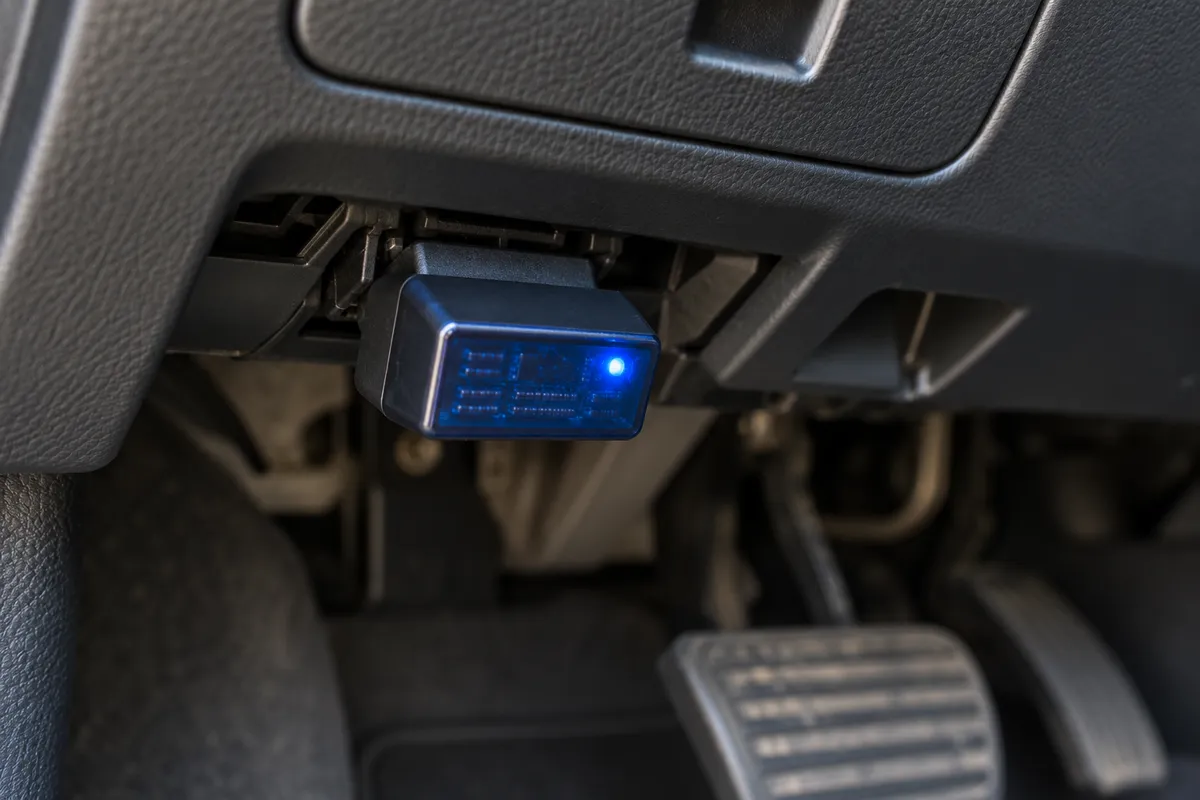
The genuine ELM327 v2.2 chip (the most recent version) supports all six OBD2 protocols required for US-market compliance: ISO 15765-4 (CAN at 500 kbits/s and 250 kbits/s, with 11-bit and 29-bit CAN IDs in standard and extended formats), ISO 14230-4 (KWP2000 at 5-baud init and fast init), ISO 9141-2, SAE J1850 PWM, and SAE J1850 VPW. Automatic protocol detection (AT SP 0) attempts each protocol in sequence to find which one the vehicle responds to.
Honda owners looking for the right scanner should check my best diagnostic tools for Honda.
On CAN vehicles (all US vehicles from 2008), the ELM327 correctly initiates ISO 15765-4 communication and handles multi-frame CAN messages (the ISO 15765 transport protocol for messages longer than 8 bytes). This allows it to retrieve full-length VIN strings, multi-frame DTC responses, and other data that requires the CAN isotp (ISO Transport Protocol) layer.
BMW owners looking for the right scanner should check my best diagnostic tools for BMW.
ELM327 Clones and Their Limitations
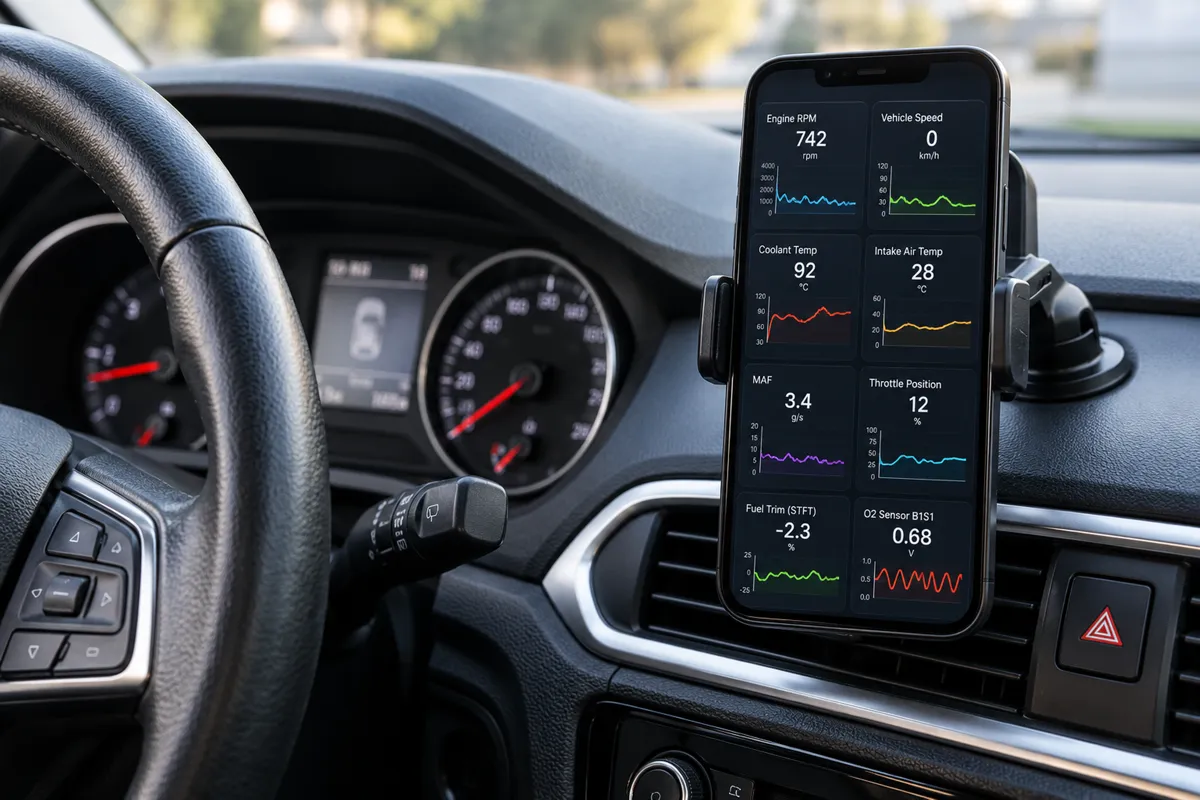
The original ELM327 chip from ELM Electronics is not the chip in most consumer OBD2 adapters. Chinese manufacturers produce numerous ELM327-compatible chips and firmware implementations that implement a subset of the ELM327 command set. These clones are sold under the ELM327 branding but omit some commands, contain timing bugs, or implement the protocol layers incorrectly for specific vehicle variants.
Ford owners looking for the right scanner should check my top Ford scanner picks.
Common clone deficiencies include: incorrect CAN timing that causes communication failures on specific makes (BMW and Chrysler vehicles are frequently mentioned), missing AT command support that breaks apps relying on those commands, incorrect multi-frame message handling that corrupts long responses (like VIN or extended DTC lists), and inability to automatically detect protocols correctly, requiring manual protocol selection by the app. A clone that works perfectly on a 2010 Toyota may fail completely on a 2012 BMW because of a timing difference in the BMW’s CAN implementation that the clone handles incorrectly.
I explain this in more detail in my my guide on use an.
The only way to verify genuine ELM327 hardware is to purchase from ELM Electronics directly or from authorized retailers, or to buy from reputable adapter manufacturers (OBDLink, Veepeak, BAFX) who source quality hardware. Adapters priced below $10 to $15 are almost universally using clone chips with incomplete implementations.
Chevy owners looking for the right scanner should check my best diagnostic tools for Chevy.
Hard Limits of ELM327 Architecture
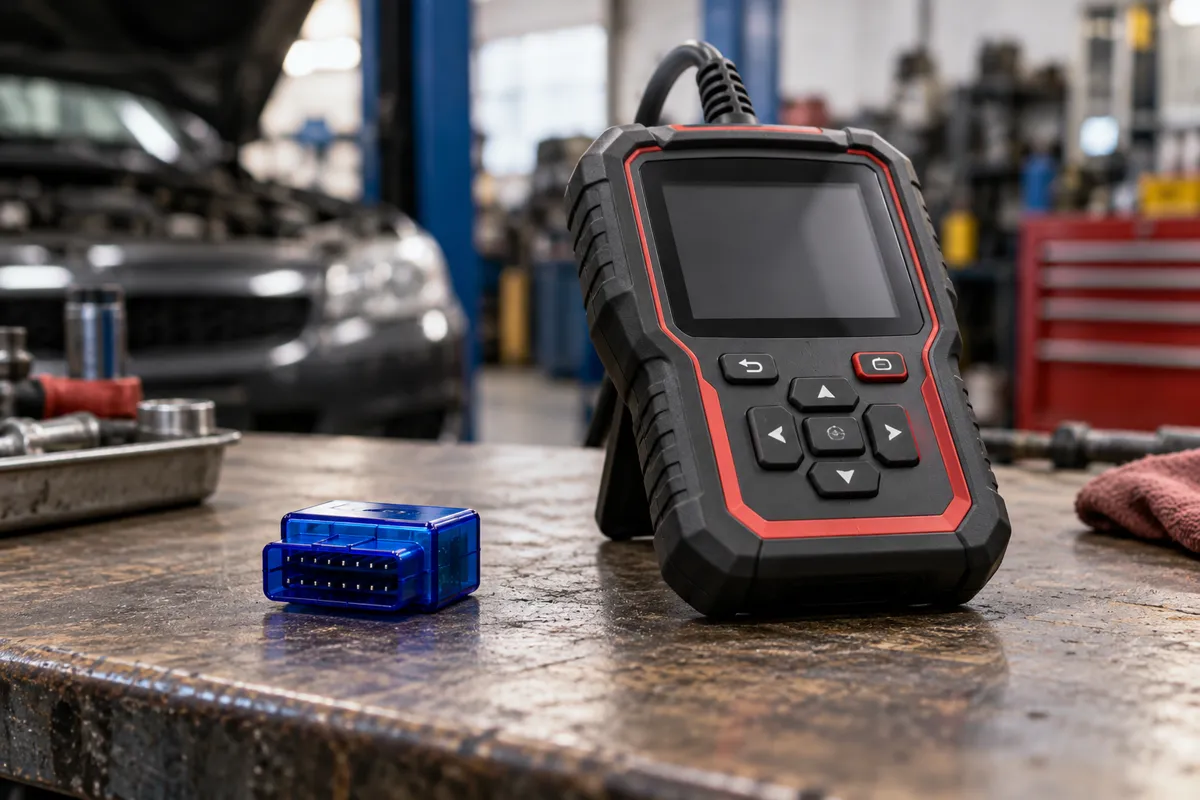
The ELM327’s AT command interface was designed for standard OBD2 Mode 01 through Mode 09 access: PID requests, DTC retrieval, and basic vehicle information. The chip does not provide a general-purpose CAN bus interface: it cannot send arbitrary CAN messages, cannot listen to CAN bus traffic passively (except through specific undocumented modes in some versions), and cannot implement the manufacturer-specific protocol handshakes that enhanced diagnostics require.
My what are obd2 pids and how do they work covers this step by step.
Toyota owners looking for the right scanner should check my top Toyota scanner picks.
Service functions require a different type of communication: the scanner sends a specific sequence of module-specific command messages, waits for confirmation, sends another command based on the response, and continues through a multi-step protocol that is specific to each manufacturer and module. The ELM327 AT command interface does not support this type of application-controlled protocol flow: the chip processes one AT command at a time and returns a response, but cannot engage in the stateful bidirectional sessions that service functions require.
Mercedes owners looking for the right scanner should check my best diagnostic tools for Mercedes.
This is the fundamental reason why no ELM327-based adapter can perform service functions: it is an architectural limitation of the AT command design, not a fixable software issue. Professional scanner hardware that supports service functions contains a full-featured microcontroller with direct CAN bus access, allowing the application to implement arbitrary protocol sequences, manage timing precisely, and maintain stateful communication sessions independently of the AT command abstraction layer.
Honda CR-V owners can find the right scanner in my top CR-V diagnostic tools.
Alternatives When ELM327 Is Not Sufficient
When ELM327-based adapters fall short, the alternatives are: mid-range dedicated scanners with service function support (Autel MX808, Launch CRP909, Foxwell NT series), professional-grade bidirectional scanners (Autel MaxiSYS, Launch X431), make-specific tools (VCDS for VW Group, Techstream for Toyota, ForScan for Ford vehicles with its own ELM327-compatible adapter that supports Ford’s proprietary extensions), and J2534 pass-thru devices for ECU programming.
My ecu coding when does it need to be done explained covers this step by step.
My what is a j2534 pass thru device covers this step by step.
My a bidirectional obd2 scanner explained covers this step by step.
Audi Q8 owners can find the right scanner in my top Q8 diagnostic tools.
ForScan deserves specific mention as an exception to the ELM327 limitation pattern: ForScan uses an ELM327-compatible adapter but implements its own enhanced Ford/Lincoln/Mazda protocol support on top of the ELM327 interface, accessing systems beyond what standard ELM327 commands reach. For Ford vehicle owners specifically, ForScan with a compatible adapter is a cost-effective alternative to a full dedicated scanner for many diagnostic and service function tasks.
Audi Q7 owners can find the right scanner in my Q7-compatible diagnostic tools.
ELM327 for OBD2 Readiness Checks Before Emissions Testing
One of the most practical legitimate uses of an ELM327 adapter is verifying OBD2 monitor readiness status before taking a vehicle to an emissions inspection. OBD2 Mode 01 PID 0x01 returns the status of all emissions monitors (catalyst efficiency, oxygen sensor, EVAP, EGR, and others): whether each monitor has completed its self-test since the last code clear, and whether it has failed. Most states and countries use OBD2 monitor readiness as the primary emissions test criteria: a vehicle with one or two incomplete monitors fails the inspection even without a check engine light.
I cover this capability in more detail in my OBDLink MX+ deep dive.
An ELM327 adapter with any OBD2 app that displays monitor readiness status handles this task correctly on all vehicles. The readiness PID is part of standard OBD2 Mode 01, which all ELM327-based adapters support. Checking readiness before driving to an emissions test station confirms which monitors are still incomplete (displaying as “not ready” or “incomplete”) so the driver can complete additional drive cycles to set the remaining monitors before the inspection. A common scenario is a battery replacement or code clear that resets all monitors: driving the vehicle through its OBD2 drive cycle readiness procedure before the emissions test prevents a failed inspection due to incomplete monitors, and the ELM327 adapter confirms readiness without requiring a trip to a shop.
My battery disconnect obd2 codes monitors covers this step by step.
I cover this capability in more detail in my BlueDriver diagnostic coverage.
The one monitor that takes longest to complete on most vehicles is the EVAP monitor, which runs only under specific conditions (cool ambient temperature, specific fuel level range, extended continuous driving). If readiness checks show EVAP as the only incomplete monitor before an emissions test, the standard advice is: drive early in the morning after the vehicle has cooled overnight, with the fuel level between 1/4 and 3/4 full, for a combination of highway and city driving of at least 20 to 30 minutes. The ELM327 adapter confirms completion of the EVAP monitor without requiring any additional tools.
I explain this in more detail in my my guide on check used car.
FAQs
Is ELM327 v2.1 better than v1.5?
ELM327 version numbers on packaging indicate the firmware version of the genuine ELM Electronics chip. Version 2.1 and 2.2 include additional features and improved protocol support compared to v1.5. However, most adapters sold with version numbers on the packaging use clone chips, not genuine ELM Electronics chips: the version number may be fabricated. A genuine ELM327 v1.5 from ELM Electronics performs better than a clone labeled as v2.1, because the genuine chip correctly implements the standard while the clone may contain bugs in a higher-labeled version. The version number is only meaningful on confirmed genuine ELM Electronics chips.
Can I use ELM327 to unlock hidden features in my car?
Unlocking hidden features (such as enabling folding mirrors, activating ambient lighting, or enabling certain convenience functions) requires reading and modifying the module’s coding or adaptation values: this is module coding and requires a scanner that supports this make’s extended protocol, not an ELM327 adapter performing standard OBD2 access. VCDS can do this for VW Group vehicles, Carista for selected makes, and manufacturer tools for their respective vehicles. No standard ELM327 application can perform module coding on most vehicles.
Why does my cheap ELM327 adapter work fine on my old car but not my new one?
Older vehicles using ISO 9141-2 or J1850 protocols have slower, more forgiving communication timing requirements. Clone chips that have timing inaccuracies still work because the protocol allows for wider timing margins. CAN bus on modern vehicles requires precise timing: CAN frames have strict bit-timing requirements, and a clone chip that implements CAN communication with slightly incorrect timing may fail on vehicles where the CAN transceiver does not tolerate the deviation. Newer vehicles also use CAN at higher speeds and with more complex multi-frame message sequences, both of which expose clone chip implementation deficiencies more readily than older, simpler protocols.