
How to Reset Check Engine Light Without a Scanner: What Actually Works
By Kamil Siegień / October 12, 2026
Three methods can turn off the check engine light without a scan tool: completing enough drive cycles for the ECU to self-clear, disconnecting the battery to wipe the fault memory, or using the key cycling sequence on older vehicles. None of them fix the underlying fault. The light returns as soon as the ECU re-detects the same condition during normal driving. Understanding what each method actually does to the ECU’s internal state matters for deciding which one to use and what to expect afterward.
iPhone users looking for a compatible scanner can check my best scanner apps for iPhone.

About the author: Hello! I’m Kamil Siegień, founder of OBD2 Scout. My diagnostic experience started with an engine rebuild on a 2014 Skoda Superb 1.8 TSI, where tuning from 160 to 222 hp required mastering live data and ECU behavior that basic code readers cannot handle. I am a former BMW and MINI employee and regularly use diagnostic scanners on my own Audi A4 2.0 TFSI.
This guide covers exactly what happens inside the ECU during each reset method, which situations each one is appropriate for, the emissions test consequences of each approach, and the one case where no scanner-free method works at all.
I cover this capability in more detail in my BlueDriver diagnostic coverage.
Why the Check Engine Light Stays On Without Intervention
The ECU stores confirmed Diagnostic Trouble Codes in non-volatile memory. Non-volatile means the storage persists through power cycles: turning the ignition off and on, starting the engine, or letting the car sit overnight does not erase the stored fault. The check engine light stays on because the DTC is still in that memory, and the ECU continues to illuminate the MIL for every key-on cycle until the code is cleared or the fault resolves through drive cycle confirmation.
My most common reasons check engine light comes on covers this step by step.
My the malfunction indicator light mil explained covers this step by step.
Audi owners looking for the right scanner should check my best diagnostic tools for Audi.
The ECU has two ways to clear a confirmed code without a scanner. The first is natural self-clearing: if the fault does not recur across a defined number of consecutive drive cycles where the relevant monitor ran and produced a passing result, the ECU concludes the fault is gone and clears the code automatically. The second is manual clearing: a scanner sends a Mode 04 command that instructs the ECU to wipe all confirmed DTCs immediately. Without a scanner, only the natural self-clearing path is available, unless the battery is disconnected to force an emergency memory wipe.
I explain this in more detail in my can you drive with check engine light on.
The key distinction matters: natural self-clearing means the fault genuinely resolved. Battery disconnect means the memory was erased by force. The ECU cannot tell you which scenario applies from the outside. Only the code history and freeze frame data, which both get wiped on a battery disconnect, tell the diagnostic story.
I explain this in more detail in my check engine light on but no codes stored.
Method 1: Let the ECU Self-Clear Through Drive Cycles
The most legitimate scanner-free reset is to repair the fault and then drive normally until the ECU self-clears. The ECU counts passing drive cycles after a fault is no longer detected. For most fault types, three consecutive passing drive cycles are enough for the ECU to clear the confirmed DTC and turn the light off. Some faults require as few as one passing cycle. Others, particularly EVAP system faults with strict enabling conditions, may require several days of normal driving before the relevant monitor runs enough passing cycles to trigger the auto-clear.
Honda owners looking for the right scanner should check my best diagnostic tools for Honda.
This method only works if the underlying fault is actually resolved. If the repair was incomplete, the ECU re-detects the fault, resets the pass counter, and the light stays on. If the fault is intermittent and stops occurring on its own (a loose connector that reseated, a fuel cap that was tightened), the ECU self-clears after the fault stops triggering the monitor during normal driving.
I explain this in more detail in my service engine soon light vs check engine light.
The practical implication: if the light turned on, then turned off on its own without any intervention, the ECU ran enough passing cycles to self-clear. This is normal and does not mean nothing happened. The fault was real, the code was stored, and the condition resolved. Intermittent faults that self-clear almost always return. The underlying cause is still present even when the light is off.
A drive cycle is not simply starting the car and driving. It is a sequence of operating conditions: cold start with engine temperature below 86°F (30°C), idle for two to three minutes, gentle acceleration to highway speed, steady cruise at 55 to 65 mph for at least five minutes, deceleration without heavy braking, and city driving with stops. Different monitors require different enabling conditions within that sequence. One deliberate drive cycle of 20 to 30 minutes that includes all those phases completes more monitors than several short trips.
I explain this in more detail in my check engine light came back after clearing codes.
Method 2: Battery Disconnect
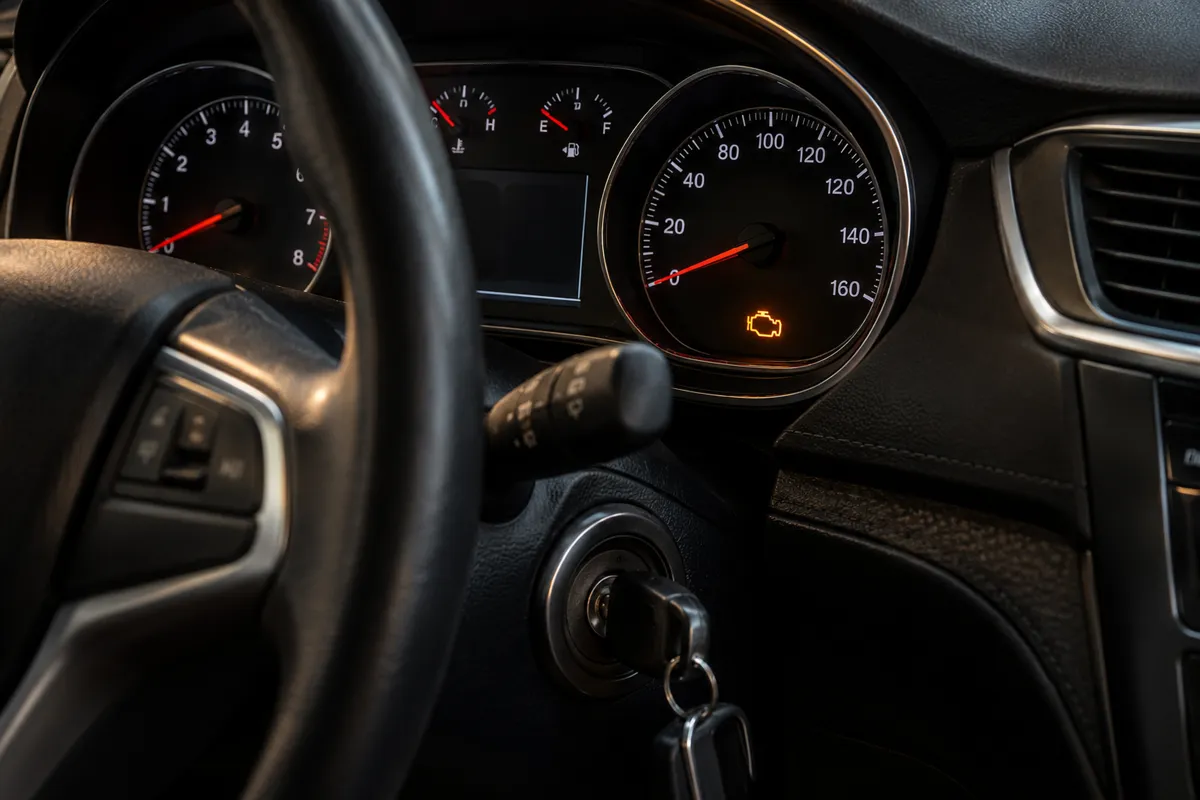
Disconnecting the negative battery terminal for 30 to 60 seconds resets the ECU’s volatile memory. All stored confirmed DTCs are erased. All pending codes are erased. All freeze frame data tied to those codes is erased. All readiness monitors reset to “Not Ready.” The check engine light turns off because there is no longer a stored code in memory.
My my guide on verify repair fixed obd2 covers this step by step.
BMW owners looking for the right scanner should check my best diagnostic tools for BMW.
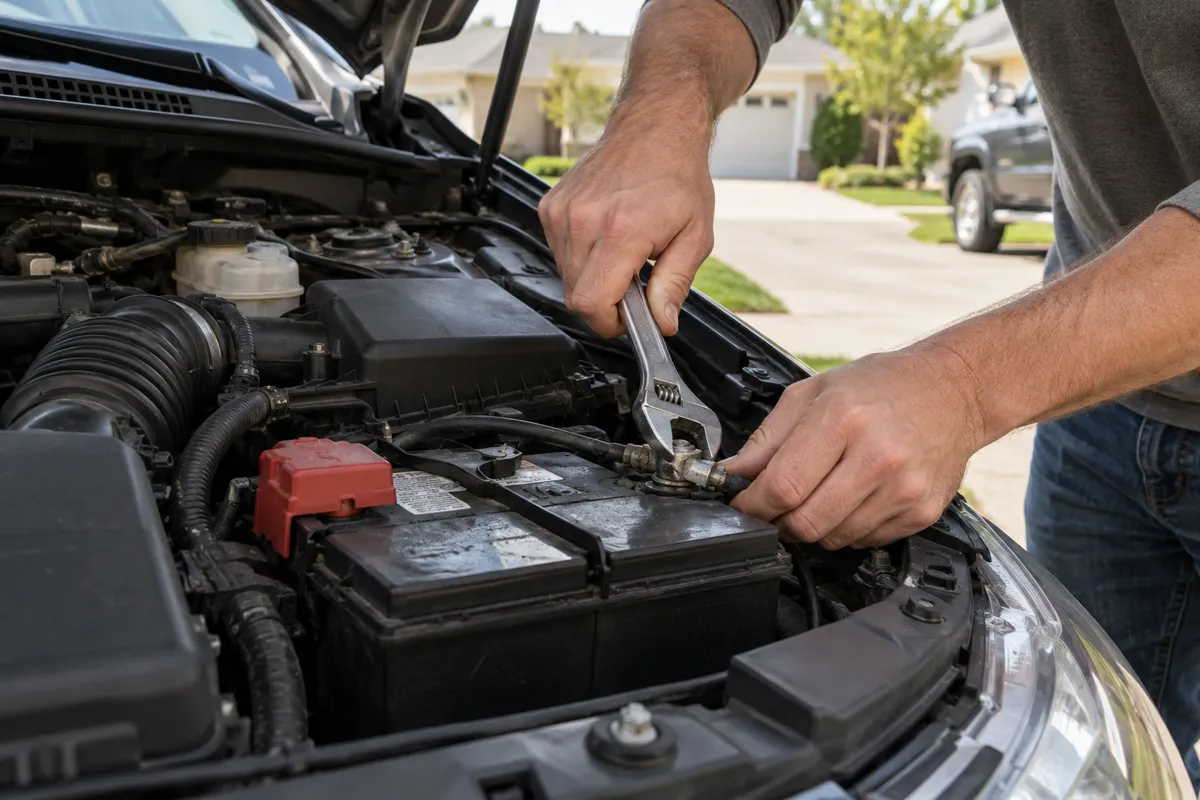
The procedure is: park the vehicle and turn the ignition off completely. Locate the negative battery terminal (marked with a minus sign or black cable). Loosen the terminal clamp with a wrench and remove the cable from the post. Wait at least 30 seconds. Some technicians recommend pressing the brake pedal while the battery is disconnected to drain any residual charge from capacitors in the ECU. Reconnect the negative terminal and tighten the clamp. Start the engine and confirm the MIL is off.
Battery disconnect has three significant consequences. The first is monitor reset: all readiness monitors show “Not Ready” after reconnection. The ECU must run each monitor from scratch. This takes one to several drive cycles depending on the monitor. An emissions inspection immediately after a battery disconnect will fail on monitor completion status even with the MIL off and no stored codes. Most states allow one or two monitors to show incomplete, but a fresh disconnect clears all of them. The EVAP and catalyst monitors may take a full week of normal driving to complete after a reset.
My battery disconnect obd2 codes monitors covers this step by step.
For scanner recommendations to perform this type of work, see my top-rated diagnostic tools.
The second consequence is the loss of adaptive learning. Modern ECUs learn your engine’s characteristics over time and store corrections to the fuel map, idle speed, and other parameters. A battery disconnect wipes those adaptations. The engine may run slightly rough, idle higher than normal, or show abnormal fuel trim values for the first several drive cycles after a reset while the ECU relearns. This is normal and resolves within a few days of driving.
My ecu coding when does it need to be done explained covers this step by step.
If you are on a tight budget, my best value OBD2 scanners covers the top value picks.
The third consequence is security system reset. On some vehicles, disconnecting the battery resets the radio security code, requiring the driver to re-enter a PIN to use the radio. Check your vehicle’s owner’s manual before disconnecting the battery if the radio has a security code feature.
Method 3: Key Cycling
The key cycling method involves rapidly cycling the ignition between the on and off positions without cranking the engine, typically three to five times in succession. The theory is that repeated power cycling drains residual charge from ECU memory capacitors and causes a soft reset similar to a battery disconnect.
My a pid obd2 diagnostics explained covers this step by step.
Ford owners looking for the right scanner should check my best diagnostic tools for Ford.
This method is unreliable on modern vehicles. Current ECUs use non-volatile flash memory for DTC storage, which does not depend on continuous power to retain data. Cycling the ignition does not erase flash memory. On older pre-2000 vehicles with RAM-based code storage, key cycling could sometimes drain the memory backup capacitor and clear stored codes. On 2005 and newer vehicles, the likelihood of this method working is low enough that it is not worth attempting as a primary strategy.
The key cycling method also does not reset readiness monitors in any predictable way. If it does happen to clear codes on an older vehicle, the monitor status is unpredictable. For vehicles where key cycling is being considered, a battery disconnect achieves the same result reliably and completely.
Chevy owners looking for the right scanner should check my best diagnostic tools for Chevy.
Permanent Codes: The Method That Does Not Work
On 2010 and newer OBD2-compliant vehicles, permanent Diagnostic Trouble Codes (PDTCs) are stored in non-volatile memory that survives both battery disconnects and scan tool clear commands. A vehicle with a PDTC has its check engine light on even after a battery disconnect and even after a scanner clears all standard codes. Reconnecting the battery reveals the PDTC immediately, and the MIL illuminates again.
Toyota owners looking for the right scanner should check my best diagnostic tools for Toyota.
PDTCs were introduced specifically to prevent the use of code-clearing and battery disconnects to pass emissions inspections. The only way to clear a PDTC is to repair the underlying fault and complete at least two consecutive passing drive cycles for the relevant monitor. After those passing cycles, the ECU clears the PDTC automatically. No scanner command, no battery disconnect, and no key cycling method has any effect on a PDTC.
Mercedes owners looking for the right scanner should check my best diagnostic tools for Mercedes.
If the check engine light returns immediately after a battery disconnect on a 2010 or newer vehicle, the most likely explanation is an active PDTC. Connect a scanner that explicitly reads the PDTC memory category, navigate to the permanent code list, and note which fault is stored. That fault must be repaired before the light can be cleared by any means.
Honda CR-V owners can find the right scanner in my best OBD2 scanner for Honda CR-V.
The Emissions Test Problem
The most common reason drivers reset the check engine light without a scanner is to prepare for a state emissions inspection. Both the battery disconnect and key cycling methods create a new problem they were intended to solve: a fresh battery disconnect resets all readiness monitors to “Not Ready,” and an emissions inspection requires most monitors to show complete.
If you prefer a wireless setup, my best wireless diagnostic tools covers the best options.
A typical state OBD2 emissions inspection checks three things: MIL status must be off, no stored DTCs, and readiness monitor completion. Most states allow one incomplete monitor on 1996 to 2000 vehicles, one on 2001 and newer vehicles in some states, and zero on 2001 and newer in stricter states. After a battery disconnect, all monitors are incomplete. Driving to the inspection immediately after disconnecting the battery fails the test on monitor status even with the MIL off.
The practical solution for an upcoming inspection where the MIL was cleared via battery disconnect: drive the vehicle for several days of normal mixed driving before the inspection. One full drive cycle per day covering cold start, highway cruise, and city driving completes most monitors within three to five days. Check the monitor status with any OBD2 scanner or basic code reader before going to the inspection. When all required monitors show “Ready” or “Complete,” the inspection will pass if no new codes have formed and the MIL remains off.
Audi Q8 owners can find the right scanner in my best scanners for the Q8.
When Not to Reset the Check Engine Light
Resetting the check engine light without addressing the fault is counterproductive in several situations. If the light came on with any of the following symptoms, diagnose before resetting: rough idle, hesitation during acceleration, loss of power, unusual fuel consumption increase, engine noise that was not present before, overheating, or any additional warning light illuminating at the same time. These symptoms alongside a check engine light indicate an active fault that may cause secondary damage if left running.
Audi Q7 owners can find the right scanner in my best scanners for the Q7.
If the light appeared during or immediately after a mechanical event (a stall, a knock, a hard shift, a sudden loss of power), do not reset and continue driving. The light in these cases is reporting a fault that occurred during an event that may have caused mechanical damage. Reading the code before resetting gives diagnostic information that helps identify what happened. Resetting without reading permanently destroys that freeze frame record.
If you are about to sell the vehicle, resetting the check engine light without disclosing the fault to the buyer is deceptive practice in most jurisdictions. A buyer who checks the readiness monitors will see “Not Ready” on all of them after a fresh reset and will know the memory was recently cleared, which is a stronger negative signal than a specific fault code.
I cover this capability in more detail in my Innova 3100RS coverage.
What to Do Instead
A basic OBD2 code reader costs $15 to $30 and reads the fault code in 60 seconds. The code number identifies the system, which determines whether the fault is urgent or can wait. Most auto parts chains (Advance Auto Parts, AutoZone, O’Reilly, NAPA) read codes for free with their store scanner. Knowing which code triggered the light before resetting it is always more useful than resetting without reading.
My beginners guide reading obd2 data covers this step by step.
If the light is on and you do not have a scanner and do not want to visit a parts store, the safest approach is to let the vehicle run normally, monitor for any additional symptoms, and address the fault when convenient for non-urgent situations. The light staying on does not cause any additional damage in most fault categories. It does cause an automatic emissions inspection failure, and it masks any new fault that develops while the original code is stored.
FAQs
Will the check engine light reset itself without doing anything?
Yes, if the fault was intermittent and stopped occurring. The ECU counts consecutive passing drive cycles for the relevant monitor, and after typically three passing cycles, it clears the stored code and turns the light off automatically. The light going off on its own does not mean the fault is permanently resolved. Intermittent faults return when the triggering conditions recur.
How long does it take for the check engine light to turn off after disconnecting the battery?
The light turns off immediately after reconnecting the battery, assuming no PDTC is active and the fault condition is no longer present. If the underlying fault is still active, the check engine light returns within one to two drive cycles after the battery reconnect as the ECU re-detects the condition during normal monitoring.
Does disconnecting the battery damage the ECU?
No. Modern vehicle ECUs are designed to tolerate battery disconnects during normal service. The reset of adaptive learning data and readiness monitors is a known and expected consequence, not damage. The only risk is in vehicles with continuously powered memory modules that lose calibration data on a battery disconnect, such as certain automatic transmission control units on specific makes. Check your owner’s manual for any warnings about battery disconnects before proceeding.
How many drive cycles does it take for the check engine light to turn off on its own?
Most fault types require three consecutive passing drive cycles for the ECU to auto-clear the confirmed DTC. Some fault types self-clear in one passing cycle. EVAP faults with strict enabling conditions may require five or more drive cycles spread across multiple days. The specific count depends on the manufacturer, fault type, and whether the enabling conditions for the relevant monitor occur during each drive.
Can I pass an emissions test right after resetting the check engine light?
Not immediately after a battery disconnect or code clear. All readiness monitors reset to “Not Ready” after either method. Most state emissions inspections require monitors to show complete, and driving to the inspection immediately after a reset fails on monitor status. Drive normally for three to five days, check monitor completion with any scanner, and inspect only after all required monitors show ready.
What is the key cycling method and does it work?
Key cycling involves turning the ignition on and off rapidly several times without starting the engine, with the intent of draining capacitor charge and causing a soft ECU reset. It sometimes worked on pre-2000 vehicles with RAM-based code storage. On 2005 and newer vehicles using flash memory for DTC storage, it has no reliable effect. Battery disconnect is more effective and more predictable on any vehicle where a memory wipe is the goal.