
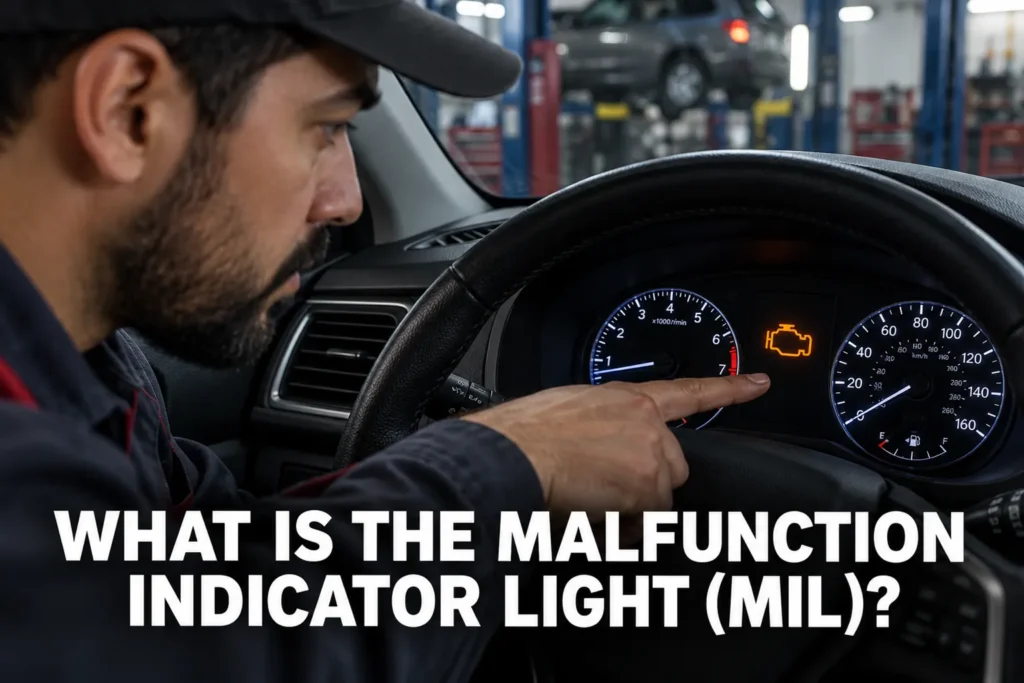
What Is the Malfunction Indicator Light (MIL)? The Full Technical Explanation
By Kamil Siegień / October 12, 2026
The malfunction indicator light is the official name for what most drivers call the check engine light. It is not a vague warning that something is wrong with the car. It is a federally mandated indicator that the vehicle’s onboard diagnostic system has confirmed a fault that causes emissions to exceed a legally defined threshold. Every gasoline-powered vehicle sold in the United States since 1996 is required to have one, and it operates according to a specific set of rules that the ECU follows exactly.
For scanner recommendations to perform this type of work, see my best OBD2 scanners.

About the author: Hello! I’m Kamil Siegień, founder of OBD2 Scout. My diagnostic experience started with an engine rebuild on a 2014 Skoda Superb 1.8 TSI, where tuning from 160 to 222 hp required mastering live data and ECU behavior that basic code readers cannot handle. I am a former BMW and MINI employee and regularly use diagnostic scanners on my own Audi A4 2.0 TFSI.
This guide covers what the MIL is at the regulatory and technical level, how the ECU decides when to illuminate it, what its two operating states mean, which faults trigger it and which do not, and what the light staying on after a repair actually tells you about the ECU’s internal state.
iPhone users looking for a compatible scanner can check my best OBD2 scanner for iPhone.
The Legal Definition of the MIL
The malfunction indicator light is defined in SAE J1979 and its ISO equivalent ISO 15031-5 as the federally mandated warning lamp that illuminates when the OBD2 system detects a fault that causes a vehicle’s emissions to exceed 1.5 times the applicable federal standard. The Environmental Protection Agency mandated OBD2 compliance for all 1996 and newer gasoline vehicles sold in the US. California mandated it earlier, from 1988 on some vehicles under CARB regulations.
If you are on a tight budget, my best budget OBD2 scanner covers the top value picks.
The standard specifies what the MIL must do, not what it must look like or what it must say. Manufacturers have latitude to label it “Check Engine,” “Service Engine Soon,” or nothing at all beyond the engine outline icon. The legal obligation is that the lamp illuminates within a defined number of drive cycles after a qualifying fault is detected, and that it connects to a standardized diagnostic interface at a standardized 16-pin connector where a scan tool can retrieve the stored fault code.
My my guide on reset check engine light without a scanner covers this step by step.
Honda owners looking for the right scanner should check my best OBD2 scanner for Honda.
The MIL is not optional. A vehicle without a functioning MIL circuit fails OBD2 compliance. A state emissions inspection checks MIL status as one of three mandatory checks: MIL must be off, no stored DTCs, and readiness monitors must show complete for the required systems.
Audi owners looking for the right scanner should check my best OBD2 scanner for Audi.
What the MIL Icon Looks Like
The standard MIL icon is a silhouette of an engine block in profile: a rectangular body with a cylinder head on top and an intake manifold visible on one side. ISO 2575 defines the symbol. It appears in amber on the instrument cluster, never in red. Red warning lights in automotive instrument clusters are reserved for conditions that require immediate shutdown: oil pressure, coolant temperature, and charging system failures.
BMW owners looking for the right scanner should check my best OBD2 scanner for BMW.
The amber color communicates a specific severity level. The fault is real and confirmed, but the vehicle can typically be driven to a repair facility. The only exception is when the MIL flashes, which indicates a misfire severe enough to damage the catalytic converter and requires stopping promptly.
Ford owners looking for the right scanner should check my best OBD2 scanner for Ford.
Some manufacturers substitute the engine icon with text: “CHECK ENGINE,” “SERVICE ENGINE SOON,” or “CHECK ENGINE SOON.” On General Motors vehicles produced through most of the OBD2 era, “Service Engine Soon” is the MIL, functioning identically to a check engine light. On BMW vehicles, “Service Engine Soon” is a separate maintenance reminder unrelated to the OBD2 MIL. The engine icon itself is always the MIL regardless of accompanying text.
If you prefer a wireless setup, my best Bluetooth OBD2 scanner covers the best options.
The Bulb Check at Key-On
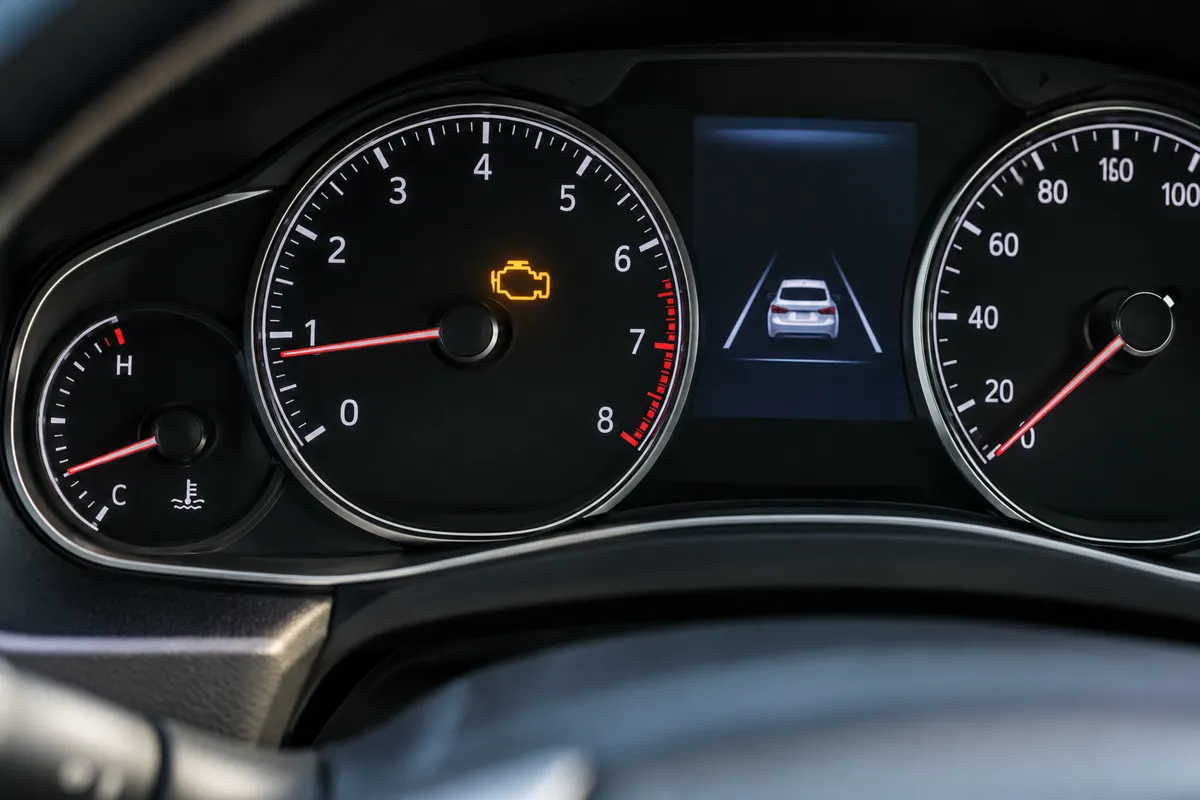
When the ignition is turned to the on position without cranking the engine, the MIL illuminates for approximately two to three seconds. This is the bulb check sequence, a self-test the instrument cluster runs to confirm the MIL bulb or LED is functional. After the bulb check, the light turns off if no faults are stored. If faults are stored, it remains on.
Chevy owners looking for the right scanner should check my best OBD2 scanner for Chevy.
A MIL that does not illuminate during the bulb check indicates a failed MIL circuit: a blown fuse, a burned bulb, a failed LED, or a wiring fault between the cluster and the ECU. A vehicle with a non-functional MIL circuit fails OBD2 compliance and will not pass an emissions inspection that checks MIL continuity.
Toyota owners looking for the right scanner should check my best OBD2 scanner for Toyota.
Some drivers disconnect the MIL to hide active faults before a vehicle sale or emissions test. The inspection system checks for MIL continuity during the key-on sequence. A lamp that does not illuminate during the bulb check is recorded as a fault, and the vehicle fails regardless of whether codes are present.
Mercedes owners looking for the right scanner should check my best OBD2 scanner for Mercedes.
How the ECU Decides to Turn the MIL On
The ECU runs continuous and non-continuous monitors during every drive cycle. Continuous monitors check fuel system status, misfire, and comprehensive component monitoring in real time throughout every trip. Non-continuous monitors check the catalyst, oxygen sensors, EGR system, EVAP system, and secondary air system under specific enabling conditions that may only occur during certain phases of a drive.
My obd2 mode 06 explained monitor test results covers this step by step.
My my guide on obd2 mode 6 explained use for diagnosis covers this step by step.
When a monitor detects a fault, the ECU does not immediately illuminate the MIL. It stores the fault as a pending code and waits for confirmation. For most fault types, confirmation requires the ECU to detect the same fault on two consecutive drive cycles where the relevant monitor ran and produced a failure result. Only after the second confirmation does the ECU promote the pending code to a confirmed DTC and illuminate the MIL.
My my guide on verify repair fixed obd2 covers this step by step.
Ford F-150 owners can find the right scanner in my best OBD2 scanner for Ford F-150.
The two-cycle confirmation rule prevents transient conditions from triggering persistent warnings. A single momentary sensor dropout caused by a voltage spike, a cold start anomaly, or a brief fuel delivery hiccup does not confirm as a fault. If the condition does not repeat on the next applicable drive cycle, the pending code clears automatically without the MIL ever turning on.
Audi Q8 owners can find the right scanner in my best OBD2 scanner for Audi Q8.
Certain fault types bypass the two-cycle rule and trigger the MIL immediately on the first detection. Type A misfires, where the ECU calculates catalyst damage risk within 200 crankshaft revolutions at the detected misfire rate, illuminate the MIL in the same drive cycle without waiting for confirmation. Some fuel system faults that could cause immediate catalyst damage also confirm in a single cycle.
Audi Q7 owners can find the right scanner in my best OBD2 scanner for Audi Q7.
The Two MIL States: Steady and Flashing
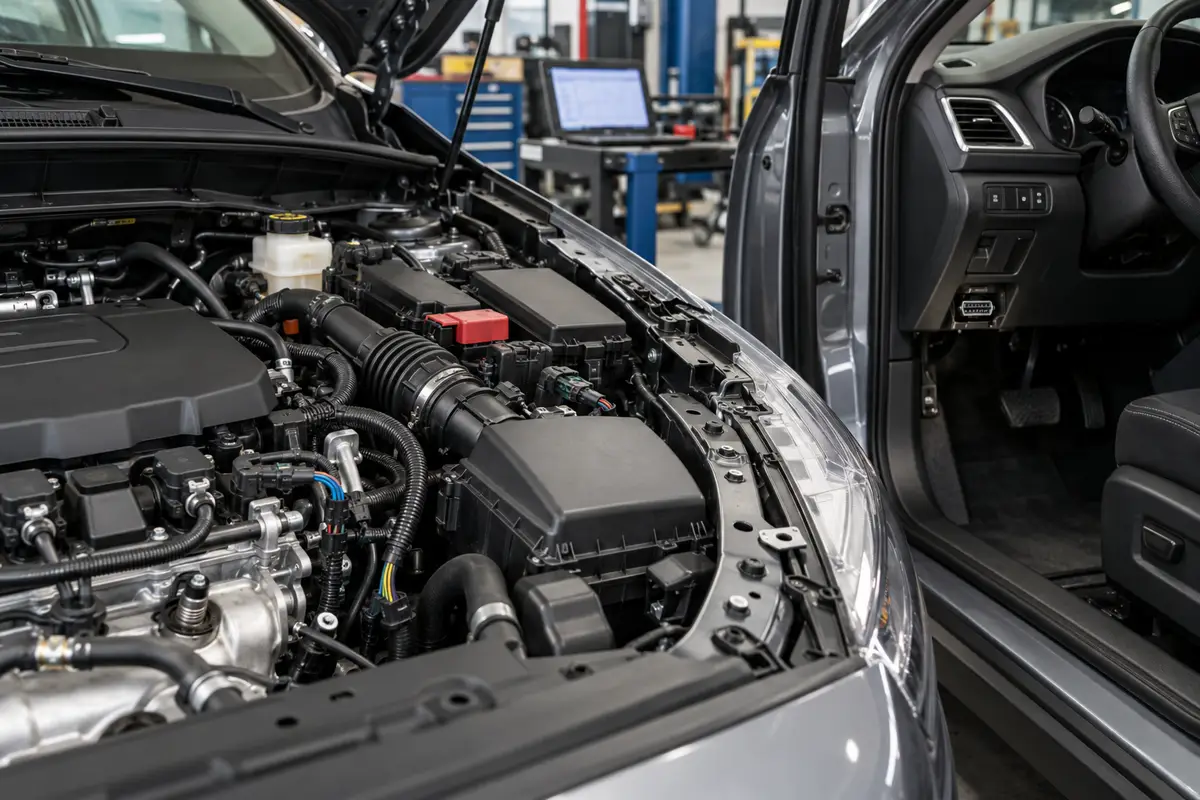
A steady MIL means the ECU has stored a confirmed DTC and the fault does not currently meet the catalyst damage misfire threshold. The vehicle can typically be driven to a repair facility. The urgency depends entirely on which code is stored, not on the MIL state itself. An EVAP leak code with a steady MIL is a low-urgency fault. An upstream oxygen sensor code with a steady MIL is a moderate-urgency fault that causes secondary catalyst damage if left for months.
My my guide on perform evap system test covers this step by step.
I cover this capability in more detail in my Innova 3100RS review.
A flashing MIL means the ECU has detected an active Type A misfire at a rate it calculates will cause irreversible catalytic converter damage within minutes of continued driving at current conditions. SAE J1979 reserves the flashing MIL state exclusively for this condition. No other fault type causes the MIL to flash on a properly functioning OBD2 system. The correct response to a flashing MIL is to reduce engine load immediately, coast to a safe stop, and turn the engine off.
I cover this capability in more detail in my BlueDriver Pro review.
The flash rate is approximately once per second, consistent and steady. It does not vary with misfire severity or RPM. Any steady once-per-second amber flash from the MIL location means the same thing regardless of vehicle make or model: active catalyst damage misfire, stop driving.
I explain this in more detail in my service engine soon light vs check engine light.
Which Faults Trigger the MIL
The MIL triggers for any confirmed DTC that relates to an emissions-relevant system. P-codes in the powertrain range cover the fuel system, ignition, misfires, auxiliary emissions controls, speed and idle, computer output circuits, and transmission. Not every P-code illuminates the MIL immediately: codes that affect emissions above the 1.5 times standard threshold trigger the MIL, while informational codes that do not cross that threshold may store without illuminating it.
I explain this in more detail in my can you drive with check engine light on.
B-codes (body), C-codes (chassis), and U-codes (network) can trigger the MIL on some vehicles when the fault affects an emissions-relevant system. A U-code network fault that prevents the ECU from communicating with the oxygen sensor control module, for example, may trigger the MIL because the emissions monitoring function is compromised. Whether non-powertrain codes trigger the MIL is manufacturer-specific and varies by fault.
My what are enhanced obd2 codes covers this step by step.
I explain this in more detail in my check engine light on but no codes stored.
Faults that do not trigger the MIL include manufacturer-specific codes that fall below the emissions threshold, informational DTC categories that represent operating data rather than faults, and some chassis and body faults that have no emissions relevance. These faults are accessible with a full-system scanner but do not appear in the standard generic OBD2 code read and do not illuminate the MIL.
I explain this in more detail in my how to check used car with obd2 scanner.
Permanent Codes and the MIL
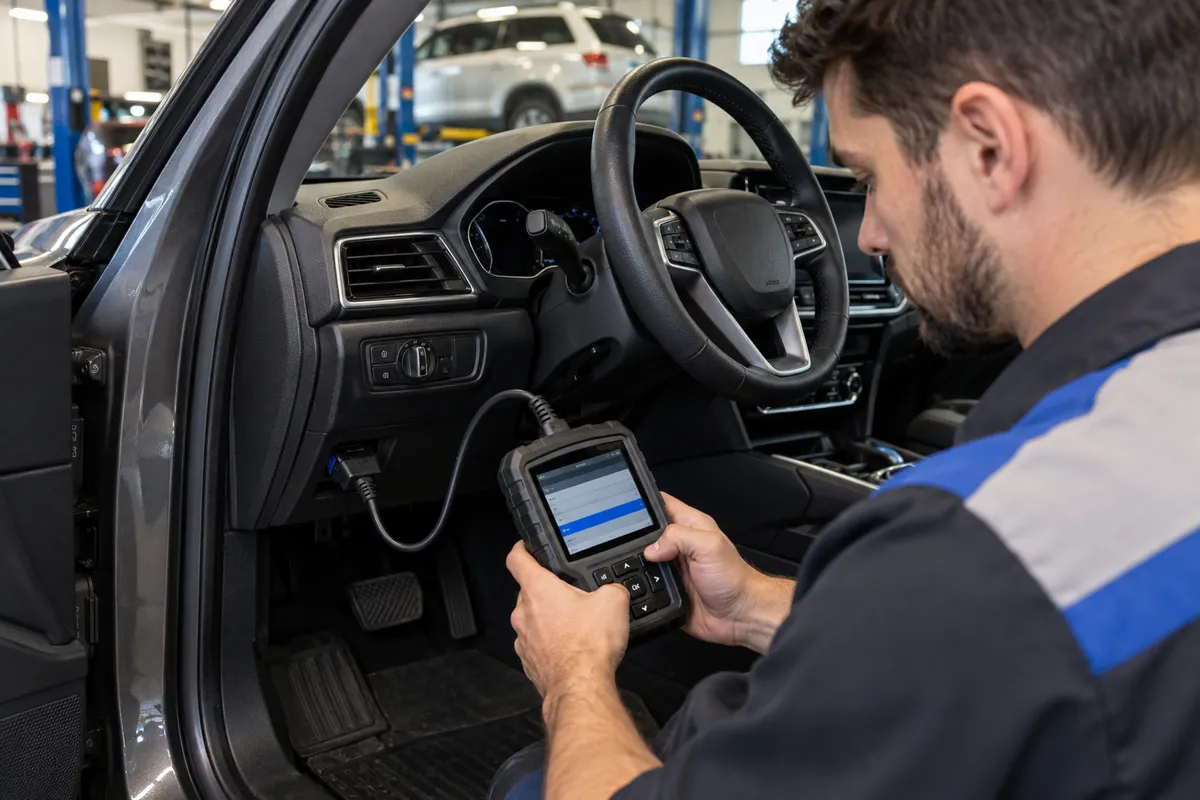
A third code category called Permanent Diagnostic Trouble Codes (PDTCs) was introduced with the 2010 OBD2 update and is required on 2010 model year and newer vehicles. A PDTC is a confirmed DTC stored in non-volatile memory that no scan tool command can erase. The MIL remains on as long as a PDTC is active, regardless of what a scanner’s clear-codes command does to the standard code memory.
PDTCs exist specifically to prevent the practice of clearing codes before an emissions test and retesting immediately. Before PDTCs, a vehicle with an emissions-related fault could pass an inspection by clearing the codes with a scanner and arriving at the inspection before the fault reconfirmed. The PDTC closes that gap: only the ECU can clear a PDTC, and it does so only after the underlying fault is repaired and the relevant monitor passes on at least two consecutive successful drive cycles.
A vehicle with an active PDTC fails an OBD2 emissions inspection even if the standard code list is empty and all monitors show complete. The inspection software reads PDTC memory as a separate check from the standard DTC list. Clearing codes with a scanner does not affect PDTC status, and the MIL remains on until the ECU self-clears after confirming the repair.
How the MIL Turns Off
After a repair, the MIL does not turn off immediately. The ECU needs to re-run the monitor for the repaired system and pass it without detecting the fault again. For most fault types, this requires the monitor to pass on two or three consecutive drive cycles. Once the ECU confirms the fault is gone across the required number of passing cycles, it clears the confirmed DTC from memory and turns the MIL off.
The time this takes in practice depends on which monitor was affected. The oxygen sensor monitor runs on every warm drive cycle and typically completes within one to two trips after a repair. The EVAP monitor requires specific enabling conditions including an overnight cold soak with the fuel tank at a specific level, and may take a week of normal driving to run. The catalyst monitor requires several minutes of steady-speed driving at operating temperature and typically completes within two to three mixed drive cycles.
Disconnecting the battery or clearing codes with a scanner turns the MIL off immediately by wiping the stored DTC from memory. This does not repair the fault. The ECU resumes monitoring from the next drive cycle, and if the fault condition is still present, the MIL returns as soon as the monitor runs and detects the fault again. For a constant fault like a failed sensor, the MIL typically returns within one to two drive cycles after a code clear.
What the MIL Does Not Tell You
The MIL is a binary indicator: it is either on or off, steady or flashing. It does not tell you which system faulted, how severe the fault is, how long ago the fault occurred, or how many faults are stored. All of that information is in the stored DTC and freeze frame data, which requires a scanner connected to the OBD2 port to read.
The MIL state is consistent across fault types. A loose fuel cap and a failing catalytic converter both produce a steady amber MIL. A single-cylinder misfire at idle and a random multi-cylinder misfire at highway speed both produce a flashing amber MIL. The visual presentation is identical. The fault identity and urgency are only accessible through a code read.
The MIL also does not illuminate for all vehicle faults. Faults stored in manufacturer-specific memory of non-powertrain modules (transmission control module, body control module, ABS module, airbag module) typically do not trigger the MIL unless they cross into emissions relevance. A transmission fault that causes rough shifting may store a code in the TCM with no MIL. An ABS fault stores a code in the ABS module with no MIL. These faults require a full-system scanner with manufacturer-specific coverage to access.
My airbag srs codes explained covers this step by step.
My my guide on reset transmission adaptations covers this step by step.
FAQs
Is the malfunction indicator light the same as the check engine light?
Yes. Malfunction indicator light (MIL) is the official technical term defined in SAE J1979 and ISO 15031. “Check engine light” is the common name used by drivers and most service centers. They refer to the same federally mandated lamp. Some manufacturers label the same lamp “Service Engine Soon,” particularly General Motors, but the function is identical.
Can I drive with the malfunction indicator light on?
If the MIL is steady, you can typically drive to a repair facility, but the urgency depends on which code is stored. A loose fuel cap code is low urgency. An upstream oxygen sensor code requires attention within days. A steady MIL with rough running, unusual smells, or abnormal power delivery requires stopping and scanning before continuing. If the MIL is flashing, stop driving immediately: a flashing MIL means an active misfire is damaging the catalytic converter.
What causes the malfunction indicator light to come on?
Any confirmed fault that causes vehicle emissions to exceed 1.5 times the federal standard triggers the MIL. The most common causes are a loose or damaged fuel cap, a failing oxygen sensor, a degraded catalytic converter, a misfiring cylinder, a malfunctioning mass airflow sensor, and EVAP system leaks. The specific cause is stored as a DTC readable with an OBD2 scanner.
Why does the malfunction indicator light flash instead of staying steady?
A flashing MIL means the ECU detected an active engine misfire at a rate classified as a Type A misfire under SAE J1979: severe enough that continued driving at current load and RPM will damage the catalytic converter within a short period. SAE J1979 reserves the flashing MIL state exclusively for this condition. Pull over, turn the engine off, and arrange diagnosis before driving further.
How do I turn off the malfunction indicator light?
Repairing the underlying fault and completing the required drive cycles for the relevant monitor to pass is the correct method. The ECU clears the MIL after confirming the fault is gone. Clearing codes with a scanner turns the light off immediately but does not fix the fault: the MIL returns as soon as the ECU re-detects the same condition. On 2010 and newer vehicles, permanent DTCs cannot be cleared with a scanner at all.
Does the malfunction indicator light affect emissions testing?
Yes. An illuminated MIL causes an automatic failure at any OBD2-based state emissions inspection. The inspection software reads MIL status directly from the OBD2 port along with stored DTCs and readiness monitor completion. All three must pass. An active MIL fails the inspection regardless of which fault triggered it or whether the fault is emissions-related by the state’s own criteria.
What is a permanent malfunction indicator light code?
On 2010 and newer OBD2 vehicles, a permanent DTC (PDTC) is a confirmed fault stored in non-volatile memory that no scanner command can erase. The MIL stays on as long as a PDTC is active. Only the ECU can clear it, and only after the fault is repaired and the relevant monitor passes on at least two consecutive successful drive cycles. PDTCs exist to prevent code clearing before emissions inspections.