
How Long Until the Check Engine Light Resets on Its Own
By Kamil Siegień / October 12, 2026
The check engine light does not go off immediately after a repair. The ECU needs to run through a set of self-tests called readiness monitors, confirm the fault is gone, and only then extinguish the light. Depending on which monitor was triggered and how aggressively you drive, this process takes anywhere from one drive cycle to several days of mixed highway and city use.
My my guide on verify repair fixed obd2 covers this step by step.
My battery disconnect obd2 codes monitors covers this step by step.
My why does check engine light come on after oil change covers this step by step.

About the author: Hello! I’m Kamil Siegień, founder of OBD2 Scout. My diagnostic experience started with an engine rebuild on a 2014 Skoda Superb 1.8 TSI, where tuning from 160 to 222 hp required mastering live data and ECU behavior that basic code readers cannot handle. I am a former BMW and MINI employee and regularly use diagnostic scanners on my own Audi A4 2.0 TFSI.
This guide covers how the ECU decides to clear the check engine light, what a drive cycle actually involves, which monitors take the longest to complete, and the one scenario where the light will never turn off on its own regardless of how much you drive.
Why the Check Engine Light Does Not Turn Off Immediately
The ECU stores a confirmed Diagnostic Trouble Code (DTC) when a fault triggers on two or more consecutive drive cycles. Fixing the physical problem does not automatically erase that stored code. The ECU needs to re-run the relevant monitor, pass it without detecting the fault again, and then clear the code internally.
This confirmation loop exists for a reason. A one-time sensor hiccup caused by cold weather, low fuel, or a loose connector can trigger a code. The ECU holds the code and watches to see whether the fault repeats. If it does not repeat across a defined number of passing cycles, the ECU clears the code and turns off the light.
The number of passing cycles required varies by fault type and manufacturer. Most emissions-related faults require two to three complete passing cycles. Some catalyst and EVAP faults require more.
My guide to OBD2 readiness monitors explains what each monitor tests and the exact driving conditions needed to complete the most stubborn monitors, including EVAP and catalyst.
What Counts as a Drive Cycle
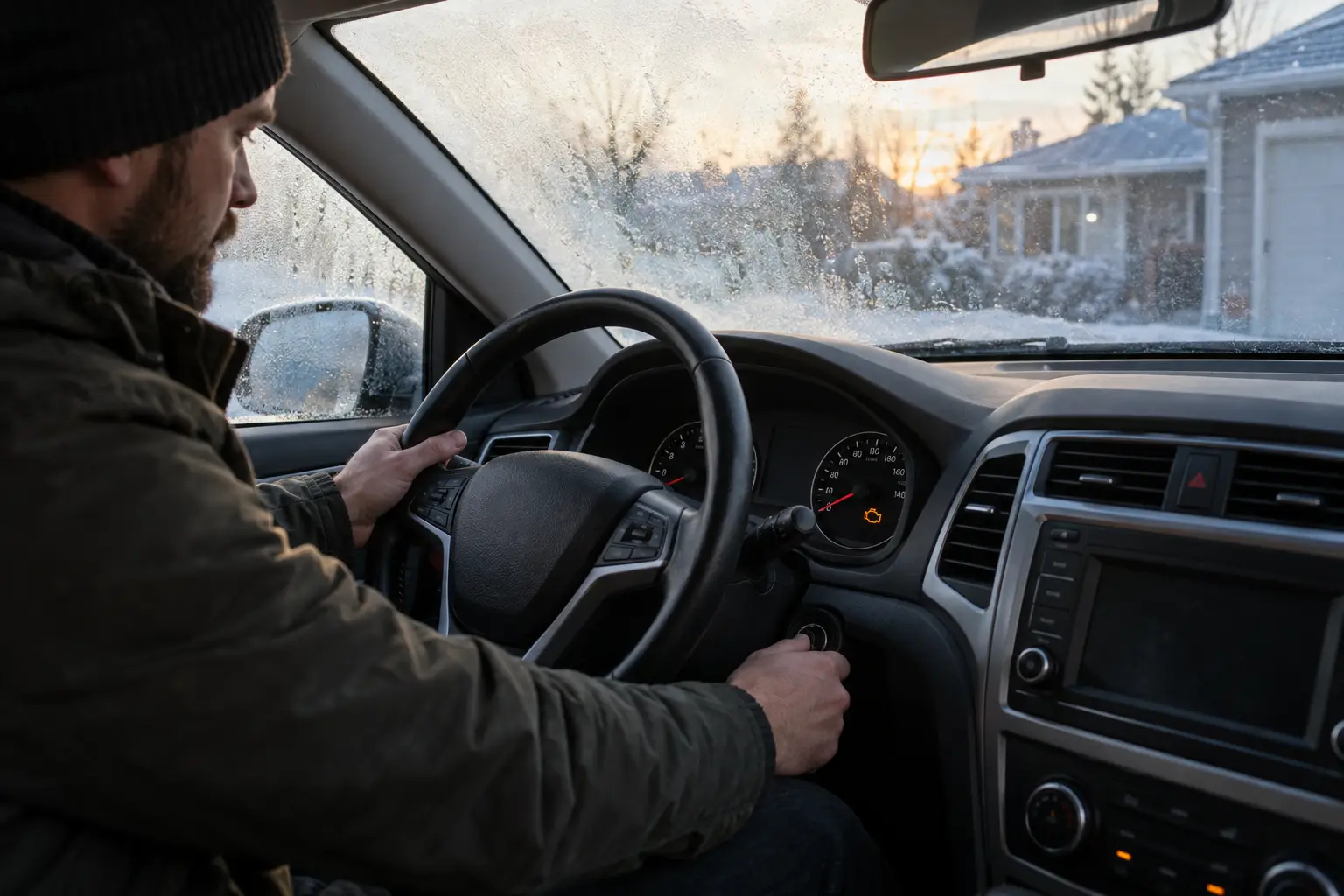
A drive cycle is a specific sequence of operating conditions the ECU uses to run its self-tests. A cold start is the beginning: the engine must be cold, typically below 86°F (30°C), before the key goes in. The ECU will not run certain monitors if the engine is already warm.
After the cold start, the drive cycle continues through idle, low-speed city driving, steady highway cruising, and a deceleration phase. Not every monitor runs during every trip. The EVAP monitor, for example, runs only after an overnight cold soak with the fuel tank between one-quarter and three-quarters full.
A complete drive cycle for emissions purposes follows the EPA Federal Test Procedure. In practical terms, this means: cold start, 5 minutes of idle, several minutes of gentle acceleration up to 55 mph, 5 or more minutes of steady cruising, a deceleration without braking, and then shutoff. That sequence takes roughly 20 to 30 minutes of actual driving.
How Many Drive Cycles Does the Light Need
For most common faults, the check engine light turns off after one to three successful drive cycles following a confirmed repair. One drive cycle is often enough if the monitor for that fault runs during a single trip and passes cleanly.
The Innova 3100RS shows readiness monitor status alongside stored codes, making it easy to confirm after each drive cycle whether the ECU has completed the relevant test; my Innova 3100RS review covers the full monitor display interface.
In mileage terms, most drivers see the light go off after 50 to 100 miles of normal mixed driving. Highway miles count more than stop-and-go city driving, because steady-speed cruising lets several monitors run and complete. A purely city-only commute may require more trips to satisfy all conditions.
Toyota and other Japanese brands apply stricter monitor completion criteria than most domestic models; my guide to the best OBD2 scanners for Toyota covers tools that display Toyota’s exact monitor sub-test results so you can track progress accurately.
The table below shows approximate reset times for the most common fault categories:
| Fault Category | Typical Drive Cycles to Reset | Notes |
|---|---|---|
| O2 sensor fault | 1 to 2 | Needs engine at full operating temp |
| Misfire (single cylinder) | 1 to 2 | Runs continuously once warm |
| Catalytic converter | 2 to 3 | Needs upstream and downstream O2 data |
| EVAP leak (large) | 2 to 4 | Needs overnight cold soak |
| EVAP leak (small) | 3 to 5 | Strict fuel level and temperature conditions |
| MAF sensor | 1 to 2 | Runs as soon as engine is warm |
| EGR system | 2 to 3 | Needs steady load conditions |
The Difference Between Clearing Codes and Letting the ECU Reset
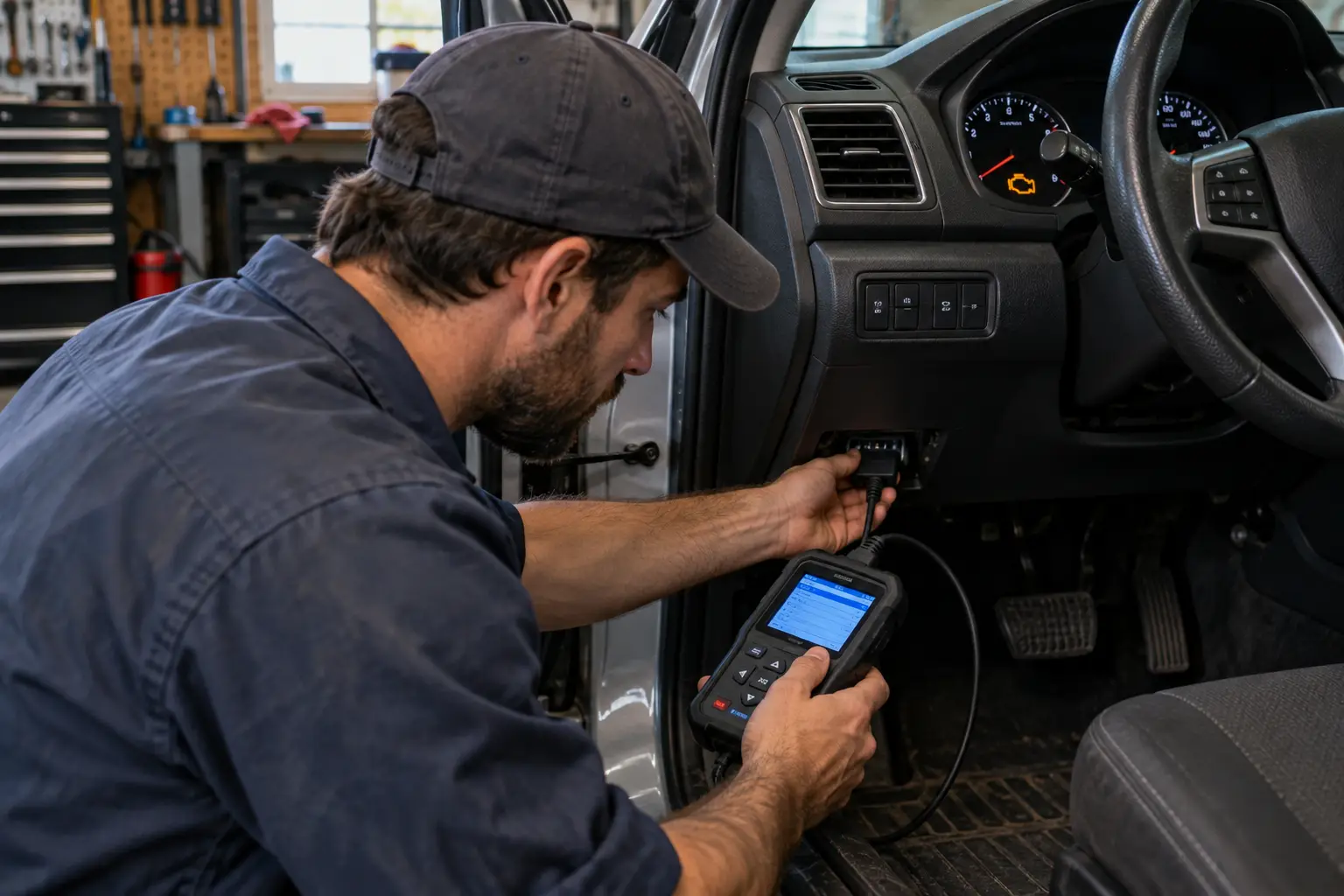
Clearing codes with a scanner or disconnecting the battery does not fix the fault. It wipes the stored code and resets all readiness monitors to “Not Ready.” The ECU then starts fresh, re-running every monitor from zero.
If the light returns shortly after the reset, my guide on why the check engine light comes back after clearing codes explains how to determine whether you are dealing with a constant or intermittent fault.
After a code clear, all monitors show “Not Ready” on any scanner. An emissions test at this point will fail, not because the car has a fault, but because the ECU has not completed its self-checks. Most state inspection programs require at least some monitors to show “Ready” before they will pass the car.
Letting the ECU reset on its own after a repair is different. The stored code remains until the ECU confirms the fault is gone. The monitors still run, but they are checking against an existing confirmed fault rather than starting clean. Once the ECU passes the relevant monitor on two or more consecutive cycles, it clears the code and turns off the light.
A bidirectional scanner can trigger specific monitor tests manually on some vehicles, speeding up the verification process after a repair; my guide to the best bidirectional OBD2 scanners covers tools with forced monitor initiation.
The practical takeaway: if you fix the fault and drive normally, the light will go off on its own without you touching a scanner. Clearing codes first and then driving is not faster. You lose the stored data and still need the same drive time.
Permanent Codes: The One Case Where Normal Driving Is Not Enough
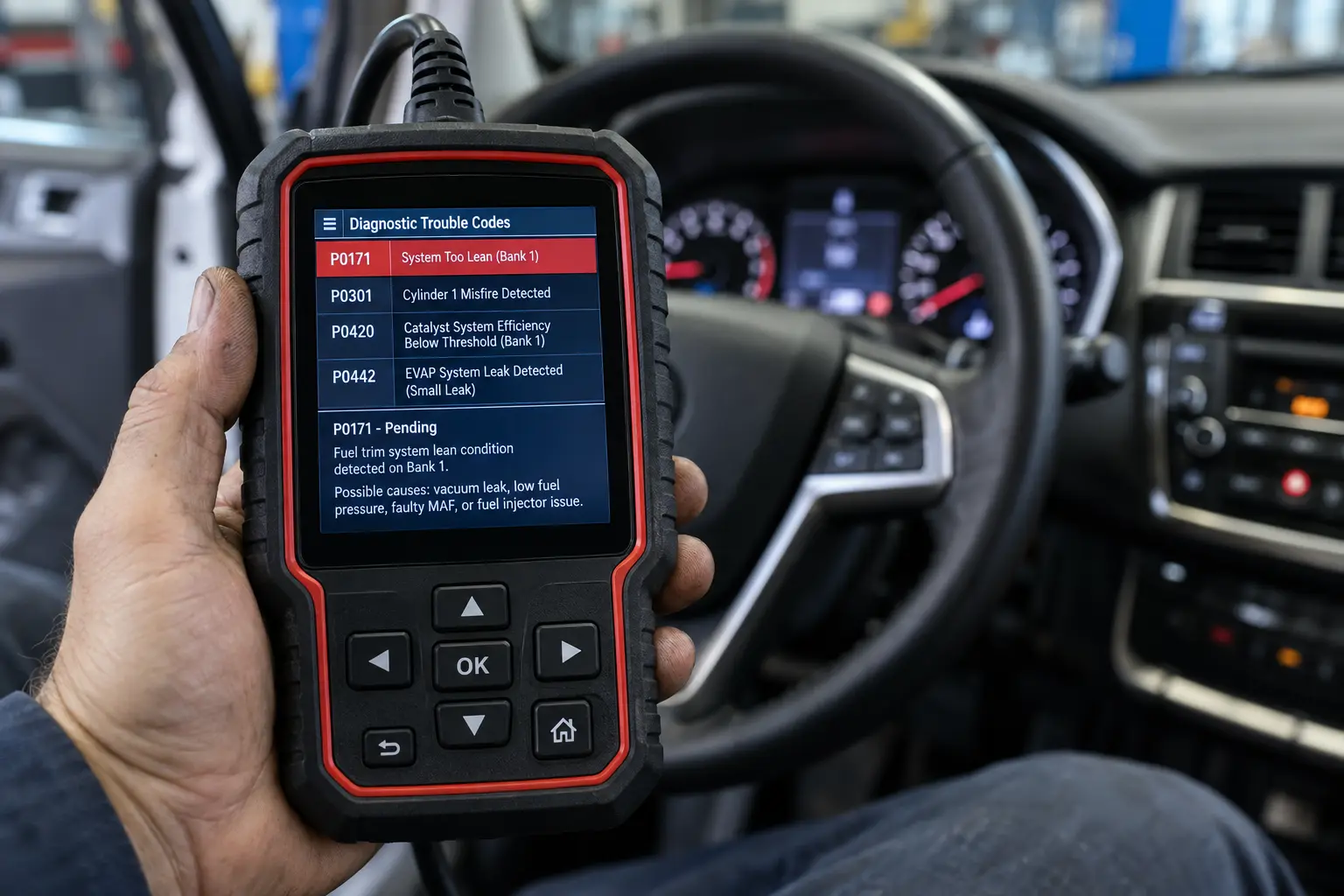
OBD2 introduced a third code category called Permanent Diagnostic Trouble Codes (PDTCs) in 2010, with full enforcement on 2010 model year and newer vehicles. A PDTC is a confirmed code that no scanner can erase. Only the ECU itself can clear it.
A PDTC is set when a confirmed fault has been stored and the ECU has not verified a fix. Connecting a scanner and sending a clear-codes command does nothing. The code remains in a separate non-volatile memory location the scanner cannot write to.
To clear a PDTC, the underlying fault must be repaired and the ECU must pass the corresponding monitor on at least two consecutive successful drive cycles. Only then does the ECU erase the PDTC from memory and turn off the light. There is no shortcut.
My guide to the best professional OBD2 scanners identifies tools with dedicated PDTC monitoring that track completion progress separately from standard readiness monitors.
PDTCs exist to prevent vehicles from being cleared before an emissions test and then retested immediately. A car with a cleared PDTC will fail any OBD2 readiness inspection because the monitor history is missing, even if the monitor status shows “Ready.”
What Happens After a Battery Disconnect
Disconnecting the battery resets the ECU’s volatile memory. All stored codes, freeze frame data, and readiness monitor statuses are wiped. The effect is the same as clearing codes with a scanner: the check engine light goes off, but all monitors reset to “Not Ready.”
PDTCs are stored in non-volatile memory and survive a battery disconnect. A car with a PDTC will still fail an emissions inspection after a battery reset, and the code will reappear on a scanner once the monitors have run enough to detect the fault again.
Battery disconnects are sometimes used to hide a check engine light before a vehicle sale or inspection. Any scanner will show all monitors as “Not Ready” after a disconnect. An inspector or buyer who checks monitor readiness will know the ECU was recently reset.
My how to reset check engine light without a scanner covers this step by step.
The Foxwell NT630 Plus displays the full readiness monitor list with pass or incomplete status on one screen; my Foxwell NT630 Plus review explains how to interpret this data after a code clear or battery reset.
Why the Light Sometimes Stays On Longer Than Expected

Three situations cause the check engine light to stay on well past the normal 50 to 100 mile range after a repair.
My the malfunction indicator light mil explained covers this step by step.
**The monitor conditions were not met.** The EVAP monitor is the most common example. It requires an overnight cold soak with fuel at a specific level. If you drive the car every day and keep the tank below one-quarter or above three-quarters, the EVAP monitor may take a week or more to complete one cycle.
**The fault is still present.** An incomplete repair, a related fault, or a new fault in the same system can prevent the monitor from passing. If the light has not gone off after 100 miles of mixed driving, connect a scanner and check whether the same code has reconfirmed. A reconfirmed code means the repair did not address the root cause.
**The repair introduced a new fault.** A sensor connector left loose, a vacuum hose not reseated, or a wiring repair that grounded incorrectly can generate a new code that keeps the light on even after the original fault is gone.
How to Verify the Light Is About to Turn Off
A scanner shows the readiness monitor status in real time. After a repair, connect a scanner and look for the monitor associated with the fault you fixed. If it shows “Not Ready,” the ECU has not yet run that test. If it shows “Ready” or “Complete,” the ECU ran it and passed it.
My guide to the best OBD2 scanners covers tools that display each monitor’s completion status in real time, so you know exactly when the ECU is about to turn the light off.
Most OBD2 scanners show readiness monitors under a menu labeled “I/M Readiness,” “Monitor Status,” or “Readiness Tests.” Basic code readers show only a pass or fail per monitor. Mid-range and professional scanners show the specific test results within each monitor.
My obd2 mode 06 explained monitor test results covers this step by step.
A basic code reader is enough to check I/M readiness; my guide to the best budget OBD2 scanners covers affordable options that show monitor pass or fail status on any OBD2 vehicle.
Once the relevant monitor shows “Ready” and no new codes are stored, the light will go off at the end of that drive cycle or at the next key cycle. If it has not gone off within two complete drive cycles after the monitor shows Ready, read the codes again. The ECU may have stored a new code during the same trip.
Cold Start Requirements and Temperature Conditions

Several readiness monitors will not run unless the engine starts cold. The ECU measures coolant temperature and intake air temperature at startup. If either reading is above the cold-start threshold (typically 86°F / 30°C for coolant), the ECU skips certain tests for that trip.
This matters in practice during summer months in hot climates. A car parked in direct sunlight for a few hours may never reach a cold enough start temperature to run the EVAP or catalyst monitors. Parking in shade or in a garage overnight gives the engine a better chance of meeting the cold-start criteria the next morning.
A Bluetooth OBD2 adapter left connected overnight logs the coolant temperature at first startup, confirming whether you achieved a true cold start; my guide to the best Bluetooth OBD2 scanners covers adapters that support overnight logging through their companion app.
In winter, the opposite problem occurs. Most monitors require the engine to reach full operating temperature, typically 176 to 212°F (80 to 100°C), before the test runs. Short cold-weather trips where the engine never fully warms up prevent monitors from completing. A single longer drive that gets the engine fully warm and keeps it there for at least 10 minutes completes more monitors than several short cold-weather trips.
FAQs
Can the check engine light turn off on its own without any repair?
Yes. If a fault is intermittent and does not reoccur across two to three drive cycles, the ECU clears the code and turns off the light. This does not mean the problem is gone. It means the ECU did not detect it long enough to keep the code confirmed. Intermittent faults return.
Does the check engine light go off faster on highway driving?
Generally, yes. Steady highway driving at 55 to 65 mph allows more monitors to run and complete in a single trip. Stop-and-go city driving often does not reach the load and speed conditions required for catalyst, EVAP, and O2 sensor monitors to run.
How do I know if the light is about to go off?
Connect a scanner and check the I/M readiness status. When the monitor for the fault you repaired shows “Complete” or “Ready” with no stored codes, the light will turn off at the end of the current or next drive cycle.
Will the check engine light reset if I clear it myself?
Clearing the code turns off the light immediately, but all monitors reset to “Not Ready.” If the fault is still present, the light returns after one to two drive cycles. Clearing codes before confirming a repair does not solve the underlying problem.
What is the fastest way to reset the check engine light after a repair?
A complete OBD2 drive cycle, done once from a cold start with mixed city and highway driving, is the fastest way. Roughly 20 to 30 minutes of driving following the cold start, idle, acceleration, cruise, and deceleration sequence completes most monitors in one trip.
Do all vehicles need the same number of drive cycles to reset?
No. The number varies by manufacturer, fault type, and model year. European brands and some Japanese manufacturers use stricter monitor completion criteria than domestic US brands. Check your vehicle’s service manual or a manufacturer-specific drive cycle guide for exact requirements.