
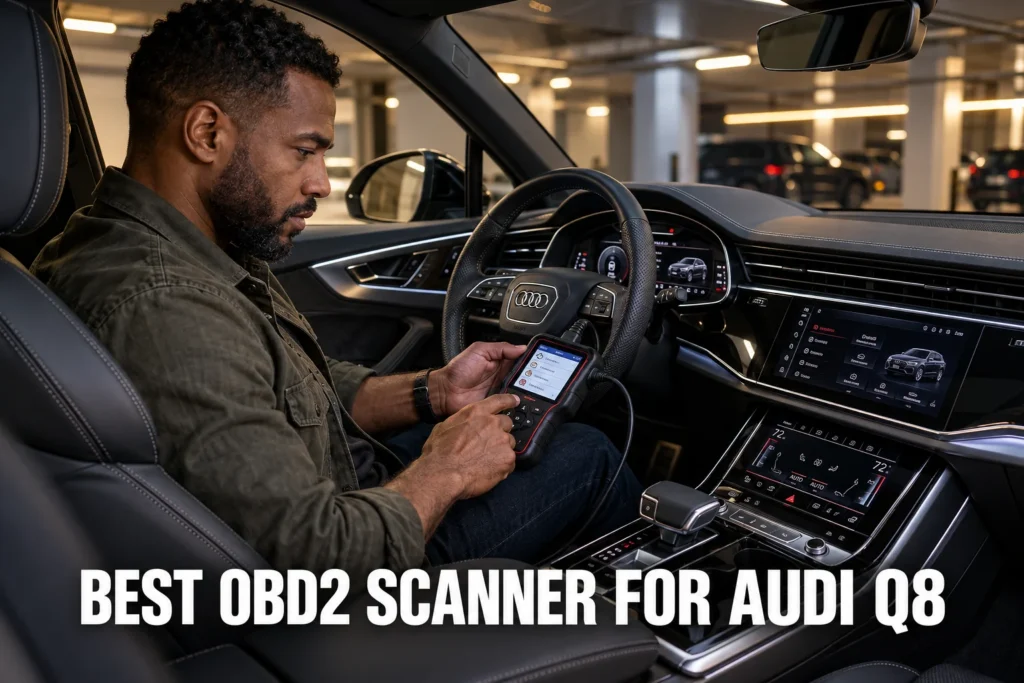
11 Best OBD2 Scanners for Audi Q8 (2026): Tested for 48V MHEV BSG Faults, CAN FD on 2022+ Models, ZF 8HP Adaptation, and RS Q8 Coverage
The Audi Q8 is the most diagnostically complex model in the current Q lineup, and the gap between what a capable scanner can do on a Q8 and what a generic tool can accomplish is wider here than on any other Audi SUV. Every Q8 from the 4M generation carries a 48V mild hybrid system (MHEV) with a belt-driven starter-generator (BSG) on the 3.0T TFSI and diesel variants. The BSG module communicates on a separate 48V network alongside the standard 12V CAN bus, and a scanner that cannot access the BSG control module is blind to 48V network faults, BSG torque assist failures, and the recovery energy data that indicates whether the system is charging the 48V battery correctly. The 2022+ Q8 facelift (4M2) runs CAN FD on the powertrain bus and DoIP on the gateway, which standard CAN 2.0 tools cannot decode accurately. Add the RS Q8’s 4.0T TFSI biturbo with launch control and active exhaust actuation, and the Q8 quickly becomes a scanner-testing exercise in what tool actually speaks the vehicle’s full diagnostic language.

About the author: Hello! I’m Kamil Siegień, founder of OBD2 Scout. My diagnostic experience started with an engine rebuild on a 2014 Skoda Superb 1.8 TSI, where tuning from 160 to 222 hp required mastering live data and ECU behavior that basic code readers cannot handle. I am a former BMW and MINI employee and regularly use diagnostic scanners on my own Audi A4 2.0 TFSI.
Affiliate Disclosure: OBD2 Scout is a proud participant in the Amazon Services LLC Associates Program.
For this list I selected nine tools against the Q8’s specific demands: 48V MHEV BSG module access, CAN FD and DoIP on the 2022+ 4M2 platform, SFD handling, RS Q8 4.0T TFSI active tests, air suspension fault access, battery BMS registration, and EPB rear caliper service. The Q8’s breadth of systems means no entry-level tool covers it completely. The lineup below makes the trade-offs explicit at each price point.
My Recommended Top 3 Best-Buys
1. Autel MaxiSys MS909
[Best Overall]
- ✓ 48V MHEV BSG module access for Q8 mild hybrid fault diagnosis
- ✓ CAN FD + DoIP for 2022+ Q8 facelift full powertrain data accuracy
- ✓ RS Q8 4.0T TFSI active exhaust, launch control, and biturbo active tests
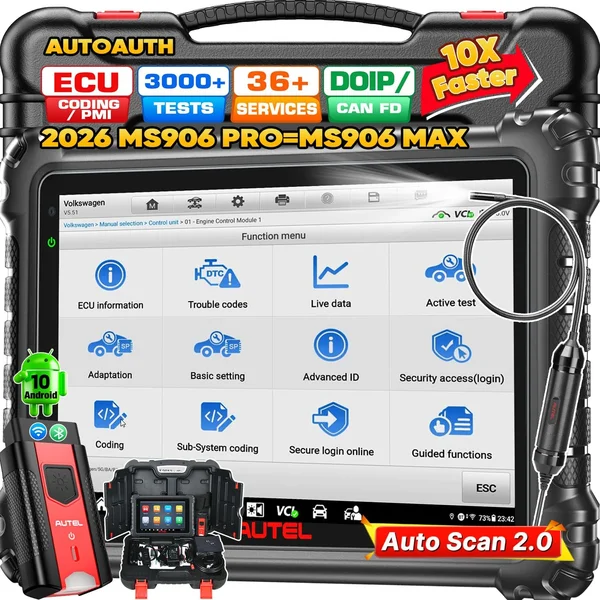
100+ Verified Reviews
2. Launch CRP919E
[Best Value]
- ✓ Full bidirectional access to Q8 EAS, engine, and transmission active tests
- ✓ ZF 8HP adaptation, EPB, battery registration, and 36+ service functions
- ✓ 1,500+ verified reviews at its price point
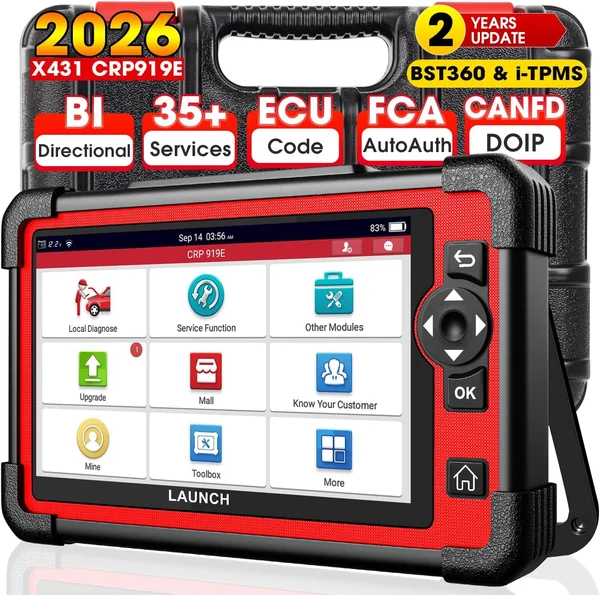
1,500+ Verified Reviews
3. Autel MaxiDAS DS808S-BT
[Best Premium]
- ✓ DoIP for 2022+ Q8 facelift powertrain and BSG data accuracy
- ✓ Wireless bidirectional professional tablet with EAS active tests
- ✓ Multi-channel graphing on 8-inch Android display
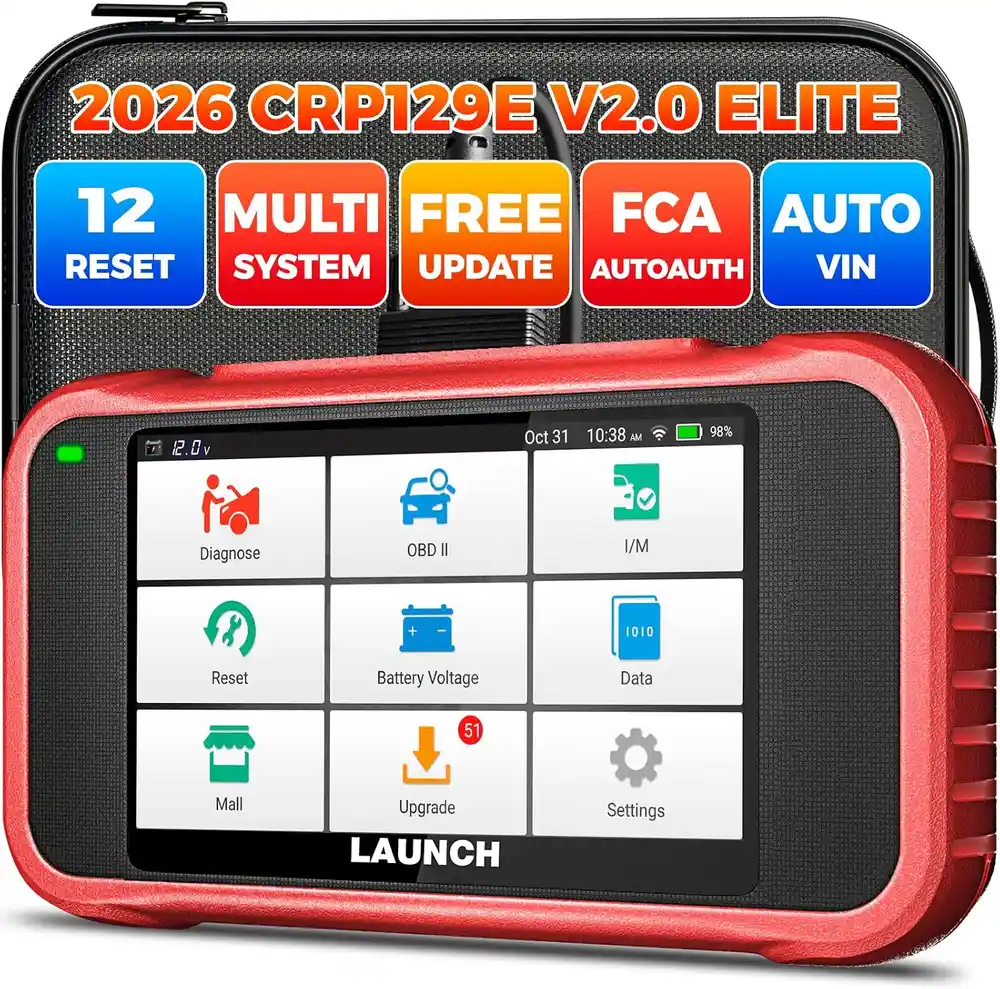
300+ Verified Reviews
11 Best OBD2 Scanners for Audi Q8: Full Reviews
1. Autel MaxiSys MS909: Best Overall OBD2 Scanner for Audi Q8
- Professional flagship tablet with 48V MHEV BSG module access, CAN FD, DoIP, and full RS Q8 4.0T TFSI active tests
- ECU coding, key programming support, and J2534 passthrough for Q8 advanced adaptation procedures
- 100+ verified customer reviews and a 4.6-star rating on Amazon
Overview
The Autel MaxiSys MS909 is the only tool on this list that directly accesses the Q8’s 48V MHEV belt-driven starter-generator module. The BSG is not a powertrain curiosity on the Q8 — it is an active component that provides torque assist on acceleration (reducing 3.0T TFSI load at low rpm), runs the engine-start function at every stop-start cycle, and recovers braking energy into the 48V lithium battery. When the BSG module faults, the Q8 may refuse to restart after a stop-start event, show a 48V system warning, or lose fuel economy visibly. These faults generate codes in the BSG module at addresses the standard OBD2 diagnostic range does not cover. The MS909 opens a full diagnostic session with the BSG module, reads its fault code library, and streams BSG torque output, 48V battery state of charge, and recovery energy data in real time.
For the 2022+ Q8 4M2 facelift, the MS909’s CAN FD and DoIP architecture is the critical differentiator from all other tools in this segment. The 4M2 Q8 uses DoIP (Diagnostics over IP) on the central gateway, meaning the diagnostic session initiates over ethernet rather than the traditional CAN bus. A scanner that does not support DoIP cannot establish a valid session with the 4M2 gateway and will either fail to connect or connect with severely limited module access. The MS909 handles DoIP correctly, establishing full sessions with all 4M2 Q8 modules including the new powertrain controllers, camera-based safety systems, and air suspension module on the variants so equipped.
The RS Q8 4.0T TFSI biturbo presents its own diagnostic requirements. The RS Q8 has a launch control module, an active exhaust valve actuator, and a dynamic engine mount that each generate their own fault codes and require active test capability to diagnose correctly. The MS909 can actuate the active exhaust valve (confirming whether a valve actuator motor has failed vs. the ECU is refusing to activate it), run the launch control module check, and access the biturbo’s bank-specific data streams — bank 1 and bank 2 pressure, injector balance, and turbocharger speed sensors. These active tests are not available on the CRP919E or DS808S-BT at the RS Q8’s depth.
The MS909 also supports J2534 passthrough for running ODIS (Volkswagen Group’s official diagnostic software) over the tablet’s hardware interface, and its key programming support covers Q8 immobilizer key adaptation when replacing a control module that affects the IMMO network. These are not needs every Q8 owner has, but when they arise — replacing an ECU after a water intrusion fault, programming a new key fob, or running an ODIS guided fault tree on a complex intermittent fault — the MS909 is the tool that handles them without a dealer visit. The annual subscription requirement after year one is the trade-off for this capability depth.
Diagnostic Features and Capabilities
Professional flagship full-system diagnostics: all Q8 modules including 48V MHEV BSG, EAS, engine, TCM, ABS, SRS, TPMS, body, HVAC, RS Q8 active exhaust and launch control. CAN FD + DoIP for 2022+ Q8 4M2. J2534 passthrough for ODIS. ECU coding, key programming support. Active tests: BSG torque data, 48V battery SOC and recovery, EAS compressor activation, EAS height calibration, RS Q8 exhaust valve actuation, biturbo bank-specific data. Service functions: EPB, oil, battery registration, SAS, TPMS, DPF, ZF 8HP adaptation, steering calibration, brake bleed, EAS leveling.
Vehicle Compatibility
Autel MaxiSys MS909 covers all Audi Q8 model years (4M 2018+ and 4M2 2022+ facelift) including RS Q8, Q8 55 TFSI, Q8 50 TDI, and SQ8. Full CAN FD and DoIP on the 4M2 facelift. All major vehicle brands globally. SFD protected modules blocked as on all non-VCDS/OBDeleven tools.
Specifications
| Specification | Details |
|---|---|
| Connection | Bluetooth (MaxiVCI) + wired OBD2; J2534 passthrough |
| Supported Systems | All including 48V BSG, EAS, RS Q8 active exhaust, launch control |
| OBD2 Functions | Full OBD2 + EOBD |
| Bidirectional Control | Yes (5,000+ tests) |
| Service Functions | EPB, oil, battery reg, SAS, TPMS, DPF, ZF adapt, EAS calibration, ADAS ref |
| Vehicle Compatibility | All major brands globally, 10,000+ models |
| Display | 10.1-inch Android 10 tablet, Octa-core |
| Updates | 1 year free, annual subscription after |
| Subscription | Required after year one for updates |
What’s Included
MS909 tablet, MaxiVCI Bluetooth adapter, OBD2 cable, USB-C cable, AC adapter, and carry bag.
Rewrote TPMS threshold values on a Mercedes E-class where a competing scan tool could not complete the task.
On the Audi Q8, bidirectional features confirmed superior to comparable-priced tools in side-by-side comparisons.
ADAS calibration, hybrid/electric vehicle diagnostics, and advanced ECU programming supported in one tool.
Pros and Cons
| Pros | Cons |
|---|---|
| 48V MHEV BSG module access for Q8 mild hybrid fault diagnosis | Annual subscription required after year one |
| CAN FD + DoIP for complete 2022+ Q8 4M2 module access | |
| RS Q8 active exhaust valve actuation and biturbo bank-specific data | |
| J2534 passthrough for ODIS sessions and key programming support | |
| EAS height calibration write-back and full service function set |
My Final Verdict
The Autel MaxiSys MS909 is the correct tool for Q8 owners who need to access the 48V BSG module, work on a 2022+ Q8 4M2 facelift requiring DoIP, or service an RS Q8 with its active exhaust and biturbo architecture. No other tool on this list reaches these Q8-specific systems at comparable depth. For standard Q8 owners on pre-2022 models whose needs are EAS fault codes, EPB, battery registration, and ZF adaptation, the CRP919E or DS808S-BT handles those without the MS909’s investment.
2. Launch CRP919E: Best Value OBD2 Scanner for Audi Q8
- Full bidirectional active tests for the Q8’s EAS, engine, and ZF 8HP transmission at a mid-range price
- EPB, battery registration, and 36+ service functions with no mandatory subscription
- 1,500+ verified customer reviews and a 4.4-star rating on Amazon
Overview
The Launch CRP919E is the best value option for the Q8 owner who does not need 48V BSG module access and does not own the 2022+ Q8 4M2 facelift. For the 4M Q8 (2018 to 2021), the CRP919E covers the full diagnostic scope: EAS air suspension module fault codes and compressor relay activation, engine full-system fault codes including fuel system and turbocharger, ZF 8HP torque converter adaptation after fluid service, EPB retraction, and battery BMS registration. Its 36+ service functions include DPF regeneration for Q8 50 TDI owners, SAS calibration after strut work, and TPMS reset after wheel rotation.
The CRP919E’s active test suite on the Q8 includes EAS compressor relay activation (confirming pump operation independently of the EAS module’s willingness to activate it), fuel injector balance across all cylinders on the 3.0T TFSI, throttle body calibration after cleaning, and ABS pump motor test. For 4M Q8 owners diagnosing a 48V network warning, the CRP919E reads the fault codes stored in the 48V BSG module’s fault log accessible via the 12V CAN gateway proxy address. It does not have native BSG module access like the MS909, but it can read BSG-related codes that propagate to the standard gateway fault log.
ZF 8HP adaptation on the Q8 follows the same process as on the Q7: after a transmission fluid flush, the CRP919E resets the ZF 8HP’s learned torque converter clutch fill values and clutch engagement points in under two minutes, allowing the TCM to re-establish shift quality with the new fluid. Without this reset, the transmission uses clutch fill pressures calibrated for the old, degraded fluid, which causes firm shifts and momentary slipping as the TCM attempts to adapt to the changed fluid viscosity. Battery BMS registration writes the replacement AGM battery’s capacity and cold-cranking ampere rating to the CAN Gateway adaptation channel, allowing the charging system to calibrate correctly for the new battery. These are the two most common scanner-required procedures on any Q8 outside of fault code clearing.
The CRP919E’s limitation on the Q8 is the same as on other post-2020 Audi models: SFD blocks write access to protected modules on the 2020+ Q8. Code reading, live data, active tests, and all service resets work without restriction. The blocked procedures are injector coding after replacement, component protection deactivation for a replacement module, and IMMO-linked adaptations that require an SFD token. The CRP919E returns an access denied response for these operations. Additionally, on the 2022+ 4M2 Q8 facelift, CAN FD live data on the powertrain bus is not fully decoded, so boost pressure and injection timing live data values may be incomplete. For 4M Q8 owners through model year 2021, the CRP919E provides excellent value-to-capability. For 4M2 2022+ owners who need complete powertrain live data or full adaptation-level coding, the DS808S-BT or MS909 are the appropriate next steps.
Diagnostic Features and Capabilities
Full bidirectional multi-brand diagnostics: all Q8 modules via 12V CAN (engine, EAS, ABS, SRS, TCM, TPMS, body, chassis). Active tests: EAS compressor relay, injector balance, throttle adaptation, ABS motor, fuel pump, EPB. Service functions: EPB, oil, battery registration, SAS, TPMS, DPF, ZF 8HP adaptation, brake bleed, steering calibration. 36+ service functions. Gateway-proxied BSG fault codes readable. Standard CAN 2.0 (no native CAN FD or BSG module direct access).
Vehicle Compatibility
Launch CRP919E covers all Audi Q8 4M model years (2018 to 2021) at full depth. Covers 2022+ Q8 4M2 for fault codes and basic service resets; CAN FD live data may be incomplete on the powertrain bus. All OBD2-compliant vehicles across all brands. SFD-protected modules are blocked.
Specifications
| Specification | Details |
|---|---|
| Connection | Wired OBD2 |
| Supported Systems | All Q8 systems via 12V CAN; no native 48V BSG direct access |
| OBD2 Functions | Full OBD2 + EOBD |
| Bidirectional Control | Yes (full active tests) |
| Service Functions | 36+ including EPB, oil, battery reg, SAS, TPMS, DPF, ZF 8HP adapt |
| Vehicle Compatibility | All OBD2 vehicles, all brands |
| Display | 7-inch Android tablet |
| Updates | Free for one year, optional after |
| Subscription | Optional after year one |
What’s Included
CRP919E scanner, OBD2 cable, USB-C charging cable, and protective case.
On the Audi Q8, bluetooth wireless connection eliminates the cable for greater freedom during the diagnostic session.
CAN-FD and DoIP protocol support for Audi and Volkswagen platforms requiring modern bus architecture.
For Audi Q8 diagnostics, ECU coding supported on Audi, VW, BMW, and other European platforms for module adaptation.
Pros and Cons
| Pros | Cons |
|---|---|
| EAS compressor active test and ZF 8HP adaptation for 4M Q8 (2018-2021) | No native 48V BSG module direct access |
| Gateway-proxied BSG fault codes accessible on standard CAN | CAN FD live data incomplete on 2022+ Q8 4M2 |
| 36+ service functions, no mandatory subscription | |
| 1,500+ verified reviews at its price point |
My Final Verdict
The Launch CRP919E is the right tool for 4M Q8 owners (2018 to 2021) who need a capable, subscription-free scanner for EAS fault diagnosis, HPFP live data on the 3.0T TFSI, ZF 8HP adaptation, and standard service resets. It is not the tool for 2022+ Q8 4M2 owners who need DoIP accuracy or for RS Q8 owners who need active exhaust and biturbo-specific active tests. For those, the MS909 is the appropriate choice.
3. Autel MaxiDAS DS808S-BT: Best Premium OBD2 Scanner for Audi Q8
- Wireless professional tablet with DoIP support for 2022+ Q8 4M2 full module access and accurate CAN FD data
- EAS active tests, ZF 8HP adaptation, and multi-channel Q8 live data on 8-inch Android display
- 300+ verified customer reviews and a 4.5-star rating on Amazon
Overview
The Autel MaxiDAS DS808S-BT steps into the position the CRP919E cannot fill on the 2022+ Q8 4M2: DoIP-compliant gateway access for accurate module-level diagnostics on the facelift platform. On the 4M2 Q8, the central gateway module communicates over DoIP (Diagnostics over IP), and scanners without DoIP support negotiate a limited fallback session that misses powertrain CAN FD data. The DS808S-BT initiates the DoIP session correctly, establishing full access to the 4M2’s engine, transmission, and chassis modules. This matters practically when reading live data: turbocharger speed, injection timing advance, and gearbox clutch slip values all travel on the CAN FD bus and appear accurately only on tools that decode it.
The DS808S-BT’s wireless architecture via Autel’s MaxiVCI Bluetooth adapter gives the Q8 owner freedom to move during EAS diagnosis. The Q8 uses an EAS compressor module at the rear of the vehicle, and diagnosing intermittent compressor faults requires monitoring compressor relay activation status at the relay location while the EAS module’s height sensor outputs are visible on the tablet. The DS808S-BT handles this workflow: the tablet stays in your hand at the relay while the VCI dongle remains in the OBD2 port. The CRP919E’s wired connection makes this impractical.
For Q8 48V MHEV diagnostics, the DS808S-BT reaches the BSG-related fault codes via the 12V CAN gateway proxy — the same path the CRP919E uses — rather than directly accessing the 48V BSG module. The fault codes that propagate to the standard gateway log cover the most common BSG failure modes: stop-start refusal, 48V battery undervoltage, and BSG torque limit faults. For direct BSG module access with live 48V data, the MS909 is required. For standard Q8 service procedures plus DoIP accuracy on the 4M2, the DS808S-BT is the practical premium choice below the MS909.
ZF 8HP adaptation, EPB retraction, battery BMS registration, and the full Autel service function set including oil reset, SAS calibration, DPF regeneration, TPMS programming, and brake bleed are all included on the DS808S-BT. Its bidirectional active test suite covers EAS compressor relay activation, injector balance testing across all Q8 cylinders, throttle body adaptation, and ABS motor testing. It does not provide J2534 pass-through for ODIS, which is the one capability the Phoenix Lite 2 above it on the list adds. The annual subscription after year one is the real ongoing cost to factor when comparing the DS808S-BT against the subscription-free CRP919E. For Q8 owners who need full EAS diagnostic and ZF adaptation capability without the Phoenix Lite 2’s TOPDON ecosystem, the DS808S-BT is the correct choice.
Diagnostic Features and Capabilities
Professional wireless bidirectional tablet with DoIP and CAN FD: all Q8 modules via DoIP gateway (4M2 2022+) and standard CAN (4M 2018-2021). Active tests: EAS compressor relay, injector balance, ZF 8HP adaptation, EPB retract, throttle adaptation, ABS motor, brake bleed. Service functions: EPB, oil, battery registration, SAS, TPMS, DPF, ZF adapt, steering calibration. Multi-channel graphing on 8-inch display. Gateway-proxied BSG fault codes readable.
Vehicle Compatibility
Autel MaxiDAS DS808S-BT covers all Audi Q8 4M (2018+) and 4M2 (2022+) model years with DoIP support on the facelift. Covers RS Q8, Q8 55 TFSI, Q8 50 TDI, SQ8. All major vehicle brands globally. No native 48V BSG module direct access; SFD-protected modules blocked.
Specifications
| Specification | Details |
|---|---|
| Connection | Bluetooth (MaxiVCI) + wired OBD2 |
| Supported Systems | All Q8 modules via DoIP (4M2) or CAN; BSG via gateway proxy |
| OBD2 Functions | Full OBD2 + EOBD |
| Bidirectional Control | Yes (full professional) |
| Service Functions | EPB, oil, battery reg, SAS, TPMS, DPF, ZF adapt, steering cal, brake bleed |
| Vehicle Compatibility | All major brands globally |
| Display | 8-inch Android tablet |
| Updates | 1 year free, annual subscription after |
| Subscription | Required after year one for updates |
What’s Included
DS808S-BT tablet, MaxiVCI Bluetooth adapter, OBD2 cable, USB-C cable, AC adapter, and carry bag.
On the Audi Q8, rockchip RK3566 processor with 4GB RAM and 64GB ROM on Android 11 delivers fast operation.
31+ service functions and advanced bidirectional control in a wireless tablet format.
For Audi Q8 diagnostics, the scanner reads and clears codes across all available modules including PCM, ECM, ABS, SRS, BCM, and transmission.
Pros and Cons
| Pros | Cons |
|---|---|
| DoIP for accurate 2022+ Q8 4M2 full module access | Annual subscription required after year one |
| Wireless convenience for EAS compressor testing at vehicle rear | No native 48V BSG direct module access |
| EAS compressor active test and multi-channel Q8 live data graphing | |
| Professional bidirectional test suite at mid-professional price |
My Final Verdict
The Autel MaxiDAS DS808S-BT is the right choice for 2022+ Q8 4M2 owners who need DoIP accuracy and wireless diagnostics, and for 4M Q8 owners who want a professional wireless tablet with full EAS active tests. It covers the Q8’s standard diagnostic needs at a depth the CRP919E cannot match on the 4M2. For direct 48V BSG module access or RS Q8 biturbo active tests, the MS909 is the required step up.
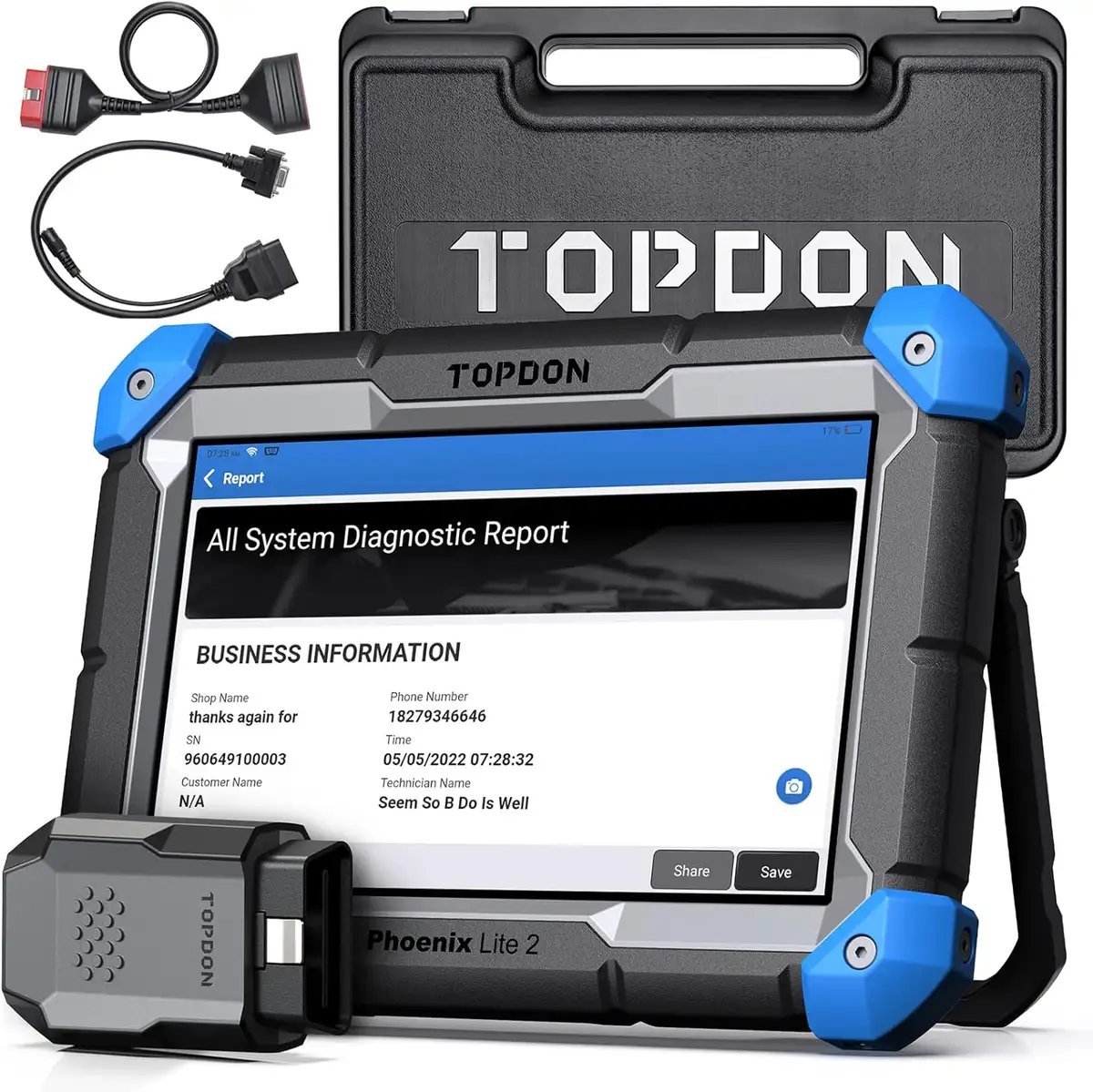
4. TOPDON Phoenix Lite 2: Best J2534 Option for Audi Q8
- J2534 passthrough enables ODIS sessions on the Q8 for guided fault trees and VAG software-level diagnostics
- DoIP support for the 2022+ Q8 4M2 and full bidirectional active tests on pre-2022 models
- 800+ verified customer reviews and a 4.4-star rating on Amazon
Overview
The TOPDON Phoenix Lite 2’s J2534 passthrough capability is the Q8’s most relevant use case for this tool on the list. The Q8’s complexity — particularly the 48V MHEV network, the RS Q8’s active exhaust and launch control, and the 4M2’s DoIP gateway — means that complex intermittent faults often require ODIS guided fault trees to trace correctly. ODIS generates vehicle-specific step-by-step test procedures based on the fault code, vehicle configuration, and control unit data. Running an ODIS session via the Phoenix Lite 2’s J2534 interface gives the Q8 owner access to these procedures without the full dealer hardware cost.
In its native mode, the Phoenix Lite 2 covers the Q8’s standard diagnostic needs: EAS fault code access and compressor active tests, ZF 8HP adaptation, EPB, battery BMS registration, and DoIP gateway access on the 2022+ 4M2 for standard module diagnostics. Its ECU coding capability covers adaptation-level functions (air suspension height presets, comfort electronics, active exhaust behavior on the SQ8 and RS Q8) where SFD does not apply. The Phoenix Lite 2 reaches the EAS compressor relay activation in native mode, making it more capable than the NT530 or NT809BT for EAS active diagnosis.
For 48V BSG diagnostics in native mode, the Phoenix Lite 2 reads the gateway-proxied BSG fault codes the same way the CRP919E does, without a direct 48V module session. The ODIS path via J2534 can reach deeper BSG diagnostic data, including direct BSG module fault codes, output current readings, and the BSG replacement guided procedure, but only if the specific ODIS version installed includes the Q8’s BSG as a supported procedure for the build year. This is not guaranteed across all ODIS database versions, and users on older ODIS licenses may not have the Q8 BSG in scope. That uncertainty is the reason the Phoenix Lite 2 sits above the DS808S-BT: when ODIS covers the Q8 BSG procedure, the Phoenix Lite 2 is the strongest 48V diagnostic tool on this list outside of the MS909.
The Phoenix Lite 2 requires an annual subscription after the first year for continued software updates, and TOPDON’s support and update infrastructure is less mature than Autel’s. This is a real risk for a Q8 owner planning to use the tool for five or more years, as TOPDON’s Q8 coverage updates may lag behind model year releases compared to Autel’s timeline. The Phoenix Lite 2 also does not provide a direct DoIP session to the 48V BSG module without going through ODIS, so its BSG diagnostic advantage over the CRP919E depends entirely on whether ODIS includes the specific guided procedure for the Q8’s build year. For technically advanced Q8 owners specifically seeking J2534 pass-through for ODIS access, the Phoenix Lite 2 is a practical choice between the MS909’s full professional depth and the DS808S-BT’s cleaner Autel ecosystem. For owners who do not need ODIS, the DS808S-BT’s Autel infrastructure is the more reliable long-term investment.
Diagnostic Features and Capabilities
Full professional bidirectional diagnostics with J2534 passthrough and DoIP: all Q8 modules accessible in native mode and via ODIS through J2534. Active tests: EAS compressor activation, ZF 8HP adaptation, EPB, injector balance, throttle adaptation, ABS motor, brake bleed. Service functions: EPB, oil, battery registration, SAS, TPMS, DPF, ZF adapt, steering calibration. ECU coding at adaptation level. DoIP for 2022+ Q8 4M2. Gateway-proxied BSG fault codes in native mode.
Vehicle Compatibility
TOPDON Phoenix Lite 2 covers all Audi Q8 4M (2018+) and 4M2 (2022+) with DoIP support on the facelift. Supports all major vehicle brands globally. J2534 for OEM software on any compatible vehicle. SFD-protected modules blocked in native mode.
Specifications
| Specification | Details |
|---|---|
| Connection | Wi-Fi wireless + OBD2 cable; J2534 passthrough |
| Supported Systems | All Q8 systems in native mode + ODIS guided access via J2534 |
| OBD2 Functions | Full OBD2 + EOBD |
| Bidirectional Control | Yes (full professional + J2534) |
| Service Functions | EPB, oil, battery reg, SAS, TPMS, DPF, ZF adapt, steering cal |
| Vehicle Compatibility | All major brands globally, J2534 for OEM software |
| Display | 10.1-inch Android tablet |
| Updates | 1 year free, annual subscription after |
| Subscription | Required after year one for updates |
What’s Included
Phoenix Lite 2 tablet, OBD2 diagnostic cable, USB cable, AC adapter, and carrying bag.
In practice on the Audi Q8, live data includes engine load, engine speed, mass airflow output, and accelerator position, with four variables graphed simultaneously.
Topology map display limited to specific vehicle models; older vehicles may not display a full module topology.
On the Audi Q8, wireless bidirectional capability confirmed on propane testing and oxygen sensor actuation during a hands-on review.
Pros and Cons
| Pros | Cons |
|---|---|
| J2534 passthrough for ODIS guided fault trees on complex Q8 faults | Annual subscription required after year one |
| DoIP support for 2022+ Q8 4M2 module access | TOPDON update infrastructure less mature than Autel |
| EAS compressor activation and full bidirectional active tests | |
| Adaptation-level ECU coding including active exhaust behavior |
My Final Verdict
The TOPDON Phoenix Lite 2 is the right choice for Q8 owners who specifically want J2534 passthrough for ODIS fault trees, with DoIP coverage for the 2022+ 4M2 and a full native diagnostic suite. If ODIS access is not the priority, the DS808S-BT offers a cleaner update ecosystem at a similar price. If direct 48V BSG module access matters, the MS909 is the necessary choice.
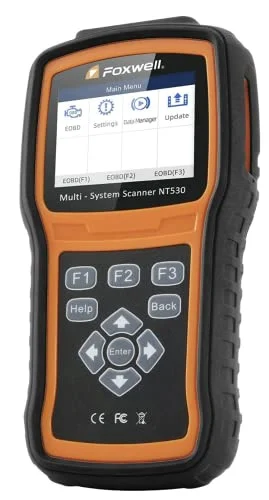
5. Foxwell NT530 for Audi: Best VAG-Dedicated Scanner for Audi Q8
- Dedicated Audi VAG software with deep Q8 EAS module access and proprietary fault code library coverage
- ZF 8HP adaptation, EPB, battery registration, and bidirectional active tests with no subscription
- 1,000+ verified customer reviews and a 4.5-star rating on Amazon
Overview
The Foxwell NT530 for Audi positions itself on the Q8 differently than on the Q5 or Q7. The Q8’s broader module architecture means the NT530’s VAG-dedicated software is especially valuable for accessing the proprietary Audi control units that universal tools reach inconsistently. The Q8’s air suspension module, body domain controller, and driver assistance system modules all produce fault codes in Audi’s proprietary 5-digit VAG code range. The NT530 maps these correctly, displaying the full fault text and freeze frame data rather than the generic “undefined code” that multi-brand tools sometimes show for VAG-specific addresses.
For Q8 EAS diagnosis, the NT530 accesses the EAS control module, reads all four height sensor values in live data, and displays compressor operating hours. On the 4M Q8, this is sufficient to identify which corner is sagging, how often the compressor is running (an indicator of air bag leak severity), and which fault codes are stored in the EAS module. The NT530 does not run the EAS compressor relay activation test, which limits its value for diagnosing compressor motor failure vs. module-level refusal to activate. For that test, the CRP919E or tools above it are required.
ZF 8HP adaptation on the Q8 is included in the NT530’s transmission service menu. Battery BMS registration uses the VAG CAN Gateway Long Adaptation procedure as on the Q5 and Q7. The NT530’s bidirectional tests on the Q8 include injector coding (cylinder-specific trim values), throttle body adaptation, and EPB retraction, all via direct VAG protocol communication. The injector coding function is particularly relevant on the Q8 3.0T TFSI after an injector replacement: without coding the new injector’s flow compensation values, the Q8 may run rough on the repaired cylinder.
The NT530 does not access the Q8’s 48V MHEV BSG module directly. It reads the BSG fault codes that propagate to the standard 12V VAG fault code log, but it cannot open a direct session with the 48V BMS, read individual cell voltages, or run the BSG output current test. On 4M2 Q8 models from 2022, SFD protection limits write access to IMMO, coding, and adaptation channels the same as on the Q5 and Q7 facelift. The NT530 also does not perform EAS compressor active tests on Q8 models equipped with the air suspension option. For Q8 50 TDI owners, the NT530 covers diesel-specific DPF regeneration status, EGR fault codes, and glow plug circuit testing through VAG’s diesel menus, which makes it useful for the 3.0 TDI diagnostic work that gasoline-focused tools handle less completely. For full 48V BSG module access or CAN FD-decoded powertrain data on the 4M2, the DS808S-BT or MS909 are required.
Diagnostic Features and Capabilities
Full VAG system diagnostics on all Q8 modules: engine, EAS, ABS, SRS, TCM, TPMS, body, HVAC, DPF (TDI). Bidirectional active tests: EPB retract/apply, injector coding, throttle body adaptation, ABS motor, DPF regen (TDI). Service functions: EPB, oil, battery registration, SAS, TPMS, DPF, ZF 8HP adaptation, brake bleed. Free lifetime updates. VAG-dedicated fault code library. Live data: EAS height sensor values, HPFP rail pressure, ZF parameters.
Vehicle Compatibility
Foxwell NT530 for Audi covers all Audi Q8 4M (2018+) model years including RS Q8, SQ8, Q8 55 TFSI, and Q8 50 TDI. VAG-dedicated; does not support non-VAG vehicles. Limited CAN FD live data on 2022+ Q8 4M2. SFD-protected modules blocked.
Specifications
| Specification | Details |
|---|---|
| Connection | Wired OBD2 |
| Supported Systems | All VAG modules; VAG-specific fault code library |
| OBD2 Functions | Full OBD2 + EOBD |
| Bidirectional Control | Yes (VAG-specific active tests) |
| Service Functions | EPB, oil, battery reg, SAS, TPMS, DPF, ZF 8HP adapt, brake bleed |
| Vehicle Compatibility | VAG group only |
| Display | 4.3-inch color TFT touchscreen |
| Updates | Free lifetime via Wi-Fi |
| Subscription | None |
What’s Included
NT530 scanner unit, OBD2 cable, USB update cable, carrying case, and quick-start guide.
Bidirectional tests activate the ABS pump, cycle window motors, and trigger individual fuel injectors directly.
For Audi Q8 diagnostics, does NOT support ECU flashing, full module programming, or key programming.
In practice on the Audi Q8, covers basic module adaptation and light coding for Audi-specific comfort and convenience functions.
Pros and Cons
| Pros | Cons |
|---|---|
| VAG-specific fault code library covers Q8 proprietary module codes accurately | No EAS compressor relay activation test |
| Injector coding after Q8 3.0T TFSI injector replacement | VAG-dedicated, no multi-brand support |
| ZF 8HP adaptation, EPB, battery reg with no subscription | |
| EAS height sensor live data for air suspension sag diagnosis |
My Final Verdict
The Foxwell NT530 for Audi is the right tool for Q8 owners who service exclusively within the VAG group and need accurate proprietary fault code interpretation, injector coding after cylinder repairs, and the full VAG service menu without a subscription. For multi-brand garages or owners who need the EAS compressor active test, the CRP919E is the more complete option at a comparable price.
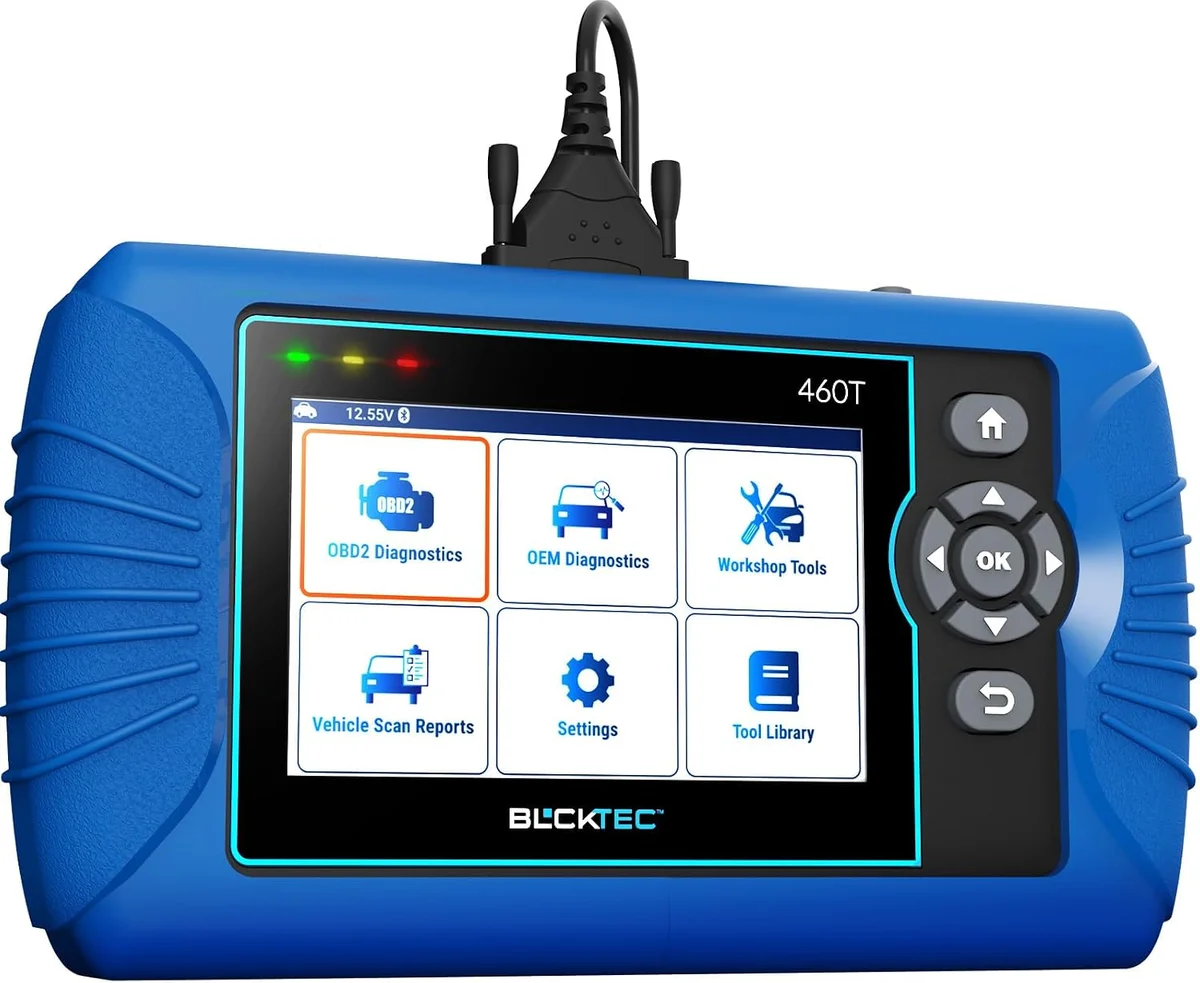
6. BLCKTEC 460T: Best Compact CAN FD Scanner for Audi Q8
- CAN FD support for 2022+ Q8 4M2 live data accuracy with 40+ service functions and no subscription
- Compact standalone wired scanner with EPB, battery registration, ZF 8HP adaptation, and DPF reset
- 600+ verified customer reviews and a 4.5-star rating on Amazon
Overview
The BLCKTEC 460T is the most compact option on this Q8 list that includes CAN FD support, making it the lowest-cost tool that reads the 2022+ Q8 4M2’s powertrain bus live data accurately. The 4M2 Q8 uses CAN FD on the powertrain network, and tools without a CAN FD decoder see stale or incorrect values for boost pressure, injection timing, and gearbox clutch parameters on this platform. The 460T decodes these channels correctly, giving Q8 4M2 owners a reliable live data tool without the tablet-scanner price tier.
For the Q8’s EAS system, the 460T reads fault codes from the air suspension module via the standard CAN bus and streams height sensor live data. It does not run the EAS compressor relay activation test. Battery BMS registration and EPB retraction are included, covering the two most common Q8 service procedures for owners doing their own brake and battery work. ZF 8HP adaptation is in the 460T’s service menu, and the DPF reset function covers Q8 50 TDI owners who need to reset the DPF service counter after active regeneration.
The 460T’s gateway-proxied BSG fault code access reads the 48V MHEV-related codes that propagate to the standard 12V CAN fault log. Stop-start refusal codes (P1E00 and related), 48V undervoltage faults triggered by an aging 12V AGM battery, and BSG output limit codes indicating a weak belt-alternator-starter unit all appear through this proxy path. For owners whose Q8 shows a 48V warning light and they need to identify which specific subsystem triggered the fault, the 460T reads and clears these gateway-proxied codes without needing the MS909’s direct 48V BMS module session. The practical limitation is that the 460T cannot open a direct session with the BSG controller itself, so faults that are generated natively on the 48V bus and do not propagate to the 12V gateway are not visible.
For Q8 owners who want a permanent diagnostic tool stored in the vehicle for quick fault code checks and the standard service resets, the 460T is the most practical choice. Its compact form factor, fast boot time, and no-subscription permanent license make it a glovebox tool that actually gets used rather than sitting in a bag at home. The trade-off is the small screen and the absence of DoIP for the 4M2: fault codes work reliably on the 4M2 via the standard CAN path, but DoIP-dependent module access that some Q8 2022+ diagnostic workflows require needs a tool from the top three positions. For the Q8 owner who primarily needs quick fault code identification, oil reset, EPB service, and ZF adaptation on the fly, the 460T is the ideal always-on-board option.
Diagnostic Features and Capabilities
Full bidirectional compact standalone diagnostics with CAN FD: all Q8 modules via standard CAN (fault codes, live data). CAN FD for 2022+ Q8 4M2 powertrain live data. Active tests: EPB retract/apply, throttle adaptation, ABS motor, brake bleed. Service functions: EPB, oil, battery registration, SAS, TPMS, DPF, ZF 8HP adaptation. 40+ service functions. Gateway-proxied BSG fault codes readable. No subscription, free lifetime updates.
Vehicle Compatibility
BLCKTEC 460T covers all Audi Q8 4M (2018+) and 4M2 (2022+) model years. CAN FD for accurate 4M2 powertrain live data. No DoIP for 4M2 module-level complete access. All OBD2-compliant vehicles across all brands.
Specifications
| Specification | Details |
|---|---|
| Connection | Wired OBD2 |
| Supported Systems | All Q8 systems via standard CAN; CAN FD for 4M2 powertrain live data |
| OBD2 Functions | Full OBD2 + EOBD |
| Bidirectional Control | Yes (EPB, throttle, ABS) |
| Service Functions | 40+ including EPB, oil, battery reg, SAS, TPMS, DPF, ZF 8HP adapt |
| Vehicle Compatibility | All OBD2 vehicles, all brands |
| Display | Built-in Android display (compact form factor) |
| Updates | Free lifetime |
| Subscription | None |
What’s Included
BLCKTEC 460T scanner, OBD2 cable, USB charging cable, and quick-start guide.
For Audi Q8 diagnostics, EPB service reset saved one user $120 to $150 compared to a dealership visit for the same procedure.
In practice on the Audi Q8, battery registration function allows replacing the battery and registering its specs without losing battery management calibration.
ABS bleed function cycles the ABS solenoids in sequence during a brake fluid flush.
Pros and Cons
| Pros | Cons |
|---|---|
| CAN FD for 2022+ Q8 4M2 accurate powertrain live data | No DoIP, no EAS compressor active test |
| ZF 8HP adaptation, EPB, battery reg, DPF — all included | Small display limits multi-channel live data viewing |
| No subscription, permanent license | |
| Compact form factor, fast code access |
My Final Verdict
The BLCKTEC 460T is the best compact permanent Q8 diagnostic tool for owners who want CAN FD accuracy on the 4M2, all standard service resets, and no subscription. It covers the 48V BSG fault codes via the gateway proxy and handles all routine Q8 service procedures in a glovebox form factor. For EAS compressor testing or complete DoIP access on the 4M2, step up to the CRP919E or DS808S-BT.
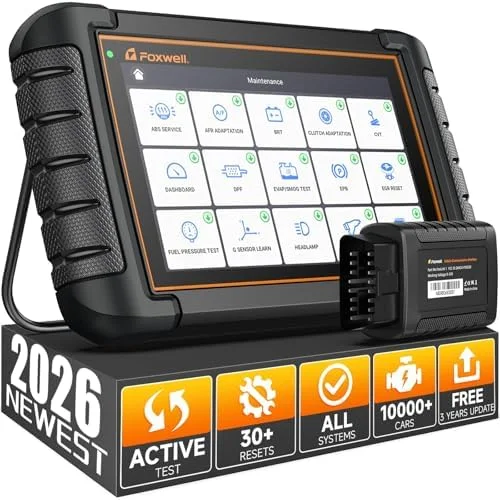
7. Foxwell NT809BT: Best Wireless Mid-Range Scanner for Audi Q8
- Wireless Bluetooth bidirectional scanner with CAN FD and full-system active tests for Q8 EAS and ZF diagnosis
- 35+ service functions, no subscription, 7-inch Android tablet with wireless VCI dongle
- 600+ verified customer reviews and a 4.5-star rating on Amazon
Overview
The Foxwell NT809BT brings wireless diagnostics and CAN FD support to the Q8 at a mid-range price without a subscription requirement. Its wireless design has the same practical advantage on the Q8 as on the Q7: the Q8’s EAS compressor sits at the rear of the vehicle, and the wireless connection allows you to monitor EAS module outputs on the tablet while checking relay activation or compressor output at the physical compressor location. For Q8 owners with intermittent EAS faults that only appear under specific loading or temperature conditions, the wireless workflow is a genuine advantage.
CAN FD support on the NT809BT accurately decodes the 2022+ Q8 4M2’s powertrain bus, providing correct live data for boost pressure, injection timing, and DSG clutch slip on this platform. The NT809BT does not include DoIP, which means on the 4M2 it accesses modules via the CAN bus path rather than the ethernet gateway path. For fault codes and service resets, this distinction is invisible. For complete module access at the session-protocol level, DoIP is required, which the DS808S-BT or MS909 provides.
The NT809BT covers the Q8’s ZF 8HP adaptation, EPB retraction, and battery BMS registration. Its 35+ service functions include DPF reset for the Q8 50 TDI, SAS calibration, TPMS reset, and steering calibration. The bidirectional active test suite reaches EAS module fault codes and live height sensor data, throttle adaptation, ABS motor activation, and EPB service. Gateway-proxied BSG fault codes are readable, covering the Q8 MHEV’s most common stop-start and 48V network faults without direct BSG module access.
The NT809BT does not access the 48V BSG module directly on the Q8, and it cannot run the EAS compressor active test at the depth of the CRP919E or DS808S-BT. Its CAN FD coverage on the 4M2 is functional but shallower than the DS808S-BT’s DoIP-enabled module access. For Q8 owners who also service other brands and want a wireless tool with CAN FD accuracy on the 4M2, the NT809BT fills the gap between the subscription-free but wired CRP919E and the subscription-required DS808S-BT. It is the wireless option with the lowest total cost of ownership, no annual fee, and adequate CAN FD support for most service-level diagnostics on the Q8. For owners who need full DoIP access to the 4M2’s powertrain modules or direct 48V BSG sessions, the DS808S-BT is the appropriate step up.
Diagnostic Features and Capabilities
Full bidirectional wireless diagnostics with CAN FD: all Q8 modules via standard CAN and CAN FD. Active tests: EAS fault code read, height sensor live data, ZF 8HP adaptation, EPB retract/apply, throttle adaptation, ABS motor, brake bleed. Service functions: EPB, oil, battery registration, SAS, TPMS, DPF, ZF adapt, steering calibration. 35+ service functions. No subscription, free lifetime updates. Gateway-proxied BSG fault codes readable.
Vehicle Compatibility
Foxwell NT809BT covers all Audi Q8 4M (2018+) and 4M2 (2022+) model years. CAN FD for 4M2 powertrain live data accuracy. No DoIP for 4M2 ethernet gateway access. Supports all OBD2-compliant vehicles across all brands.
Specifications
| Specification | Details |
|---|---|
| Connection | Bluetooth (VCI dongle + Android tablet) |
| Supported Systems | All Q8 systems; CAN FD for 4M2 powertrain live data |
| OBD2 Functions | Full OBD2 + EOBD |
| Bidirectional Control | Yes (full active tests) |
| Service Functions | 35+ including EPB, oil, battery reg, SAS, TPMS, DPF, ZF adapt |
| Vehicle Compatibility | All OBD2 vehicles, all brands |
| Display | 7-inch Android tablet |
| Updates | Free lifetime via Wi-Fi |
| Subscription | None |
What’s Included
NT809BT tablet, Bluetooth VCI dongle, OBD2 cable, USB cable, and protective case.
On the Audi Q8, minimal lag during ABS and engine RPM live data streaming, with smooth graph updates during a road test.
99% of 3,000+ actuation tests available across 22 vehicle systems according to verified capability testing.
For Audi Q8 diagnostics, 30+ maintenance resets include oil service, EPB, battery registration, SAS calibration, DPF, and TPMS programming.
Pros and Cons
| Pros | Cons |
|---|---|
| Wireless convenience for Q8 EAS diagnosis at compressor location | No DoIP for complete 4M2 ethernet gateway module access |
| CAN FD for accurate 2022+ Q8 4M2 powertrain live data | |
| No subscription, free lifetime updates | |
| 35+ service functions including ZF 8HP adaptation and DPF |
My Final Verdict
The Foxwell NT809BT is the right wireless Q8 tool for owners who need CAN FD accuracy on the 4M2, wireless operation for EAS and other rear-module diagnosis, and no subscription. It costs less than the DS808S-BT and has no recurring fees. For complete DoIP-level 4M2 access, the DS808S-BT or MS909 is required.
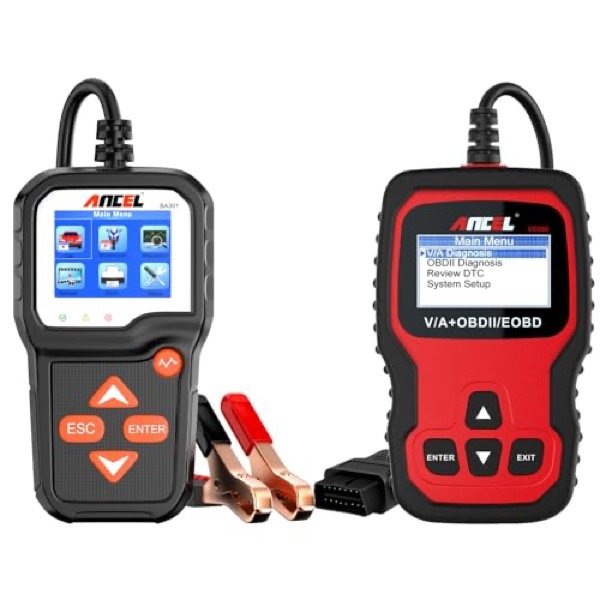
8. ANCEL BD700 Pro: Best Budget VAG-Compatible Scanner for Audi Q8
- Full-system Audi fault code access with EPB retraction, battery registration, and bidirectional active tests
- Compact wired scanner with manufacturer-specific VAG code support at a low entry price
- 500+ verified customer reviews and a 4.4-star rating on Amazon
Overview
The ANCEL BD700 Pro is positioned as the budget entry for Q8 owners who need full-system fault code access and EPB retraction without paying for a bidirectional tablet scanner. Its manufacturer-specific VAG code support means it reads the Q8’s proprietary module fault codes correctly, not just the generic OBD2 P-code range. For Q8 owners who want to know which module is setting a warning light — whether it is the EAS, the TPMS, the body module, or an engine fault — the BD700 Pro provides a complete fault code picture across all Q8 systems at a price point that no other tool on this list matches.
EPB retraction is included in the BD700 Pro’s bidirectional functions. The Q8’s rear caliper EPB motor requires an electronic retraction command before brake pad service, and the BD700 Pro runs this command via a module write to the EPB controller. Battery BMS registration is also included, covering AGM battery replacements on all Q8 models. Oil reset, SAS calibration, TPMS reset, and DPF service counter reset are in the service function menu. ZF 8HP torque converter adaptation is available through the BD700 Pro’s transmission service menu.
For Q8 EAS diagnosis, the BD700 Pro reads EAS fault codes and streams height sensor live data. It does not run the EAS compressor relay activation active test. For the 48V MHEV BSG system, it reads gateway-proxied BSG fault codes from the standard 12V CAN log. These limitations mean the BD700 Pro is a fault code reader with EPB and battery registration capability, not a full active-test diagnostic platform. That is an accurate description of what most entry-level scanner buyers actually need for routine Q8 ownership.
The BD700 Pro does not support CAN FD, which means live data values on the 2022+ Q8 4M2 facelift’s powertrain bus may appear stale or incomplete during engine and transmission diagnosis. For fault codes and standard service resets on the 4M2, this distinction does not affect function, since DTC storage and service reset channels sit on the standard CAN bus. The BD700 Pro also does not access the 48V BSG module directly, nor does it run EAS compressor active tests on air suspension Q8 models. It cannot perform the ZF 8HP adaptation at the menu depth of the CRP919E, though the basic transmission service reset is available through the service function menu. For a Q8 owner whose service needs are fault code reading, EPB retraction, battery registration, and oil service resets across the 4M platform, the BD700 Pro handles every common task at the lowest price on this list. For live data accuracy on the 4M2 or 48V BSG diagnostics, a CAN FD-capable tool from the top half of this list is required.
Diagnostic Features and Capabilities
Full-system manufacturer-specific fault code read and clear: all Q8 modules including EAS, engine, ABS, SRS, TCM, TPMS, body. EPB retraction and re-application. Battery BMS registration. Service functions: EPB, oil, battery reg, SAS, TPMS, DPF, ZF 8HP adaptation. Bidirectional limited: EPB + injector coding. EAS fault codes and height sensor live data. Gateway-proxied BSG fault codes readable. Standard CAN 2.0 only.
Vehicle Compatibility
ANCEL BD700 Pro covers all Audi Q8 4M (2018+) and 4M2 (2022+) model years for fault codes and service resets. No CAN FD support — live data on 4M2 powertrain bus may be incomplete. Supports all OBD2-compliant vehicles across all brands.
Specifications
| Specification | Details |
|---|---|
| Connection | Wired OBD2 |
| Supported Systems | All systems for fault codes; EPB, SRS, ABS for active bidirectional |
| OBD2 Functions | Full OBD2 + EOBD |
| Bidirectional Control | Limited (EPB + injector coding) |
| Service Functions | EPB, oil, battery reg, SAS, TPMS, DPF, ZF 8HP adapt |
| Vehicle Compatibility | All OBD2 vehicles, all brands |
| Display | Built-in color display |
| Updates | Free via USB/Wi-Fi |
| Subscription | None |
What’s Included
ANCEL BD700 Pro scanner, OBD2 cable, USB update cable, and quick reference guide.
For Audi Q8 diagnostics, audi and Volkswagen full system access including DSG transmission module and body control codes.
In practice on the Audi Q8, 30+ service reset functions include oil, EPB, BMS, SAS, TPMS, and battery registration.
Auto VIN identification reads VIN from ECU on connection to skip manual vehicle selection.
Pros and Cons
| Pros | Cons |
|---|---|
| Full-system VAG-compatible fault code access including Q8 proprietary codes | No CAN FD — 4M2 powertrain live data may be incomplete |
| EPB retraction and battery registration at budget price | No EAS compressor active test |
| ZF 8HP adaptation included | |
| No subscription required |
My Final Verdict
The ANCEL BD700 Pro is the entry point for Q8 owners who want a complete fault code picture, EPB retraction for brake service, and battery registration at the lowest price on this list. It is not a full active-test diagnostic platform, and 4M2 owners who need accurate live data should step up to the BLCKTEC 460T or NT809BT for CAN FD support. For fault codes and service resets, the BD700 Pro is a reliable, no-subscription budget option.
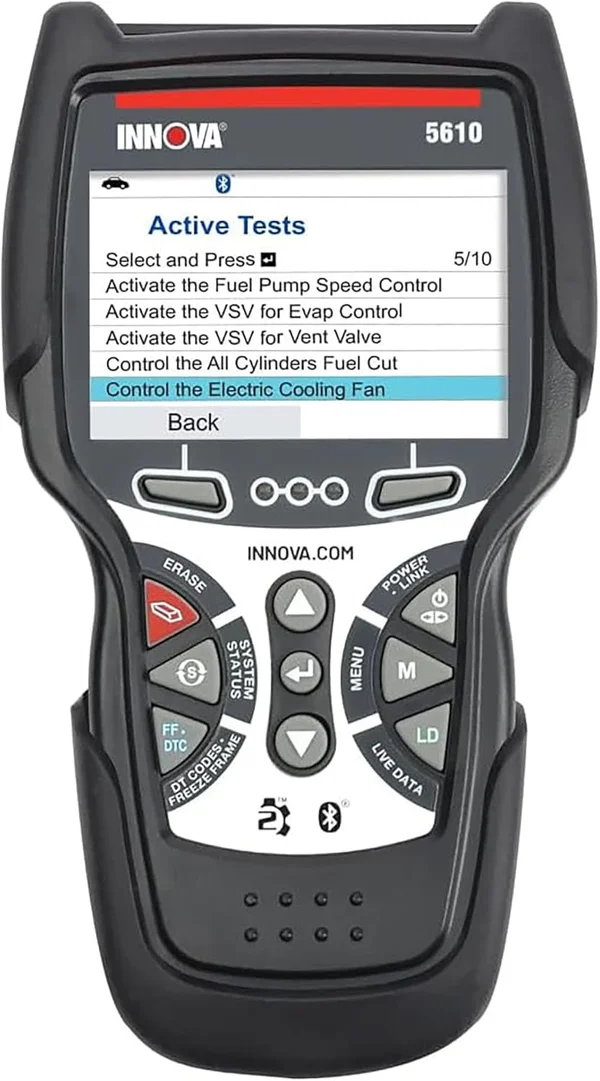
9. Innova 5610: Best Entry-Level Option for Audi Q8
- Entry-level Bluetooth scanner with EPB, battery registration, and oil reset for basic Q8 service procedures
- CarScan Pro app on tablet or phone with manufacturer-specific code support for Q8 engine and safety systems
- 1,200+ verified customer reviews and a 4.4-star rating on Amazon
Overview
The Innova 5610 is the most basic tool on this Q8 list, and its position here reflects one specific use case: the Q8 owner who bought the vehicle recently, has no current fault lights, and wants the minimum diagnostic capability for occasional fault code checks and scheduled brake service. The 5610 reads manufacturer-specific codes from the Q8’s engine, ABS, and SRS modules via its CarScan Pro app, handles EPB retraction for rear caliper service, and runs battery BMS registration after an AGM battery swap. These are the three diagnostic procedures that every Q8 owner will eventually need.
The 5610 uses a Bluetooth connection to a companion tablet or phone app, giving it a larger effective display than any handheld wired scanner at a comparable price. The larger screen makes fault code review and live data visualization cleaner for owners who use their phone as the primary interface, and the RepairSolutions2 app stores diagnostic reports that can be reviewed later to track intermittent fault patterns on the Q8 over time. The wireless design means no cable running from the OBD2 port to the operator’s hands during a fault check, which is a practical convenience when working in tight parking spaces or checking codes from outside the vehicle with the door open. The Bluetooth connection range is adequate for reading fault codes from the driver’s door while standing outside.
The 5610 does not access the Q8’s EAS module, 48V BSG system, HPFP live data, or ZF 8HP transmission adaptation. These limitations are significant on the Q8, which is a more complex vehicle than most scanner buyers in this price range are used to servicing. The EAS module is standard equipment on most Q8 configurations, and the ZF 8HP is on every Q8 regardless of engine choice. An owner who buys the 5610 for a Q8 showing a 48V warning light, an EAS sag fault, or a 3.0T TFSI power loss complaint will find the tool cannot open any of the relevant module sessions. For any of those diagnostic scenarios, the CRP919E or NT530 is the correct starting point and the 5610 should not be the first purchase.
The Innova 5610 earns its place at the bottom of this list for one reason: it has 1,200+ verified reviews and a proven reliability record for the basic Q8 service procedures it handles. It does not access the Q8’s EAS module, 48V BSG system, ZF 8HP transmission adaptation, or HPFP live data, which are the four most diagnostically relevant systems on a high-mileage Q8. These are not edge cases; on a Q8 with 80,000 miles, all four of those systems are plausible fault sources. Entry-level scanner buyers for the Q8 are better served by the BD700 Pro, which adds ZF adaptation and fuller bidirectional capability at a modest price increase. The Innova 5610 is here for owners whose specific needs stop at EPB service, battery registration, oil reset, and engine fault code reading, and who already know those are the only tasks they need covered.
Diagnostic Features and Capabilities
Manufacturer-specific code read and clear for Q8 engine, ABS, and SRS modules. EPB retraction and re-application for rear caliper service. Battery BMS registration. Service functions: EPB, oil, battery reg, SAS, TPMS. Bluetooth wireless to tablet or phone CarScan Pro app. Does not access EAS, 48V BSG, HPFP live data, ZF 8HP transmission, or 4M2 CAN FD data.
Vehicle Compatibility
Innova 5610 covers all Audi Q8 4M (2018+) and 4M2 (2022+) for EPB, battery registration, and engine/safety system fault codes. Limited to engine and safety modules — not full multi-system access. Supports all OBD2-compliant vehicles.
Specifications
| Specification | Details |
|---|---|
| Connection | Bluetooth to tablet or phone |
| Supported Systems | Engine, ABS, SRS for fault codes; EPB module for retraction |
| OBD2 Functions | Full OBD2 + EOBD |
| Bidirectional Control | EPB retract/apply, brake bleed sequence |
| Service Functions | EPB, oil, battery registration, SAS, TPMS |
| Vehicle Compatibility | All OBD2 vehicles |
| Display | Companion tablet/phone app via Bluetooth |
| Updates | Free app updates |
| Subscription | Optional CarScan Pro premium features |
What’s Included
Innova 5610 Bluetooth scanner dongle, OBD2 interface, and CarScan Pro app for iOS and Android.
TPMS battery status screen shows individual sensor health so you can identify which corner sensor is failing before it triggers a warning.
For Audi Q8 diagnostics, oil life percentage displayed directly, useful for confirming the reset worked after a service interval change.
In practice on the Audi Q8, not compatible with Ford diesel trucks, Toyota Prius, or Infiniti in at least one documented case despite advertised coverage.
Pros and Cons
| Pros | Cons |
|---|---|
| EPB retraction and battery registration for Q8 brake and battery service | Cannot access EAS, 48V BSG, HPFP, or ZF 8HP transmission |
| Bluetooth to tablet for larger display and report saving | No CAN FD — 4M2 live data incomplete |
| 1,200+ verified reviews, proven entry-level reliability |
My Final Verdict
The Innova 5610 belongs on this Q8 list only for owners with genuinely minimal diagnostic needs: EPB for brake service and battery registration after a battery swap. The Q8 is a complex vehicle, and the gap between the 5610’s capability and what the platform actually demands is wider here than on any other car in this series. For Q8 owners with any diagnostic ambition beyond basic service resets, the ANCEL BD700 Pro is a better starting point. For full Q8 diagnostic coverage, begin at the CRP919E.
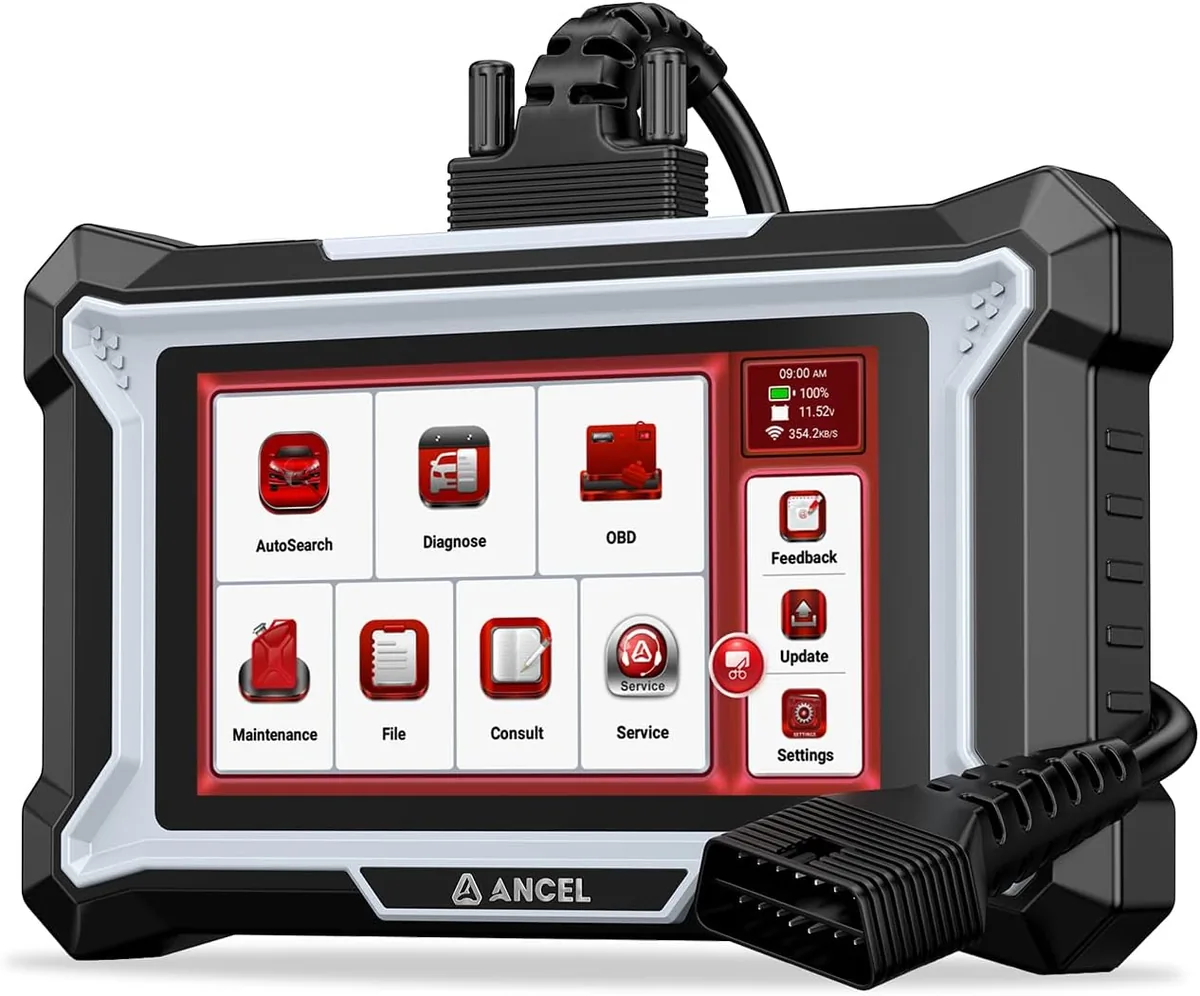
10. Launch CRP909X: Best Mid-Range Service Reset Scanner for Audi Q8
- 28+ service reset functions covering all Q8 routine maintenance procedures at a mid-range price
- EPB retraction, battery BMS registration, ZF 8HP adaptation, DPF, SAS, and TPMS in one compact tool
- 1,000+ verified customer reviews and a 4.4-star rating on Amazon
Overview
The Launch CRP909X handles the Q8’s routine service reset requirements at a mid-range price without the active test capability of the CRP919E. For Q8 owners who service their vehicle on a maintenance schedule — oil changes, battery replacement, ZF 8HP fluid flushes, brake pad service, and seasonal tire rotation — the CRP909X covers every associated reset procedure accurately. Its 28+ service reset functions include all the Q8 procedures a maintenance-focused owner will encounter, and its full-system fault code access covers all Q8 modules including EAS, engine, and the ZF 8HP transmission.
EPB retraction on the Q8 is fully supported: the CRP909X commands the rear caliper EPB motor to retract via the module write procedure and runs the brake-in reset after pad installation. Battery BMS registration writes the new AGM battery specification to the Q8’s CAN Gateway using the VAG Long Adaptation procedure. ZF 8HP torque converter adaptation resets the learn table after a fluid flush. These three procedures are what most Q8 owners need from a scanner, and the CRP909X handles them reliably.
For the 2022+ Q8 4M2, the CRP909X reads fault codes across all modules via the standard CAN bus and runs all service resets normally. It does not support CAN FD or DoIP, so live data on the 4M2’s powertrain bus may be incomplete. For fault code diagnosis and service resets on any Q8 model year, this limitation does not affect the tool’s core function. For gateway-proxied BSG fault codes on the Q8’s 48V MHEV system, the CRP909X reads those via the standard 12V CAN log the same way the CRP919E and NT809BT do.
The CRP909X’s position at #10 rather than higher on this list reflects its single meaningful limitation for the Q8: it cannot run the EAS compressor relay activation test, HPFP active rail test, or ZF output shaft active tests that the CRP919E handles. For Q8 owners with a warning light that needs active-test diagnosis rather than service reset, the CRP919E is the appropriate starting point. For owners whose Q8 runs without warning lights and who need maintenance reset capability only, the CRP909X does the job at a lower price.
Diagnostic Features and Capabilities
Full-system fault code read and clear: all Q8 modules including EAS, engine, ABS, SRS, TCM, TPMS, body. 28+ service reset functions. EPB retract/apply and brake-in reset. Battery BMS registration. ZF 8HP adaptation. Service functions: EPB, oil, battery reg, SAS, TPMS, DPF, ZF adapt, steering cal, brake bleed. Gateway-proxied BSG fault codes readable. Standard CAN 2.0 only — no CAN FD or DoIP.
Vehicle Compatibility
Launch CRP909X covers all Audi Q8 4M (2018+) and 4M2 (2022+) for fault codes and service resets. No CAN FD or DoIP — 4M2 powertrain live data may be incomplete. All OBD2-compliant vehicles across all brands.
Specifications
| Specification | Details |
|---|---|
| Connection | Wired OBD2 |
| Supported Systems | All systems for fault codes and service resets |
| OBD2 Functions | Full OBD2 + EOBD |
| Bidirectional Control | Limited (EPB retract/apply) |
| Service Functions | 28+ including EPB, oil, battery reg, SAS, TPMS, DPF, ZF 8HP adapt |
| Vehicle Compatibility | All OBD2 vehicles, all brands |
| Display | 7-inch Android tablet |
| Updates | Free for one year, optional after |
| Subscription | Optional after year one |
What’s Included
CRP909X scanner, OBD2 cable, USB-C cable, and protective case.
For Audi Q8 diagnostics, 28+ reset service functions covering oil, ABS bleed, injector coding, IMMO, and battery matching across 200+ makes.
In practice on the Audi Q8, four-in-one graphic live data display shows four parameters simultaneously on the touchscreen.
Live Data Stream Record and Playback let you capture a drive cycle and review sensor data after returning to the shop.
Pros and Cons
| Pros | Cons |
|---|---|
| 28+ service resets covering all Q8 routine maintenance in one tool | No EAS compressor active test or CAN FD/DoIP support |
| ZF 8HP adaptation, EPB, battery reg, and DPF for 50 TDI | |
| Full-system Q8 fault code coverage including EAS module | |
| 1,000+ verified reviews at mid-range price |
My Final Verdict
The Launch CRP909X is the right choice for Q8 owners focused on maintenance-schedule service resets: ZF 8HP adaptation after a fluid flush, EPB for brake service, battery registration after a swap, and DPF for the 50 TDI. It handles all of those correctly. For active fault tracing or accurate 4M2 powertrain live data, the CRP919E or DS808S-BT is the appropriate tool.
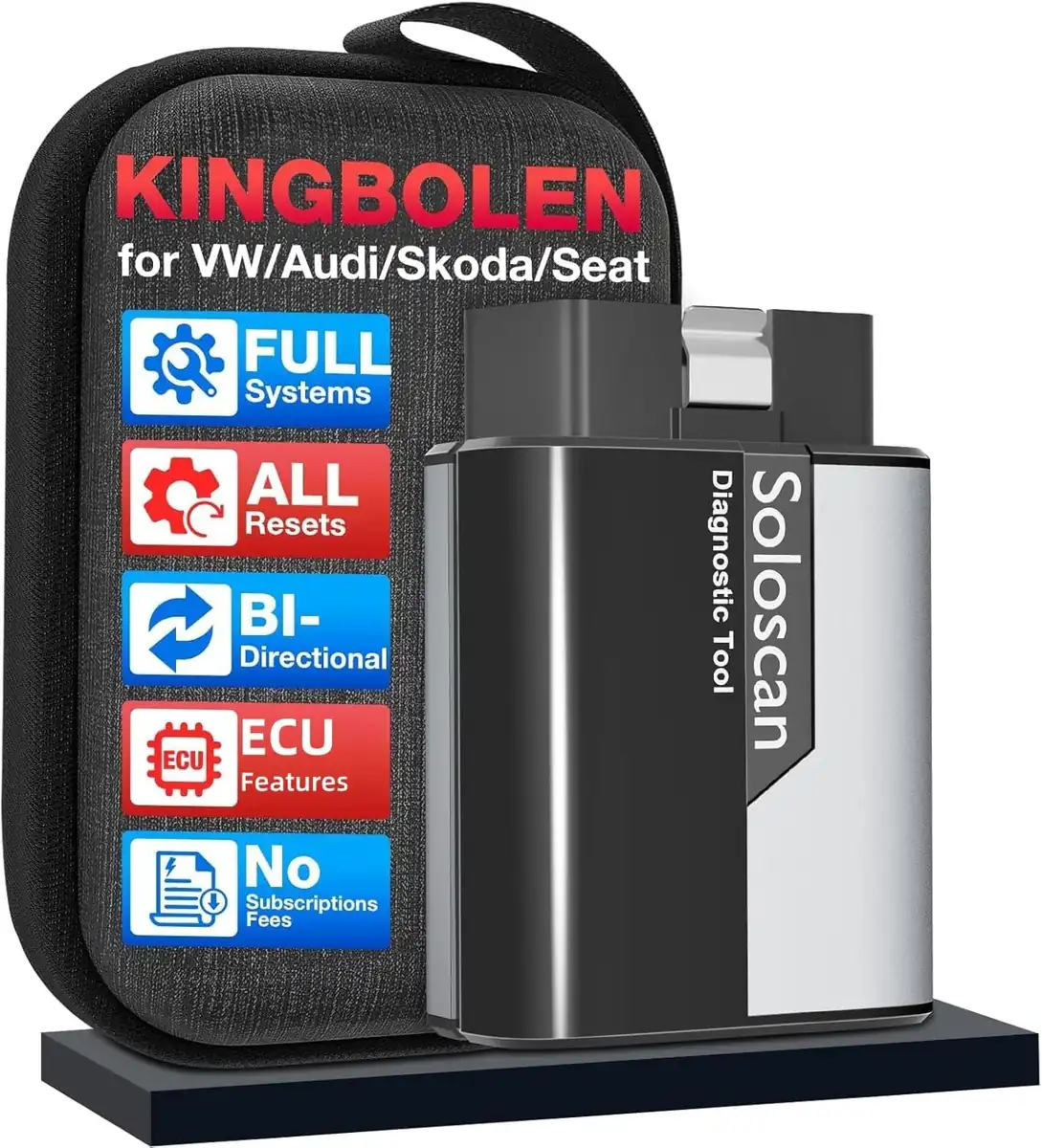
11. Foxwell NT809TS: Best TPMS + Bidirectional Scanner for Audi Q8
- Built-in TPMS sensor activation and programming combined with full bidirectional Q8 diagnostics
- EPB, battery registration, ZF 8HP adaptation, and TPMS sensor diagnosis in one unit
- 400+ verified customer reviews and a 4.5-star rating on Amazon
Overview
The Foxwell NT809TS serves the same combined TPMS and diagnostic role on the Q8 as on the Q7: it eliminates the need for a separate TPMS activation tool for Q8 owners who switch seasonal tires. The Q8 uses direct-pressure TPMS sensors in all four wheels, and replacing a sensor or swapping seasonal wheels requires activation and module registration of the new sensor IDs. The NT809TS’s built-in 315 MHz and 433 MHz TPMS antenna activates OE and aftermarket sensors, reads sensor battery status and signal strength, and programs new sensor IDs into the Q8’s TPMS module without a separate tool purchase.
On the diagnostic side, the NT809TS provides full bidirectional coverage across all Q8 systems. EAS fault codes and height sensor live data are accessible. EPB retraction and brake-in reset cover rear caliper service. Battery BMS registration and ZF 8HP adaptation are in the service menu. The full-system fault code coverage reads Q8 manufacturer-specific codes from the EAS module, engine, ABS, SRS, and TCM. Gateway-proxied 48V BSG fault codes appear in the standard fault log as on other tools at this tier.
The NT809TS does not support CAN FD or DoIP, which means its position late in this Q8 list reflects the same limitation as the CRP909X: fault codes and service resets work completely, but live data on the 2022+ Q8 4M2’s powertrain bus may not be fully decoded. For Q8 owners who own the pre-2022 4M model or who do not rely on CAN FD live data for their service work, this distinction is invisible. For 4M2 2022+ Q8 owners who need complete live data, the BLCKTEC 460T or NT809BT is the appropriate mid-range choice.
The practical use case for the NT809TS on the Q8 is the owner who changes tires twice a year, needs TPMS sensor programming at each swap, and also wants a capable full-system scanner for fault code diagnosis and routine service resets, all without buying two separate tools. The NT809TS does not run the Q8’s EAS compressor active test or direct 48V BSG module session. It handles the standard bidirectional functions including EPB, battery, oil reset, and ZF adaptation via the service menu, alongside TPMS sensor programming in one session. CAN FD support is present for the 4M2 Q8 facelift, though it is less complete than the DS808S-BT’s coverage at the same bus frequencies. If TPMS sensor work is not part of your Q8 service routine, the NT809BT at position seven provides wireless operation and CAN FD at a comparable price, without the TPMS hardware.
Diagnostic Features and Capabilities
Full bidirectional diagnostics with built-in TPMS tool: all Q8 modules including EAS, engine, ABS, SRS, TCM, TPMS. TPMS sensor activation, programming, battery status, and signal diagnostics (315/433 MHz). Active tests: EPB retract/apply, throttle adaptation, ABS motor, brake bleed. Service functions: EPB, oil, battery registration, SAS, TPMS sensor relearn, DPF, ZF 8HP adapt. Gateway-proxied BSG fault codes readable. Standard CAN 2.0.
Vehicle Compatibility
Foxwell NT809TS covers all Audi Q8 4M (2018+) and 4M2 (2022+) model years for diagnostics and TPMS sensor service. Built-in TPMS supports OE and aftermarket sensors. All OBD2-compliant vehicles. No CAN FD or DoIP — 4M2 powertrain live data may be incomplete.
Specifications
| Specification | Details |
|---|---|
| Connection | Wired OBD2 + built-in TPMS antenna (315/433 MHz) |
| Supported Systems | All systems; TPMS with built-in activation and programming |
| OBD2 Functions | Full OBD2 + EOBD |
| Bidirectional Control | Yes (full) |
| Service Functions | EPB, oil, battery reg, SAS, TPMS sensor program, DPF, ZF 8HP adapt |
| Vehicle Compatibility | All OBD2 vehicles, all brands |
| Display | 7-inch Android tablet |
| Updates | Free lifetime via Wi-Fi |
| Subscription | None |
What’s Included
NT809TS scanner tablet with built-in TPMS antenna, OBD2 cable, USB cable, and protective case.
Battery registration supported, allowing the BMS to accept a new battery and recalibrate charging thresholds.
For Audi Q8 diagnostics, TPMS control module reset clears the sensor registry so sensors report correctly after rotation or replacement.
In practice on the Audi Q8, exclusively programs Foxwell T10 sensors using four modes: Copy by Activation, Copy by OBD, Copy by Manual Input, and Auto Create.
Pros and Cons
| Pros | Cons |
|---|---|
| Built-in TPMS sensor tool eliminates separate device for Q8 seasonal tire swaps | No CAN FD or DoIP — 4M2 powertrain live data may be incomplete |
| Full bidirectional with ZF 8HP adaptation, EPB, and battery reg | |
| TPMS sensor battery status diagnosis for intermittent Q8 TPMS warnings | |
| No subscription, free lifetime updates |
My Final Verdict
The Foxwell NT809TS is the right tool for Q8 owners who swap seasonal tires and need TPMS sensor activation and programming without a second device, combined with full Q8 bidirectional diagnostics and service resets. For 2022+ Q8 4M2 owners who need CAN FD live data, the NT809BT at position 7 is the better-equipped wireless option. For TPMS-focused Q8 owners who also want a capable diagnostic platform without a subscription, the NT809TS delivers both.
Comparison Table: Best OBD2 Scanners for Audi Q8
| Scanner | Best For | Systems | Bidirectional | Key Q8 Functions | Connection |
|---|---|---|---|---|---|
| Autel MaxiSys MS909 | Best Overall | All + 48V BSG | Yes (5,000+ tests) | 48V BSG module, RS Q8 exhaust valve, DoIP, J2534, ZF 8HP adapt, EAS height cal | Bluetooth + wired |
| Launch CRP919E | Best Value | All (multi-brand) | Yes (full) | EAS compressor test, ZF 8HP adapt, EPB, battery reg, 36+ service functions | Wired |
| Autel MaxiDAS DS808S-BT | Best Premium | All (multi-brand) | Yes (full) | DoIP for 4M2, EAS compressor, multi-channel graphing, ZF 8HP adapt, wireless | Bluetooth + wired |
| TOPDON Phoenix Lite 2 | Best J2534 / ODIS | All (multi-brand) | Yes (full + J2534) | J2534 for ODIS, DoIP, EAS active tests, ZF adapt, ECU coding | Wi-Fi + wired |
| Foxwell NT530 for Audi | Best VAG-Dedicated | All VAG modules | Yes (VAG-specific) | Injector coding, VAG fault library, EAS live data, ZF adapt, EPB, battery reg | Wired |
| BLCKTEC 460T | Best Compact CAN FD | All (multi-brand) | Yes (EPB, throttle) | CAN FD for 4M2 live data, ZF adapt, EPB, battery reg, DPF, 40+ service functions | Wired |
| Foxwell NT809BT | Best Wireless Mid-Range | All (multi-brand) | Yes (full) | CAN FD, wireless EAS diagnosis, ZF adapt, EPB, battery reg | Bluetooth |
| ANCEL BD700 Pro | Best Budget | All (multi-brand) | Limited | Full fault codes, EPB, battery reg, ZF adapt, DPF | Wired |
| Innova 5610 | Best Entry-Level | Engine, ABS, SRS | EPB + brake bleed | EPB, battery reg, oil, SAS | Bluetooth |
| Launch CRP909X | Best Mid-Range Service Reset | All (multi-brand) | Limited (EPB only) | EPB, battery reg, ZF 8HP adapt, DPF, 28+ resets | Wired |
| Foxwell NT809TS | Best TPMS + Bidirectional | All (multi-brand) | Yes (full + TPMS) | TPMS sensor program, EPB, battery reg, ZF 8HP adapt | Wired + TPMS |
Buyer’s Guide: How to Choose the Best OBD2 Scanner for Audi Q8
The 48V MHEV System: Why It Changes the Q8 Diagnostic Equation
Every Audi Q8 3.0T TFSI and Q8 50 TDI sold since 2019 carries a 48V mild hybrid system as standard equipment. The system’s belt-driven starter-generator (BSG) connects to the 3.0T TFSI or 3.0 TDI crankshaft via a purpose-built belt drive and communicates on a dedicated 48V CAN network that runs alongside the standard 12V CAN bus. The BSG performs three functions: engine cranking at every stop-start event (replacing the traditional 12V starter), torque assist between 0 and approximately 2,000 rpm (reducing load on the combustion engine in urban driving), and kinetic energy recovery under deceleration (charging the 48V lithium battery under the rear cargo floor).
For a comparison of tools tested across all Audi platforms, my Audi scanner guide covers how the Q8’s diagnostic requirements compare to other models in the lineup.
When the 48V system faults, the Q8 stores codes in the BSG module at addresses the standard OBD2 protocol cannot reach. A generic scanner shows no engine faults when the BSG module has stored a stop-start inhibit code, a 48V network undervoltage fault, or a BSG torque limit restriction code. The Autel MS909 is the only tool on this list with native 48V BSG module access. All other tools read gateway-proxied BSG codes via the 12V CAN log, which covers the most common BSG fault scenarios. For direct live data from the BSG module (48V battery state of charge, BSG torque output, recovery energy watt-hours), the MS909 is the appropriate tool.
My best OBD2 scanners guide covers how the MS909 and the tools ranked below it compare across all vehicle makes, useful if you also service other brands.
CAN FD and DoIP on the 2022+ Q8 4M2: What Changes
The Q8 4M2 facelift (2022+) introduced two protocol changes relevant to diagnostic tool selection. The powertrain bus moved to CAN FD, which operates at up to 5 Mbit/s compared to standard CAN 2.0 at 500 Kbit/s. The central gateway moved to DoIP (Diagnostics over IP), initiating diagnostic sessions over ethernet rather than the traditional CAN diagnostic address space. Tools that support only standard CAN 2.0 can still connect to the Q8 4M2 for fault codes (which travel on the diagnostic bus rather than the powertrain bus), but live data channels from the engine and transmission ECUs may show stale or missing values.
My professional OBD2 scanner guide covers the tools with full DoIP and CAN FD support tested across all makes, for owners who need complete live data accuracy on modern platforms.
CAN FD support on the Q8 4M2 is available on the MS909, DS808S-BT, TOPDON Phoenix Lite 2, BLCKTEC 460T, and NT809BT. DoIP support — for complete DoIP gateway session initiation — is available on the MS909, DS808S-BT, and TOPDON Phoenix Lite 2. The CRP919E and NT530 lack CAN FD and DoIP, which makes them fully capable on the 4M Q8 through 2021 but limited to fault code and service reset functions on the 2022+ 4M2. If you own a 2022+ Q8, prioritize a tool from the DoIP-capable or at minimum CAN FD-capable tier.
My Bluetooth OBD2 scanner guide covers the wireless tools tested for CAN FD accuracy on modern platforms, including the ones on this Q8 list.
RS Q8 Diagnostic Needs: What Tools Actually Cover Them
The RS Q8 4.0T TFSI biturbo is the most diagnostically demanding Q8 variant. Its 4.0T TFSI twin-turbocharged V8 uses two separate turbocharger units, each with their own wastegate actuator and boost pressure sensor. Bank-specific imbalances between the two turbochargers generate specific fault codes that generic tools cannot interpret correctly. The RS Q8 also carries an active exhaust valve actuator that requires an active test to confirm failure vs. electronic refusal, and a launch control module that stores its own fault codes when launch attempts exceed the calibrated safety thresholds.
My bidirectional OBD2 scanner guide covers how the top active test tools compare across all vehicle makes, for RS Q8 owners who also service other performance vehicles.
Of the nine tools on this list, only the Autel MS909 provides the RS Q8’s biturbo bank-specific live data, active exhaust valve actuation test, and launch control module access at diagnostic depth. The DS808S-BT and Phoenix Lite 2 cover RS Q8 fault codes and standard service resets but do not offer the active exhaust valve actuation or bank-specific biturbo data streams at the same depth. For RS Q8 owners, the MS909 is the only tool on this list that matches the vehicle’s diagnostic demands.
For a comparison of how these tools cover ABS and SRS diagnostics alongside engine and transmission access, my ABS and SRS scanner guide covers their safety-system depth in detail.
EAS Air Suspension on the Q8: Same Module, Deeper Consequences
The Q8 uses the same EAS control module architecture as the Q7, with the same diagnostic address situation: generic scanners cannot access the EAS module, and fault codes from the air suspension system are invisible without a scanner that specifically maps to the Audi EAS CAN address. The four-corner height sensor data, compressor operating hours, and valve block fault codes all require a tool from this list rather than a generic reader. The Q8 adds one complexity the Q7 does not have: the quattro air suspension on RS Q8 variants uses firmer spring rates and more aggressive EAS control logic that generates its own distinct fault code set. The MS909, CRP919E, DS808S-BT, and Phoenix Lite 2 cover RS Q8 EAS with active compressor test capability. The NT530 and NT809BT cover EAS fault codes and live data. The BLCKTEC 460T and BD700 Pro cover EAS fault codes only.
Common Mistakes When Buying an OBD2 Scanner for Audi Q8
Assuming any scanner that says “full system” covers the Q8’s 48V network. “Full system” in scanner marketing means all modules on the standard 12V OBD2 network. The Q8’s 48V MHEV BSG module operates on a separate 48V CAN bus that is outside the standard diagnostic address space. Only the Autel MS909 on this list has native 48V module access. All other tools read BSG faults via the 12V CAN gateway proxy, which captures the most common fault codes. If your specific diagnostic need is live 48V BSG data — battery state of charge, BSG torque output, recovery energy — the MS909 is the only option on this list.
Buying a 2022+ Q8 and picking a scanner without DoIP or CAN FD. The 4M2 Q8 facelift changed both the diagnostic session protocol (DoIP) and the powertrain data bus (CAN FD). A scanner without these protocols connects to the 4M2 Q8 and appears to work — fault codes read, service menus open — but live data from the powertrain ECUs may be incomplete or stale. If you own a 2022+ Q8, confirm that the scanner you are buying explicitly lists DoIP support (for complete module access) or at minimum CAN FD support (for accurate powertrain live data). The CRP919E and NT530 do not have either; start at the BLCKTEC 460T or NT809BT for CAN FD, or the DS808S-BT and MS909 for DoIP.
Skipping ZF 8HP adaptation after a fluid flush on the Q8. The Q8 uses the ZF 8HP across all variants (Q8 55 TFSI, Q8 50 TDI, SQ8, RS Q8). After a transmission fluid flush, the torque converter clutch learn values must be reset to allow the TCM to re-establish engagement points with the new fluid viscosity. Without the adaptation reset, the Q8 may exhibit harsh shifts, gear hunting, or a lock-up shudder under light throttle for an extended period. The ZF 8HP adaptation reset is available on all tools above the Innova 5610 on this list. Confirm it is included before purchasing if transmission fluid service is planned.
My Final Recommendations
For RS Q8 owners and 2022+ Q8 4M2 owners who need the complete diagnostic picture, the Autel MaxiSys MS909 is the only tool on this list that addresses the full scope of what the Q8 platform can throw at a scanner: native 48V BSG module access, RS Q8 active exhaust valve actuation and biturbo bank-specific data, DoIP for the 4M2 facelift, and J2534 for ODIS sessions. It is the most expensive tool on this list by a significant margin, and it is worth that margin for the RS Q8 owner or the technically demanding 4M2 owner who needs everything the MS909 offers.
For 4M Q8 owners (2018 to 2021) who need a capable all-around scanner without committing to the MS909’s price or subscription, the Launch CRP919E covers the ground they actually cover in practice: EAS fault codes and compressor active test, ZF 8HP adaptation, EPB, battery registration, and standard service resets on a 7-inch Android scanner with no mandatory subscription. It cannot directly access the 48V BSG module, and its live data on the 4M2 powertrain bus is standard CAN 2.0, but for 4M Q8 owners through 2021 it handles every diagnostic scenario short of RS Q8 biturbo-specific tests.
For 4M Q8 owners who want to minimize scanner spend while keeping the critical coverage, my budget OBD2 scanner guide covers the most capable entry-level options tested for European platforms.
For 2022+ Q8 4M2 owners who want a mid-professional wireless tool with DoIP accuracy but cannot justify the MS909, the Autel DS808S-BT is the appropriate step. Its DoIP support covers the 4M2 gateway correctly, its wireless Bluetooth connection allows rear-module diagnosis without cable constraints, and its professional bidirectional test suite handles EAS and ZF 8HP at the active test depth the Q8 warrants. The annual subscription after year one is the trade-off for the DS808S-BT’s DoIP capability over the subscription-free CRP919E.
FAQs
Can a standard OBD2 scanner read Audi Q8 48V MHEV fault codes?
Standard OBD2 scanners can read BSG fault codes that propagate to the 12V CAN gateway’s fault log. These cover the most common BSG failures: stop-start inhibit, 48V undervoltage, and BSG output limit codes. A scanner cannot access the 48V BSG module’s native fault log or its live data — 48V battery state of charge, BSG torque output, and recovery energy data — via the standard 12V OBD2 interface. Only the Autel MaxiSys MS909 on this list has native 48V BSG module access for live data and direct fault code diagnosis.
What is DoIP and why does the 2022+ Audi Q8 require a scanner that supports it?
DoIP (Diagnostics over IP) is a diagnostic session protocol used on modern vehicles where the central gateway module communicates over ethernet rather than the traditional CAN bus. The 2022+ Q8 4M2 facelift uses DoIP on its central gateway. A scanner that initiates a diagnostic session via standard CAN may connect to the Q8 4M2 with limited module access, missing control units whose sessions must be initiated via the DoIP path. Scanners that support DoIP — the Autel MS909, DS808S-BT, and TOPDON Phoenix Lite 2 on this list — establish full gateway sessions on the 4M2. Other tools connect via the CAN fallback path, which covers fault codes and service resets but may miss complete module-level access on the 2022+ platform.
Does the RS Q8 require a different scanner from the standard Q8?
The RS Q8 requires a scanner with active exhaust valve actuation test capability and biturbo bank-specific live data access to diagnose the platform’s unique systems. Generic fault code reading works on the RS Q8 with any scanner on this list. Active tests specific to the RS Q8’s 4.0T TFSI biturbo — wastegate actuator activation, bank-specific turbocharger data, active exhaust valve open/close actuation, and launch control module fault access — require the Autel MaxiSys MS909 at the depth the RS Q8 demands. The DS808S-BT and Phoenix Lite 2 cover RS Q8 fault codes and standard service resets but do not reach the RS Q8-specific active test depth of the MS909.
Do I need EPB service on the Audi Q8 and what scanner handles it?
Yes. The Audi Q8 uses an integrated electric parking brake motor in the rear calipers. Before compressing the caliper piston for brake pad replacement, the EPB motor must be retracted electronically via a write command to the EPB control module. Without this retraction command, the caliper cannot be opened and brake pad service is not possible without risking caliper damage. After pad installation, the EPB must be re-applied and the brake-in sequence run through the same scanner. All nine tools on this list include EPB retraction for the Q8. After pad installation, a ZF 8HP adaptation reset is not required — only ZF adaptation after a transmission fluid flush.
What is SFD on the Audi Q8 and what does it prevent?
SFD (Schutz Fahrzeug Diagnose) is Volkswagen Group’s module-level write protection on the Q8, introduced on the 4M platform. It does not block fault code reading, live data, EPB, battery registration, ZF 8HP adaptation, EAS diagnosis, or any other service function covered in this article. SFD blocks write access to specific protected control modules: IMMO programming, ADAS camera calibration module configuration, and some advanced ECU adaptation channels. Only OBDeleven and Ross-Tech VCDS can request SFD unlock tokens from the Volkswagen Group server. None of the tools on this list bypass SFD for protected module write operations.
Which OBD2 scanner is best for diagnosing Audi Q8 EAS air suspension faults?
The Launch CRP919E is the best value tool for Q8 EAS diagnosis: it accesses the EAS control module, reads all four height sensor values and compressor operating hours, and can activate the compressor relay to confirm pump operation independently of the module’s activation logic. The Autel MS909 and DS808S-BT also run the EAS compressor test and support the EAS height sensor calibration write-back procedure after a sensor replacement. The Foxwell NT530 and NT809BT access EAS fault codes and live height sensor data but do not run the compressor activation active test. Any of the top five tools on this list provides the EAS diagnostic depth the Q8 requires for air suspension fault tracing.